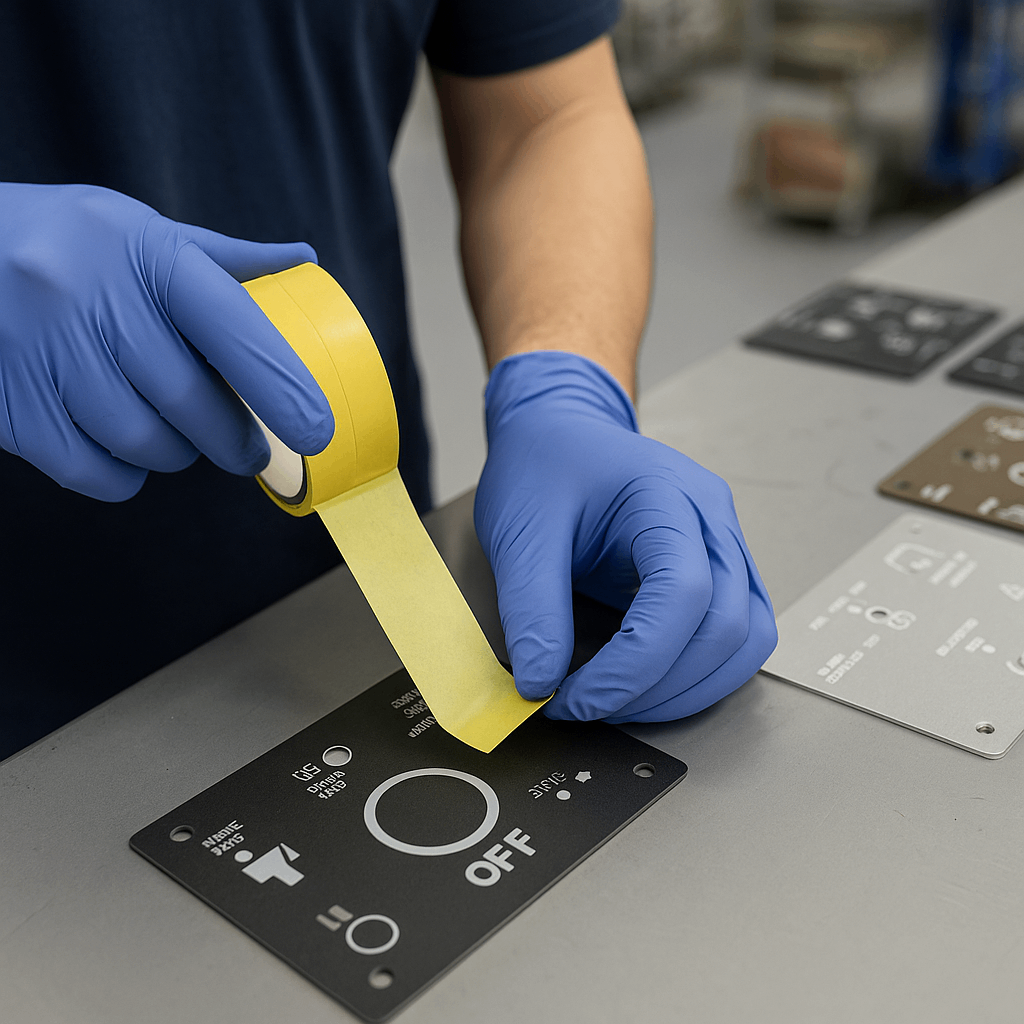
Silk screen printing on metal is widely used for OEM labels, equipment markings, control panels, nameplates, and other industrial graphic applications where durability and readability are important.
For B2B buyers, this process is not only about appearance. It also affects adhesion, wear resistance, outdoor durability, batch consistency, and the long-term usability of printed parts in industrial environments.
Compared with some other marking methods, metal screen printing remains a practical choice when the project requires strong color opacity, clear graphics, and repeatable results across medium or large production runs.
This guide explains the main points buyers and engineers usually need to review when selecting silk screen printing on metal for OEM and industrial applications.
Why Silk Screen Printing on Metal Still Matters
For industrial labels and OEM graphic parts, the printing method must do more than look clean at delivery. It should remain readable and stable during handling, assembly, and real product use.
Silk screen printing on metal is still widely used because it can provide:
strong color coverage;
clear contrast on metal surfaces;
good wear resistance when the ink system and surface preparation are correctly matched;
better cost efficiency in many medium- to high-volume projects.
What Silk Screen Printing on Metal Is
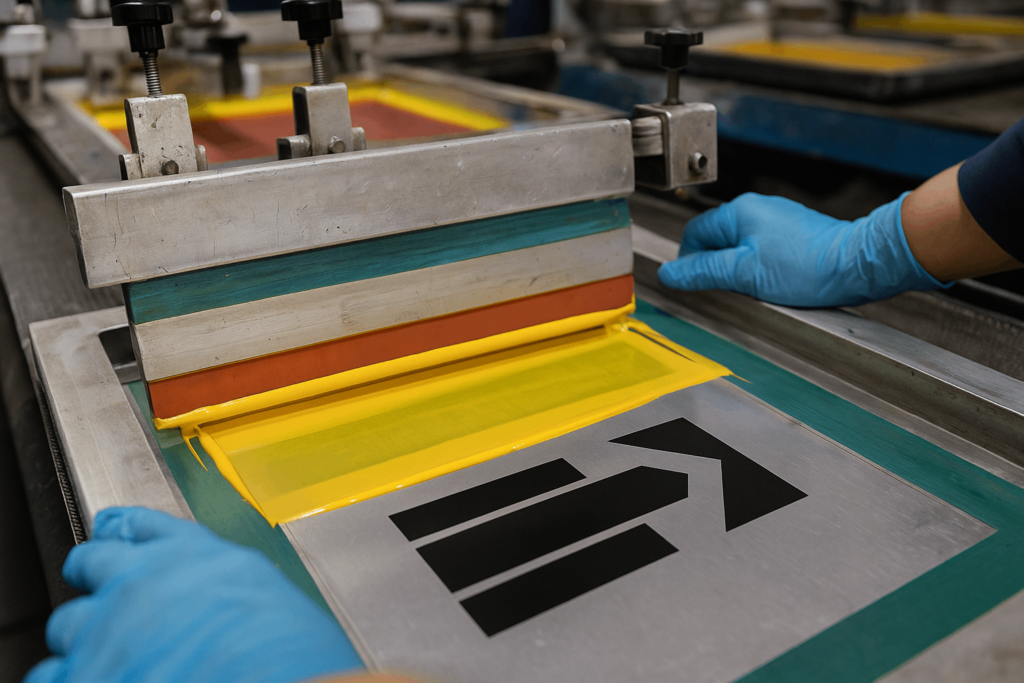
Silk screen printing on metal is a process in which ink is transferred through a mesh screen onto a metal surface such as aluminum, stainless steel, galvanized steel, copper, or brass.
This process is commonly used for:
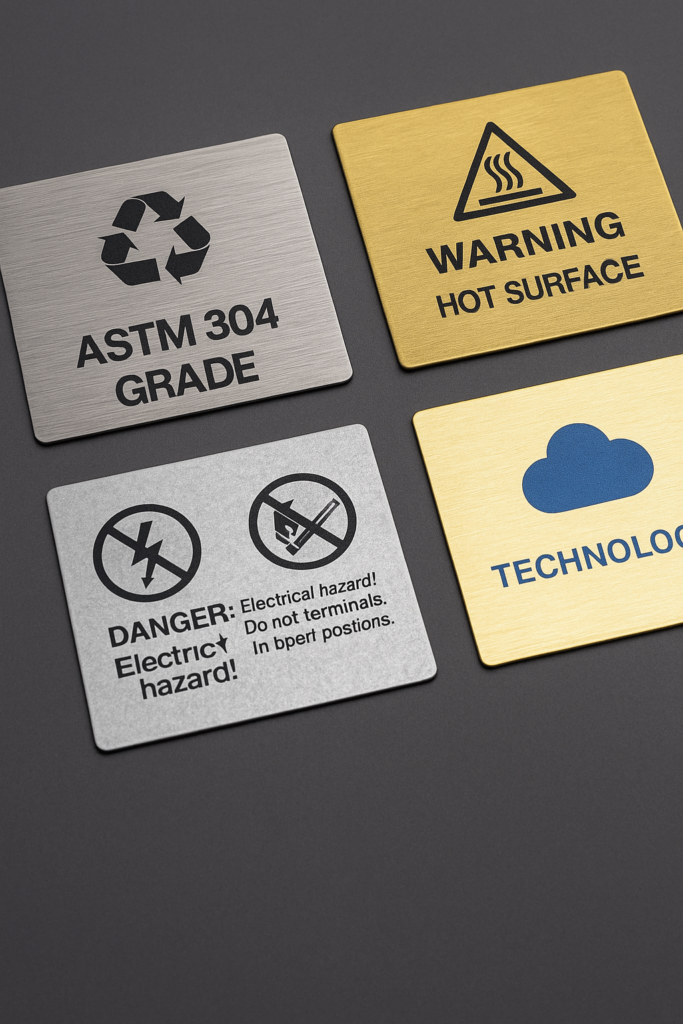
metal nameplates;
control panel graphics;
warning and instruction labels;
equipment tags;
branded metal parts and industrial faceplates.
For projects that need durable printed markings rather than only shallow surface marking, this method remains a practical option.
The print result depends not only on the artwork or ink, but also on the metal surface itself. Different metals have different surface energy, coating behavior, oxidation tendencies, and adhesion response.
Surface preparation may be needed to improve adhesion
Aluminum / Anodized Aluminum
Good weight-to-performance balance and clear printed appearance
Ink system should match the surface condition
Galvanized Steel
Good cost efficiency for industrial labels and signage
Pretreatment compatibility should be checked
Copper / Brass
Distinct appearance for specialty applications
Oxidation and surface change need to be considered
Inks and Surface Preparation
For durable metal printing, the ink system should match the substrate, surface condition, and actual use environment.
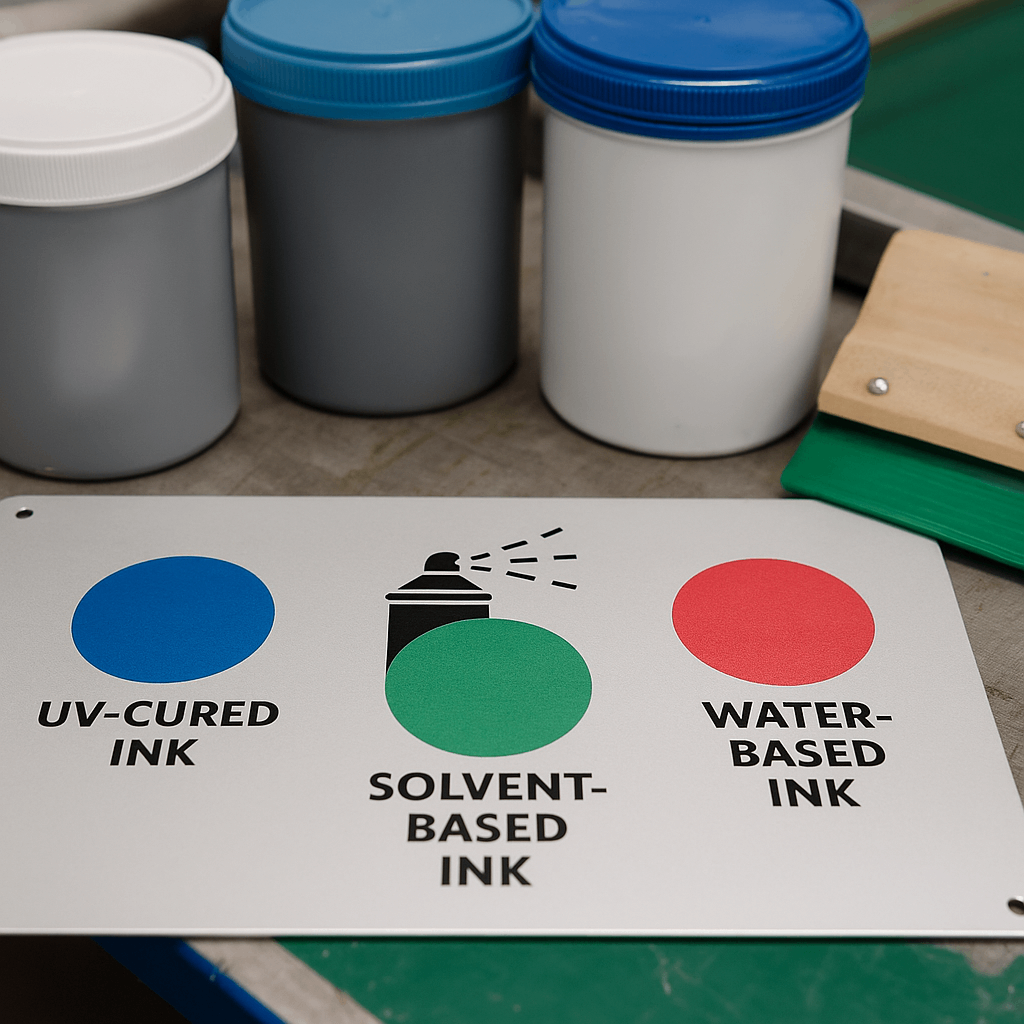
Common industrial ink directions may include:
epoxy ink for stronger chemical and wear resistance in demanding environments;
UV-curable ink for efficient production on suitable coated or prepared surfaces;
solvent-based ink for certain formed or specialty applications where process compatibility is important.
Surface preparation may also affect the final result, including cleaning, roughening, primer use, or other pretreatment steps depending on the material and project requirement.
Mesh, Ink, and Graphic Detail
Mesh selection should be matched to the required print detail, ink deposit, and graphic scale.
lower mesh counts are often used for bolder graphics or thicker ink deposits;
higher mesh counts are more suitable for finer detail and cleaner edges;
the final choice should be reviewed together with ink viscosity, substrate condition, and expected production consistency.
What Determines Batch Consistency in Metal Screen Printing
For OEM and industrial buyers, print quality is not judged only by the first approved sample. What matters more is whether later batches remain consistent in color, adhesion, position, and curing condition.
Important control points usually include:
artwork and file review before production;
screen setup consistency;
ink mixing control;
print alignment;
curing stability;
inspection and packing control.
If any one of these steps is unstable, batch variation can appear in the form of color drift, poor adhesion, incomplete curing, or inconsistent graphic position.
The exact process choice should still depend on the required durability, print detail, substrate, and end-use environment.
Why Silk Screen Printing Is Still Chosen for Many Industrial Labels
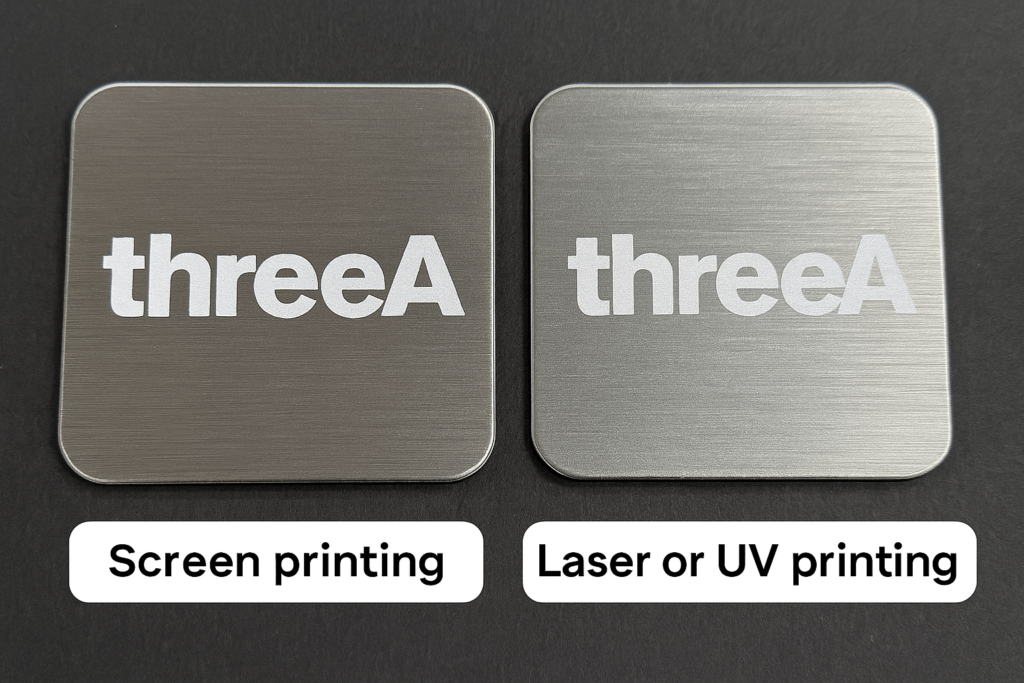
Different marking methods have different strengths. Silk screen printing is often preferred when the project needs stronger color visibility, clearer graphic presentation, and better cost efficiency in repeated production.
Feature
Silk Screen Printing
Laser Marking
Digital Printing
Color visibility on metal
Strong
Limited for some graphic needs
Moderate
Thick ink deposit
Yes
No
More limited
Suitability for medium and high volume
Good
Depends on marking type
Depends on substrate and durability target
Graphic style flexibility
Good
Limited for colored graphic output
Good
Durability potential
Good when the substrate, ink, and curing process are matched correctly
Good for certain marking uses
Depends strongly on surface and ink system
This does not mean it is always the best process for every project. The right method depends on the material, required durability, graphic style, quantity, and end-use condition.
FAQ
What is silk screen printing on metal used for?
It is commonly used for nameplates, industrial labels, control panels, equipment tags, warning graphics, and branded metal faceplates.
Does silk screen printing work on stainless steel and aluminum?
Yes, but the result depends on correct ink selection and proper surface preparation.
What most affects print durability?
The main factors are metal surface condition, ink-substrate match, pretreatment, curing control, and actual use environment.
Is silk screen printing better than laser marking?
Not in every case. Silk screen printing is often preferred when colored graphics, stronger opacity, or thicker printed markings are needed.
Custom Metal Screen Printing Support from YISHANG
YISHANG Metal Products Co., Ltd. is a metal products factory with more than 26 years of experience in custom metal manufacturing for wholesale and OEM/ODM projects.
We support custom metal screen printing for industrial labels, metal nameplates, equipment tags, control panels, and related OEM metal parts.
Our material range includes:
stainless steel 304 / 316;
low carbon steel;
galvanized steel;
aluminum;
copper;
brass.
Our related manufacturing capabilities include:
sheet metal laser cutting;
bending;
stamping;
welding;
CNC machining;
surface finishing;
design support;
prototyping;
assembly;
packaging;
quality inspection;
shipment support.
We are certified to ISO 9001 and RoHS. For custom OEM and wholesale projects, we can support print review, sample development, fabrication coordination, and repeat production.
If you have any questions or need a quote, please send us a message. One of our specialists will get back to you within 24 hours and help you select the correct valve for your needs.