
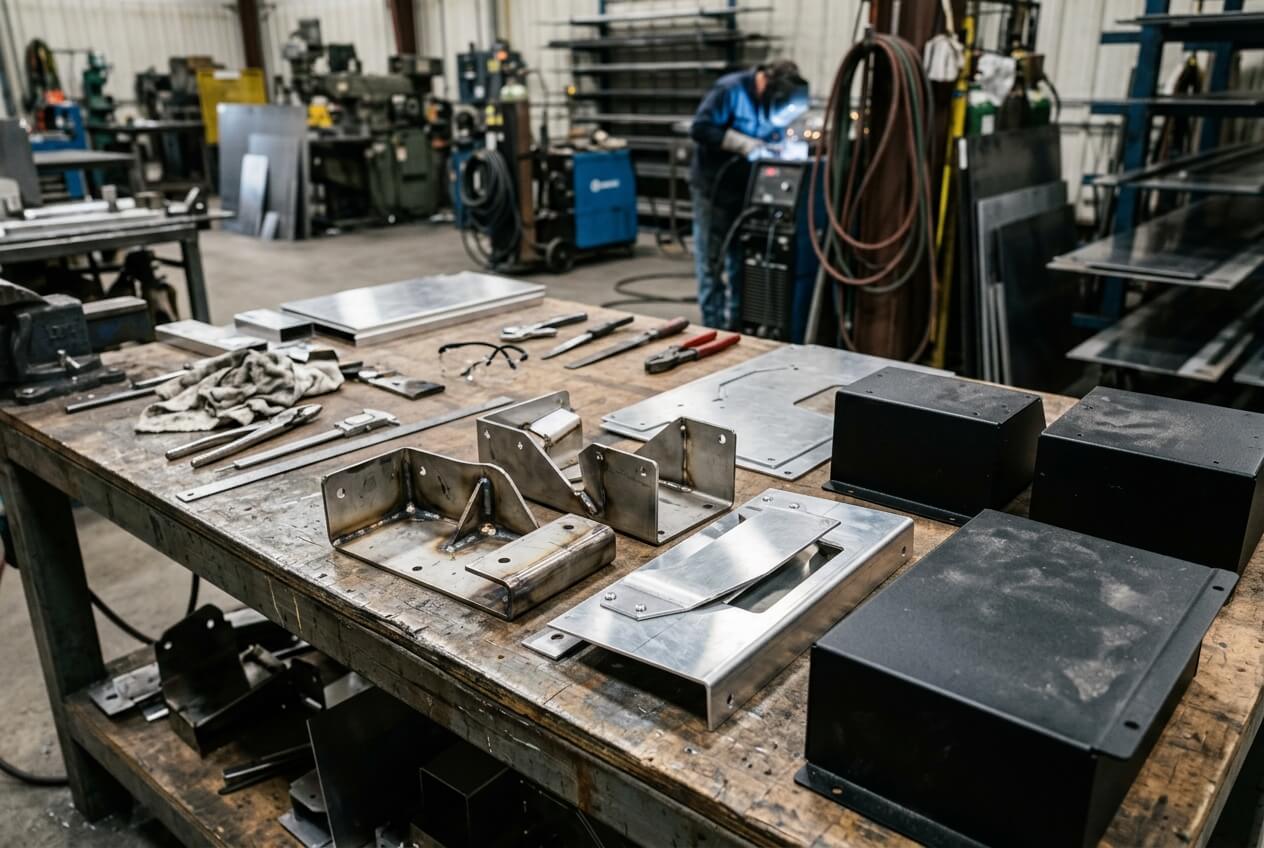
An OEM buyer sends one enclosure drawing to three specialty metal fab suppliers. The drawing shows laser-cut panels, bends, welded corners, a hinged cover, mounting holes, and a black exterior finish. The RFQ says, “Material open: stainless steel or aluminum acceptable. Quote 20 prototypes and 500 pieces per batch.”
The quotes do not line up. One supplier looks low. One price lands 35% higher. Another supplier asks several technical questions before quoting. Procurement may see a pricing problem, but the real problem often starts earlier. Each supplier priced a different process route.
One assumed mild steel with standard powder coating. Another assumed brushed stainless with visible weld cleanup. A third included masking, hinge clearance, and inspection after assembly. None of those assumptions look dramatic on a drawing. Together, they change cost, lead time, fit, and batch consistency.
This article focuses on one procurement risk: RFQ assumptions that make specialty metal fab quotes look comparable when they are not. The material name matters, but it does not decide the finished part by itself. Buyers need to connect material, forming, welding, finish, tolerance, inspection, and assembly fit before they compare suppliers.
Where RFQ Assumptions Start to Distort Specialty Metal Fab Quotes
Most quote distortion starts when the RFQ names a part but not the operating conditions. A metal enclosure, bracket, frame, cabinet, or welded assembly can look simple in CAD. Yet the supplier still needs to understand how the part will work, what surfaces people will see, and which features must align after fabrication.
When buyers ask for stainless steel, aluminum, and carbon steel prices from the same drawing, they may expect a clean material comparison. That request can create false accuracy. Each material changes the fabrication route. Sheet thickness, bend radius, weld design, surface preparation, coating, masking, and inspection may all shift.
A carbon steel enclosure may carry the lowest material cost. Add blasting, powder coating, threaded-hole masking, and coating inspection, and the gap may shrink. Stainless steel may avoid coating in some indoor applications, but the buyer may still need brushed grain direction, weld blending, passivation, or hardware compatibility. Aluminum may reduce weight, yet it can require thicker sheet, larger bend radii, inserts, or more careful welding control.
The quote gap is often a scope gap
A low quote may not mean the supplier found a smarter route. It may mean the quote excludes work that the part actually needs. The missing work may include cosmetic grinding, fixture welding, coating clearance checks, first article inspection, or assembly trial fitting.
Buyers should make the application visible inside the RFQ. State whether the part sits indoors, outdoors, near salt air, inside a machine, in a retail space, or in contact with operators. Explain whether the main risk is corrosion, stiffness, weight, appearance, electrical grounding, heat, or repeatable assembly.
That context helps suppliers price the same product. It also exposes tradeoffs before purchase orders lock in the wrong assumptions.
Material Choice Becomes a Quotation Risk When It Ignores Bending, Welding, and Assembly
Material selection often looks like an engineering decision. In procurement, it also becomes a quote-control decision. A supplier cannot price a stable route if the RFQ treats stainless steel, aluminum, and coated carbon steel as direct substitutes.
Bending creates the first hidden risk. The material grade and sheet thickness affect springback, minimum inside radius, tooling marks, and flange accuracy. If the drawing shows sharp internal corners or does not define acceptable bend radii, suppliers may make different assumptions. One supplier may quote a risky tight bend. Another may adjust the radius and create a dimension shift. A third may add forming trials into the price.
Welding creates a second risk. Heat moves metal. Stainless steel corners can pull. Long carbon steel panels can twist. Aluminum conducts heat quickly and may need more control around small tabs, thin walls, and visible surfaces. A quote that ignores weld sequence or fixtures may look attractive, but the cost can return later as rework.
Project example: aluminum bracket that missed its mating holes
A buyer specified an aluminum U-shaped bracket to reduce machine weight. The bracket connected two existing modules, so the hole pattern mattered more than most other dimensions. The flat blank matched the drawing. After forming, springback changed the flange angle. A small welded reinforcement then pulled one side wall inward.
The bracket did not fit without force. The issue did not start at final inspection. It started when the RFQ asked for a lighter material without asking how the supplier would control flange angle, datum surfaces, and post-weld hole position. A better RFQ would identify the mating parts, critical datum faces, hole-to-hole tolerance after forming, and whether a formed rib could replace the welded tab.
This kind of failure hurts more than the part price. It can delay machine assembly, force design concessions, or trigger a second prototype round. It also makes supplier comparison difficult because one quote may include fixture planning while another quote assumes standard forming and welding.
Finish Expectations Can Turn a Correct Part Into a Rejected Assembly
Finish notes look short, but they carry large consequences. “Black powder coat,” “brushed stainless,” or “polished aluminum” does not tell a supplier which surfaces matter, where coating must stay away, or how the part should fit after finishing.
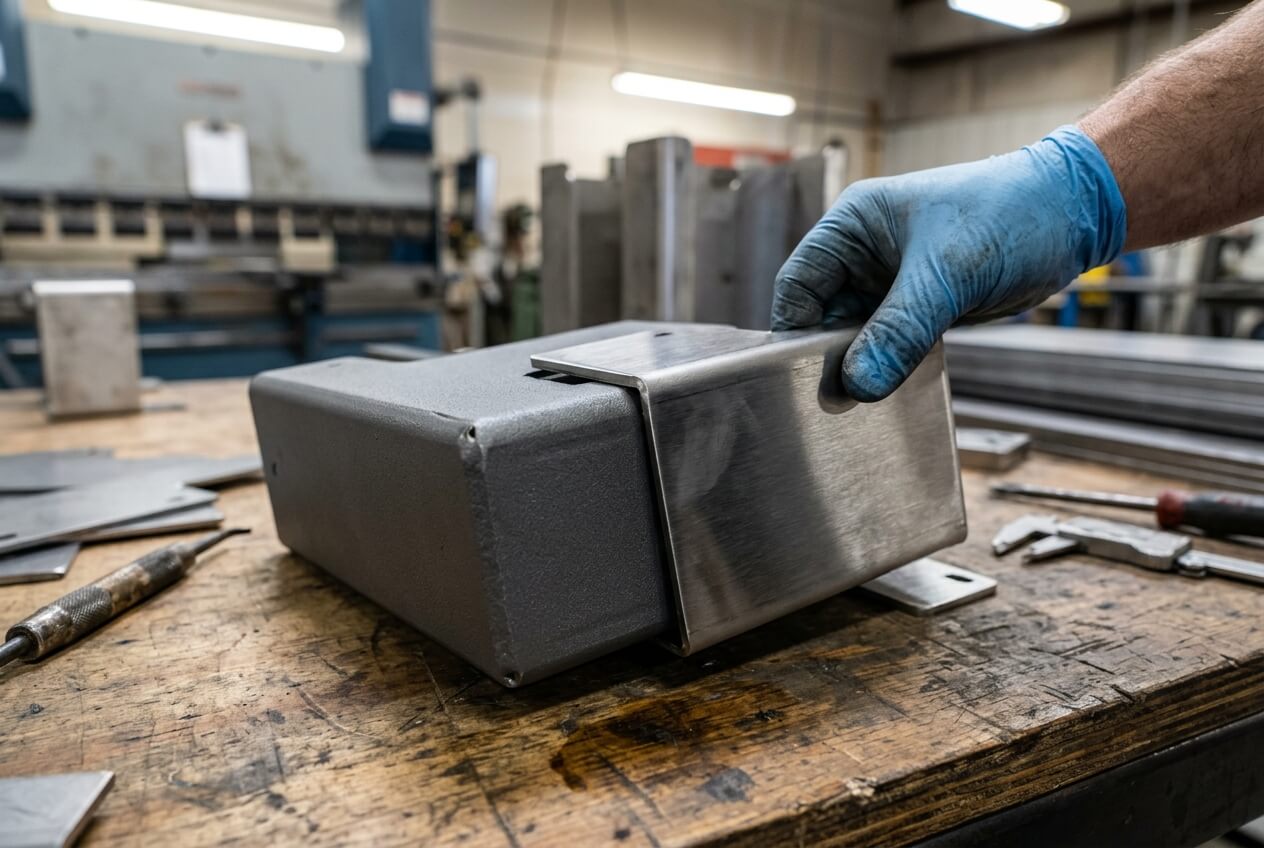
Powder coating adds thickness at edges, returns, holes, hinges, slots, and mating lips. That thickness can block a sliding cover, tighten a door gap, or reduce thread engagement. If the drawing does not call out masking, tapping after coating, or extra clearance, suppliers will choose their own method. Those choices change both price and lead time.
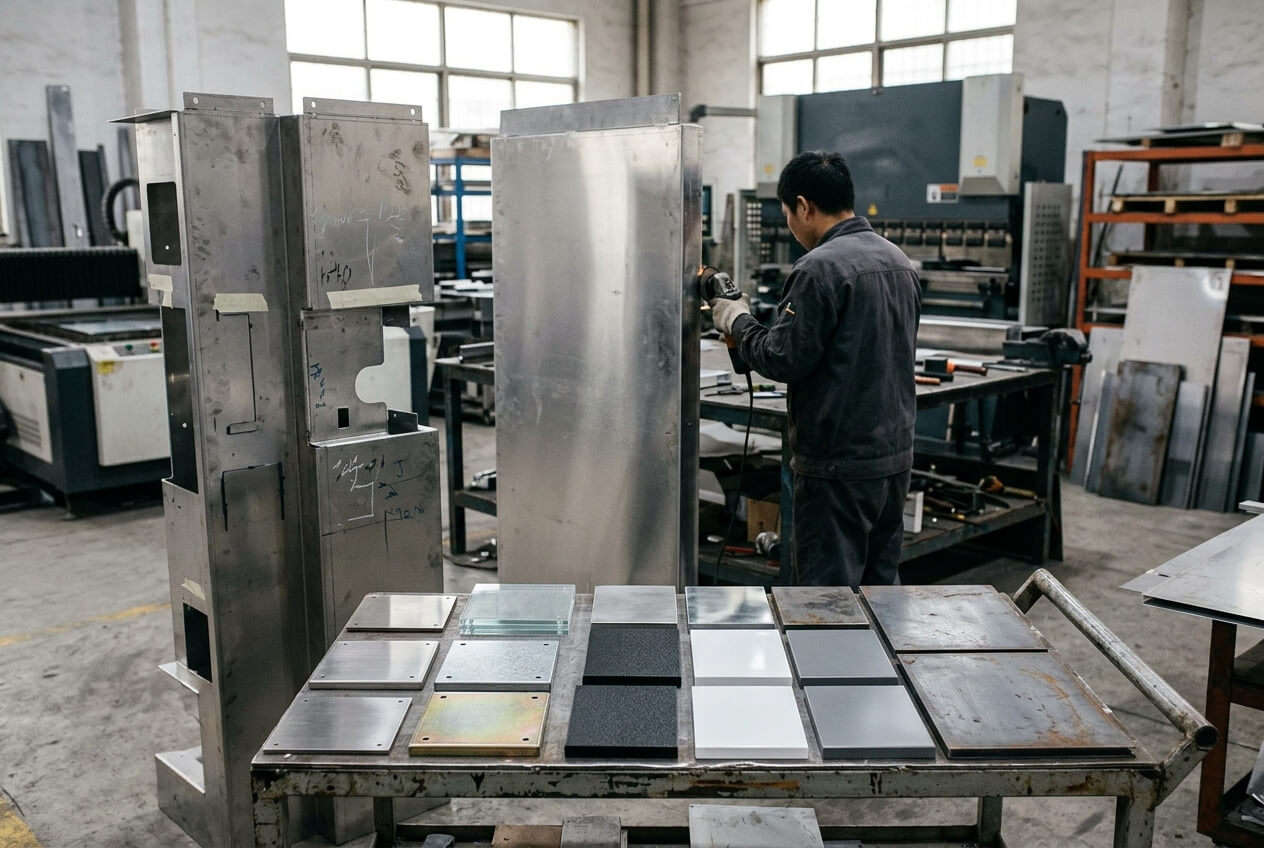
Stainless steel creates a different quotation trap. Buyers may select stainless to avoid paint, but visible finish still needs definition. A front panel may require one brushed grain direction. A public-facing welded frame may need grinding and blending. A hidden equipment frame may not need that work. Without surface classification, suppliers price different levels of cosmetic labor.
Project example: powder-coated enclosure with a tight removable cover
A control enclosure passed prototype review. The buyer approved the sample and released a 500-piece batch. In production, some covers felt tight. Others scraped coating from the mating lip. A few units needed rework before assembly.
The drawing held the sheet dimensions, but it did not control the full chain. Weld distortion changed the opening slightly. Coating built up around the cover return. The hinge area had limited clearance. The prototype had received extra fitting time, but the production quote did not include that manual adjustment.
The RFQ should have marked the cover opening, hinge line, gasket area, and coating-sensitive lip as fit-critical features. It should also have asked whether the supplier planned masking, adjusted clearance, or assembly checks after finishing. Yishang often reviews enclosure drawings this way before quoting, because finish decisions can change the real manufacturing scope.
Tolerances Should Protect Assembly Fit, Not Inflate Every Quote
Many buyers respond to fit problems by tightening general tolerances. That reaction can raise cost without reducing the actual risk. In sheet metal fabrication, the most important dimensions usually sit at interfaces: mounting holes, hinge lines, door gaps, gasket surfaces, datum faces, and mating edges.
A tight note across the whole drawing can push suppliers into higher inspection time, more rework allowance, and conservative pricing. It can also hide the true problem. The part may not need every flange held tightly. It may need one hole pattern held after bending and welding.
Good RFQs separate critical-to-fit features from normal fabrication dimensions. They define which dimensions apply before finishing and which apply after finishing. They also tell the supplier whether inspection should happen on a single component, after welding, after coating, or after final assembly.
Consider a welded machine frame that accepts customer-supplied panels. The buyer may care most about squareness, hole position, and flatness at the mounting pads. A blanket tight tolerance on tube length or hidden gussets may add cost without improving panel fit. A better RFQ marks the mounting datum, allowed frame twist, post-weld inspection points, and whether the frame needs a fixture during welding.
This approach supports better supplier communication. Instead of asking, “Can you hold this tolerance?” the buyer can ask, “Which process step controls this feature, and what can move it?” That question exposes material springback, weld pull, coating thickness, and fixture needs before the quote becomes a purchase order.
Prototype Approval Fails When It Approves the Sample but Not the Process
A prototype can prove that a supplier can make one acceptable part. It does not always prove that the same route can produce 500 consistent parts. Procurement risk increases when the buyer approves only the sample and ignores how the sample was made.
Prototype work often includes extra attention. A technician may adjust a flange by hand. A welder may correct distortion during fit-up. A finishing operator may spend extra time on a visible panel. These actions may help development, but they can become a batch problem when nobody documents them.
Buyers should ask what changed between prototype and planned production. Will the same material grade and thickness be used? Will the same bend tooling, welding sequence, fixture plan, surface preparation, coating specification, masking method, and inspection points apply? If not, the approved prototype may not represent the production part.
Batch consistency depends on locked assumptions
Before releasing production, lock the details that affect fit, finish, and function. For an enclosure, this may include door gap, hinge alignment, cover clearance, gasket compression, and visible surface criteria. For a bracket, it may include datum flatness and hole position after forming. For a welded display rack, it may include verticality, coating appearance, and visible weld cleanup.
Lead time also depends on these decisions. A late change from carbon steel to stainless may alter material availability, welding approach, grinding time, and finishing sequence. A late masking requirement can add handling steps. A late tolerance clarification may require a fixture that was not included in the first quote.
When Yishang reviews custom sheet metal fabrication projects, the most useful conversations often focus on these production assumptions. The aim is not to make every part more expensive. Sometimes the best answer is to loosen a non-critical tolerance, move a weld to a hidden side, add coating clearance, or change a welded tab into a formed feature.
Before comparing specialty metal fab quotes, send the full assumption package. Share drawings, 3D files if available, material requirements, acceptable alternates, order quantities, prototype and batch expectations, critical tolerances, finish expectations, cosmetic faces, mating-part photos, and assembly notes. If you want Yishang to review a custom enclosure, bracket, frame, cabinet, panel, or welded assembly, include the features that must fit after bending, welding, and finishing. The goal is simple: make every supplier quote the same process route before price comparison begins.
Frequently Asked Questions
Why do specialty metal fab quotes vary so much for the same drawing?
Quotes vary when suppliers price different assumptions. One may include cosmetic weld cleanup, fixture welding, coating masking, or assembly checks. Another may quote only the basic cutting, bending, welding, and finishing steps. The RFQ should define the application, critical fit points, material route, finish scope, and inspection stage.
What RFQ details make stainless steel, aluminum, and coated carbon steel easier to compare?
State the preferred material, allowed alternates, application environment, sheet thickness requirements, visible surfaces, corrosion expectations, and assembly interfaces. Ask each supplier to explain how an alternate material changes bend radius, welding, inserts, coating, masking, inspection, cost, and lead time.
How can powder coating create assembly problems on sheet metal enclosures?
Powder coating adds thickness around holes, lips, hinges, slots, cover returns, and gasket areas. If the design lacks clearance or masking instructions, the finished enclosure may bind during assembly. Mark coating-sensitive areas and confirm whether the supplier will mask, post-tap, or adjust clearances.
Should buyers tighten all tolerances to avoid fit problems?
No. Blanket tight tolerances can increase price without solving the real issue. Buyers should identify fit-critical features such as datum faces, hinge lines, mounting holes, door gaps, and gasket surfaces. Then they should define when those features must be inspected: after forming, welding, finishing, or final assembly.
Why can an approved prototype still fail in batch production?
A prototype may include hand fitting, extra weld correction, or additional finishing time. If the production process does not include the same controls, batch parts may vary. Buyers should lock material grade, bend tooling, weld sequence, fixture use, finish specification, masking, and inspection criteria before release.
What should I send with a custom sheet metal fabrication RFQ?
Send 2D drawings, 3D files if available, material requirements, acceptable alternates, quantities, critical tolerances, finish expectations, cosmetic surface notes, mating-part information, prototype comments, and assembly requirements. These details reduce quote assumptions and help suppliers price the real manufacturing route.