
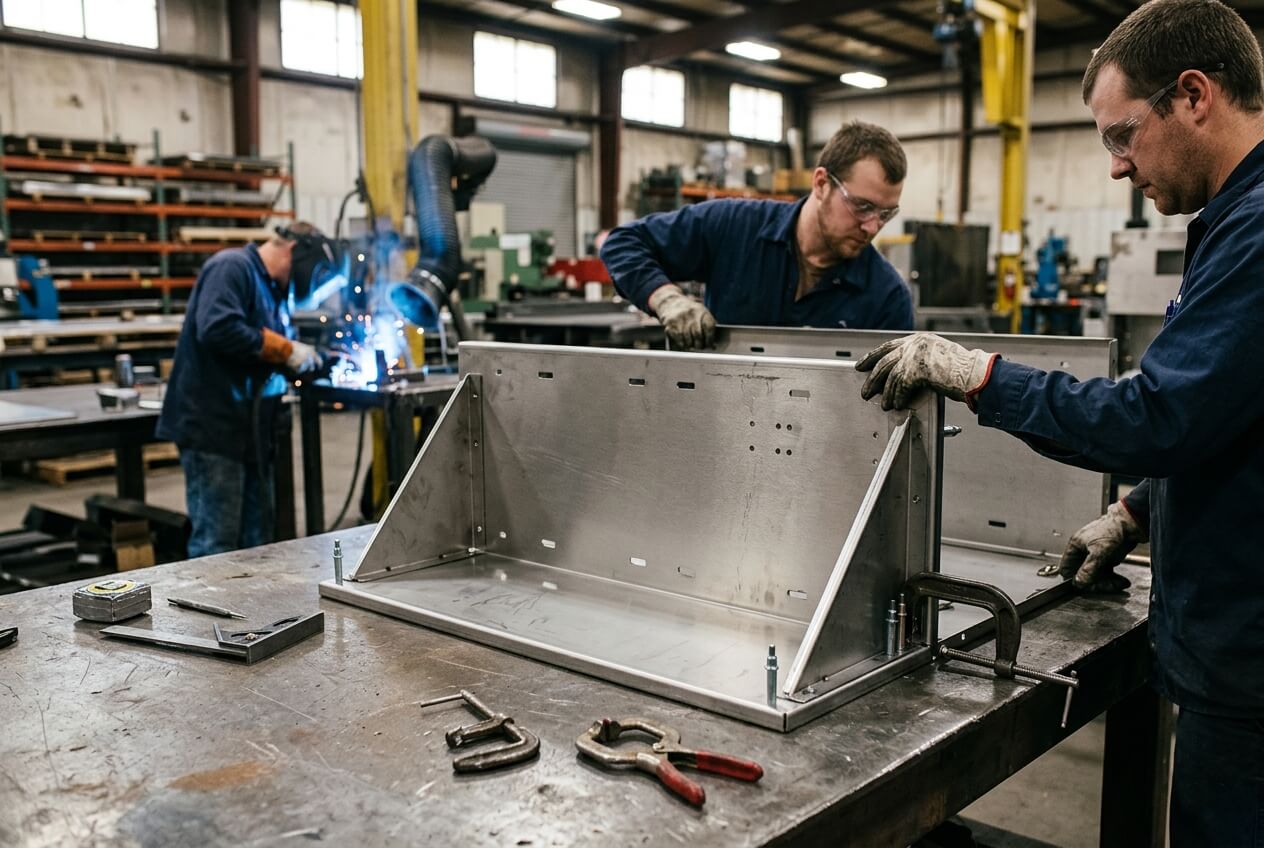
Buyers often compare steel and welding quotes as if every supplier priced the same part the same way. That is where projects go wrong. One quote may assume loose fit and hand correction. Another may include fixtures, weld sequencing, and post-weld inspection. The prices can look close, yet the manufacturing paths are very different. If the RFQ does not define the assembly-fit risk, the cheapest quote can hide the most expensive outcome.
This matters across custom sheet metal fabrication, sheet metal parts, metal enclosures, brackets, frames, and welded assemblies. A part can match the drawing and still fail in assembly. Holes drift after welding. Flanges spring back. Heat pulls one side of a frame. Coating adds a small buildup that closes a gap. None of those issues looks dramatic on paper. Together, they can stop installation, delay approval, or force rework after production has started.
The buyer risk is not simply bad fabrication. It is quote distortion caused by hidden fit assumptions. When the RFQ leaves room for interpretation, suppliers fill the gap with their own process choices. Some will quote to a loose visual standard. Others will price fixture control, inspection gauges, and corrective work. If you do not freeze the assembly relationship early, you are not comparing one part. You are comparing two different manufacturing plans.
Where RFQ Assumptions Start to Distort Steel and Welding Quotes
The first mismatch usually appears before anyone cuts metal. It starts when the drawing shows dimensions, but not the functional order of those dimensions. A supplier then has to decide what controls the build. Is the hole pattern critical, or is the outer profile more important? Does the hinge line drive the assembly, or does the mounting face drive it? That choice changes fixture design, welding sequence, inspection time, and cost.
In steel and welding work, a quote can move sharply depending on whether the supplier expects make-to-print work or fit-controlled assembly. A welded frame with simple cut parts may seem inexpensive. Add a mating panel, a latch location, and a flush exterior, and the job changes. The supplier may need a fixture, a gauge, or a trial fit. If the RFQ never says that fit matters, the quote may omit it.
That omission creates downstream risk. The buyer may issue a purchase order based on price alone. Production then reveals the real work. The supplier asks for clarification, adds correction time, or flags that the assembly will need hand adjustment. Schedule slips. Approval slows. In some cases, the part is remade because the quoted method cannot reach the required fit.
What the quote comparison should actually test
Compare the controlling feature, not just the unit price. Ask which face, hole set, edge, or datum locks the assembly. Ask whether the quoted method assumes loose assembly or controlled fit-up. If two suppliers describe two different methods, their numbers are not directly comparable. A higher price may reflect the only path that reliably fits the mating part.
For example, a machine enclosure side panel can look straightforward in CAD. Once it must align with a welded subframe, the supplier may need to hold the hinge line within a tight functional band. If the RFQ does not state that the hinge line controls door alignment, the quote may exclude the fixture and correction needed to keep the door gap consistent.
Another common case appears in bracket sets. A bracket may only need to look square in isolation. But if it lands inside a purchased chassis, the mating hole position matters more than the raw bracket outline. The price changes as soon as the bracket becomes an assembly item instead of a stand-alone part.
Which Fit Details Must Be Frozen Before Steel and Welding Production Starts
Once the buyer identifies the assembly risk, the next step is to define the fit conditions in a way the supplier can use. This is not a long paperwork exercise. It is a practical way to stop the quote from drifting. The goal is simple: make the supplier price the same functional outcome you expect to receive.
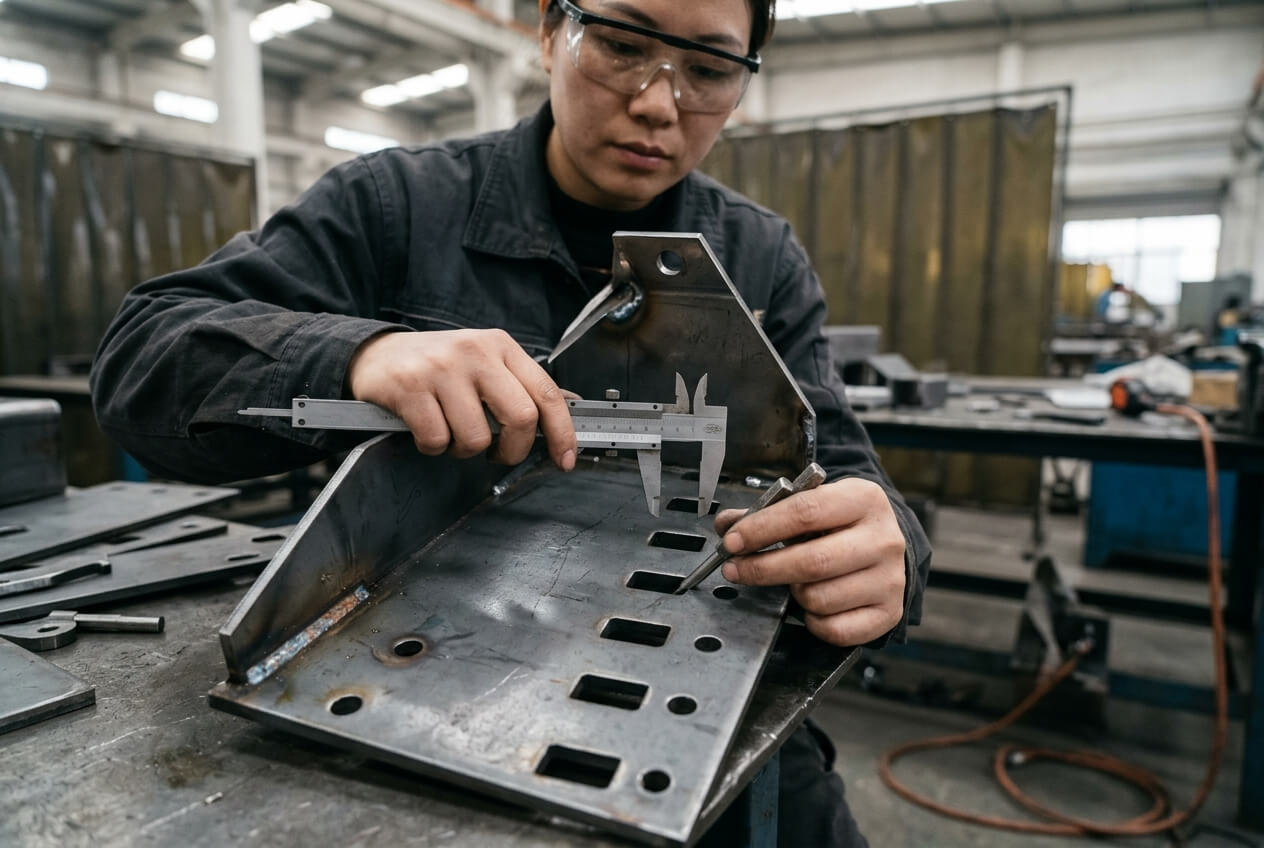
Start with the mating relationship. State what the part must align with and what it must clear. A welded assembly may need to sit on a base plate, accept a hinge, or drop into another frame. Each of those requirements changes the meaning of tolerance. A hole that is acceptable on a loose bracket may fail when it has to line up with another welded component.
Then define the critical dimensions. Not every number needs the same control. In many sheet metal parts, the outer edge matters less than the distance between a mounting hole and a datum face. In metal enclosures, the door opening or latch line may matter more than the overall cabinet width. The RFQ should tell the supplier which features drive installation.
Details that change the manufacturing path
- Identify the controlling datum and the mating part.
- Mark critical-to-fit dimensions, not only overall size.
- State whether holes are cut before welding, after welding, or reworked later.
- Clarify whether straightening, reaming, or machining is allowed.
- Note whether cosmetic surfaces or weld beads affect the assembly interface.
Finish can also affect fit, even when the buyer treats it as a separate line item. Powder coating, paint, and surface treatment add thickness. That build is small, but it matters near hinges, slots, latch points, and sliding interfaces. If a door already runs tight in bare steel, coating may be enough to create drag. The quote should account for that condition before production starts.
A welded cabinet for electrical equipment shows the problem clearly. The bare frame may close correctly in a prototype. After coating, the clearance around the door or mounting hardware can shrink. If the supplier did not price that finish build into the assembly method, the buyer may discover the problem only after the batch is complete.
This is where drawing review becomes useful. A partner such as Yishang can help check whether the documented fit condition is actually manufacturable before the quote is locked. That review matters most when the assembly has more than one process step and the final fit depends on all of them working together.
How Welding, Heat, and Process Order Move the Finished Assembly
Steel and welding projects rarely fail because one dimension was wrong at the start. They fail because the part moves during fabrication. Heat input, clamp release, bend springback, and weld sequence all change the final geometry. The drawing may still be correct. The part may simply stop matching the drawing after welding.
Weld shrinkage is one of the most common causes. When a long weld cools, it pulls material toward the joint. On thin sheet, that pull can close a gap or bow a panel. On heavier frames, it can twist the assembly and shift a hole pattern out of position. Bend springback adds another effect. A flange that looked accurate at the brake can open after welding or after the fixture releases.
Because these moves happen after the cut and bend steps, buyers need to think in process order, not just in finished dimensions. A frame that welds cleanly may still require the hole pattern to be machined afterward. A bracket that looks square may need a fixture that holds the mating face during cooling. If the RFQ leaves these decisions open, each supplier will choose a different path.
Why process order changes quote risk
The quoted price reflects how much control the supplier thinks the part needs. If the part can be made loose and corrected by hand, the price is lower. If the part needs a welding fixture, controlled tack locations, or post-weld correction, the price rises. That difference is not overpricing. It is a signal that one path carries more work and more risk than the other.
Consider a welded support frame for a display rack. The frame may look simple until the casters, cross braces, and shelf supports all line up. If welding pulls one leg inward, the unit may rock on the floor. The drawing may not show that consequence clearly, but the assembly will. Buyers should ask how the supplier will hold leg squareness after welding, not just before it.
A second example is a metal enclosure with reinforced hinge plates. The plates can be welded in the correct location on the bench and still shift the door line after cooling. If the hinge plane is not controlled, the latch may bind. The issue is not the weld itself. It is the lack of process control around a functional interface.
Why Prototype Approval Can Still Fail in Batch Production
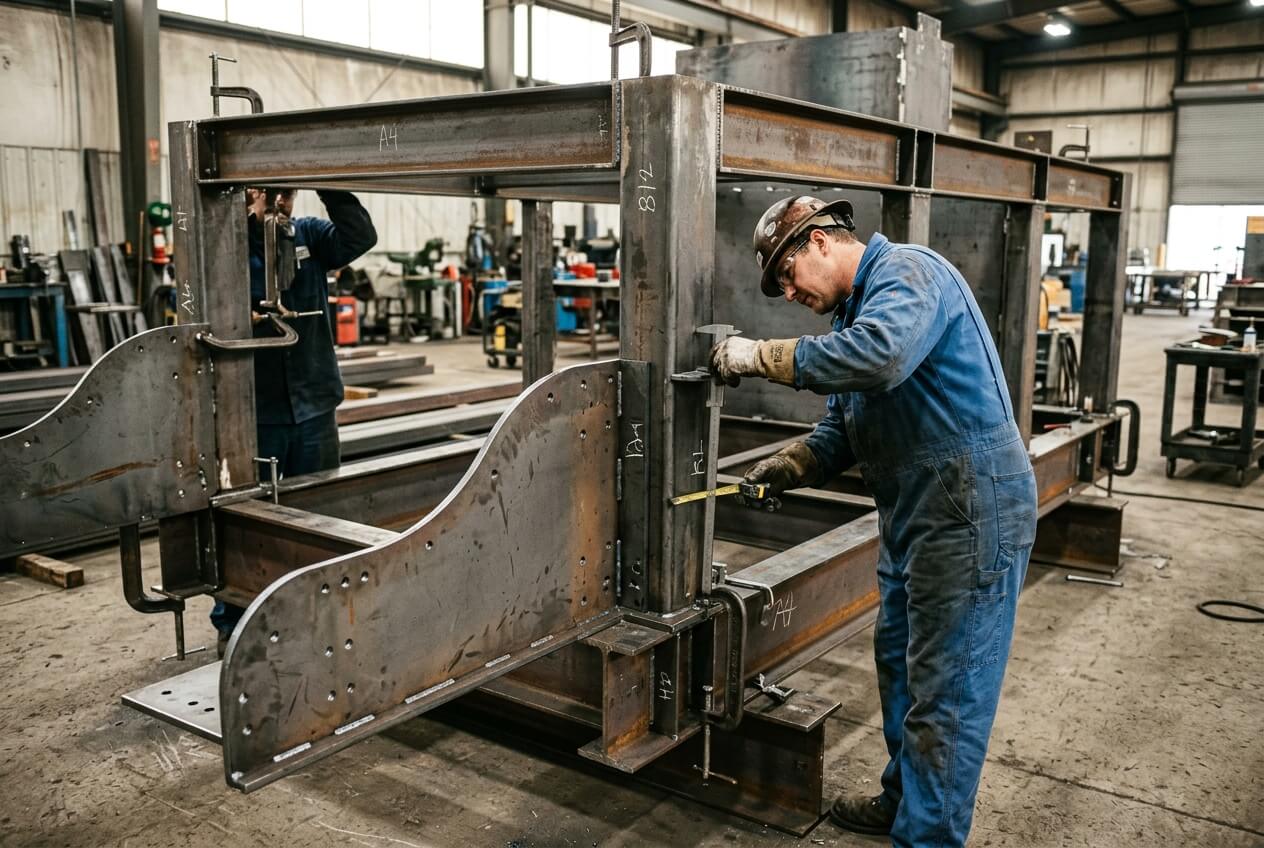
A sample part can create false confidence. It may fit because a technician nudged it into place, ground a tab, or held the assembly in a custom jig. That correction often disappears in production. Once the lot starts, the supplier has to repeat the same method without special handling. If the process was not stable, the batch will expose it.
This risk is common in custom sheet metal fabrication jobs that combine cutting, bending, welding, polishing, and coating. Each operation adds a small shift. A prototype often absorbs those shifts through manual adjustment. Batch production usually does not. As a result, the first article can pass while the second or third lot begins to drift.
Buyers should therefore treat prototype approval as a fit validation, not a final guarantee. The sample should prove that the part can be made and repeated with the same datums and the same sequence. If the supplier changes the fixture, weld order, or inspection point for production, the prototype is no longer a reliable predictor.
What first article approval should prove
Ask for proof against the same assembly conditions that will govern the batch. If possible, test with the mating part, a go/no-go gauge, or a documented fit trial. If the part needs reaming, straightening, or machining to pass, decide in advance whether that action is allowed in production. Otherwise the sample may hide a correction method that cannot scale.
This is especially important for welded assemblies that must drop into an existing product platform. A bracket set may fit a sample chassis because the team adjusted it by hand. In production, that same bracket can become too costly or too slow to correct. A stable batch needs a stable process, not a lucky sample.
Yishang can be useful at this stage when the buyer sends the drawing, photos of the mating assembly, and any accepted gap or flushness limit. That makes the prototype review about repeatability instead of one-off success. The best question is not whether the sample fits once. It is whether the fit survives production conditions.
What Buyers Should Send Before They Compare Steel and Welding Quotes
The cleanest way to reduce quote distortion is to make the RFQ reflect the real assembly risk. Buyers do not need a long spec package for every job. They do need enough information for the supplier to price the functional outcome, not an assumption. That usually means drawings, quantities, materials, tolerances, finish expectations, and a note about how the part will be used.
Include the mating context whenever possible. A photo of the assembly often matters as much as the drawing. If a welded bracket must fit a purchased frame, show the frame. If a cabinet door must clear a latch, show the latch area. If a support frame must align with wheels or cross members, identify the load path and the critical contact points. Those details help the supplier see where fit can shift.
Do not leave the finish conversation vague. Coating, paint, and surface treatment can affect clearance and assembly feel. Do not leave quantities vague either. A prototype quote and a batch quote may use the same geometry but very different assumptions about tooling, setup, and inspection. When the volume changes, the fit-control strategy may change too.
For buyers who want a manufacturability check before pricing, a review through Yishang can help flag where a drawing will likely create rework, fixture changes, or fit drift. That support is most useful before quote lock-in, when there is still time to adjust the RFQ rather than the production run.
If you are sourcing steel and welding work for enclosures, brackets, frames, or welded assemblies, send the drawings, material requirements, quantities, tolerances, and finish expectations with the RFQ. Add the mating part photo or assembly note as well. That combination gives suppliers the context they need to quote the real risk, not an optimistic guess.
Frequently Asked Questions
Why do two steel and welding quotes look similar but produce different assembly results?
They often assume different manufacturing paths. One may include fixture control, weld sequencing, and inspection. The other may assume loose fit and manual correction. The price gap usually reflects that hidden difference.
What is the most important detail to define in an RFQ for welded sheet metal parts?
The controlling datum and mating part matter most. If the supplier knows what the part must align with, it can price the right fit method instead of guessing from the outline alone.
How do weld shrinkage and bend springback affect enclosures and frames?
Weld shrinkage can pull edges, close gaps, or twist a frame. Bend springback can open flange angles after release. Those moves change the final assembly even when the cut and bent parts looked correct earlier.
Why can a prototype fit but the batch still fail?
A prototype may pass because someone adjusted it by hand or used a custom fixture. Batch production removes that rescue step. If the process is not stable, the lot can drift even when the sample looked good.
Should buyers specify coating or paint when fit is critical?
Yes. Coating build can reduce clearance at hinges, slots, latch points, and other interfaces. If the fit is already tight, the finish can turn a workable design into a difficult assembly.
What should I send to Yishang for an RFQ review?
Send the drawings, material requirements, quantities, tolerances, finish expectations, and any photos or notes about the mating assembly. That gives Yishang enough context to review manufacturability and fit risk before pricing.