
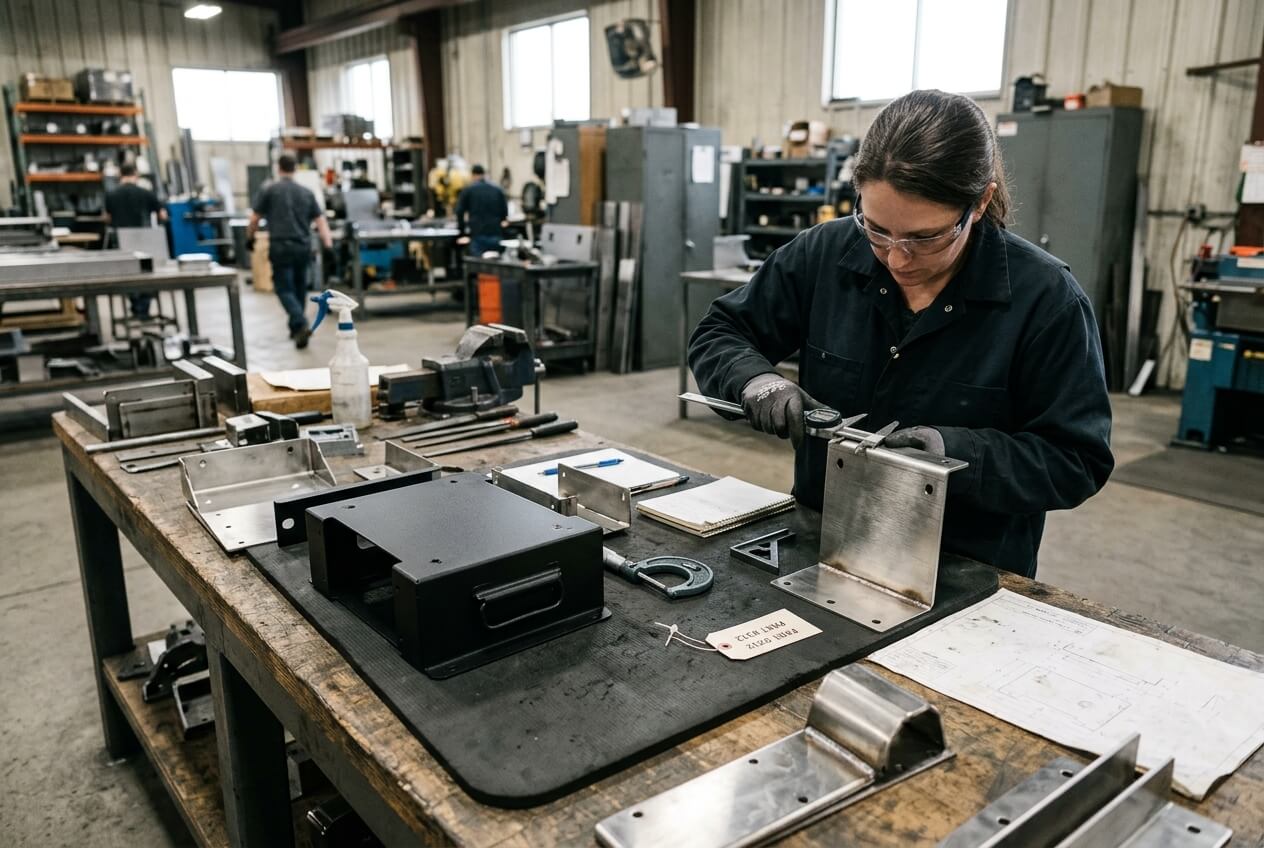
Buying temper steel parts often looks simple until quote comparison starts. One supplier prices a basic black powder coat. Another includes masking, weld cleanup, and handling protection. A third assumes standard shop practice and leaves the finish details open. The price gap comes from different assumptions, not different steel.
That is the real risk. Tempering can change surface condition, distortion, and how coating sits on the part. If the RFQ does not define cosmetic faces, masking zones, fit-critical holes, and acceptance limits, the quote will hide rework. The first batch may then fail receiving, even when the prototype looked fine on the table.
When RFQ wording leaves finish scope open, quotes stop comparing the same job
The buyer problem starts when the drawing says only powder coat black or finish as required. That line leaves too many open decisions. Does the shop mask threaded holes? Are visible welds ground smooth? Can coating bridge a slot? Must the part ship with no scratches, or is light handling wear acceptable? Each supplier answers those questions differently.
For a temper steel control cabinet door, one fabricator may price a standard coating line. Another may include extra prep around hinge pockets, latch cutouts, and grounding points. Both can sound correct during bidding. They are not quoting the same scope. If the buyer awards on unit price alone, the low bid can trigger change orders, sample rejection, or late rework once fit and finish get checked together.
The consequence chain is predictable. RFQ ambiguity creates hidden assumptions. Hidden assumptions distort the quote. Distorted quotes lead to award mistakes. Award mistakes then show up as coating touch-up, assembly interference, and delayed shipment. Yishang often sees that pattern during drawing review, especially on sheet metal parts that combine visible faces with fit-critical interfaces.
Project example: an equipment cabinet with a visible front flange and internal mounting tabs may need two different acceptance rules. If the buyer does not separate them, one supplier will protect both surfaces while another will protect only the outside. The first quote looks higher, but it may be the only one that actually fits the application.
Tempering changes the surface the coating must cover
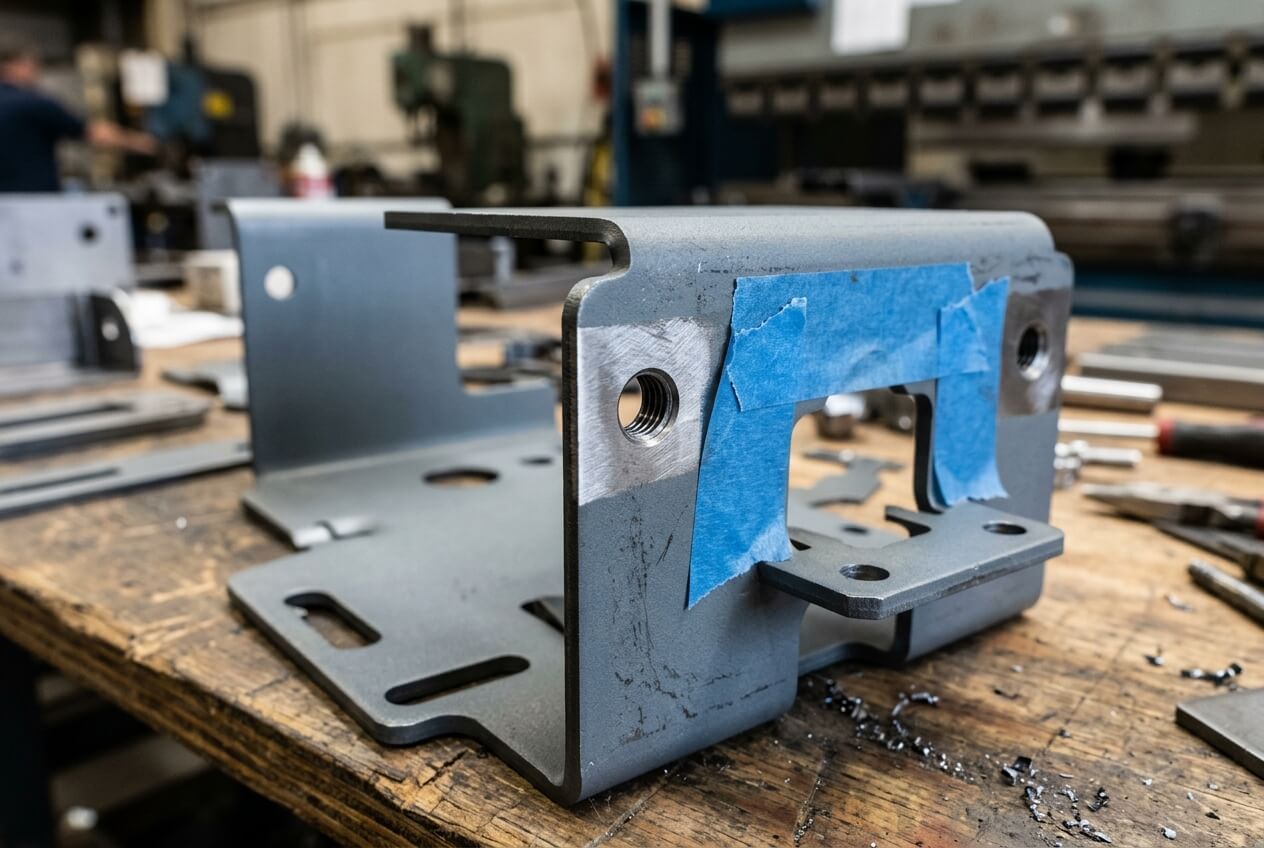
Temper steel is not just a strength choice. Heat treatment changes surface condition, color, and flatness. Scale can form. Light distortion can appear after quenching, welding, or stress relief. A coating line then has to work over a surface that already carries risk. If the buyer prices only the paint step, the quote misses the cleaning, straightening, or repair work that comes before it.
That matters because finish does not start at the spray gun. It starts with the part condition when it leaves cutting, bending, and welding. A tempered carbon steel bracket may need more degreasing and pre-treatment than a plain laser-cut panel. A welded frame may need controlled straightening before coating, or the finish will expose twist that the naked eye missed. If the buyer wants a cosmetic face, the supplier must know that before pricing.
Assembly fit also changes once coating enters the job. Powder build on holes, tabs, and mating flanges can tighten a fit that looked fine in raw metal. On a sheet metal enclosure, a coated hinge pocket may bind. On a welded assembly, a coated locating tab may stop full seating. The problem is not the steel alone. It is the interaction between heat treatment, coating thickness, and the final assembly method.
Surface condition is part of the scope
If temper steel parts need blasting, masking, edge break, or post-weld cleanup, those steps should sit in the RFQ, not in the supplier’s guesswork. That clarity protects both price and lead time. It also lets the buyer compare quotes on the same basis instead of discovering scope gaps after the sample arrives.
Project example: a formed bracket for a machine guard may look small, but coating buildup inside a slot can stop the bracket from fitting the mating frame. If the drawing never states the allowable coating thickness on that slot, the buyer may approve a part that cannot assemble without rework.
Why prototype approval does not remove batch consistency risk
A prototype can pass for reasons that do not carry into production. The sample may be hand-checked, hung alone on the rack, and touched up before shipment. The batch is different. Multiple parts run together. Rack spacing changes. Cure loading changes. Packing changes. Those small shifts can expose gloss variation, handling marks, or coating buildup that never appeared on the approved sample.
This is where many procurement teams lose control. They treat sample approval as a general sign-off instead of a controlled reference. If the finish standard is not written down, the approved part becomes memory, not specification. Then a later dispute turns into a debate about what the sample looked like and who interpreted the drawing correctly.
Batch risk is even higher on welded assemblies. A display rack frame may pass as a one-off because the shop can inspect every visible weld and polish the rough spots. A larger run may get less individual attention. If the buyer never defined how much witness mark is acceptable, the batch can look inconsistent even when every part meets the shop’s internal process.
The better control point is first article approval tied to the real production method. The sample should reflect the same hangers, prep cycle, cure load, and pack-out method that the batch will use. If the buyer wants that level of repeatability, the RFQ should say so early. Yishang can support that review when the prototype, finish expectation, and batch quantity are already on the table.
Drawing notes that prevent masking and assembly disputes
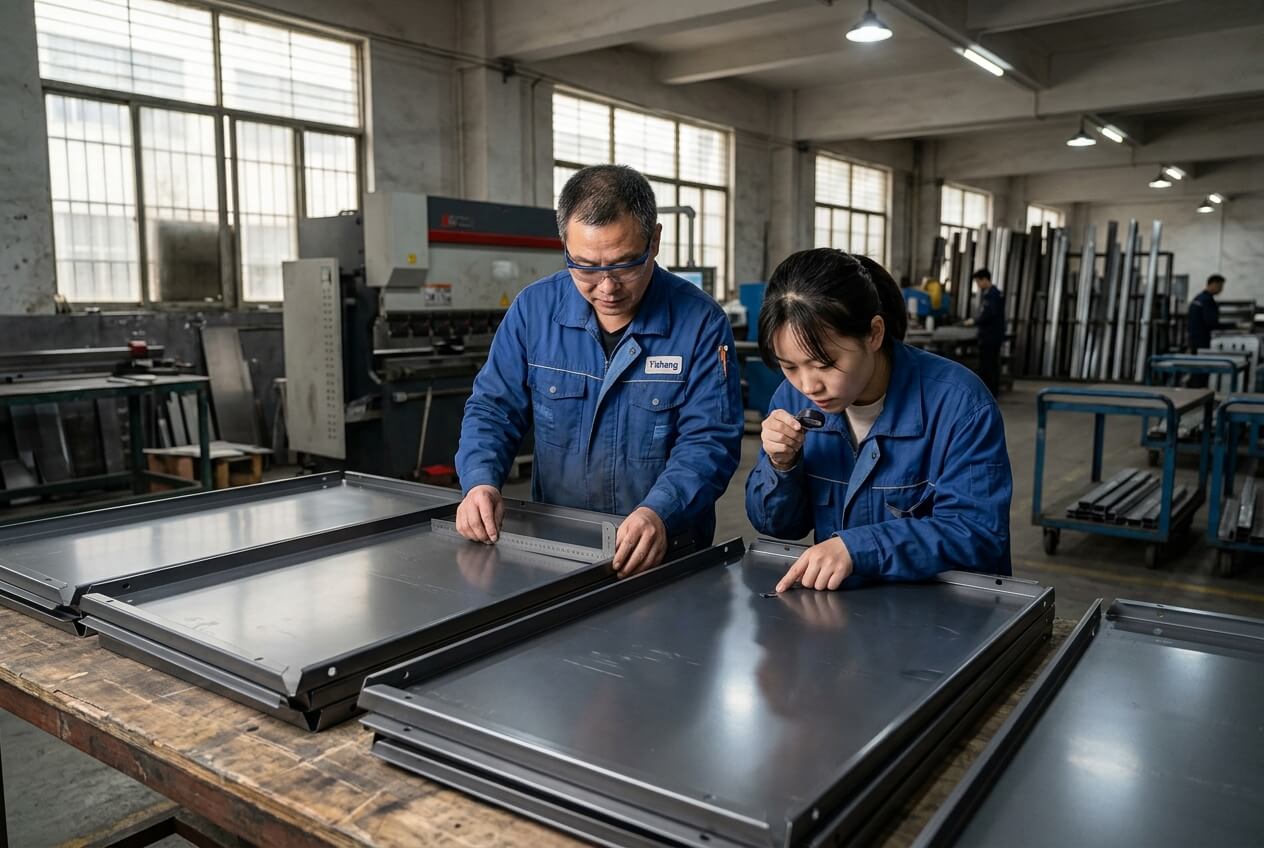
Clear drawing notes do not over-specify the job. They simply remove the questions that cause finish and fit disputes. The buyer does not need to write a process sheet, but the drawing must show what matters most. That includes the surfaces the end user sees, the holes that must stay clear, and the interfaces that affect assembly.
Mark the faces the user sees
Identify cosmetic and non-cosmetic faces on the drawing or in the RFQ package. If the part is a cabinet, bracket, frame, or enclosure, mark the external surfaces that the operator, installer, or end customer will see. Then note any weld grind requirement, witness mark limit, or scratch limit for those areas. Without that note, one supplier may deliver a rugged industrial surface while another prices a cleaner cosmetic finish.
Tie coating limits to fit-critical features
List the holes, slots, studs, grounding points, hinge pockets, and mating flanges that control assembly. State whether masking is required and whether coating buildup can enter those features. If the part will be bolted to another assembly, the fit should be clear before quote approval. Otherwise, coating thickness becomes a hidden cost driver because the shop may need extra masking, reaming, or rework to make the part assemble.
- Define which faces must remain cosmetic.
- Mark holes, threads, and slots that need masking.
- State whether touch-up after coating is allowed.
- Note any retained sample or first article standard.
- Show the mating parts if fit depends on another assembly.
These notes help the supplier price the real job. They also reduce lead time risk, because the shop does not have to stop and ask what the buyer meant by good finish or acceptable fit. The more visible the part, the more money vague wording can waste.
What to freeze before award so price, lead time, and acceptance stay aligned
Before the buyer awards a temper steel job, freeze the few decisions that create the most downstream risk. Start with the drawing package. Add material requirement, quantity, tolerances, finish expectations, and any sample photos that show what acceptable looks like. If the part is a prototype-to-batch job, say which sample controls production and whether the batch must match the retained reference.
Next, ask the supplier to show where the quote assumes standard process and where it adds extra scope. That list should cover masking, surface prep, welding cleanup, inspection, and packing protection. If the supplier leaves those items open, the buyer does not have a fixed price. The buyer has a starting point for later negotiation.
Practical move: send the drawing, material requirements, quantities, tolerances, finish expectations, and any fit notes together before quote comparison. If you need manufacturability feedback, send the same package to Yishang for review before you release the order. That gives the shop a chance to flag coating buildup, assembly interference, or rework risk before the job enters production.
The goal is not to eliminate every cosmetic debate. It is to stop the buyer from paying for scope that was never defined. When the RFQ is clear, the quote is easier to compare, the batch is easier to inspect, and the finish dispute is less likely to reach the dock.
Frequently Asked Questions
What should I define on a temper steel RFQ before asking for price?
Define cosmetic faces, masking zones, fit-critical holes and slots, finish expectations, and any sample that will control acceptance. If the part includes a cabinet door, bracket, frame, or welded assembly, show which surfaces must stay clean and which marks are acceptable.
Does masking change the quote for powder-coated temper steel parts?
Yes. Masking adds labor, inspection time, and some rework risk. Threads, grounding points, hinge pockets, and mating flanges often need masking if coating buildup would affect assembly. If the RFQ leaves that open, suppliers may quote very different scopes.
Why can a prototype pass while batch parts fail?
A prototype often gets extra attention. The batch may run with different rack spacing, cure load, or packing methods. Those changes can reveal gloss variation, scratches, or coating buildup that the sample did not show. First article approval should match the production method.
What drawing notes matter most for welded assemblies and enclosures?
Call out cosmetic faces, weld cleanup expectations, masking requirements, and the interfaces that control fit. If a coated hole, slot, or flange must mate with another part, state the limit before award. That avoids rework when the finish closes up the assembly.
What should I send if I want a quote from Yishang or another fabricator?
Send drawings, material requirements, quantities, tolerances, finish expectations, photos of the target appearance if needed, and any prototype feedback. That package gives the fabricator enough detail to review manufacturability, price the real scope, and reduce finish-related surprises later.