
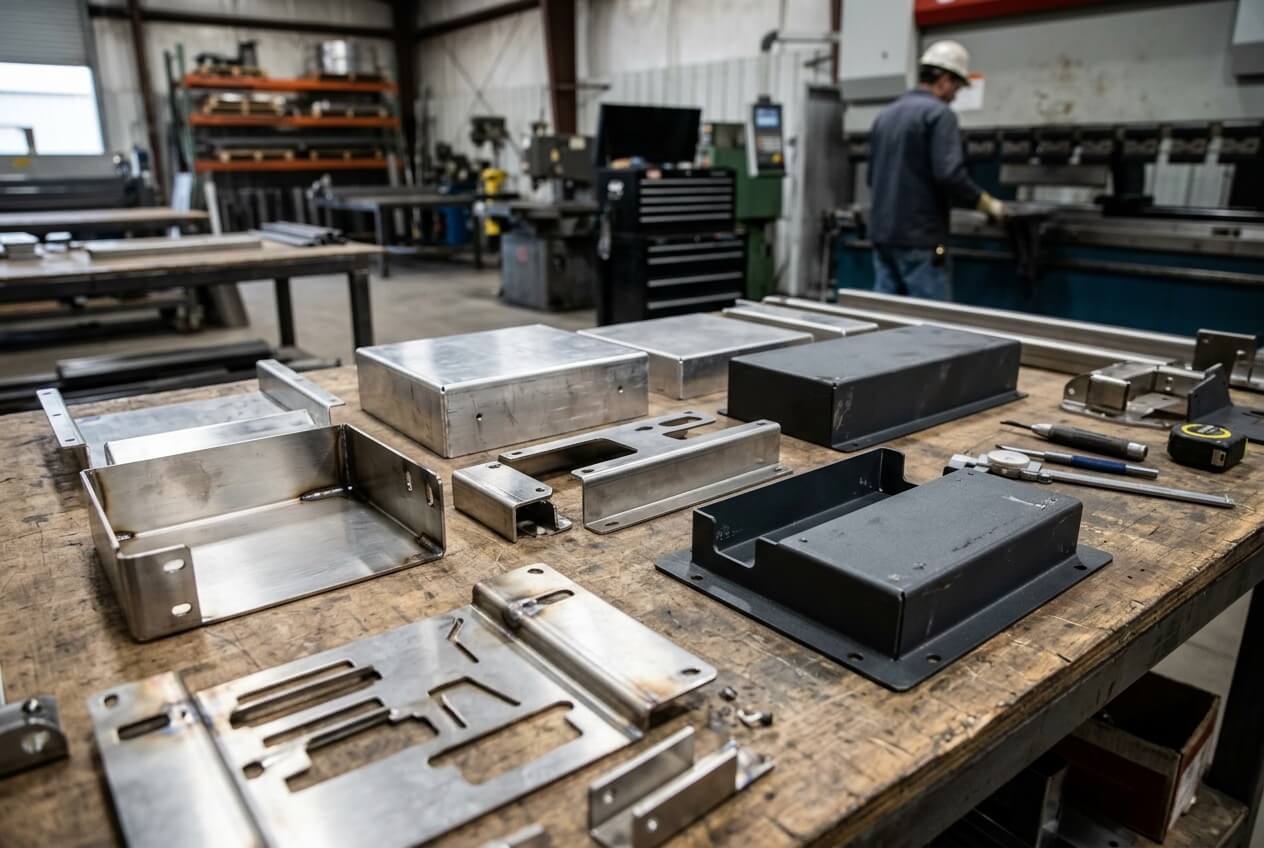
Buyers often ask for tempering and hardening steel when they really need one of three things: wear resistance, stable assembly fit, or longer service life. The problem is that those needs do not point to one single process route. A laser-cut bracket, a welded enclosure panel, and a small frame can all carry the same keyword in an RFQ, yet each one may need a different fabrication sequence. If the quote assumes the wrong sequence, the first sample can look acceptable while the batch later drifts into distortion, rework, or poor fit.
That is why the biggest procurement risk is not the furnace step itself. It is RFQ ambiguity before the quote is issued. When the drawing leaves room for interpretation, the supplier fills the gaps with its own assumptions about bend order, welding sequence, hardening depth, straightening allowance, hardness target, and finish cleanup. Those assumptions directly affect price, lead time, and whether the part still fits after heat treatment. A low quote can simply mean the supplier did not price the real route.
When the RFQ Says “Hardened Steel” but the Part Still Has to Bend, Weld, and Fit
The phrase “hardened steel” sounds specific, but it often hides the real decision. Does the part need full hardening, surface hardening, or only local wear protection? Should the supplier form the part first and heat treat later, or harden the blank and accept a more difficult bend? If the item is a bracket, latch plate, cabinet panel, or welded frame, that choice changes the process route before the machine even starts.
This is where quotes begin to split. One supplier prices a simple cut-and-form job and assumes the heat treatment is minor. Another includes fixture design, quench control, straightening, and hardness testing because the drawing shows a tight hole pattern or a visible face. Both suppliers may be correct from their own interpretation. They are not quoting the same part. The buyer only sees the gap after comparing numbers that were never built on the same assumptions.
The process order changes the quote
For sheet metal fabrication, order matters as much as material. If a flange is formed after hardening, it may crack or spring back unpredictably. If a tab is welded before hardening, the heat-affected zone can move the mating hole or twist a reference edge. If the supplier hardens the whole part to protect one wear point, the rest of the geometry may become harder to control. The quote should reflect the route, not just the word “hardened.”
A good RFQ makes that route visible. State whether the part must be fabricated first and then treated, or whether the supplier should propose a different sequence. If the buyer leaves that open, the supplier will choose the cheapest plausible path. That may work for a prototype and fail on a production order.
A small enclosure bracket can hide a big assumption
Consider a welded latch bracket for a cabinet door. The drawing may show one bend, one welded tab, and a hole that must line up with the strike. If the supplier assumes the bracket can be hardened after welding without extra straightening, the quote will look lean. But once the part comes out of heat treatment, the hole centerline can shift and the door gap can change. The buyer then pays for rework, not just heat treatment.
The procurement lesson is simple: if the part still has to move, align, or seal after hardening, the RFQ must say so. Otherwise, the supplier prices a part that can survive the furnace but not the assembly line.
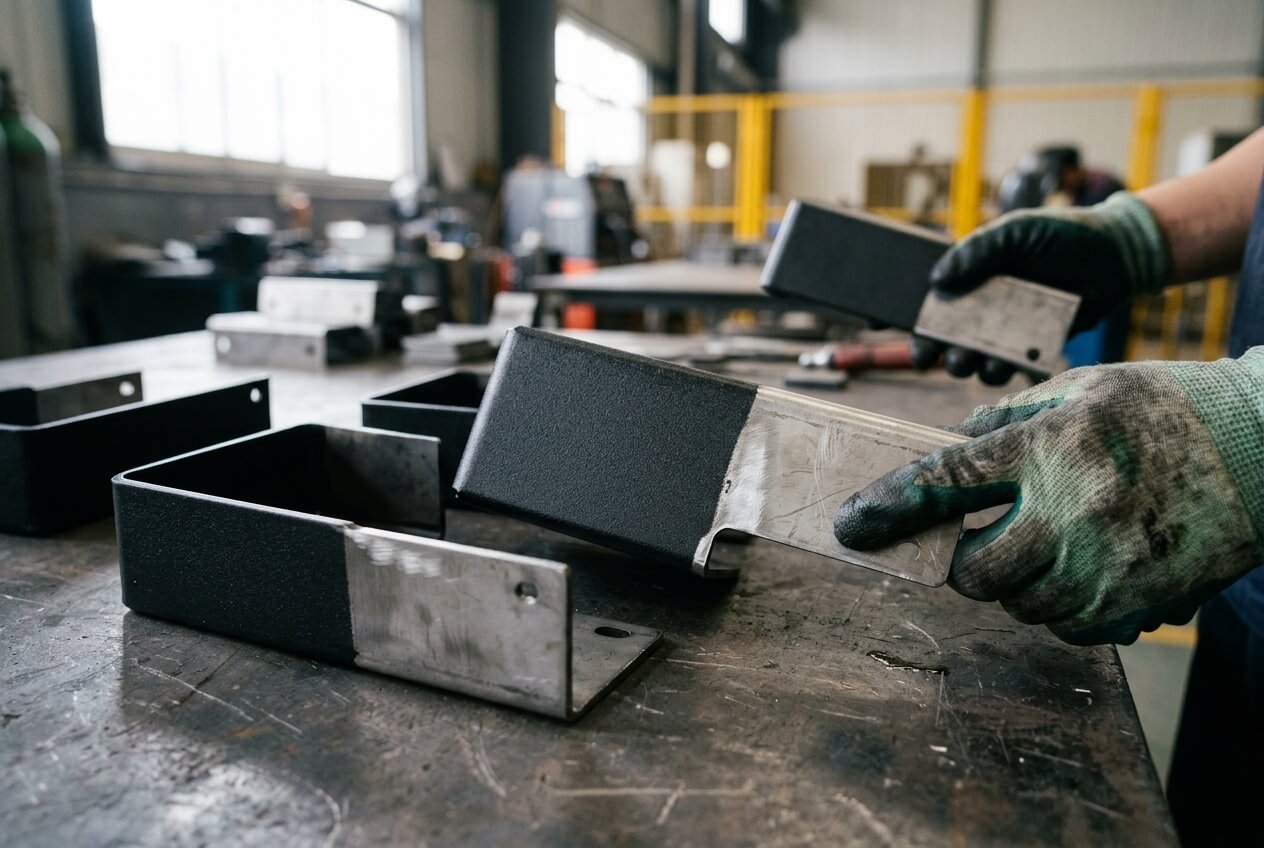
The Drawing Details That Decide Whether Hardening Is Practical or Expensive
Many buyers focus on material grade and forget the geometry that makes the part manufacturable. Thickness, bend radius, weld location, hole position, and the identity of the reference face all affect how a supplier handles tempering and hardening steel. A drawing that looks complete for laser cutting may still be incomplete for heat treatment because it does not identify the faces that must stay stable after the cycle.
That missing detail changes more than unit price. It changes how much fixturing the supplier needs, whether the part needs trial loading, whether the supplier can harden after welding, and how much straightening must be included. If the drawing shows several critical dimensions but never says which ones are checked after heat treatment, the quote will carry a hidden inspection assumption. That assumption often becomes a dispute when the first sample passes visually but fails during assembly.
Where the hidden cost usually starts
Hidden cost usually starts at the reference points. A supplier may need to hold one edge flat, protect one hole pattern, or keep one mounting face within a tighter window than the rest of the part. If the buyer never identifies those areas, the supplier may quote for generic inspection instead of the real control plan. The result can be low tooling cost up front and high rejection risk later.
This matters for welded assemblies as well. A frame can look simple on paper, but once the heat treatment moves a corner or changes the diagonal, the assembly may no longer accept hinges, latches, or hardware. The quote should reflect not just the part geometry, but the geometry that must survive after tempering and hardening steel.
What one production example usually reveals
Think about a small equipment frame with two bent rails and a cross brace. The buyer asks for harder material because the frame sees repeated contact during service. One supplier quotes the frame as if the bends are still forgiving after quenching. Another supplier adds a forming sequence before treatment and includes post-heat-treatment checking on the mounting faces. The second quote is higher, but it is pricing the real risk: distortion that affects assembly and causes field complaints.
That is why the RFQ should call out the drawing views that matter. If the part uses a cosmetic front face, a welded seam, or a mating flange, those features need direct instruction. Otherwise the supplier may optimize for hardness and lose the geometry the buyer actually needs.
Why Finish and Inspection Requirements Belong in the Quote, Not After the Sample
Finish often looks like a secondary issue until the part comes back from heat treatment. Scale, discoloration, coating adhesion, and scratch marks all become more visible once the part has gone through a thermal cycle. If the buyer wants powder coating, plating, polishing, or masking, those requirements need to be in the RFQ before the quote is locked. A supplier cannot guess which surfaces may show marks and which ones must stay clean.
Inspection creates the same problem. A hardness number means little if the buyer does not say where the test happens, how many points are measured, and what happens if one location falls outside the target. If the buyer also wants straightening, touch-up, or chase tapping after heat treatment, the supplier needs that scope before pricing. Otherwise, the quote may exclude the very operations that keep the part usable.
Finish changes the production route
A powder-coated enclosure panel illustrates the risk well. If the supplier coats before heat treatment, the coating can fail. If the supplier coats after heat treatment but does not know which surface is cosmetic, scale removal and masking become critical. If the buyer expects an invisible front face, the supplier may need extra finishing work that never appears in a vague RFQ. That extra work affects cost and schedule immediately.
Yishang can help review drawings at this stage when the buyer needs to decide whether the route should be cut, formed, welded, and then heat treated, or whether a different sequence will reduce rework. That review matters because finish and inspection are not postscript items. They shape the quote and the batch plan.
Inspection scope should match the risk
For fit-critical parts, the buyer should specify the measurement points that matter after tempering and hardening steel. That may be hole position, flatness at a mounting flange, or the relationship between two welded tabs. For cosmetic parts, the buyer should define what counts as acceptable discoloration or scale. For functional parts, the buyer should say whether minor straightening is allowed and who approves it. Without those decisions, suppliers may inspect the wrong feature and declare the part complete too early.
This is also where lead time gets distorted. A quote that excludes hardness reports, masking, or final inspection can look fast. It often becomes slow once those items are added later. When the buyer names them early, the schedule and price become more realistic.
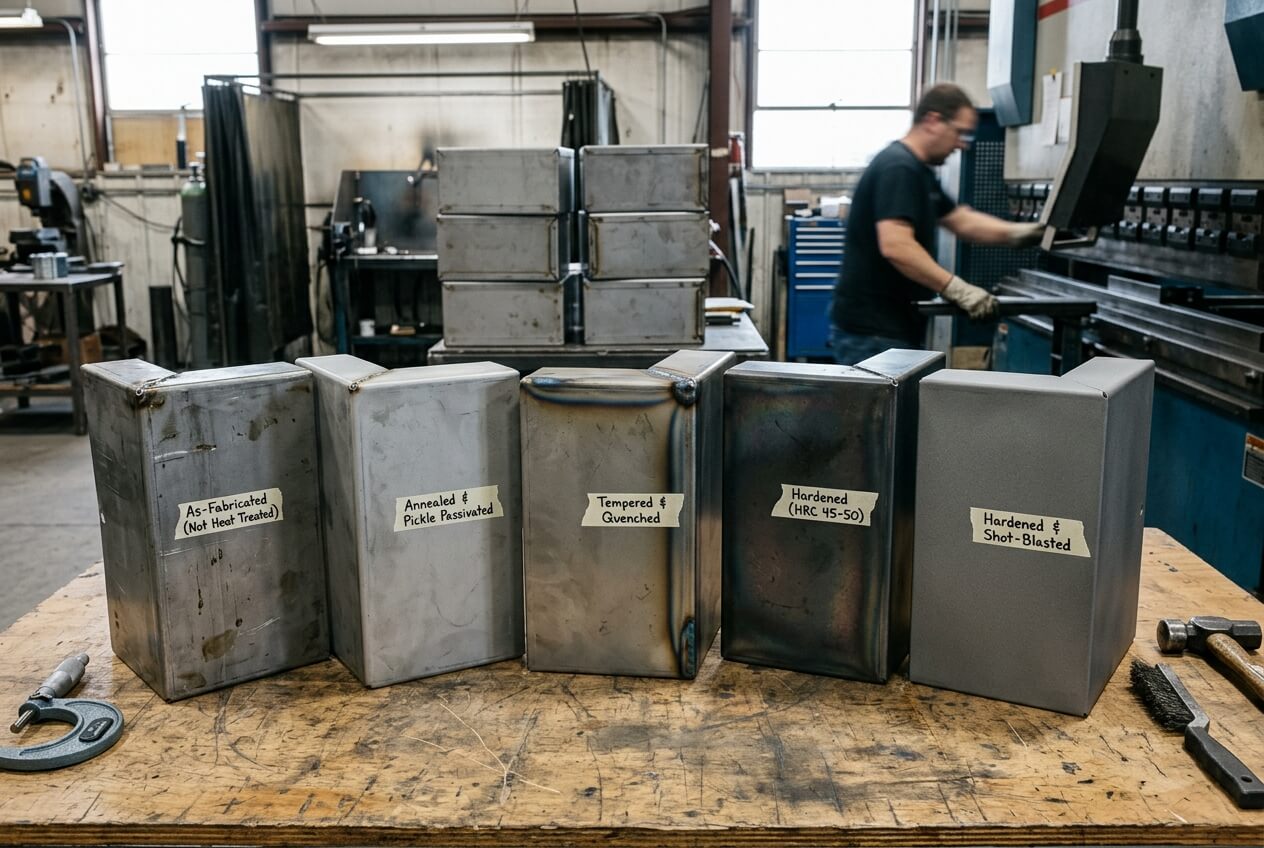
Why Prototype Approval Can Still Fail at Batch Scale
A first sample can pass and still hide a batch problem. Prototype parts are usually handled carefully. They may be loaded alone, adjusted by hand, and reviewed by the engineer who quoted the job. Batch parts do not get that treatment. They are packed differently, exposed to more variation in furnace loading, and more likely to show small differences in quench response. The quote may include that risk, or it may quietly ignore it.
That gap matters most in welded assemblies and repeated sheet metal parts. A bracket that fits once may not fit fifty times if the load pattern changes. A door frame that stays flat on a sample run may move when the supplier nests parts more tightly. If the buyer approves only the first article hardness and never asks how the batch will be controlled, the real risk appears after the order is already committed.
Prototype and batch are not the same control problem
A prototype often proves only that the geometry can survive one route. Batch production proves whether that route can repeat. The buyer should ask what stays constant across the run: steel grade, quench medium, tempering time, fixture position, and inspection point. If any of those variables can shift without notice, the batch quote carries a hidden production risk.
That is especially true when the part is part of an assembly. A hardened hinge plate may pass a standalone inspection and still create trouble when mounted to a cabinet. The same is true for a welded support frame that must align with other hardware. The real question is not whether the sample hardened correctly. It is whether the supplier can keep the fit stable while running the full lot.
A second project example shows the difference
Imagine a small machine guard made from formed sheet metal with one wear tab. The first prototype fits well after hardening. On the batch order, however, the supplier packs more parts per load and the guard warps just enough to change the screw alignment. The customer sees a mounting issue, but the original mistake was earlier. The RFQ never defined batch loading expectations, so the supplier quoted the prototype route instead of the production route.
That is why buyers should treat prototype approval as a checkpoint, not a guarantee. The sample can confirm the concept. It cannot remove the need for batch control.
What Buyers Should Send Before Comparing Quotes for Tempering and Hardening Steel
If the goal is a fair quote, the RFQ needs enough detail for the supplier to price the real route. The drawing should identify material grade, part quantity, tolerance priorities, finish expectations, and any assembly interfaces that matter after heat treatment. It should also show whether the part is a one-off prototype or a batch order, because the cost drivers are different. A supplier can price drawing-based work only when the drawing tells the supplier which risks are acceptable and which are not.
The most useful RFQ package is short but specific. Include the drawing files, the material requirement, the target quantity, the tolerance zones that matter most, the finish expectations, and photos or sample parts if the geometry is already in use. If the part is an enclosure, bracket, frame, or welded assembly, add the mating part or at least a note on how the part fits in the final product. That context helps the supplier judge whether tempering and hardening steel is the right route at all.
If you want a manufacturability check before quoting, send the same package to Yishang for drawing review, prototyping, finishing coordination, and assembly-fit feedback. The point is not to ask for a generic price. The point is to compare quotes that were built on the same assumptions.
Before you release the RFQ, make sure it answers these questions: what the part is made from, what must stay flat or aligned after heat treatment, what finish is acceptable, what quantity defines the run, and where the part will be checked in assembly. When those items are clear, the quote is easier to compare and the batch risk drops sharply.
Frequently Asked Questions
Why do quotes for tempering and hardening steel sheet metal parts vary so much?
They vary because suppliers often assume different process routes. One may quote cutting and forming only, while another includes fixturing, quenching, straightening, and hardness testing. If the RFQ does not define the route, the quotes are not truly comparable.
What should a buyer define first when asking for hardened sheet metal parts?
Start with the functional risk. State whether the part needs wear resistance, assembly fit, or both. Then define the material, the critical dimensions after heat treatment, and whether bending or welding happens before or after hardening.
Can a prototype pass and still fail in batch production?
Yes. A prototype is often loaded alone and handled carefully. Batch parts see different packing, orientation, and quench exposure. That can change flatness, hole position, and hardness consistency even when the sample looked correct.
How do finish requirements affect the heat-treatment quote?
Finish affects the route and the cost. Powder coating, masking, scale removal, polishing, and touch-up all need to be planned around the thermal cycle. If the buyer names those expectations early, the supplier can price the work more accurately.
What should buyers include when they send drawings for review?
Send the drawings, material requirements, quantities, tolerances, finish expectations, and any assembly notes. If the part fits into an enclosure, bracket set, frame, or welded assembly, include photos or related parts so the supplier can check fit risk.
When should a buyer ask Yishang for input on the process route?
Ask before the quote is fixed, especially if the part may need forming, welding, finishing, or heat treatment in a specific order. Yishang can review the drawing and help identify whether the route should be adjusted before batch production starts.