
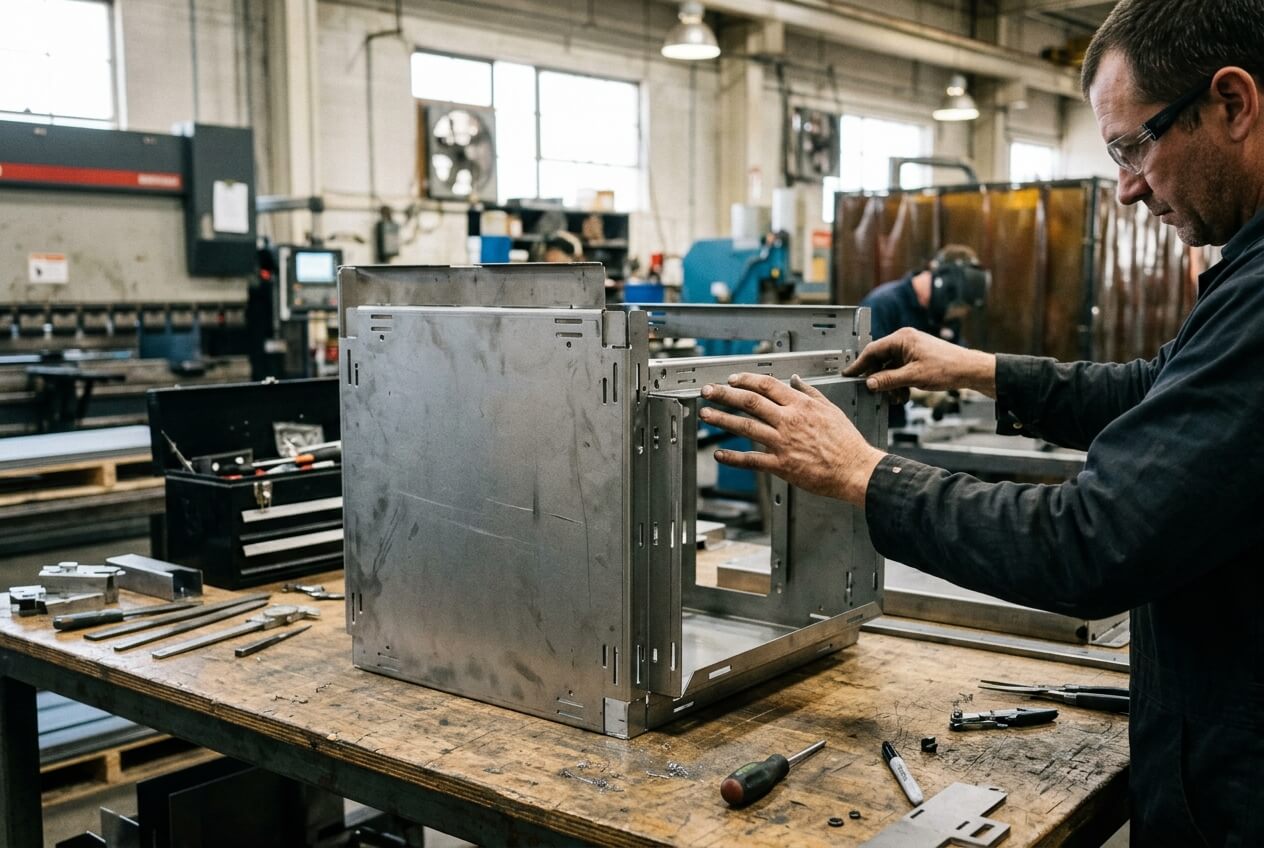
An overseas buyer sends out an RFQ for a powder-coated enclosure, two tempered steel brackets, a hinge reinforcement, and a removable service panel. The drawing package looks complete. Three suppliers quote the same files, and the lowest price wins the first round.
The problem shows up later. The brackets fit on their own, but the door needs force to close. A few holes drift after coating. One tempered steel reinforcement cracks near a bend during adjustment. Nothing was random. The RFQ left the assembly consequence undefined, so each supplier filled the gap with a different assumption.
That is the real procurement risk with tempering steel in sheet metal fabrication: a part can look correct on paper and still fail in the final assembly. If the buyer does not define how the part must flex, locate, fasten, or survive coating and welding, the quote will price the wrong route.
This article focuses on that risk spine. It shows where the assumption starts, how it changes the quote, and what buyers should lock down before they compare suppliers or approve a prototype. The examples are practical for custom sheet metal fabrication, sheet metal parts, metal enclosures, brackets, frames, and welded assemblies.
When Tempering Steel Is Only a Material Note, the Supplier Has to Guess the Fit Requirement
Many RFQs mention tempering steel as if the material line alone tells the full story. It does not. Tempering changes hardness, springback, stiffness, and bend forgiveness. That means the same geometry can behave very differently depending on whether the part is mild steel, pre-tempered stock, or heat-treated after forming.
If the drawing only says “tempered steel bracket,” the supplier still has to guess the function. Does the part need to act like a rigid support, a wear plate, a spring clip, or a controlled-flex installation bracket? Each one calls for a different manufacturing route. One route may hold load well but crack at the bend. Another may bend cleanly but lose the retention force the assembly depends on.
What the drawing often leaves unsaid
The drawing may show length, hole size, and bend angle. It may not show the actual assembly force, the acceptable springback, or the amount of installation adjustment allowed on site. That gap matters. A hardened or tempered part can resist correction after bending. It may also react badly if a technician tries to force-fit it against a welded frame or a powder-coated panel.
A supplier quoting from the flat pattern may assume the part only needs to look right. A buyer may assume the part must still flex into place during assembly. Those two assumptions produce very different costs, tooling choices, and defect risks. When the part is part of a hinge reinforcement, latch plate, cabinet rail, or support bracket, the error shows up as a closing problem, not a cosmetic problem.
Short project example
Consider a control cabinet that uses a tempered steel latch plate behind a front door. One supplier quotes pre-tempered stock and minimal forming. Another quotes annealed material with a later hardening step. Both can deliver a plate with the same outer dimensions. Only one may produce the right balance of stiffness and flex after coating. If the RFQ never states the required closing force or bend sequence, the price comparison hides the real difference.
Yishang and other drawing-review suppliers should be asked to confirm the functional role before the quote is frozen. That is more useful than simply asking whether the part is manufacturable. The important question is whether the chosen route still works in the assembly.
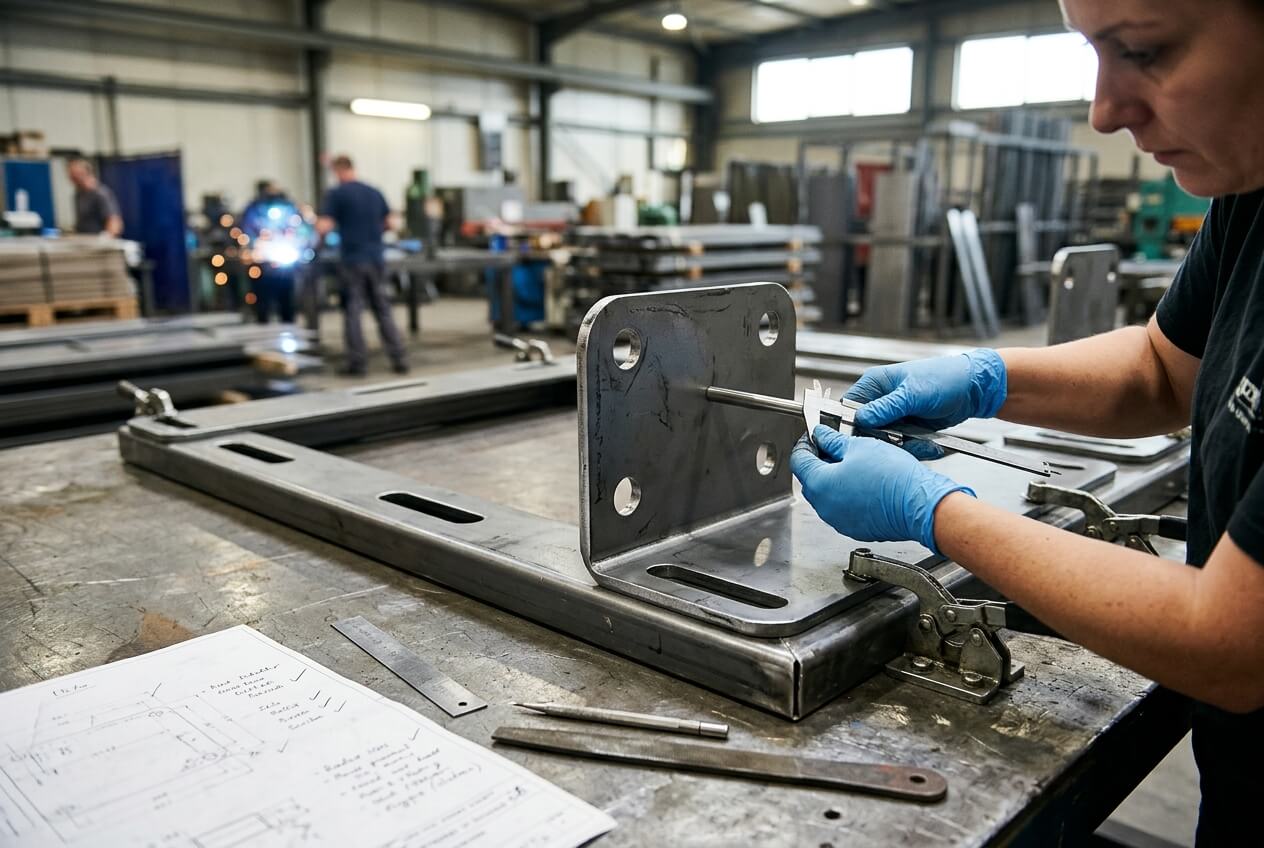
Why Three Quotes Can Price Three Different Manufacturing Routes for the Same Part Number
Unit price comparisons often fail because suppliers are not quoting the same process. A low price can come from a simpler route, not a better one. That happens often when tempering steel appears in the drawing but the hardness range, bend sequence, or post-forming treatment is not defined.
One supplier may assume standard sheet metal cutting and bending. Another may price special tooling for a small bend radius. A third may include heat treatment, coating masking, and post-process inspection. All three quotes can look similar on a spreadsheet, yet the risk behind them is very different.
The chain is predictable. The RFQ leaves room for interpretation. The supplier fills the gap based on stock, habit, or margin. The quote then looks competitive because it does not include all of the controls the assembly actually needs. Later, the buyer sees cracking, poor fit, or rework after coating. By then, the quote has already become a production problem.
Where hidden assumptions usually sit
Assumptions often hide in bend radius, hardness range, and secondary processing. A supplier may choose a tighter bend radius than the material condition can tolerate. Another may assume the part can be corrected after forming, even though tempering steel resists rework. A third may ignore the effect of powder coating on hole clearance and mating faces.
Welding adds another layer. Heat from a weld can distort nearby sheet metal, and hardened material can react badly to local thermal input. If the bracket is meant to land inside a frame or align to a door latch, that distortion becomes a fit issue. The part may still pass a single-piece inspection and still fail during assembly.
Lead time also shifts with the route. A quote that skips heat treatment, masking, or trial fit may look fast. But if the buyer later discovers that the part needs those steps, the project loses more time in rework than it would have spent in planning. Procurement should compare the complete route, not only the first line price.
Short project example
A machine guard frame used two tempered steel corner brackets. One supplier assumed the brackets only needed laser cutting and bending. Another included fixture welding and post-coating check of the hole centers. The first quote was cheaper. The second quote was the one that could actually keep the frame square after coating and assembly. Without the routing details, the buyer would have compared the wrong numbers.
That is why a useful RFQ asks suppliers to state assumptions directly. If the route is different, the price is different for a reason. Buyers should want that difference visible before award, not after prototype approval.
Why Assembly Fit Fails After Coating, Welding, and Hole Correction Stack Together
Many sheet metal failures do not come from one bad dimension. They come from several small variations stacking up. A panel is within tolerance. A bracket is within tolerance. A weld shifts a frame slightly. Powder coating adds thickness at a hole edge. The assembly then misses its target by just enough to create force, drag, or misalignment.
Tempering steel makes this harder to absorb. A mild steel part may tolerate a small manual correction during installation. A tempered part may not. If the design depends on a worker pushing the bracket into place or opening a hole after coating, the buyer has already built rework into the project.
Where the stack-up usually hurts first
The first failures often show up at hinge lines, latch points, threaded holes, and grounding contacts. Those are the places where a small offset matters. A door that closes with even pressure one day can rub or bind the next if coating thickness, weld distortion, or bend springback changes from batch to batch.
For a metal enclosure, the critical issue is rarely the full perimeter dimension. It is the relationship between the mating parts. A door panel may be acceptable alone. A hinge reinforcement may also pass. But if the hinge axis, latch plate, and powder-coated edge are not controlled together, the door may not close cleanly. The assembly then slows down the line, increases rejection risk, or forces field adjustment.
For welded assemblies, the same problem appears at the frame level. A bracket can be cut accurately and still land in the wrong place after welding heat moves the base structure. If the drawing does not identify the datum surfaces that control fit, the supplier may inspect the wrong dimensions and miss the real issue.
What buyers should lock before the quote closes
Buyers do not need to micromanage every tolerance. They do need to identify the few interfaces that determine whether the product works. That means marking the holes, bends, or surfaces that control assembly. It also means stating which dimensions must be checked after coating, not only before it.
If a powder-coated cover must slide over a frame, define the mating edges and any masking requirement. If a tempered steel bracket must align with threaded inserts, identify the hole pattern that controls that fit. If the part needs on-site adjustment, say how much adjustment is acceptable and whether the part may crack or lose function during that adjustment.
This is where a manufacturer like Yishang can add value during drawing review. The useful discussion is not about more paperwork. It is about which features matter most when the parts are finally assembled.
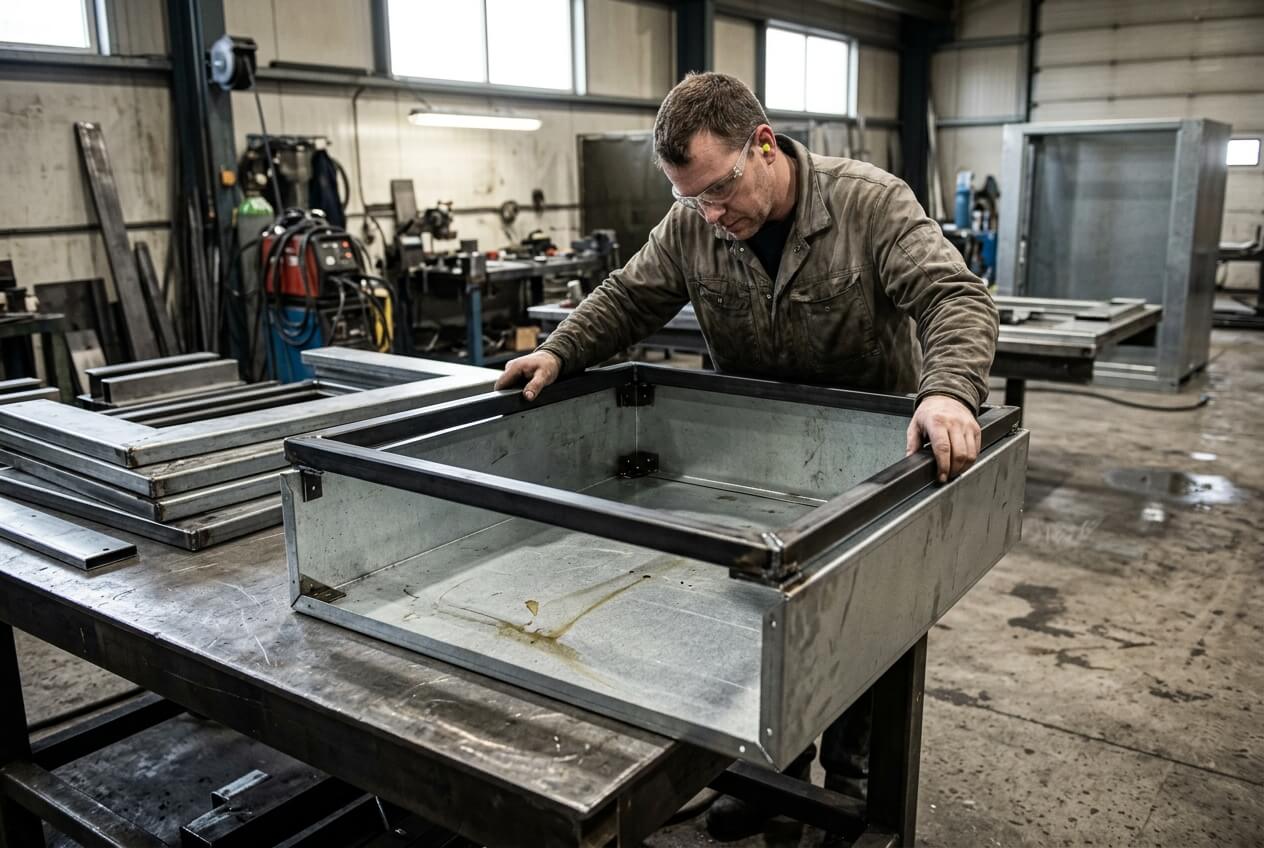
Why Prototype Approval Can Hide a Batch Problem in Tempered Steel Parts
A prototype can look successful for the wrong reason. A technician may hand-fit the sample. A fitter may slightly open a hole. A coating line may spend extra time on one part. The buyer sees a working sample and assumes production will repeat it. In batch production, that assumption often breaks.
Tempered steel increases that risk because material lot variation matters more. If the first sample uses one hardness band and the production lot lands at a slightly different condition, the part can behave differently even when the dimensions match. Springback changes. Crack risk changes. Retention force changes. The assembly outcome changes with it.
The same thing happens when the prototype is approved before the team records what made it pass. If the fit came from a fixture tweak, a hand-opened hole, or a special coating mask, that detail must move into the production control plan. Otherwise, the approved sample becomes a one-off success instead of a repeatable standard.
What a useful prototype record should capture
The prototype record should show which dimensions were checked against mating parts, where force was applied, and whether any manual correction occurred. It should also note if the sample was made from a different stock lot, a different hardness range, or a different coating setup. Those details matter more than a simple approved/rejected note.
For a welded cabinet frame, the first article should confirm door swing, latch engagement, and panel gap after coating. For a spring-like tempered bracket, it should confirm retention force and repeatable deflection. For a service panel, it should confirm screw start, thread engagement, and the final clearance at the edge. If those checks are not repeated in batch production, the buyer is still exposed.
Prototype approval should therefore be treated as a production-control checkpoint. It is the moment to freeze the route, not just to approve the sample. Buyers who skip that step often find that the batch quote was cheaper because the supplier never priced repeatability.
What Buyers Should Freeze Before Comparing Quotes or Releasing Production
By the time the quotes arrive, the buyer should already know which assembly risks matter most. If that information is still vague, the cheapest quote will usually win for the wrong reason. The supplier may have made fewer assumptions only because it excluded the operations needed for a reliable fit.
Start with the function. Does the tempered steel part need to hold, flex, wear, or reinforce? Then define the material condition if it matters, including the grade or hardness range. If the part will be bent, say whether it bends before or after heat treatment. If the part needs coating, specify which holes, slots, or surfaces must stay clear. If the part must mate to a welded frame, identify the datum points that control the final fit.
Do not bury those details in general notes. Put them where the supplier can see them during quoting. That helps the fabricator judge bend feasibility, coating buildup, fixturing, and inspection. It also makes price differences easier to explain because the suppliers are quoting the same scope.
For buyers who need a quick way to reduce risk, the best RFQ package is often a drawing set plus assembly views, the required quantity, tolerance callouts on the critical features, finish expectations, and any sample or photo that shows the fit condition. That package gives the shop enough context to quote the correct route the first time.
If your project includes sheet metal parts, metal enclosures, brackets, frames, or welded assemblies with tempering steel, send the drawing package early. Yishang can review manufacturability, finish impact, and assembly fit before you lock the RFQ or approve the prototype. A better quote starts with a clearer request.
Practical next step: send your drawings, material requirements, quantities, tolerances, and finish expectations together, along with any assembly photos or mating-part views that show where the fit can fail.
Frequently Asked Questions
Why can tempering steel create assembly risk even when the part dimensions are correct?
Tempering steel changes hardness and springback, so a part can measure correctly but still resist installation or flex too little in service. The risk rises when the assembly depends on hole alignment, controlled deflection, or a specific closing force. Buyers should define the functional fit, not just the part shape.
What should an RFQ say if a tempered steel part must work as a spring or flexing bracket?
The RFQ should state the required function, the expected deflection or retention behavior, and any hardness or material condition that matters. If the bend sequence is important, note whether forming happens before or after heat treatment. That helps the supplier choose a route that matches the actual use.
How do powder coating and coating thickness affect metal enclosure fit?
Powder coating adds thickness to edges, holes, and mating faces. That can tighten screw fit, reduce clearance, or shift door gaps after finishing. Buyers should mark the surfaces that need masking or post-coating inspection, especially on enclosures, panels, hinge plates, and grounding points.
Why does a prototype sometimes pass while batch production fails?
A prototype often gets manual help. A fitter may adjust a hole, force a bend, or spend extra time aligning the sample. Batch production follows the normal process, so small differences in hardness, weld distortion, or coating buildup show up. The prototype record should capture what was adjusted so production can repeat it.
What should buyers compare when supplier quotes for tempered steel parts look very different?
Compare the process route, not only the unit price. Check whether each supplier included heat treatment, bend feasibility review, coating masking, fixture control, and post-process inspection. If one quote is cheaper because it skipped those steps, the lower price may create the higher total cost later.
How can Yishang help before production starts?
Yishang can review drawings, assembly views, material notes, finish expectations, and fit-critical features before quotation or prototype approval. That review helps expose hidden assumptions early, especially when tempered steel parts must align with enclosures, brackets, frames, or welded assemblies.