
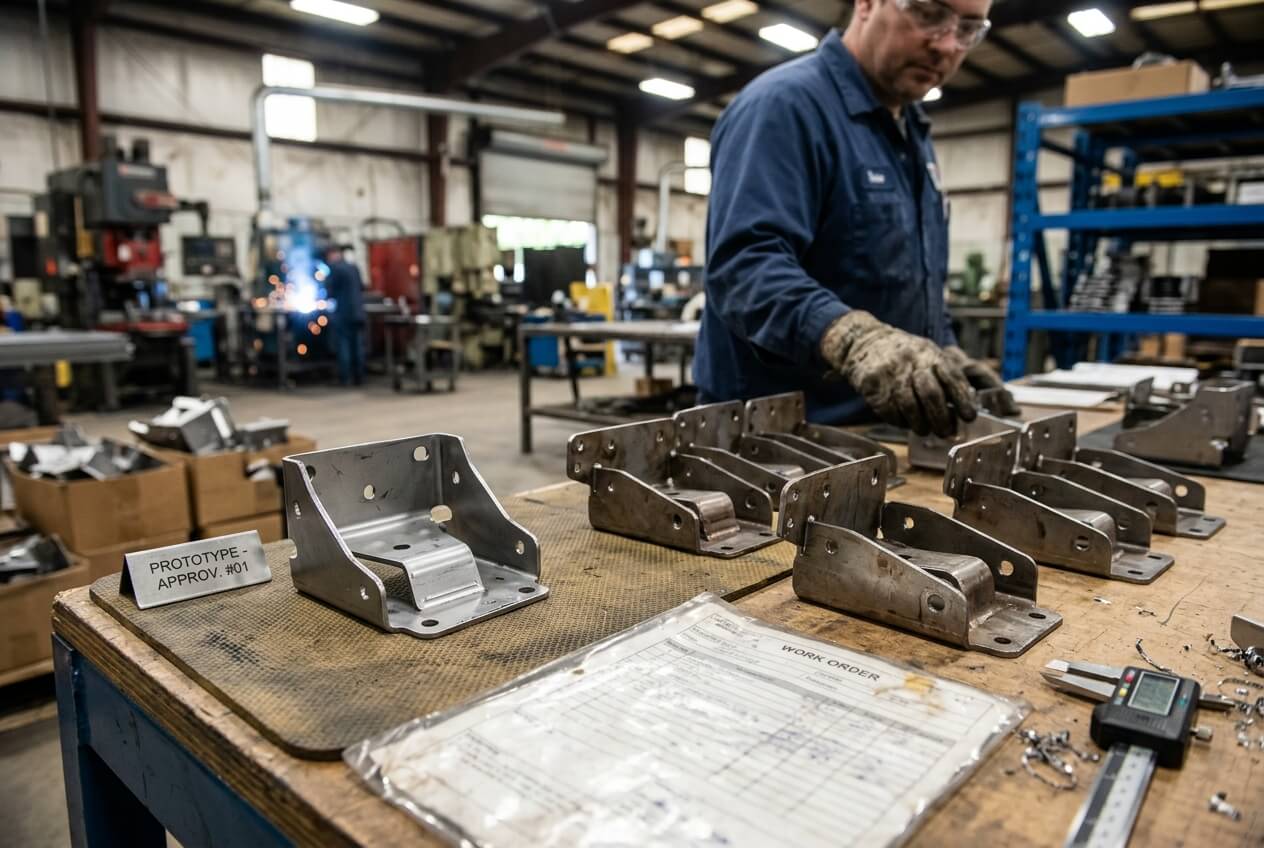
An OEM approves a black coated control enclosure for an export build. The prototype looks clean. The hinge opens without scraping. The mounting holes line up during trial assembly.
Three weeks later, the production batch creates a different problem. Coating builds up near the hinge. Doors look slightly different from side panels. Several threaded holes need retapping before the line can use the enclosures. The buyer approved the sample, yet the batch still delays assembly.
This failure usually starts before coating. It starts when the RFQ treats thermoplastic powder coating as a color note instead of a controlled production condition. A sample can receive extra cleaning, special hanging, careful masking, or slower inspection. A 300-piece batch cannot rely on the same informal handling unless the buyer and supplier define it before quoting.
The coating itself may suit the application well. Thermoplastic powder coating can provide thicker protection, strong impact resistance, and corrosion performance for sheet metal enclosures, brackets, frames, cabinets, display racks, and welded assemblies. The procurement risk is narrower: prototype approval can hide the process assumptions that decide whether the batch will fit, match, and pass inspection.
An Approved Sample Can Hide Production Conditions That Were Never Quoted
Many buyers approve a coated prototype as if it proves the batch process. That approval feels practical under schedule pressure. It also creates risk because a prototype often receives handling that the quotation does not include.
A supplier may hand clean one welded bracket before coating. A technician may mask threads more carefully than the drawing requires. The sample may hang alone in the oven, with open access to all faces. During batch production, parts move on racks, share oven space, and follow a faster inspection routine. None of those changes look dramatic on paper. Together, they can change coating thickness, gloss, edge coverage, and assembly fit.
When the sample method changes at batch scale
Thermoplastic powder coating may use different application routes depending on the part, coating system, thickness target, and supplier setup. A low-volume prototype may suit electrostatic spray because the part is easy to handle. A production run may need different hanging points, denser rack loading, or fixtures that improve throughput. The buyer sees the same color. The part experiences a different process.
Consider an outdoor sensor housing with a gasketed flange. The prototype shows smooth coverage and passes a quick seal check. In batch production, several housings hang per rack to reduce coating cost and lead time. The new angle adds coating near the flange holes. The gasket still fits, but compression becomes uneven, and the housing fails a later leak check.
The consequence chain is direct. The RFQ lacks process controls, so the quote assumes an efficient batch method. Production then changes hanging density, masking time, and inspection speed. The final part differs from the approved sample in functional areas. Buyers should confirm whether the coating method, powder identity, pretreatment, thickness range, masking method, and inspection points will match the sample before releasing the batch.
Loose Finish Notes Make Thermoplastic Powder Coating Quotes Look Comparable When They Are Not
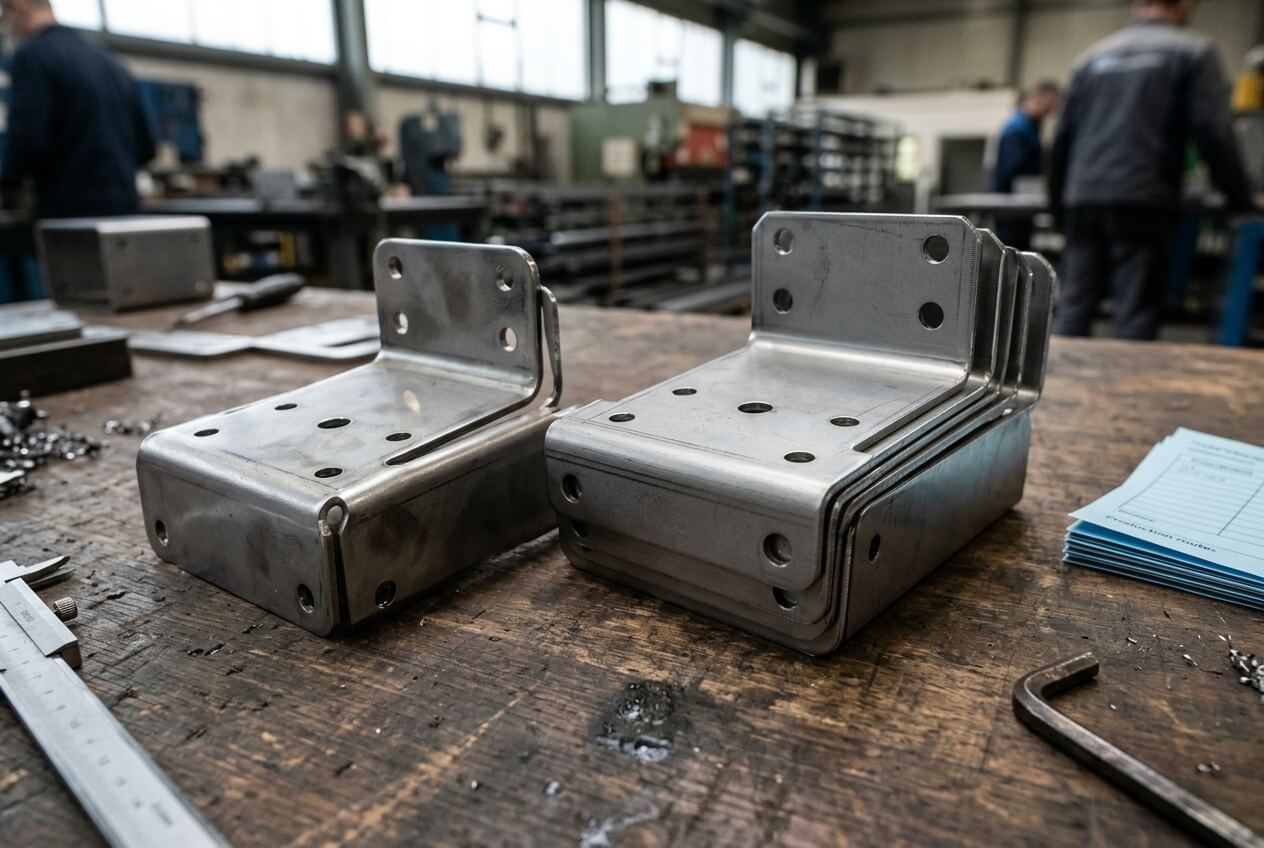
A vague RFQ can make a cheaper quote look equal to a controlled quote. Both suppliers may write “thermoplastic powder coating” on the offer. Their assumptions may still differ on resin type, pretreatment, film build, masking labor, cosmetic limits, test evidence, and post-coating checks.
This matters because procurement teams often compare unit price before they compare finish assumptions. One quote may include plugged threads, thickness checks at hinge areas, and controlled color matching across visible panels. Another may include only a general black coating over fabricated metal. The second quote looks lower until assembly rework, sorting, or shipment delays appear.
Material and finish assumptions affect the same risk
The base material also affects the coating plan. Carbon steel cabinets, galvanized brackets, aluminum panels, and welded tube frames can require different pretreatment and cleaning decisions. Welded assemblies may trap oil or blasting media. Galvanized parts may need careful surface preparation. Aluminum may create different adhesion concerns. If the RFQ only states the metal grade and color, the supplier must guess how much pretreatment and inspection the project needs.
Coating family creates another comparison problem. Some buyers use “thermoplastic” when they mean “durable black powder coating.” Suppliers may then quote different coating systems. Thermoplastic options such as nylon, PVC, or fluoropolymer-based coatings do not behave like common thermoset epoxy, polyester, epoxy-polyester, or polyurethane powders. The best choice depends on exposure, thickness needs, impact, chemical contact, and appearance limits.
A retail display rack shows the cost risk clearly. The prototype uses a thick protective coating on customer-facing bars and survives handling tests. The RFQ for batch production only says “black powder coat, sample approved.” One supplier prices general industrial coating. Another includes thicker build, tighter gloss control, and extra inspection on front bars. Without a defined finish requirement, purchasing may choose the lower quote and inherit a store-level complaint later.
Yishang’s RFQ review for custom sheet metal parts often focuses on these hidden assumptions before price comparison. The useful question is not only whether a supplier can coat the part. Buyers need to know which coating build, pretreatment, masking, and inspection standard the supplier has priced.
Coating Build Turns Finished Dimensions Into Assembly Risk
A drawing can fully define the raw metal part and still fail to define the finished part. This gap causes many thermoplastic powder coating disputes. Laser cutting, CNC punching, bending, and welding may meet the print. After coating, the enclosure door binds, the bracket will not slide into a frame, or the grounding point loses contact.
Coating thickness works like a dimensional condition. It reduces holes. It adds build to both sides of a sliding joint. It changes door gaps, hinge clearances, gasket seats, and threaded features. Thicker protective coating can help corrosion resistance, but it can also remove the clearance that the mechanical design depends on.
Tolerances must reflect the coated condition
Buyers often send a 2D drawing that controls metal dimensions before finish. The supplier quotes fabrication and coating as separate operations. During coating, the operator protects appearance but may not know which holes locate the assembly, which slots guide movement, or which pads need electrical conductivity. The batch then reaches assembly with coated features that need scraping, reaming, or retapping.
An electronics enclosure provides a common example. The part includes PEM nuts, hinge pins, ventilation perforations, a grounding stud, and a removable cover. If the drawing does not show no-coat zones around grounding points, the coating can insulate the contact area. If threaded inserts are not plugged, screws may bind. If the door gap is tight before finish, coating on both mating edges can create rubbing after assembly.
Small brackets can create the same problem at lower cost but higher volume. A U-shaped bracket may slide into a welded frame slot during final assembly. The prototype fits because the operator tests it slowly. In batch production, coating build varies at the bracket legs. Operators must push parts into place, scratching the finish and slowing the line. The original issue was not poor assembly. The RFQ never defined maximum coating build at the sliding surfaces.
Buyers should mark threads, PEM hardware, grounding pads, bearing surfaces, gasket seats, hinge zones, and close-clearance holes on the drawing. They should also identify tolerances that apply after coating, not only before finishing. A coated-part trial assembly can reduce risk when production speed, sealing, or electrical contact matters.
Batch Fixtures, Edges, Welds, and A-Surfaces Decide Whether the Sample Still Represents Production
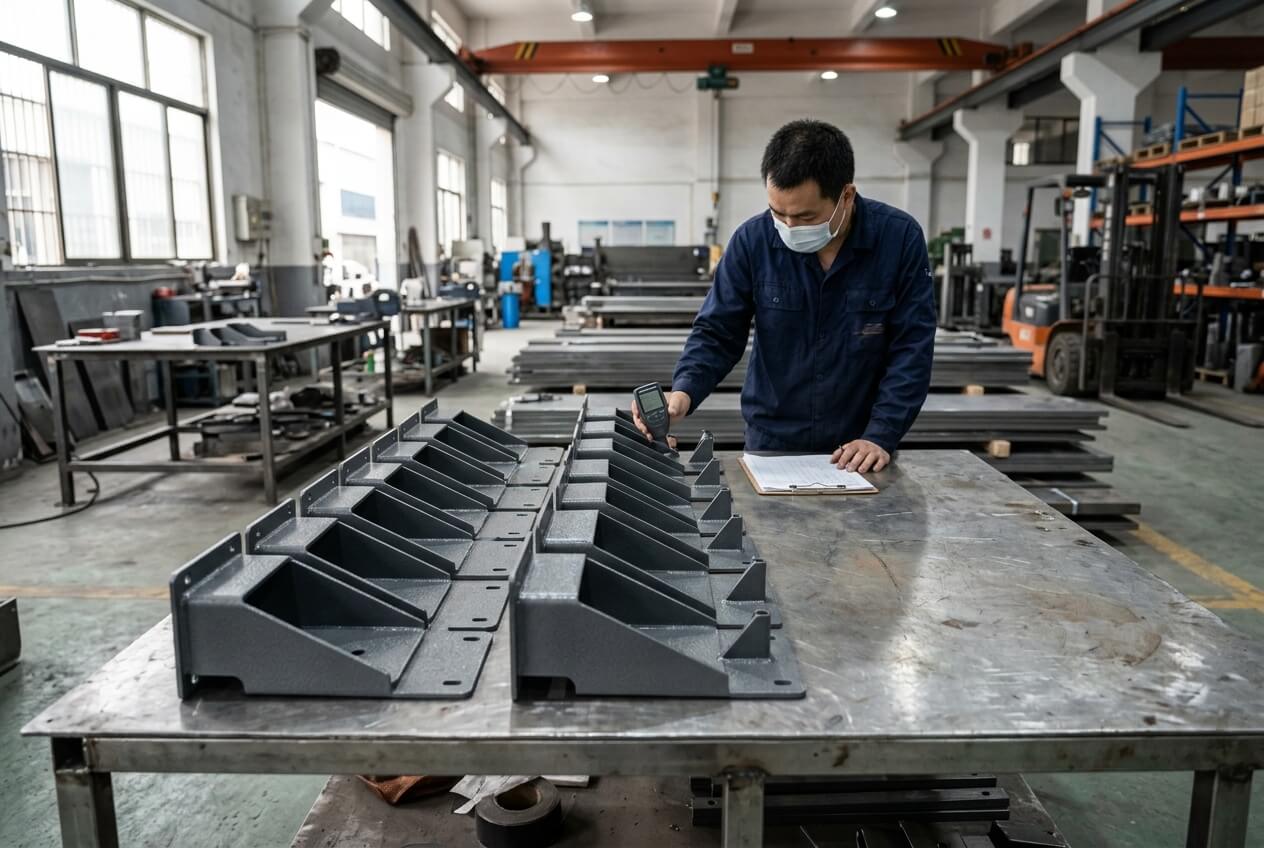
Batch rejection rarely affects every square centimeter. It usually appears at local risk points: sharp edges, welded seams, fixture marks, threaded holes, or visible front faces. These areas decide whether the approved sample still represents the production batch.
Sharp edges create a coating durability risk. Laser cut parts can look precise, but sharp corners and untreated burrs reduce coverage at edges. Thermoplastic powder coating may provide a thicker protective layer, yet it still needs suitable edge condition and pretreatment. If the drawing does not call out deburring, edge radius, or corrosion-critical edges, the supplier may quote a basic edge break while the buyer expects outdoor durability.
Weld finishing changes after coating
Welded assemblies add another repeatability challenge. Weld spatter, grinding waves, undercut, heat tint, and trapped residue can affect both appearance and adhesion. A welded machine guard frame may look acceptable as raw metal. After coating, grinding waves can appear on the front rail, while residue near tube intersections creates pinholes.
Prototype handling can hide this issue. A technician may spend extra time cleaning one weldment, polishing one visible seam, or positioning one frame for better drainage. Batch production needs a defined grinding standard, cleaning route, drain orientation, and inspection focus. Otherwise, the first batch reveals variation that the sample never showed.
Visible surfaces need their own acceptance limits
Cosmetic expectations also need control. An industrial cabinet may have one front door that the end customer sees every day. A display rack may expose every front bar under store lighting. A control enclosure may hide the back and bottom surfaces inside equipment. Treating all faces as equal creates confusion. It can overprice hidden areas and under-control customer-facing areas.
The RFQ should separate A-surfaces from hidden surfaces. It should state acceptable fixture marks, color variation, gloss range, orange peel limits, and whether doors, covers, and side panels must match after assembly. This does not turn the drawing into a cosmetics manual. It tells the supplier where the batch must match the approved sample and where normal industrial finish remains acceptable.
Lead time also connects to this risk. Extra masking, edge preparation, weld dressing, controlled racking, and assembly checks require planning. If buyers add these controls after the first failed batch, the project loses more time than it would have spent during RFQ clarification.
Repeat Orders Drift When the Approved Finish Is Stored Only as a Sample Photo
A first batch may pass because everyone watches it closely. Six months later, the repeat order can drift. The drawing, part number, and color name remain unchanged, yet the coating lot, pretreatment route, hanging method, masking practice, and inspection records may differ.
For thermoplastic powder coating, the approved sample should become a production control package. Useful records include powder manufacturer or resin type, color code, gloss range, thickness readings at agreed locations, pretreatment method, masking photos, fixture position, and any coated-part assembly results. These records protect future orders from memory-based production.
Multi-part assemblies need this control more than single parts. A metal cabinet may include a frame, door, rear cover, mounting plate, and internal brackets. The buyer may later order only spare doors. Without finish records, replacement doors may not match the original cabinets. A small missing detail then becomes a customer service problem.
Supplier communication should focus on controlled changes. A new powder supplier, color batch, pretreatment process, masking method, or fixture position may have no effect on one bracket and a large effect on a visible enclosure door. Buyers should agree which changes require approval before production starts.
Yishang can review drawings, prototype notes, material requirements, tolerances, finish expectations, and assembly points before batch release. That review should not aim to add unnecessary tests. It should identify the few coating variables that can change fit, appearance, corrosion performance, cost, or lead time between sample approval and production.
If you are moving a thermoplastic powder coated sample into batch sheet metal production, send Yishang your drawings, material requirements, quantities, tolerances, finish expectations, approved sample photos, masking notes, and assembly concerns. The review can check where coating build, fixtures, weld finishing, holes, grounding points, or color matching may affect the production batch before you release the RFQ or purchase order. Start with the information you already have through Yishang.
Frequently Asked Questions
Why can thermoplastic powder coating pass prototype approval but fail in batch production?
A prototype may use special cleaning, slow masking, a small powder lot, or a different hanging position. Batch production changes rack density, oven loading, inspection speed, and sometimes the application method. Buyers should approve both the appearance and the production conditions that created it.
What should an RFQ define beyond the color name?
The RFQ should define coating type, target thickness range, pretreatment expectation, no-coat zones, visible A-surfaces, gloss range, color matching needs, and inspection points. These details help suppliers quote the same scope instead of guessing different finish standards.
Which sheet metal features need masking before thermoplastic powder coating?
Threads, PEM nuts, grounding pads, hinge pin areas, gasket seats, bearing surfaces, sliding rails, and close-clearance holes often need masking or special control. Mark these areas on the drawing or provide annotated photos with the RFQ.
How does coating thickness affect tolerances and assembly fit?
Coating build reduces hole size and adds material to mating surfaces. It can tighten door gaps, sliding slots, hinge clearances, and gasket areas. For critical fits, define dimensions after coating and require a coated-part trial assembly.
When should buyers request adhesion, corrosion, or salt spray evidence?
Request test evidence when parts face outdoor exposure, salt air, abrasion, frequent handling, or corrosion-sensitive service. Hidden indoor brackets may not need the same testing. Match the inspection requirement to the real failure mode.
What records help keep repeat orders consistent with the approved sample?
Keep powder identity, color code, gloss range, coating thickness readings, pretreatment route, masking photos, hanging method, fixture notes, and assembly check results. These records reduce drift when buyers reorder doors, panels, brackets, or welded assemblies months later.