
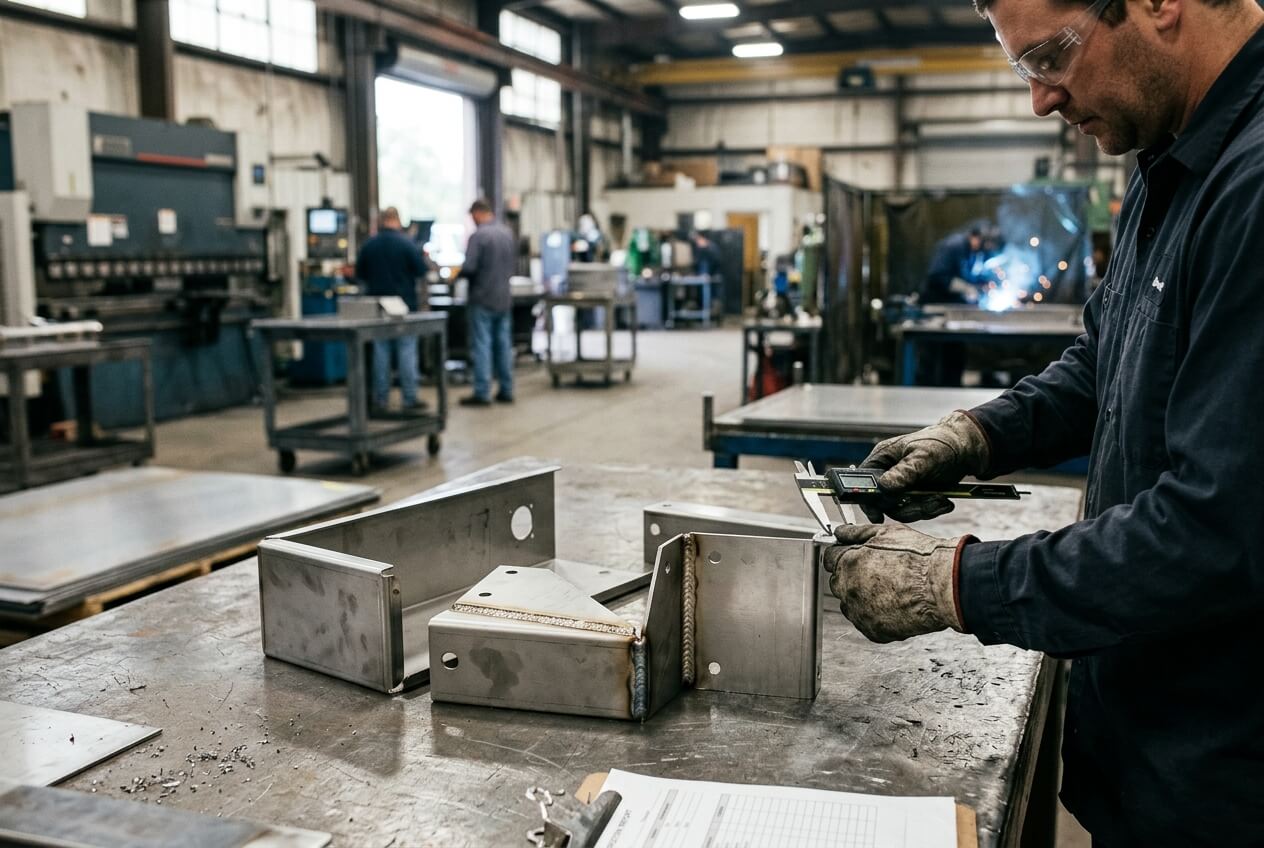
An OEM buyer sends an RFQ for a powder coated control cabinet, two welded mounting brackets, and a stainless display housing. The drawings define laser cut profiles, bend lines, hole positions, and coating color. The weld note says only “weld as required.”
Three suppliers quote the package. One price looks attractive. One looks expensive. One supplier asks whether the visible seams need TIG welding, MIG welding, flush grinding, intermittent welds, or standard fillet welds. That question is not a minor shop-floor preference. It exposes the main procurement risk in many custom sheet metal fabrication projects: unclear weld assumptions.
The tig vs mig welder decision matters because it changes labor time, fixture needs, distortion control, surface finishing, inspection effort, and batch repeatability. If the RFQ does not define the weld function, each supplier prices a different product. The lowest quote may simply exclude the work needed to meet the buyer’s real expectation.
This article focuses on that risk. It does not treat TIG and MIG as a general welding lesson. For enclosures, cabinets, brackets, frames, housings, and welded assemblies, the safer sourcing question is not “Which process is better?” The better question is “What weld assumptions must be fixed before we compare prices?”
Where TIG vs MIG Welder Assumptions Start to Distort Supplier Quotes
Quote distortion often starts with a drawing that looks complete. It may show every hole and bend. It may also include material grade, thickness, and finish. Yet the weld requirement remains open, so suppliers must guess how much welding and finishing the part needs.
MIG welding often suits carbon steel frames, hidden brackets, equipment bases, and thicker assemblies where strength and production speed matter. TIG welding often suits thin stainless parts, visible seams, aluminum components, and areas that need cleaner bead control. Those broad rules help, but they do not create a comparable RFQ.
A supplier quoting a visible stainless housing may assume TIG welding with light polishing. Another may assume short MIG welds, grinding, and powder coating. A third may assume continuous welds on every corner because the drawing does not allow intermittent welds. All three quotes can look valid, but they do not cover the same scope.
The hidden cost sits inside the assumption
A vague weld note forces the supplier to decide weld length, bead size, process, grinding level, inspection method, and fixture time. Each choice affects cost. TIG welding may raise direct labor time. MIG welding may reduce welding time but add grinding or spatter control. Continuous welds can add heat and increase straightening work.
The buyer sees only the final price. Without a weld assumption sheet, the buyer cannot tell whether a low quote reflects efficiency or missing scope. Procurement then compares numbers that appear similar but carry different production risks.
A better RFQ separates the weld requirement by location. Mark which joints are structural, which are cosmetic, which are sealed, and which remain hidden after installation. If the weld only needs to hold a bracket in place, say so. If the seam sits on a customer-facing face after coating, state that too.
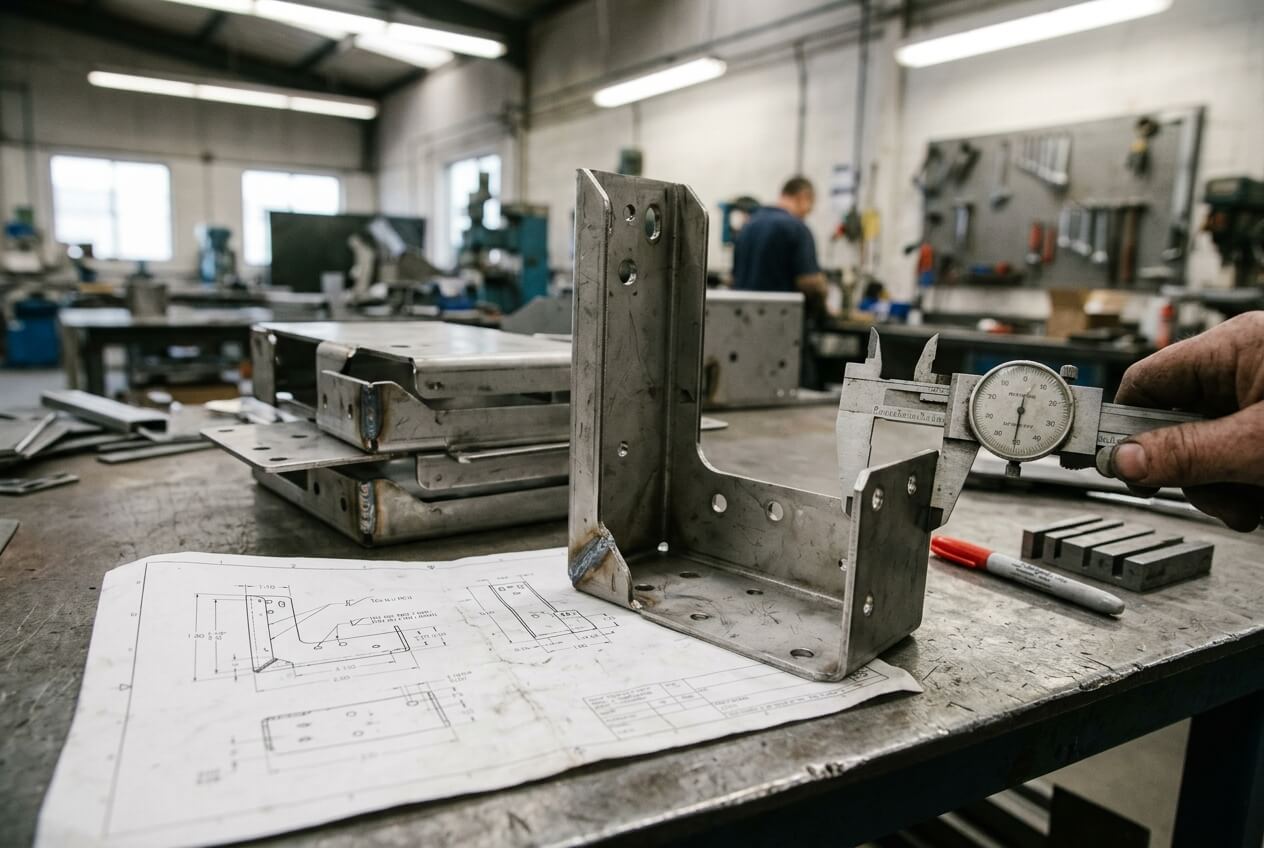
How an Unclear Weld Note Turns into Finish Rework After Coating or Polishing
Finish-related weld disputes often appear late. A raw welded sample may look acceptable under factory lighting. After powder coating, polishing, or assembly, the same weld area can show shadows, pinholes, undercut, heat marks, raised beads, or uneven grinding.
The procurement risk starts when the RFQ defines the finish but not the weld appearance under that finish. “Black powder coating” does not tell the supplier whether weld shadows on a front door are acceptable. “Brushed stainless” does not explain whether the weld bead may remain visible or must blend into the surrounding grain.
In a powder coated electrical enclosure, hidden internal reinforcements may tolerate standard MIG welds. A visible front seam may need controlled welding, careful grinding, and inspection before coating. If the drawing treats both areas the same, one supplier may quote a basic fabrication process while another includes cosmetic preparation.
Project example: display housing with visible corners
Consider a 1.2 mm stainless display housing for a retail machine. The corners face the customer. The drawing calls for stainless steel and a brushed finish, but it does not identify cosmetic faces. One supplier quotes TIG welding and grain-matched polishing on the corners. Another quotes MIG tack welds with standard grinding because the part looks like a simple enclosure.
The second quote wins on unit price. During approval, the buyer rejects the corner finish because the grind marks break the brush direction. The supplier can rework the sample, but batch pricing changes. Lead time also moves because polishing now requires more labor and inspection.
That consequence chain began with one missing RFQ detail. The buyer did not define which faces were cosmetic and what marks were unacceptable after finishing. The supplier did not price the intended surface standard. Both parties then had to renegotiate after work had already started.
Buyers can avoid that trap with short, practical notes. Mark visible faces on the drawing. State whether weld beads can remain exposed. Define whether grinding marks, spatter, discoloration, or weld shadows are reject conditions. If an approved prototype sets the surface standard, document it with photos and written notes.
Yishang can review drawings and finish expectations before quotation when buyers need help separating cosmetic weld zones from hidden structural weld zones.
Why Weld Process Ambiguity Can Move Holes, Doors, and Bracket Angles
Weld assumptions do not only affect appearance. They also affect assembly fit. Heat pulls sheet metal. Weld sequence, weld length, bead size, and fixture control can shift geometry after laser cutting and bending.
A drawing may define tight hole locations before welding. Production must still hold the functional dimensions after welding. If the RFQ does not identify those dimensions, a supplier may inspect the wrong features at the wrong stage.
MIG welding can deposit filler quickly, which helps production speed but may add concentrated heat. TIG gives more control, but it can still distort thin sheet when welds run too long or fixtures do not support the part. The buyer should not assume one process automatically solves distortion. The drawing should connect the weld method to the part’s function.
Project example: sensor bracket with a pulled tab
A buyer sources a small welded bracket for an automation sensor. The base plate has laser cut mounting slots. A vertical tab holds the sensor at a fixed distance from a moving part. The drawing controls the tab angle, but it does not say that the angle must be checked after welding.
The supplier welds the tab with manual positioning. The base plate dimensions pass inspection. However, heat pull changes the tab angle by a small amount. During assembly, the sensor sits outside its adjustment range. The buyer sees an assembly failure, not a welding issue.
Earlier clarification would have changed the quote. The supplier may have included a simple fixture, shorter welds, revised weld sequence, or inspection of the tab angle after welding. The unit price might have increased slightly, but the assembly risk would have dropped sharply.
Cabinet openings need post-weld control
Cabinets and frames create a similar problem. A welded cabinet opening may meet nominal width and height at several points, yet sit out of square diagonally. The door then rubs, the gasket compresses unevenly, or latch holes need adjustment.
The RFQ should identify datum surfaces, mating faces, gasket areas, door openings, and critical hole-to-hole dimensions. Assembly drawings help suppliers understand which dimensions drive fit. Photos of the mating component also reduce interpretation gaps, especially for overseas fabrication projects.
Fixture cost often explains quote differences. One supplier may include a welding jig to control repeatability. Another may rely on manual fit-up to reduce the first quoted price. Manual correction can pass one prototype, but batch parts can drift when operators, heat input, or sequence change.
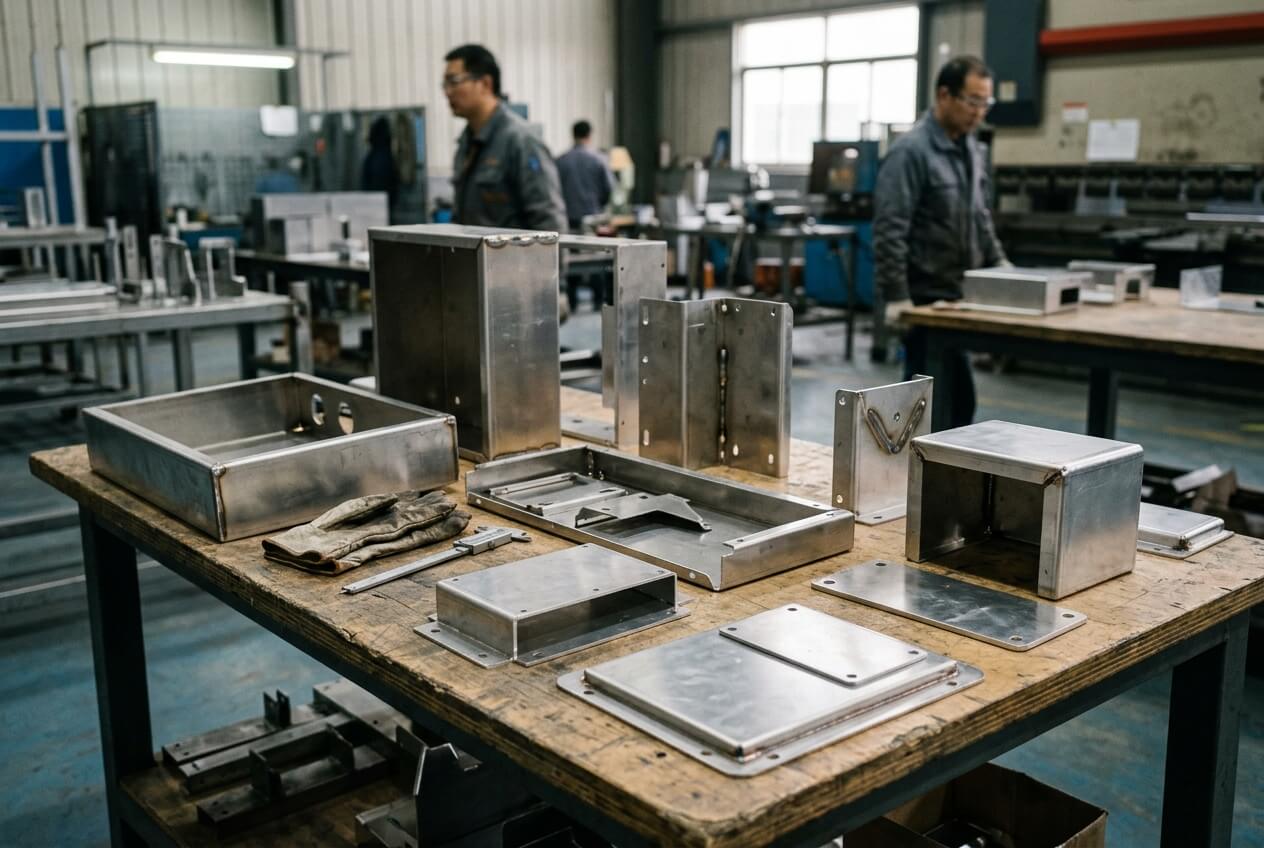
Why Prototype Approval Does Not Remove Batch Welding Assumption Risk
A strong prototype can create false confidence. One skilled welder may spend extra time adjusting heat, adding tacks, straightening a frame, or polishing a visible seam. The buyer approves the sample, but the production quote may not include the same controls.
This problem appears when prototype approval records only the finished part, not the method needed to repeat it. A supplier can meet the sample once and still struggle to hold the same surface, squareness, hole alignment, or fit across a batch.
The tig vs mig welder decision should become part of the production record when it affects appearance or assembly. If the prototype used TIG welding on visible stainless seams, document that requirement. If the prototype passed because the frame used a welding fixture, record the fixture points. If grinding direction mattered, include it in the finish standard.
Prototype learning must become production language
A prototype should answer specific questions. Will the door close after welding and coating? Will the bracket angle hold after heat input? Will the visible seam meet the customer’s cosmetic standard? Will the enclosure fit the mating gasket and fasteners?
Once the prototype answers those questions, the buyer should convert the learning into drawing notes, inspection points, and approved sample references. Otherwise, production may shift toward a faster method. The supplier may still believe the parts meet the drawing because the drawing never captured the prototype’s hidden requirements.
Display racks show this issue often. A sample rack may stand level after manual correction. Batch racks may rock after coating because the weld sequence and fixture plan were never fixed. Rework then affects more than welding cost. It can delay coating, packing, container loading, and customer installation.
Buyers can reduce that risk by asking suppliers what changed between prototype and batch. Confirm whether the same weld process, weld length, fixture method, grinding level, and inspection standard will apply. If quantity increases, ask whether the supplier plans any process changes to improve speed.
During prototype review, Yishang can help buyers identify which details should move into the production drawing or inspection checklist before batch release.
What Buyers Should Clarify Before Comparing Welding Prices
The biggest sourcing mistake is asking which quote is cheaper before asking what each quote includes. A low quote may assume hidden welds, intermittent welds, no cosmetic grinding, manual positioning, or relaxed post-weld inspection. A higher quote may include TIG welding, fixtures, grinding, polishing, and dimensional checks after welding.
Procurement teams need enough clarity to compare the same scope. That does not mean every drawing needs long welding instructions. It means the RFQ must define the weld assumptions that affect cost, fit, and finish.
RFQ details that remove the largest assumption gaps
Start with weld function. Identify structural welds, cosmetic welds, sealed welds, and hidden welds. Then define weld type and length where it matters. Continuous welds may support sealing or appearance, but they add heat and cost. Intermittent welds may reduce distortion when strength requirements allow them.
Next, connect welding to the finish. Powder coating can reveal weld shadows. Polishing can expose inconsistent grinding direction. Brushed stainless can make a repaired seam obvious. State the acceptable surface condition after the final finish, not only after raw welding.
Finally, connect welding to assembly fit. Mark critical dimensions that must be checked after welding. Include tolerances for door openings, bracket angles, hole alignment, mating faces, and frame squareness. If the welded part fits another component, send the assembly drawing or photos.
Buyers should also ask suppliers to state their assumptions in the quote. The response should identify the planned process, such as TIG, MIG, spot welding, or a mixed method. It should also list any included grinding, polishing, fixtures, inspection points, and excluded cosmetic work.
This practice protects both sides. The buyer avoids selecting an incomplete quote. The supplier avoids absorbing unpriced finishing or rework. Communication becomes more technical and less subjective because both parties discuss the same weld locations and acceptance criteria.
The practical rule is simple. Use the tig vs mig welder discussion to expose assumptions, not to chase a universal answer. TIG may fit a visible thin stainless housing. MIG may fit a hidden carbon steel frame. A mixed approach may work best for an enclosure with structural internal welds and cosmetic exterior seams.
Need a weld assumption review before quotation? Send Yishang your drawings, material requirements, material thicknesses, order quantities, tolerance notes, finish expectations, assembly drawings, and prototype or rejected sample photos. We can review which welding, grinding, fixture, and inspection assumptions should be clarified before you compare supplier prices.
Frequently Asked Questions
Should an RFQ specify TIG vs MIG welder requirements?
Yes, when the weld affects appearance, assembly fit, sealing, or repeatability. If the weld is hidden and non-critical, the supplier may choose the most efficient method. If the seam remains visible or controls geometry, state the required process or ask the supplier to quote with clear assumptions.
Why do suppliers quote different prices for the same welded sheet metal drawing?
They may assume different weld lengths, processes, grinding levels, fixture needs, and inspection standards. A drawing that says “weld as required” leaves too much room for interpretation. Ask each supplier to list the weld assumptions included in the price.
Can MIG welding be acceptable for powder coated enclosures?
Yes. MIG welding can work well for many enclosure frames, reinforcements, and hidden joints. For visible coated seams, buyers should define acceptable weld shadows, spatter, grinding marks, and raised beads before quotation.
How can welding affect mounting holes and bracket angles?
Heat from welding can pull tabs, panels, and frames after laser cutting and bending. Critical dimensions should be inspected after welding, especially for sensor brackets, door openings, gasket surfaces, and mating hole patterns.
Why can a good welded prototype still fail in batch production?
A prototype may receive extra manual correction, polishing, or distortion control. Batch production needs repeatable process notes. Document the weld process, fixture points, grinding level, cosmetic standard, and post-weld inspection criteria before release.
What should buyers send for a welding assumption review?
Send drawings, material grades, thicknesses, quantities, tolerances, finish expectations, cosmetic surface notes, assembly drawings, and prototype photos. Photos of acceptable and unacceptable welds also help suppliers quote the intended result.