
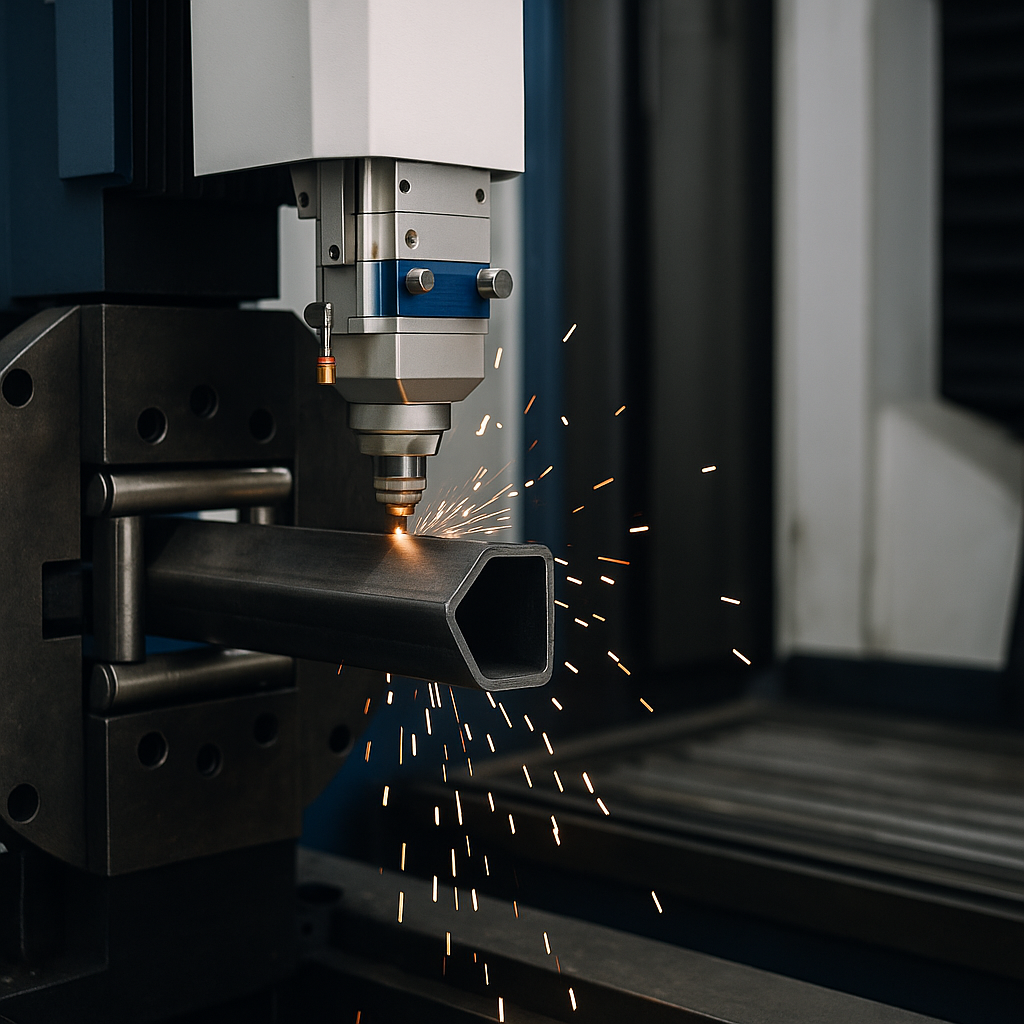
What Makes Tube Laser a Game-Changer in Metal Fabrication?
For many industrial buyers, tube laser cutting is no longer just an equipment upgrade. It changes how metal structures are designed, quoted, assembled, and delivered.
Instead of treating sawing, drilling, slotting, and punching as separate operations, tube laser processing combines them into a more controlled workflow. For buyers, that often means better fit-up, less handling, lower rework, and more predictable batch performance.
Why Global Buyers Prefer Fiber Laser Over CO2
For tube and profile processing, fiber laser is often preferred because it typically offers higher speed, lower energy consumption, and better control on thin-to-medium wall materials.
From a sourcing perspective, this matters because a more stable cutting process often leads to cleaner edges, tighter repeatability, and less manual cleanup before assembly or finishing.
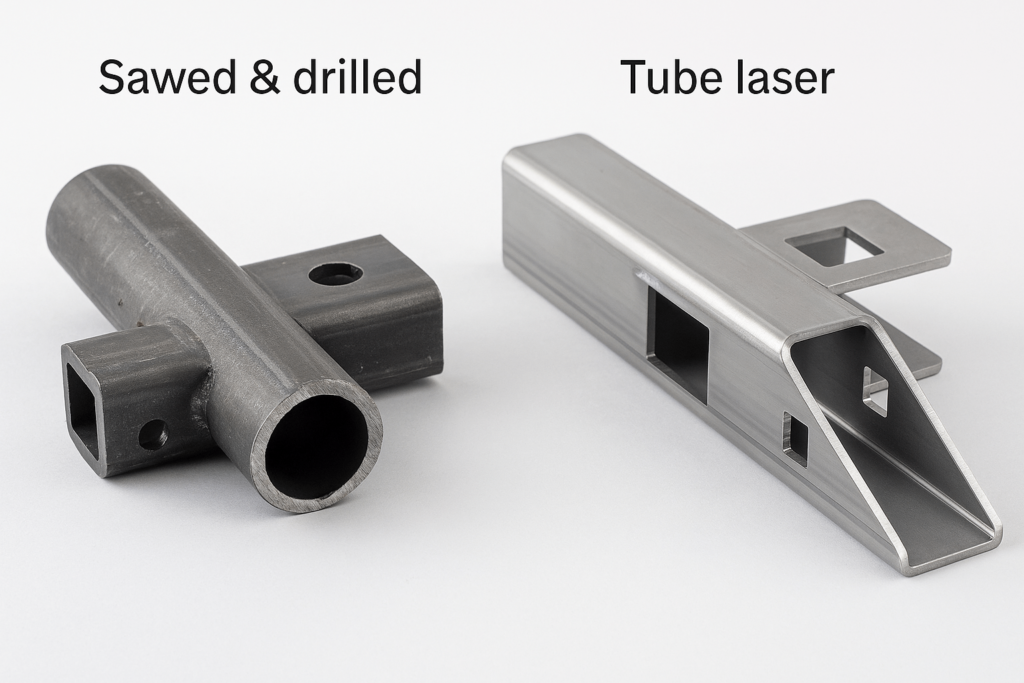
A Clear Transformation: Before and After Tube Laser Integration
One of the clearest benefits of tube laser cutting is process simplification. When holes, slots, tabs, and profile cuts are built into one cutting sequence, assembly usually becomes faster and more repeatable.
For buyers, the practical result is often fewer fixture steps, fewer weld points, less alignment correction, and better consistency from one batch to the next.
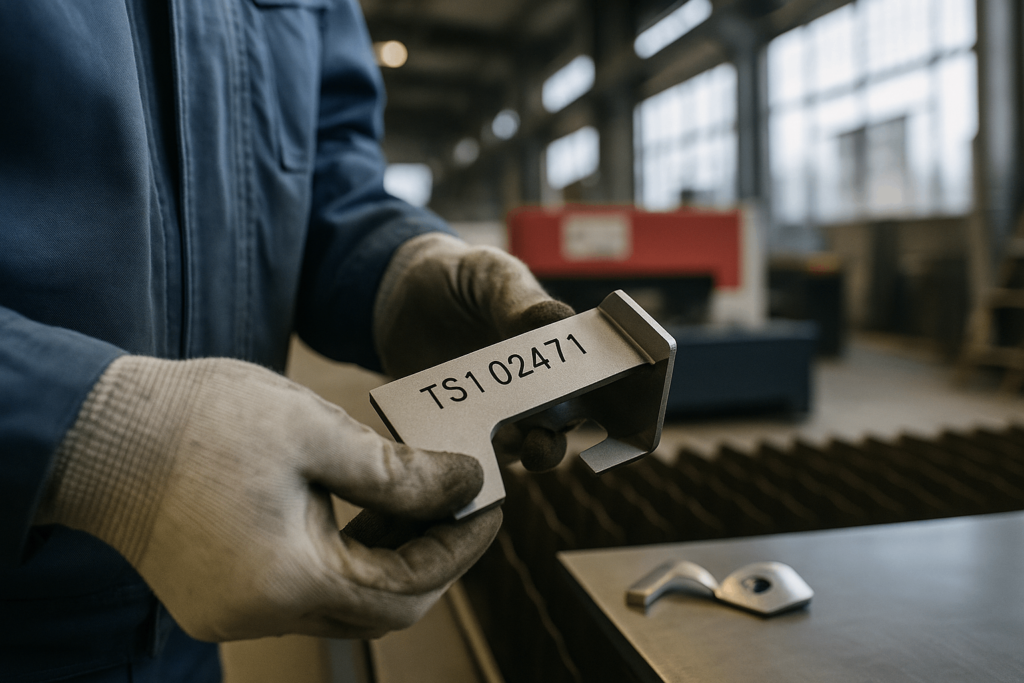
Engineered for Assembly: From Laser Cut to Fit-Ready
Tube laser processing becomes especially valuable when parts are designed for assembly from the start. Features such as slots, tabs, etched marks, hole positions, and self-locating geometry can be integrated directly into the cut pattern.
For buyers managing overseas production or multi-site assembly, this reduces guesswork and improves installation consistency.
Lowering Total Cost with Laser Accuracy
Tube laser accuracy reduces cost in ways that do not always appear in the first machining quote. It can lower rework, scrap, inspection time, packing inefficiency, and assembly correction cost.
That is why buyers should evaluate not only cutting price, but also how process accuracy affects the total manufacturing flow.
Designing Stronger Connections with Less Welding
When profile geometry is cut intelligently, many structures require less manual fitting and less welding. Tube laser features such as saddle cuts, slot-and-tab designs, and alignment marks can help parts locate more naturally during fabrication.
For buyers, this can improve both structural repeatability and shop-floor efficiency.
Can It Cut Aluminum Pipe? And Other Buyer Questions
Yes. We offer an aluminum laser cutting service compatible with square and round profiles.
✓ Copper Cutting Capability
Tube laser systems can also support copper-related applications, but reflective materials require proper machine tuning and process control. Buyers should confirm whether the supplier has stable experience with these materials rather than assuming all lasers perform equally.
✓ Stainless Steel Tube Bending
If the project includes post-cut bending, buyers should review whether the supplier can support both cutting and controlled downstream forming without damaging geometry or finish.
✓ Custom Laser Cut Sign Frames
Tube laser is also useful in signage frames, display supports, architectural tubing, and custom structural profiles where repeatability and visual consistency matter.
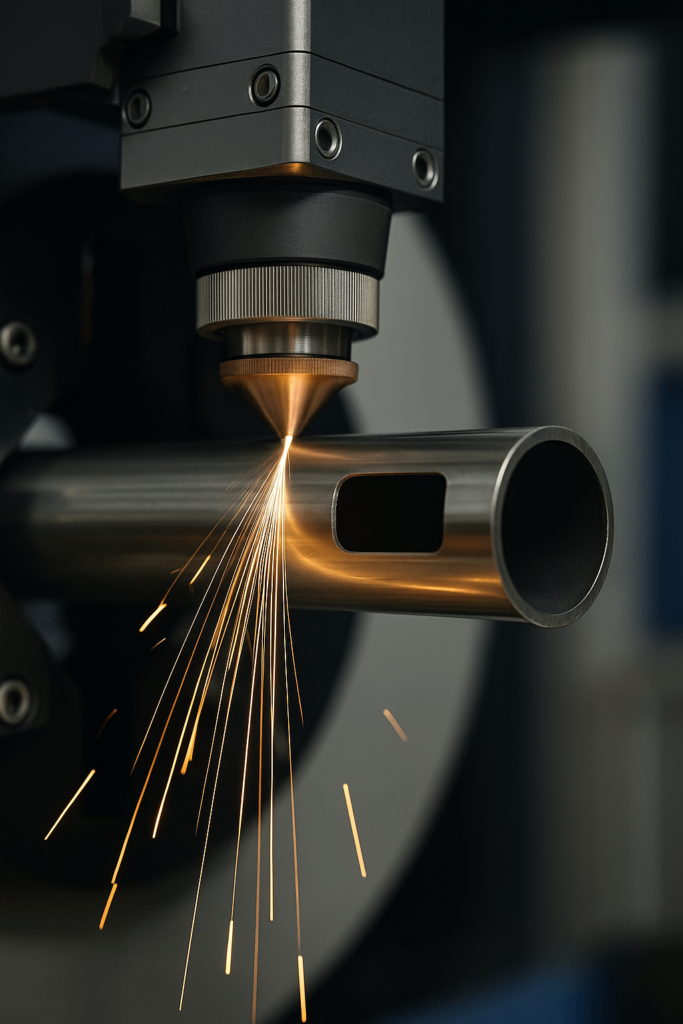
Predictability That Pays Off: ROI You Can Measure
For buyers, the biggest ROI from tube laser is often predictability. A more stable cutting process helps reduce labor variation, lowers assembly time, and improves quoting confidence for repeat programs.
When production becomes easier to forecast, buyers gain more control over lead time, cost planning, and delivery reliability.
FAQ: Practical Buyer Considerations
Q: Is laser tube cutting better than welding for light frames?
In many cases, yes—especially when cut features reduce the amount of manual alignment and welding required later.
Q: What materials can your team process?
Material suitability depends on machine capability, wall thickness, and reflectivity control. Buyers should confirm actual processing range instead of relying on general claims.
Q: Can you offer aluminum laser cutting service?
Yes, but the quality depends on machine setup, thickness range, and the supplier’s experience with reflective materials.
Q: Can you cut copper tubes or sheets?
Yes, but copper processing needs more careful control than ordinary carbon steel tube cutting.
Q: Do you provide stainless steel bending or tubing services?
If the project requires post-cut bending or related downstream work, it is useful to confirm whether the supplier can handle the full process chain.
Q: Is laser cutting cost-effective for small-to-mid runs?
Often yes, especially when the cut design reduces secondary operations, welding effort, and assembly time.
Q: Can it cut both tubes and flat sheets?
Some suppliers support both, which can be useful when a project includes structural tube parts and flat metal components in the same assembly.
Q: Do you offer value-added services?
Value-added services such as coating, labeling, sub-assembly, or export packaging can reduce coordination burden for buyers managing complex supply projects.
Final Word: Smoother Builds, Smarter Sourcing
Tube laser cutting is not just about precision on a single part. It is about making the entire structure easier to produce, assemble, inspect, and ship.
For buyers, that means smoother sourcing, fewer surprises, and more scalable metal fabrication results across repeat orders.
At Yishang Metal Products Co., Ltd., we support OEM and wholesale buyers with custom metal fabrication for structures, frames, enclosures, supports, and other industrial components. With 26+ years of manufacturing experience, we support processes including tube laser cutting, sheet laser cutting, bending, stamping, welding, CNC machining, surface treatment, assembly, packaging, inspection, and shipment.
📩 If you are evaluating tube laser solutions for your next metal structure project, send us your drawings or requirements to discuss the most suitable manufacturing approach.