
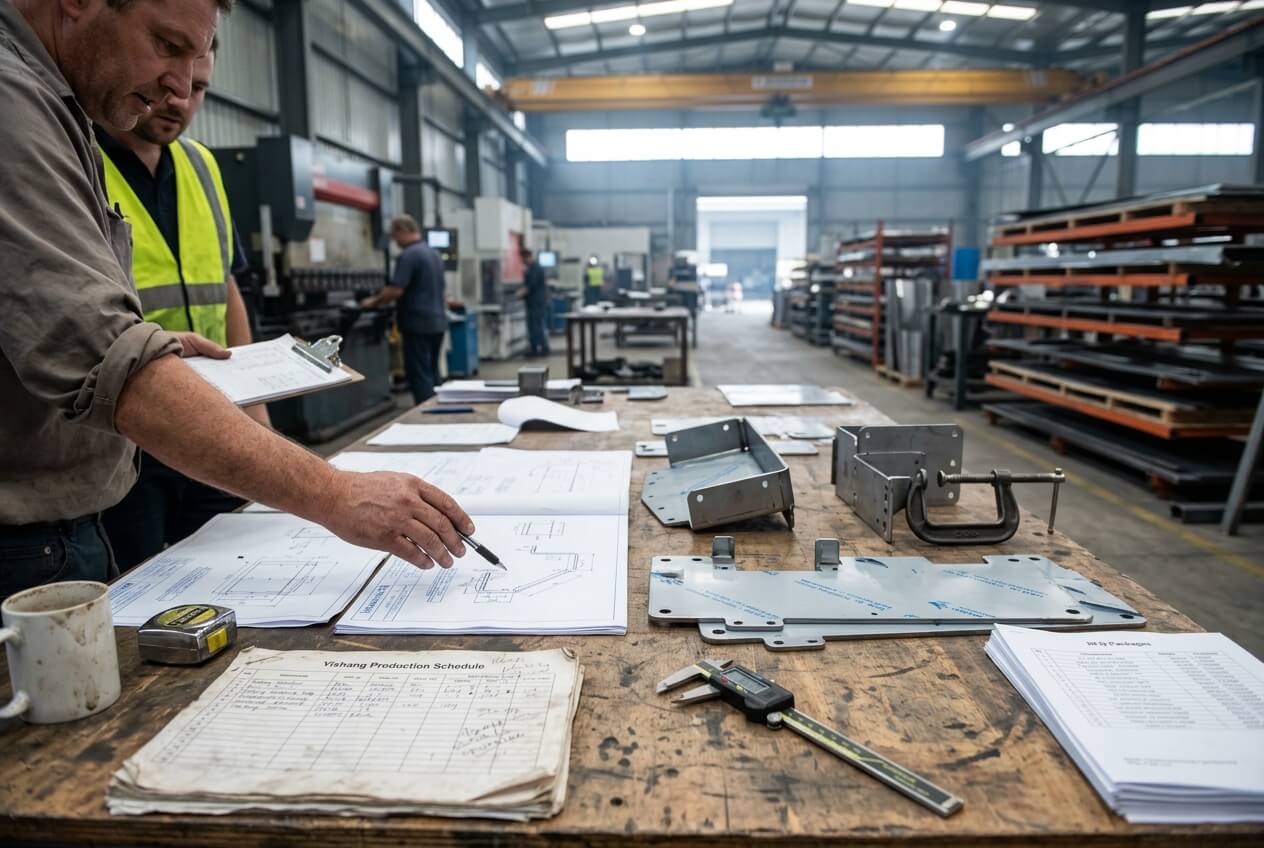
An OEM buyer needs 500 powder-coated display rack frames before a retail launch. The RFQ includes a 3D model, square tube members, laser-cut slots, welded corners, and a pilot batch. Three suppliers reply. One gives the lowest unit price. One promises the shortest lead time. One asks about wall thickness, datum faces, coating color, visible surfaces, mating shelves, and inspection records.
If purchasing compares only price and ship date, the risky quote may look like the best quote. A tube laser can cut holes, miters, slots, notches, and interlocking features faster than saw-and-drill workflows. That speed helps frames, brackets, cabinets, enclosures, and welded assemblies. Yet cutting speed does not protect the buyer from a weak RFQ.
The dominant risk is RFQ ambiguity. Missing details force each supplier to quote different assumptions. Those assumptions later affect tube sourcing, cutting programs, welding fixtures, powder coating, assembly fit, inspection time, packaging, and shipment dates. The project does not fail because the laser cuts slowly. It slips because the quote never described the real manufacturing route.
Where RFQ assumptions start to distort tube laser quotes
A tube laser RFQ often looks complete because the buyer sends a 3D model. The model may show the finished frame clearly. It may still omit the details that decide whether a supplier can quote the job accurately.
Tube profile, wall thickness, material grade, seam orientation, hole datum, and end-cut function all influence the quote. A supplier also needs to know whether the parts ship loose or become welded, coated, and packed assemblies. Without those details, each quote answers a different question.
The cheapest quote may exclude the hardest work
Consider a rectangular tube base frame for a metal enclosure. The model shows cable access holes, mitered corners, and brackets for sheet metal panels. The drawing lists outside dimensions but does not mark the assembly datum. One supplier assumes normal hole tolerance and visual inspection. Another includes a welding fixture and checks panel mounting holes after welding.
The first quote looks faster and cheaper. After PO release, the enclosure panels do not align with the frame holes. The supplier then asks for revised tolerances, fixture approval, or permission to elongate slots. The buyer loses time because the quote did not include the assembly risk.
Display racks create a similar problem. A buyer may send a model with many tube slots and tab interfaces. If the RFQ does not state which faces remain visible, the supplier may quote standard deburring and powder coating. Later, the buyer rejects frames for burrs inside cutouts, weld discoloration, or coating marks on customer-facing surfaces. The correction adds grinding, re-coating, and inspection time.
Clarify the route, not just the cut
A useful RFQ separates the route into material procurement, tube laser cutting, secondary sheet metal work, welding, surface preparation, powder coating, assembly, inspection, packing, and export preparation. This route view exposes the real schedule. It also shows where a low quote may rely on missing work.
Buyers should ask suppliers to list quote assumptions directly. Which tube size did they price? Which wall thickness and material grade? Which dimensions need inspection reports? Does the quote include trial assembly with mating sheet metal parts? Does it include masking, packaging, and coating protection? These answers make supplier comparisons safer.
Yishang can review tube laser and custom sheet metal fabrication drawings together when tube members connect to enclosures, brackets, frames, or welded assemblies. That review matters because a tube cut that looks simple in isolation may create fit-up or finish risk after welding.
Why unclear datums and tolerances create assembly delays after cutting
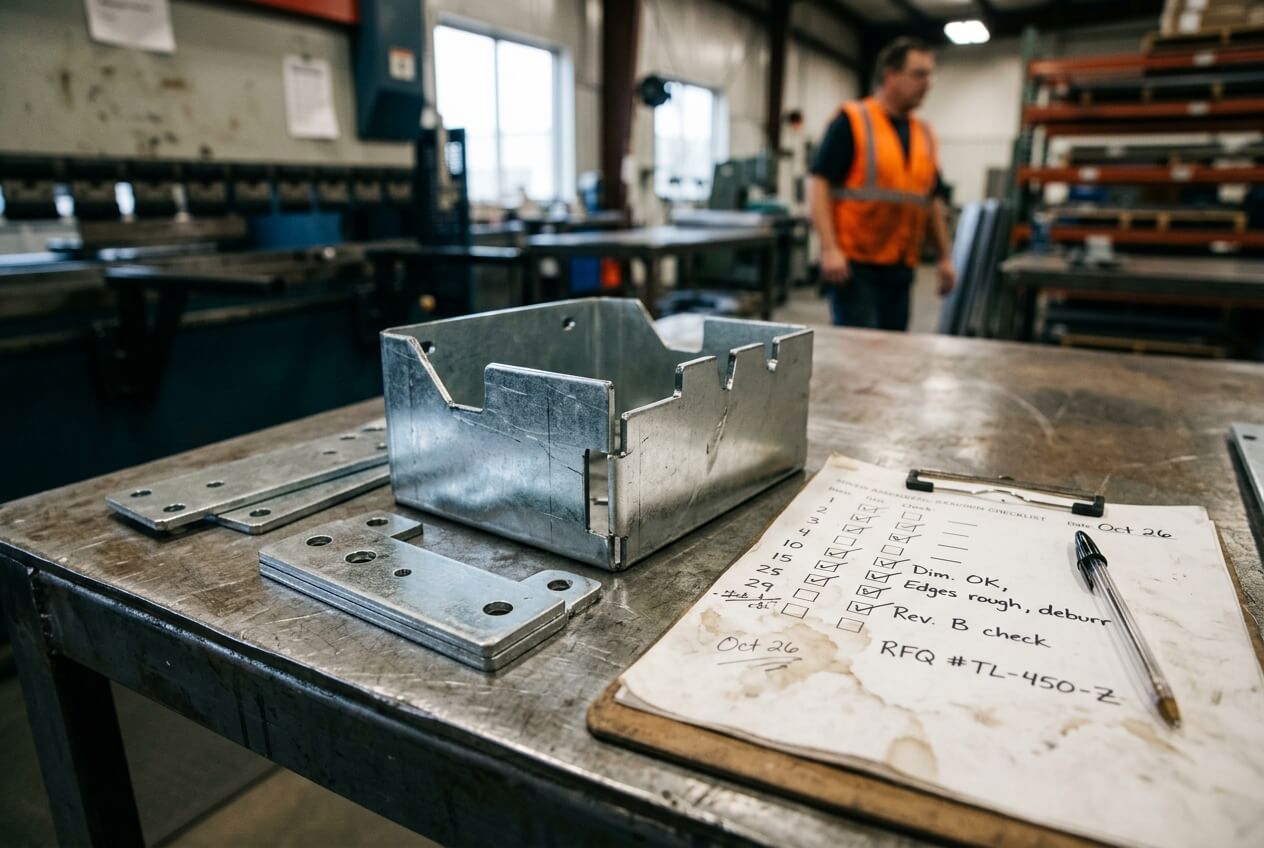
A tube laser can repeat a cut pattern accurately. It cannot decide which face controls the assembly. When the RFQ does not define datums, the supplier must infer orientation from the model. That inference can break the schedule.
Square and rectangular tubes look simple, but holes on multiple faces need a clear reference. A round tube creates more risk because rotation controls hole position. Mitered ends add another variable. If the end cut also acts as a weld-fit feature, the cut angle may control frame squareness.
Hole position risk often appears at welding
Imagine a welded equipment frame with hinge brackets on one side and a removable sheet metal cover on another. The buyer marks overall frame size but leaves mounting holes as model geometry only. The tube laser cuts the holes correctly against the imported model. During welding, heat pulls the frame slightly out of square. The cover holes no longer match.
The buyer may blame cutting accuracy. In reality, the RFQ failed to identify the dimensions that control final assembly after welding. The supplier should have known which holes needed fixture checking, which slots could float, and which faces needed restraint during welding.
Tight tolerances can also create schedule risk. If every hole, slot, and cut angle carries a tight tolerance, inspection time grows without improving function. If the buyer applies loose tolerance to mounting holes, field installation may fail. The strongest RFQ highlights the few critical dimensions and relaxes non-critical ones.
Define functional tolerances before comparing prices
Buyers should mark holes for bolts, hinges, brackets, shelf tabs, machine mounts, and mating panels. They should also identify decorative holes that need only visual review or sample measurement. This split prevents over-inspection on low-risk features and under-control on assembly-critical features.
End cuts need the same clarity. A cosmetic miter may allow more variation than an interlocking tab-and-slot joint. A tube end that touches a welded corner needs a different control plan than an end hidden under a plastic cap. When the RFQ explains the function, the supplier can price cutting, fixtures, and inspection honestly.
Supplier communication should happen before the PO, not after the first failed assembly. Ask for comments on datum faces, tolerance stack-up, weld sequence, and checking methods during quotation. A short review at this stage often prevents days of rework later.
Material and finish gaps do not stay in purchasing; they change production
Buyers often treat material and finish details as purchasing notes. For tube laser projects, they also affect production risk. Tube availability, surface condition, wall thickness, and coating requirements can change cutting stability, weld behavior, appearance, and delivery timing.
An RFQ that says mild steel square tube may not control enough. The supplier still needs grade, size, wall thickness, length availability, and acceptable substitutes. Thin-wall tube may distort near dense cut patterns. Uncommon sizes may add procurement time. Stainless or aluminum tube may need different handling and finishing controls.
Stock assumptions can make lead time look false
A cabinet manufacturer may request 300 welded support frames with rectangular tube and powder-coated sheet metal panels. The RFQ gives the tube outside size but not the wall thickness. One supplier prices a common wall thickness from local stock. Another prices the wall thickness used in the prototype. The first quote wins on lead time.
After order release, the buyer confirms that the prototype wall thickness must remain unchanged. The supplier now needs to source a less common tube or ask for engineering approval to substitute. Cutting capacity did not cause the delay. An unverified material assumption did.
Finish expectations create another chain. Powder coating thickness can reduce slot clearance. Coating inside cutouts may affect tab fit. Masking may protect threaded holes, grounding points, sliding areas, or tight mating faces. If the RFQ only says powder coat black, the supplier may not include masking, coating thickness checks, or post-coating trial assembly.
Cosmetic requirements should name visible faces
Retail display frames, office cabinets, and visible metal enclosures need clear cosmetic rules. A tube face hidden inside a welded assembly can accept normal handling marks. A customer-facing face may need stricter control for scratches, weld grinding, spatter, coating texture, and color consistency.
Buyers should mark visible surfaces on drawings or with annotated images. They should state color standard, gloss or texture, coating thickness range, and any masking requirements. If samples define the finish, the RFQ should say whether the sample controls color, texture, weld appearance, or all three.
These details affect price and lead time, but they also reduce quote disputes. A supplier who includes surface preparation and coating checks may appear more expensive. That quote may be more realistic than one that assumes commercial tube surface and standard packing.
Why prototype approval can hide batch-production inconsistency
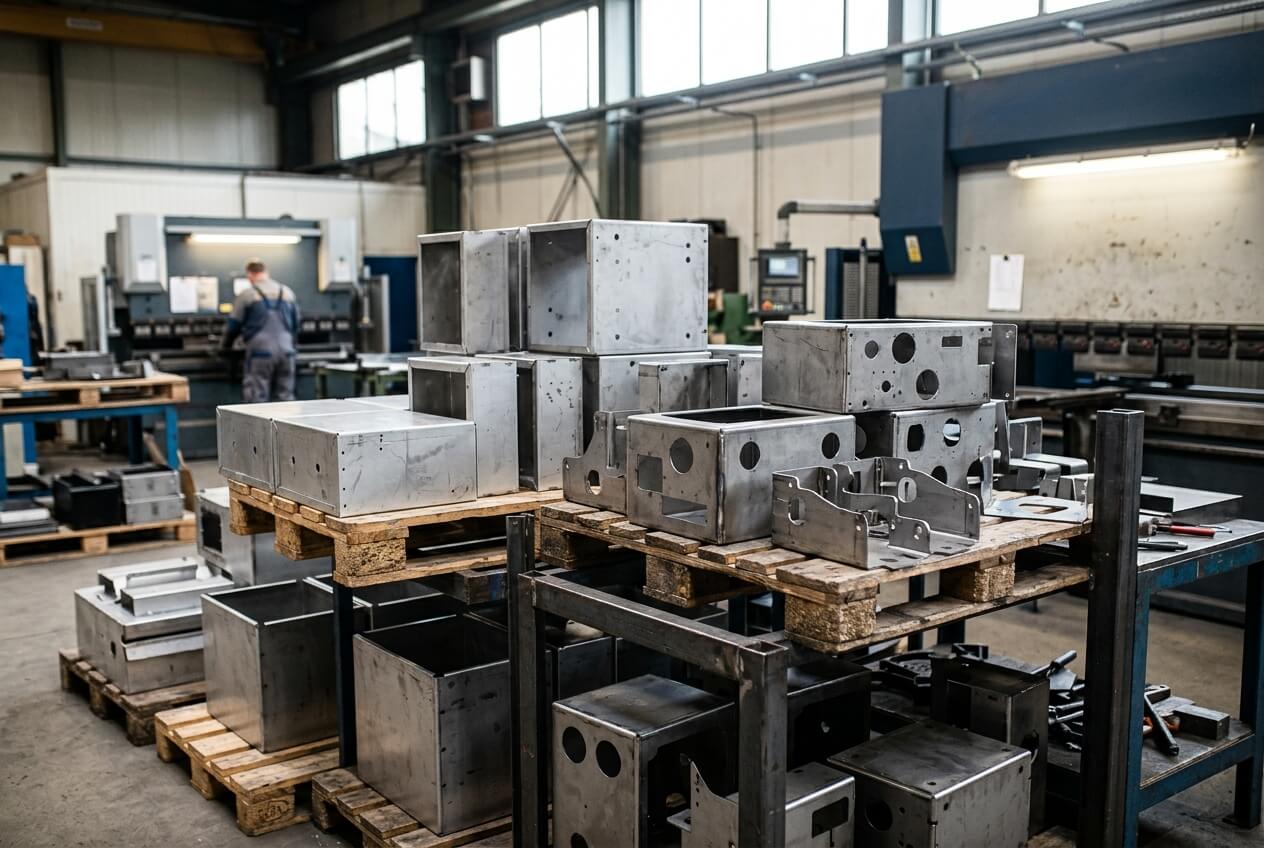
A prototype can pass review and still mislead purchasing. This happens when the sample depends on hand fitting, selective material, relaxed inspection, or extra grinding. Those actions may not scale to 200, 500, or 2,000 assemblies.
Tube laser cutting supports repeatability, but the process around it must also repeat. Batch production needs stable material, controlled datums, weld fixtures, coating clearances, and inspection points. Prototype notes should capture how the sample actually achieved fit and appearance.
Hand correction should never disappear from the record
Take a modular display rack with tube laser cut slots and sheet metal shelves. The prototype accepts the shelves, but the fit feels tight. The team approves the sample because only two units exist. During batch production, powder coating builds on both the slot edges and shelf tabs. Assembly workers start sanding tabs to make parts fit.
The cost rises, but the bigger problem is schedule control. Manual correction creates inconsistent fit and slows final packing. A better RFQ would ask suppliers to check slot clearance after coating, not only before coating. It would also identify whether shelves, brackets, or panels need trial assembly during first-article approval.
A welded machine frame can hide a different issue. The prototype may assemble well because an experienced welder adjusts tube fit-up before tacking. In batch production, operators need repeatable locating points and fixtures. If the RFQ does not require fixture planning or first-piece records, each frame may need individual correction.
First article approval should test the production route
Buyers should treat prototype approval as a manufacturing gate, not only a design gate. Ask whether the prototype used the same tube source planned for the batch. Confirm whether anyone drilled, filed, ground, bent, or forced parts to fit. Review any gap between CAD dimensions and the actual assembled sample.
The first article should include critical dimensions, fit with mating sheet metal parts, weld distortion, coating thickness, cosmetic faces, and packaging trial if the product ships overseas. Not every project needs a full report. However, the RFQ should name the evidence that purchasing will require before batch release.
When buyers ask Yishang to review prototypes for tube frames, metal enclosures, brackets, or welded assemblies, the most useful discussion often focuses on repeatability. Which features need fixtures? Which tolerances drive cost? Which clearances must account for coating? Those answers make batch pricing more dependable.
What buyers should send before the quote becomes the schedule
Many delays begin when purchasing turns a preliminary quote into a fixed delivery promise. The supplier may have priced with open assumptions. The buyer may have expected a finished, inspected, packed assembly. Both sides then discover the gap after the deadline has hardened.
A stronger RFQ package does not need unnecessary complexity. It needs enough detail to prevent hidden assumptions. Send 2D drawings with the 3D model. Mark tube profile, wall thickness, material grade, and allowed substitutions. Identify datum faces, assembly-critical holes, and functional tolerances. Include mating part drawings for sheet metal panels, shelves, brackets, covers, or fasteners.
Finish expectations also belong in the RFQ. State powder coating color, texture, gloss, coating thickness, masking needs, visible surfaces, and cosmetic limits. If the project needs welding, explain whether welds remain visible, ground smooth, or hidden. If the assembly ships overseas, specify packing limits, separation pads, corner protection, carton weight, and pallet requirements.
Inspection requirements should match risk. Ask for fixture checks or dimensional reports only on features that can stop assembly or installation. Request photos, coating readings, trial assembly records, or first-article approval when those records support release decisions. Avoid adding new inspection demands after production starts unless the schedule can absorb them.
Supplier communication should force assumptions into the open. Ask each supplier to separate lead time for material procurement, cutting, welding, coating, assembly, inspection, packing, and export preparation. Ask them to list exclusions. This makes a tube laser quote easier to compare and harder to misread.
If your project includes tube laser cut frames, custom sheet metal parts, metal enclosures, brackets, cabinets, or welded assemblies, send drawings before the delivery date locks. Share material requirements, quantities, tolerances, finish expectations, prototype notes, mating part files, and inspection needs with Yishang for an RFQ review that separates cutting assumptions from assembly, finishing, and shipment risks.
Frequently Asked Questions
What RFQ detail most often makes a tube laser quote unreliable?
The most common problem is an unclear manufacturing assumption. Missing wall thickness, material grade, datum face, critical hole tolerance, finish requirement, or inspection level can make two quotes look comparable when they are not.
Why does a 3D model not provide enough information for tube laser fabrication?
A 3D model shows geometry, but it may not define function. Suppliers still need datum faces, assembly-critical dimensions, acceptable tolerances, material rules, visible surfaces, coating expectations, and inspection evidence before they can price the full route.
Which tube laser features should buyers mark as assembly-critical?
Mark holes, slots, miters, tabs, and end cuts that control bolts, hinges, shelves, brackets, panels, machine mounts, or welded fit-up. Decorative holes and non-functional cutouts can usually follow lighter inspection rules.
How can powder coating create assembly risk on tube frames?
Powder coating adds thickness to slots, tabs, holes, and mating faces. If the RFQ does not define clearance, masking, or post-coating fit checks, parts may fit before coating but require sanding, chasing, or rework afterward.
Why can an approved prototype still delay batch production?
The prototype may rely on hand filing, selective tube stock, extra grinding, or manual weld adjustment. Batch production needs repeatable cutting programs, fixtures, coating clearances, and inspection points that the prototype record should document.
What should buyers send to Yishang for a more dependable RFQ?
Send 3D files, 2D drawings, tube specifications, material requirements, quantities, critical tolerances, finish expectations, mating part drawings, prototype notes, inspection needs, and packing requirements. These details help separate cutting time from finishing, assembly, and shipment risk.