
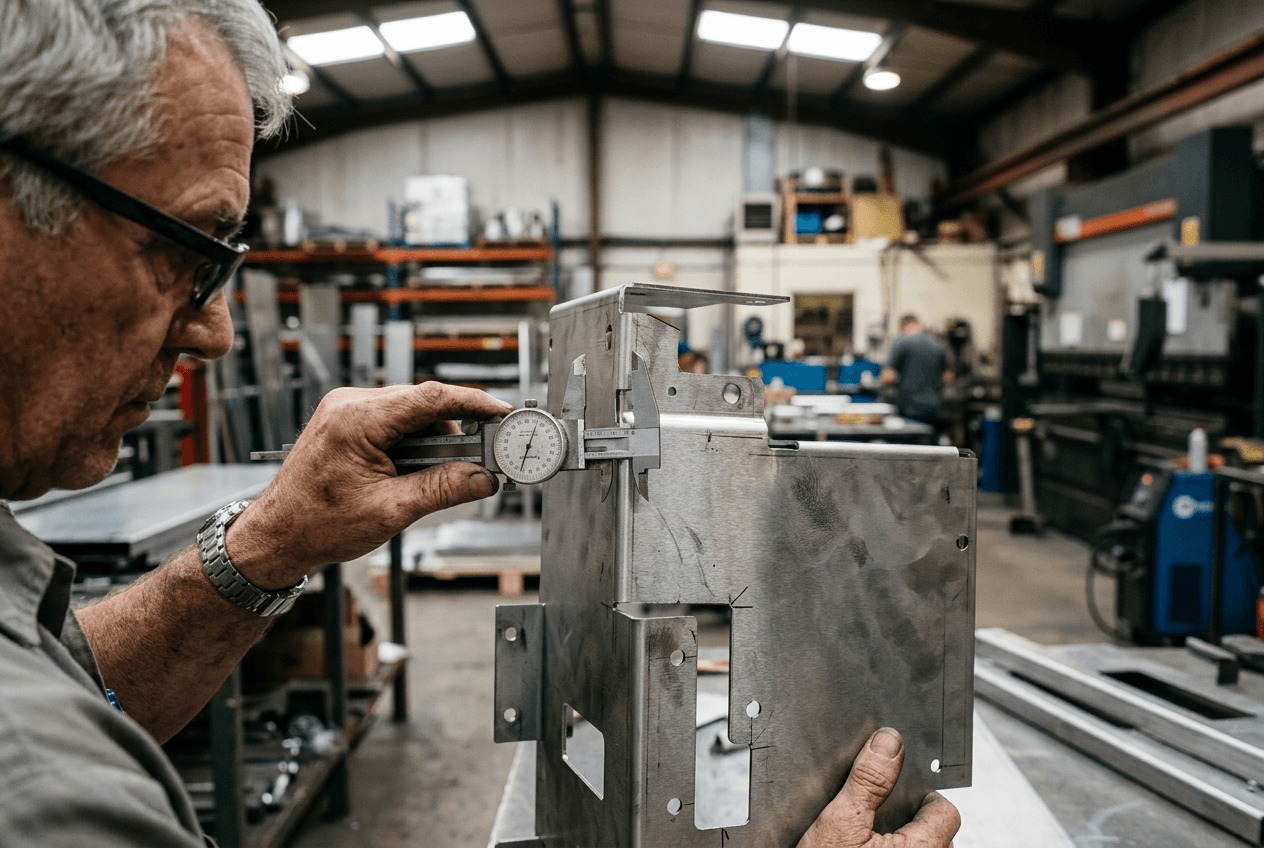
An OEM buyer sends an RFQ for a laser-cut and bent enclosure. The drawing shows hole patterns, bends, and a powder-coated finish note. The material line says only, “type of metal to be confirmed.” One supplier prices carbon steel with powder coating. Another assumes 304 stainless steel. A third quotes aluminum because the enclosure appears weight-sensitive.
All three quotes may look valid at first glance. They are not comparable. Each supplier has built a different inspection plan, forming route, finishing assumption, and cost structure around a missing material decision. The risk starts in the RFQ, but it appears later as fit-up trouble, coating disputes, delayed sampling, or batch rejection.
For custom sheet metal fabrication, the type of metal does more than define raw material cost. It changes bend behavior, springback, weld distortion, surface handling, coating build, corrosion protection, and which dimensions need inspection at which stage. Buyers who postpone the material decision often compare prices before suppliers have priced the same part.
This article focuses on one procurement risk: an incomplete material callout creates quote assumptions that later become inspection and production conflicts. The goal is not to list every possible metal. The goal is to help buyers prevent a weak RFQ from turning into a costly approval dispute.
When “type of metal to be confirmed” turns one drawing into three different quotes
A drawing can look complete while the RFQ remains commercially unclear. Dimensions, bend lines, and hole sizes may all appear on the print. Yet the missing type of metal forces each supplier to fill in the blank. That single assumption affects the quote before anyone cuts the first blank.
Carbon steel, 304 stainless steel, and 5052 aluminum do not share the same cutting speed, bending response, weld control, surface sensitivity, or finishing route. A supplier that assumes carbon steel may include powder coating for corrosion protection. A supplier that assumes stainless may reduce coating work but raise material and finishing cost. A supplier that assumes aluminum may add handling time to avoid scratches and marks.
The buyer may then choose the lowest number and believe the decision reflects supplier efficiency. In reality, the decision may reflect different assumptions. The cheapest quote may exclude corrosion protection, use a different grade, allow wider bend variation, or inspect the part in a different process state.
The quote gap begins before the unit price
Procurement teams often ask suppliers to “quote based on standard material.” That phrase creates risk because “standard” depends on the shop, region, stock position, finish route, and application. Standard material for an indoor bracket may fail quickly on an outdoor cabinet. Standard sheet for a welded frame may not suit a cosmetic display rack.
The consequence chain usually follows a pattern. The RFQ leaves the metal open. Suppliers choose different grades to protect price or lead time. The buyer compares the quotes as if they share one basis. Engineering later confirms the real grade. At that point, the selected supplier must revise price, change lead time, or explain why the prototype no longer matches the quote.
To avoid that chain, buyers should define the metal family, grade, thickness, and substitution rules before quote comparison. If the buyer wants supplier input, the RFQ should request priced alternatives instead of leaving the material blank. For example, ask for one quote in powder-coated carbon steel and one in 304 stainless steel, with inspection and finish assumptions stated separately.
A project example: enclosure quotes that looked equal
A buyer sourced a small control enclosure with a hinged door, latch, and internal mounting plate. The RFQ asked for “sheet metal, black finish.” One supplier quoted mild steel with powder coating. Another quoted stainless steel with a brushed surface. The unit prices differed sharply, but the buyer compared them as the same enclosure.
During sample review, the latch pressure changed after coating, and the door gap no longer matched the assembly expectation. The problem did not start at the hinge. It started when the RFQ failed to define the type of metal, finish build, and final inspection state. A clearer RFQ would have separated raw material choice from coating thickness and post-finish fit inspection.
Material ambiguity changes inspection state, not just fabrication method
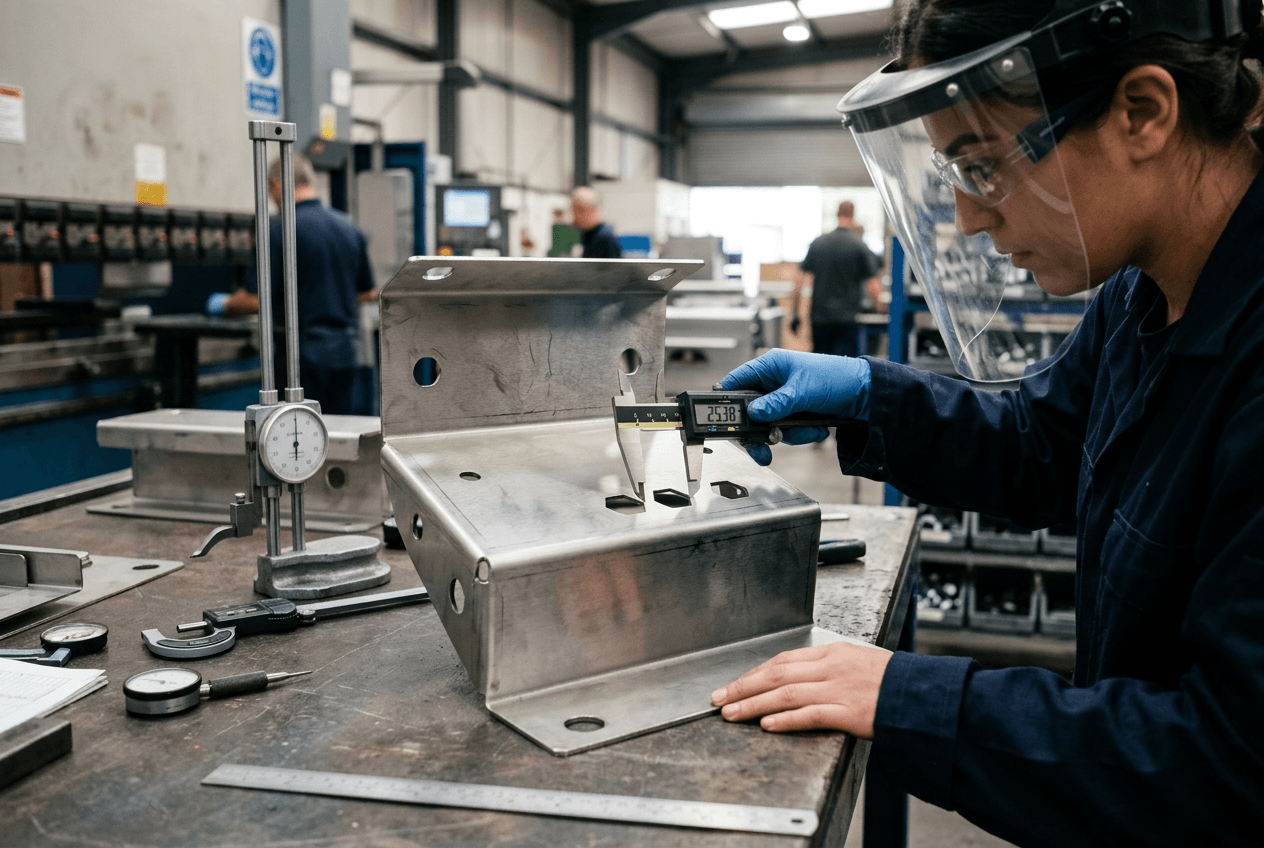
Many inspection disputes happen because the buyer and supplier measure the same dimension at different stages. The drawing may show a hole-to-hole distance, an outside width, or a mounting face tolerance. It may not say whether that feature matters in the flat blank, after bending, after welding, after coating, or after final assembly.
The type of metal influences how far features move between those stages. Stainless steel can spring back differently from mild steel. Aluminum may require different bend allowances and handling controls. Welded carbon steel frames may need fixture control to manage shrinkage. Powder-coated parts may lose clearance at tabs, hinge barrels, slots, and mating edges.
If the RFQ leaves the metal open, the supplier also has to guess the inspection state. One supplier may check the flat blank because that is easier and faster. Another may check the formed part from finished datums. A third may plan an assembly fixture because the part clearly mates with another component. Those are not equal inspection plans.
Flat dimensions can pass while assembly dimensions fail
Consider a formed bracket with two mounting holes across a bend. In the flat pattern, the holes may sit within tolerance. After bending, the effective distance between the mounted surfaces can shift because the bend radius, material thickness, and springback change the geometry. If the bracket fits into a painted frame, coating build can narrow the remaining clearance even further.
A buyer may reject the batch because the bracket does not assemble. The supplier may argue that the flat pattern passed inspection. Both sides can produce measurement data. The dispute exists because the RFQ never said which dimension controlled acceptance after forming and finishing.
Buyers should not rely on a general tolerance block for every feature. Functional dimensions need a process-state note. For example, “hole pattern to be inspected after forming from datum A” gives the supplier a very different instruction from “flat blank inspection acceptable.” That instruction also changes price because it may require fixtures, gauges, or additional setup checks.
Finish build can turn an acceptable part into a rejected assembly
Finish requirements often appear late in the RFQ, but they can change inspection results. Powder coating adds thickness to edges and internal features. Plating and passivation affect corrosion performance and surface expectations. Brushed stainless steel changes cosmetic inspection and grain direction. Painted assemblies can also hide or expose weld cleanup decisions.
The risk increases when the metal decision remains open. Carbon steel may require a protective coating for the application. Stainless may need different surface finishing. Aluminum may need special handling before coating to avoid visible defects. If suppliers quote different material-and-finish combinations, they also quote different inspection criteria.
A clear RFQ should connect material, finish, and fit. It should state whether critical clearances apply before or after finishing. It should also identify visible surfaces, acceptable cosmetic limits, masking areas, and any surfaces that must remain conductive or uncoated.
Unclear metal decisions push cost and lead time changes into the wrong stage
A late material decision rarely changes only the purchase price. It can affect raw sheet availability, minimum order quantity, nesting yield, cutting speed, tooling wear, welding consumables, finishing capacity, packaging, and inspection time. When buyers postpone the type of metal decision, they often move cost discovery from RFQ review into sample approval or production release.
That timing creates procurement pressure. The buyer has already compared prices, selected a supplier, and maybe committed an internal schedule. Engineering then confirms a different grade or surface requirement. The supplier must requote, wait for material, adjust bend allowances, or change the finishing route. The buyer sees a price increase or lead time slip after award, not before comparison.
This problem becomes serious for metal enclosures, brackets, frames, cabinets, and welded assemblies. These parts rarely depend on material alone. They depend on material plus geometry plus finish plus assembly fit. If one element changes late, the supplier may need to revise the full process plan.
Cost drivers that hide inside a loose material line
A loose material line can hide several cost drivers. Stainless steel may require more careful edge finishing on visible parts. Aluminum may need extra protection during handling and packaging. Carbon steel may look inexpensive until the RFQ adds outdoor corrosion protection. Copper and brass may require tighter scrap control because raw material value is high.
Thickness tolerance also matters. A nominal 2.0 mm sheet may not behave the same as a tighter controlled thickness range. That difference can affect bend angle, slot fit, fastener engagement, and finished weight. If the drawing calls out only thickness but not acceptable variation, suppliers may buy different stock and still believe they meet the RFQ.
Lead time follows the same logic. Common grades in standard sheet sizes may support fast sampling. Less common grades may require special purchase, higher minimum order quantities, or extra days for certification. A buyer who needs material certificates, RoHS documentation, food-contact suitability, or corrosion data should mention that requirement before the supplier quotes.
A project example: welded frame price changed after material freeze
A buyer requested a welded equipment frame and asked suppliers to quote quickly for prototype and 100 production units. The first RFQ described the part as a “metal frame, black finish.” The selected quote assumed mild steel tube and a standard powder coat. After prototype approval, the end customer required stainless steel because the frame would operate in a washdown area.
The change affected more than raw material. The supplier needed a different welding approach, different cleanup expectations, new surface acceptance criteria, and revised inspection around mounting faces. The delivery date moved because the material was not in normal stock. The avoidable problem was not the use of stainless steel. It was the decision to compare quotes before the operating environment and required type of metal were fixed.
Prototype approval cannot correct assumptions that should have been fixed in the RFQ
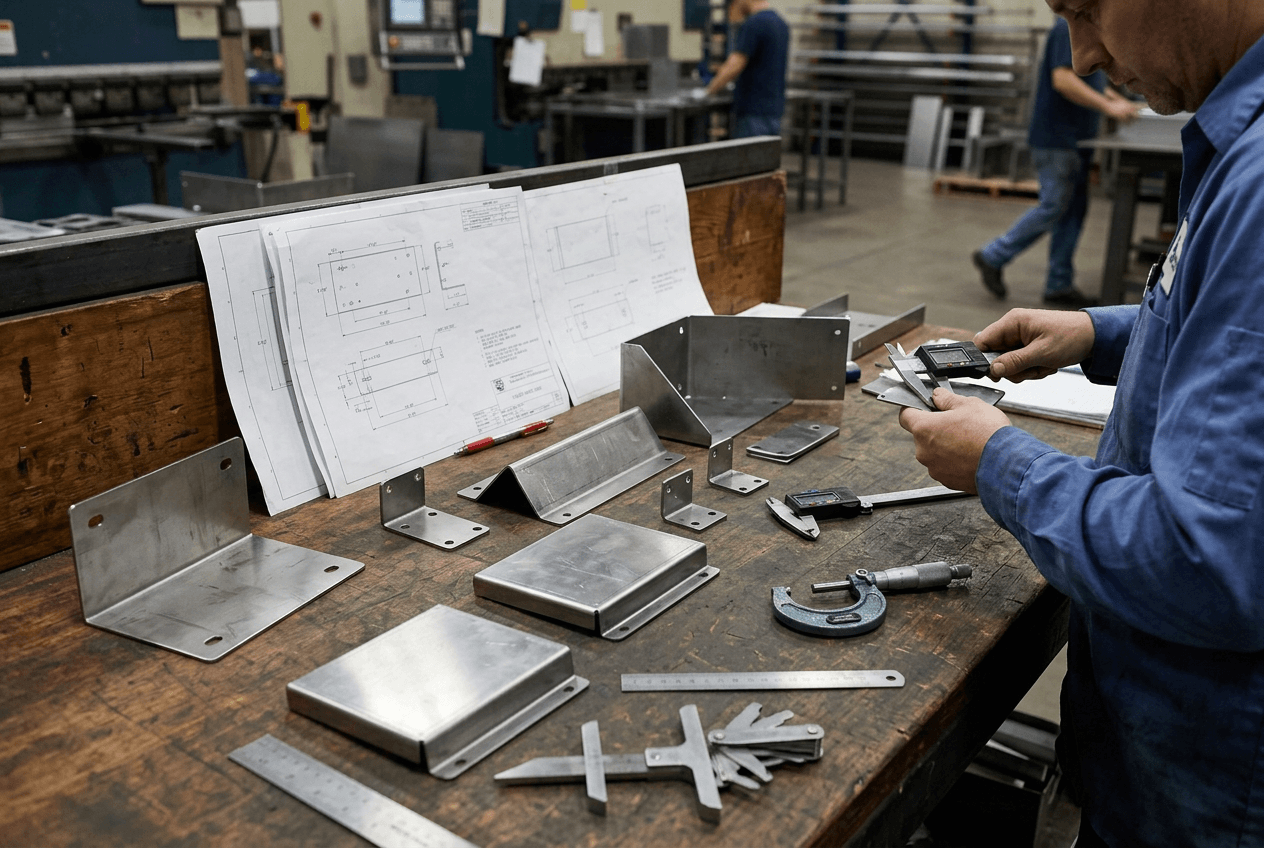
Many buyers treat prototype approval as a safety net. It helps, but it cannot repair every weak RFQ. A prototype can receive more hand fitting, more inspection attention, and more time for rework than a production batch. If the material and inspection basis remain unclear, the approved sample may prove only that one piece can be made, not that the batch can repeat.
Batch risk grows when the part includes doors, latches, slots, shelves, tabs, mounting faces, or welded corners. These features depend on repeatable forming and assembly control. The type of metal affects springback, weld shrinkage, and finish response across the batch. A sample made from one material lot may pass. A production run using a broader thickness range may create different fit-up results.
Buyers should use the prototype stage to confirm assumptions, not discover basic material requirements. Before sample approval, the supplier and buyer should agree on the metal grade, thickness range, bend radius, finish system, cosmetic surfaces, inspection datums, and process stage for key dimensions.
Sample notes should become batch controls
A useful prototype review does more than mark “approved.” It records what made the sample acceptable. If a door closes correctly only after hand adjustment, that fact matters. If a bracket fits only before powder coating, that fact matters. If a welded assembly holds flatness only with extra fixturing, that fact matters.
The RFQ and drawing package should absorb those lessons before batch release. Otherwise, production operators may follow the original incomplete drawing while the buyer expects the hand-corrected sample. That gap often causes arguments over whether the batch “matches the sample” or “matches the drawing.”
For sheet metal parts, buyers should ask suppliers to identify features that need batch controls. These may include bend angle checks, go/no-go gauges, fixture inspection, coating thickness checks, first-article inspection, and assembly trials. Yishang can review drawings and prototype notes in this context when buyers need the quote to reflect real inspection risk rather than a simplified sample assumption.
Batch consistency depends on the same material basis
Consistency starts with the same material basis across prototype and production. The grade, thickness range, surface condition, and finish route should not drift without approval. Substitution rules also need limits. A supplier may propose an alternative grade for cost or availability, but the buyer should decide whether that grade changes strength, corrosion resistance, appearance, conductivity, or bend behavior.
A controlled substitution can help a project. An uncontrolled substitution can create a batch defect. The difference lies in documentation. Buyers should require written approval for any material change that affects fit, finish, or inspection. That rule protects both sides because it prevents a purchasing shortcut from becoming a quality dispute.
What buyers should clarify before comparing sheet metal suppliers
The safest time to remove ambiguity is before quote comparison. At that point, suppliers can still price the same requirement, challenge unrealistic expectations, and propose alternatives openly. After award, every clarification feels like a change. After production, it becomes a claim.
A strong RFQ does not need to become a long textbook. It needs to control the assumptions that affect cost, lead time, inspection, and assembly. The buyer should name the type of metal and grade, the thickness and acceptable tolerance, the finish system, the functional dimensions, and the inspection state for critical features. If the buyer does not know the best material, the RFQ should ask suppliers to quote named options with separate assumptions.
Supplier communication also works better when the drawing package shows how the part will be used. Assembly photos, mating part drawings, load points, hinge details, mounting hardware, and environmental conditions help the fabricator understand what must not fail. That context matters more than extra notes that repeat generic tolerances.
Clarifications that prevent quote assumptions from becoming disputes
Buyers should confirm whether the part operates indoors, outdoors, in washdown areas, near chemicals, in a public display area, or inside another assembly. They should also state which surfaces are visible and which dimensions control mating fit. If a powder-coated tab must insert into a slot, the clearance requirement should apply after coating unless the drawing says otherwise.
Quantities and release plans also deserve attention. A one-piece prototype, a 20-piece pilot run, and a 500-piece batch may need different fixture and inspection decisions. If future volume matters, suppliers should know early. They may choose a process that costs more at sample stage but reduces variation and rework in production.
Yishang supports custom sheet metal fabrication projects such as enclosures, brackets, frames, metal cabinets, and welded assemblies. The most useful RFQ discussions usually happen before the buyer locks the supplier. Send the drawing revision, intended type of metal, material grade, thickness, quantities, tolerance notes, finish expectations, assembly photos, and any prototype concerns. That information lets the supplier quote the real manufacturing and inspection requirement, not a guess.
If you are preparing a new RFQ, ask for assumptions to appear in writing. Ask where inspection will occur, which features need finished-state checks, and whether any material substitution requires approval. A short clarification round can prevent a long dispute after the batch arrives.
To discuss a sheet metal fabrication RFQ with Yishang, send your drawings, material requirements, quantities, tolerances, finish expectations, assembly context, and target schedule through Yishang. Clear input helps turn the quote into a production plan instead of a list of hidden assumptions.
Frequently Asked Questions
Why is “type of metal to be confirmed” risky in a sheet metal RFQ?
It lets each supplier build the quote around a different assumption. The material choice affects raw stock, cutting, bending, welding, finishing, inspection, cost, and lead time. Buyers may then compare prices that do not describe the same part.
Should buyers allow suppliers to recommend a different metal grade?
Yes, but the RFQ should control the process. Ask suppliers to list the proposed grade, reason, price effect, lead time effect, and inspection impact. Do not allow substitution without approval when the change affects fit, corrosion resistance, appearance, conductivity, or strength.
How does the type of metal affect inspection of bent parts?
Different metals have different springback, thickness variation, and forming behavior. A hole pattern that passes in the flat blank may not meet the functional requirement after bending. Critical features should state whether inspection occurs before forming, after forming, after coating, or after assembly.
Why can powder coating create assembly problems after a prototype passes?
Powder coating adds build to edges, tabs, slots, hinge areas, and mating faces. A sample may fit before coating or after hand adjustment, while batch parts may bind after finishing. Buyers should define whether clearances apply after coating and whether masking is required.
What should buyers send with drawings for metal enclosures, brackets, or welded frames?
Send the drawing revision, metal grade, thickness, quantity, tolerance notes, finish requirements, visible surfaces, assembly photos, mating part details, and prototype concerns. This information helps suppliers quote the same requirement and identify fit or inspection risks early.
Can prototype approval guarantee batch consistency?
No. A prototype may receive extra hand fitting or use a different material lot. Batch consistency requires the same material basis, controlled bend and weld processes, documented finish expectations, and agreed inspection datums before production release.