
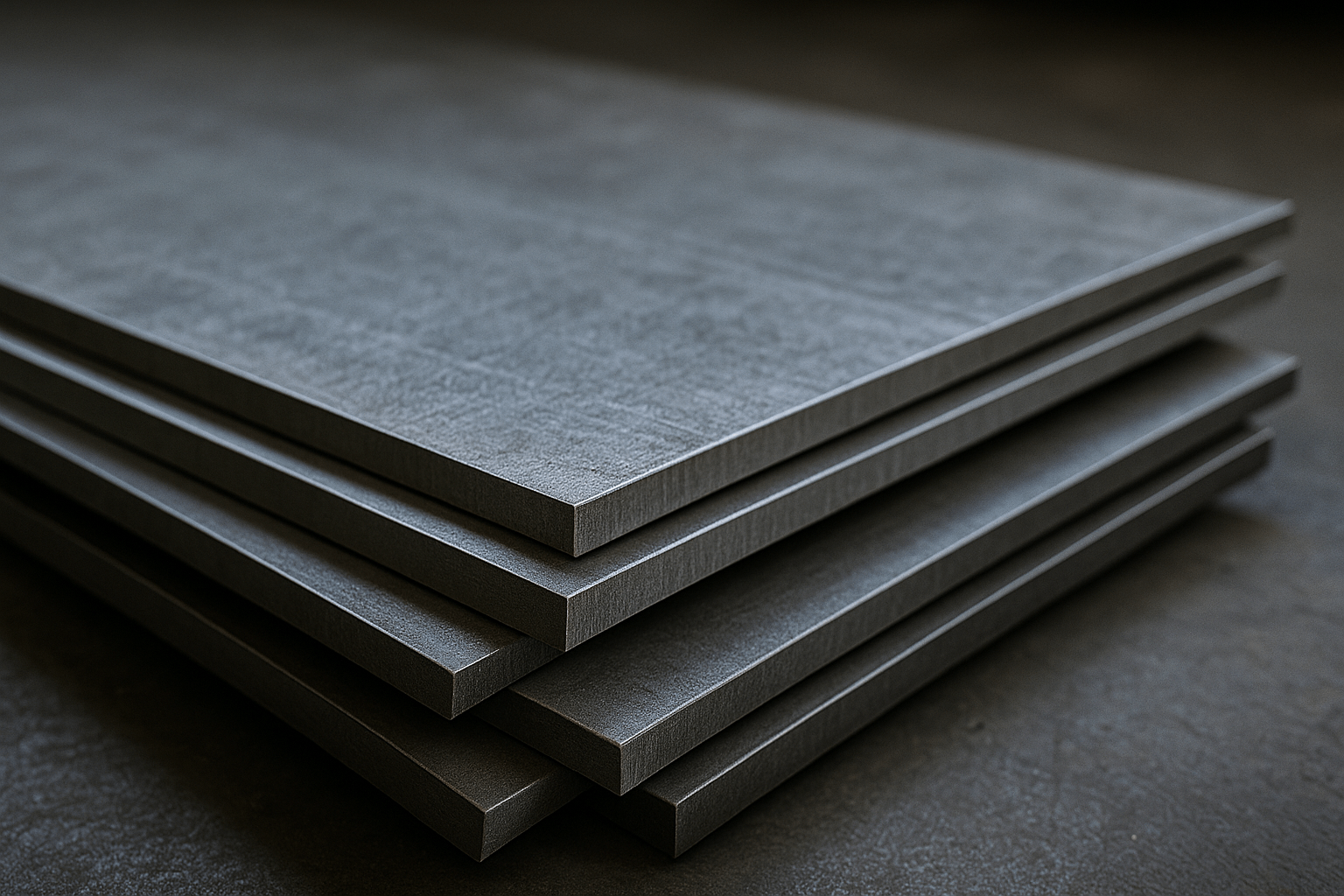
I. Why Steel “Type” Matters in Cross-Border Procurement
For many international wholesale buyers, low carbon steel appears constantly in RFQs, drawings, and purchase orders. It looks simple on paper. In actual manufacturing, however, “low carbon steel” is not one single material. Different types behave differently during forming, welding, coating, storage, and outdoor use.
When the wrong type is selected, buyers often become the first to hear about the problem. A customer may report bending cracks, deep drawing failures, paint peeling, or early rust after installation. Once that happens, claims, rework, and production delays can quickly consume the margin of the order.
This guide explains low carbon steel from a sourcing perspective. The goal is not to turn buyers into metallurgists, but to help them understand how steel type affects price, risk, and performance in real bulk orders.
By the end, you should be able to read an RFQ or drawing and ask the right two questions:
“Which type of low carbon steel actually fits this job?”
“How should I specify it so the supplier delivers the right material?”
II. Low vs Medium vs High Carbon Steel – A Quick Buyer View
Before comparing different types of low carbon steel, it helps to see where they sit within the wider carbon steel family. Buyers often search for “types of carbon steel” or “low carbon vs high carbon steel” when they are trying to clarify what their project really needs.
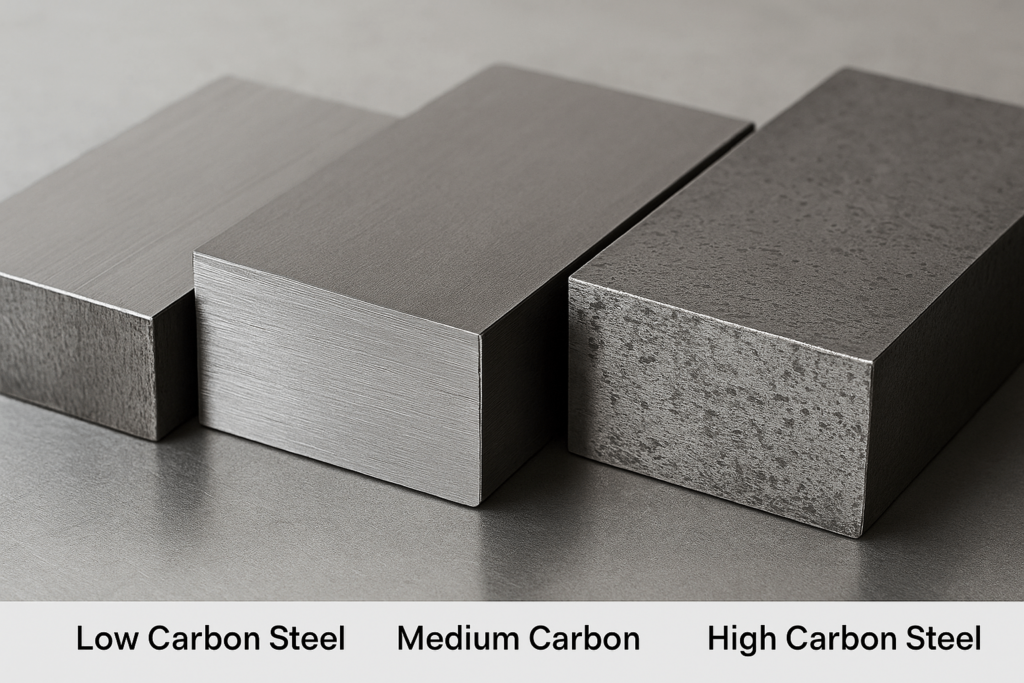
A. Snapshot Comparison
| Type of Carbon Steel | Typical Carbon Range | Key Properties | Typical Uses |
| Low carbon steel | ~0.05–0.25% | High ductility, easy to weld and form | Sheet metal parts, cabinets, frames, enclosures |
| Medium carbon steel | ~0.25–0.60% | Higher strength, less ductile | Shafts, gears, mechanical parts |
| High carbon steel | ~0.60–1.50% | Very hard, wear resistant, more brittle | Tools, springs, wear components |
For most sheet metal fabrication, frames, and enclosures, low carbon steel is the natural choice. Medium and high carbon steels have their place, but they are more often used for forged, machined, or wear-resistant parts rather than thin fabricated sheet metal components.
B. The Core Difference Between Low Carbon and High Carbon Steel
When buyers ask about the difference between low carbon and high carbon steel, they are usually asking something practical:
Which one is easier to form and weld?
Which one is better for general fabrication?
Which one matches the customer’s product?
In simple terms:
Low carbon steel is easier to cut, bend, draw, weld, and coat. It is widely used for cabinets, enclosures, brackets, and general sheet metal parts.
High carbon steel is harder and stronger, but more difficult to form and weld. It is more suitable for cutting tools, springs, and wear components.
So if a drawing includes laser cutting, bending, welding, and coating, the safer starting point is usually low carbon steel or one of its sub-types—not the highest carbon steel available.
III. What Low Carbon Steel Means in Manufacturing – In Buyer Language
Low carbon steel usually contains around 0.05%–0.25% carbon. Together with manganese, silicon, and controlled impurities, this low carbon content creates a structure that is generally easy to bend, stretch, weld, and process.
For buyers, the practical meaning is straightforward:
low carbon steel usually offers good ductility and weldability;
it is a common choice for sheet metal parts, metal cabinets, frames, machine covers, and fabricated structures;
different grades and processing routes can still behave very differently in production.
That last point is often where sourcing problems begin. A material name alone does not tell the whole story.
A. Microstructure and Why Buyers Should Care
Low carbon steels are mostly ferrite, with some pearlite. Ferrite gives flexibility; pearlite adds strength. The balance between them, along with grain size and material cleanliness, affects how the steel behaves during forming and welding.
This is why two coils with the same nominal low carbon steel grade can still perform differently. One may form smoothly. Another may crack sooner if it has more residual strain or a less suitable processing route.
For buyers, the lesson is simple: grade labels matter, but they are not enough. The steel type and production route matter too.
B. Typical Mechanical Performance – A Practical Reference
Most commercial low carbon steel sheet products fall roughly within these mechanical ranges:
| Property | Typical Range |
| Yield strength | 140–350 MPa |
| Tensile strength | 270–450 MPa |
| Elongation (A50) | 26%–40% |
| Brinell hardness (HB) | ~90–170 |
These values are useful when checking mill test reports. If a supplier offers “low carbon steel material” with unusually low elongation or unexpectedly high hardness, it may not behave as expected during bending, forming, or welding.
IV. Process-Defined Types: How Production Route Changes the Steel You Buy
The first way to classify low carbon steel is by processing route. This affects surface condition, dimensional accuracy, internal stress, coating suitability, and price.
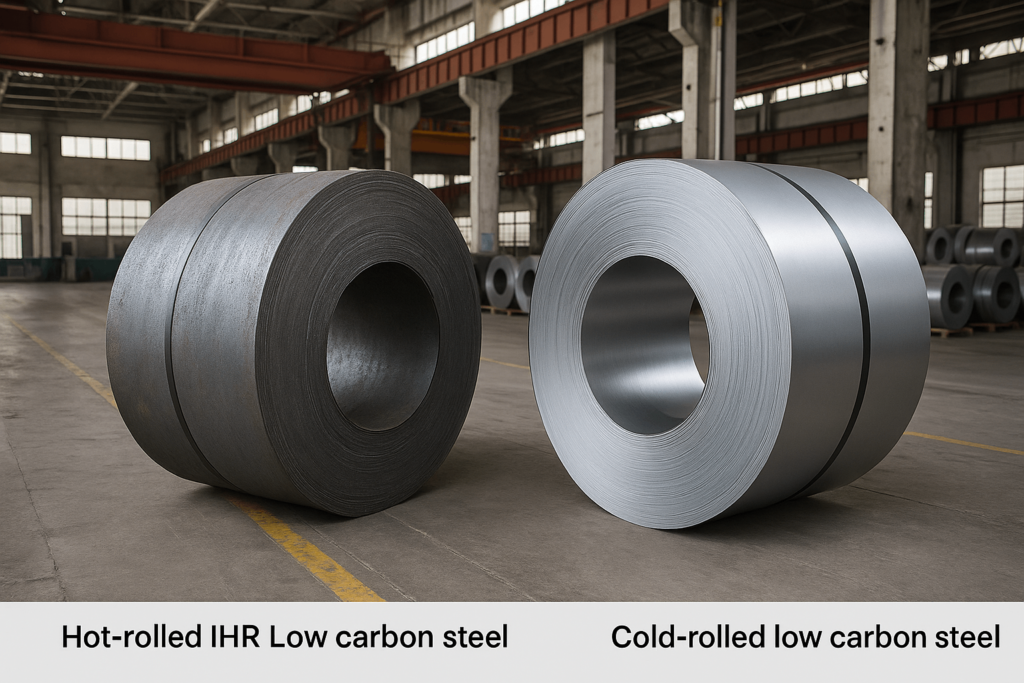
A. Hot-Rolled (HR) Low Carbon Steel
Hot-rolled steel is produced at high temperature and cooled in air. It usually has surface scale, less precise edges, and wider thickness tolerances. In return, it is cost-effective and widely available in heavier gauges.
It is often used for:
welded frames;
structural components;
industrial bases and supports.
If the part does not require a fine surface or tight dimensional control, HR low carbon steel can be an economical option. It is less suitable for visible cosmetic panels or precise deep drawn parts unless further processing is applied.
B. Cold-Rolled (CR) Low Carbon Steel
Cold-rolled steel is rolled at or near room temperature. Compared with HR material, it usually offers better thickness accuracy, smoother surfaces, and improved dimensional stability.
For buyers sourcing sheet metal parts, cabinets, enclosures, machine housings, shelving systems, or retail fixtures, CR low carbon steel is often the default choice. It also provides a better base for powder coating or painting, especially when the final appearance matters.
C. Annealed Low Carbon Steel
Annealed low carbon steel is usually cold-rolled material that has been heat treated to reduce internal stress and improve softness. It becomes useful when parts involve tighter bends or moderate drawing.
Buyers may consider annealed material when:
tight-radius bends are required;
the drawing depth is moderate;
standard CR material causes occasional cracking.
In some projects, changing the specification from basic CR steel to CR annealed low carbon steel can solve forming complaints without redesigning the part.
D. Pickled & Oiled (P&O)
Pickled & oiled steel removes mill scale through pickling, then adds temporary oil protection. It is often chosen when cleaner cutting, welding, or coating preparation is needed.
P&O low carbon steel is useful when:
laser cutting needs cleaner edges;
welding quality matters;
heavy scale would increase grinding or cleaning work.
Compared with standard HR material, P&O can reduce secondary processing time, especially in projects with extensive cutting and welding.
E. Galvanized Types (HDG, EG, GA)
Galvanized low carbon steel adds a zinc layer to improve corrosion resistance. The common types include:
HDG (Hot-Dip Galvanized): a thicker, more robust zinc coating, often used for outdoor cabinets, traffic equipment, and harsher environments.
EG (Electro-Galvanized): a thinner, smoother coating with good paintability, suitable for cosmetic panels that need moderate protection.
GA (Galvannealed): a zinc-iron alloy coating with good paint adhesion, commonly used in automotive and appliance applications.
For coastal markets or high-humidity regions, galvanized low carbon steel is often a safer choice than bare CR material.
V. Performance-Defined Types: Function-Oriented Low Carbon Steels
Beyond processing route, low carbon steel can also be classified by performance. These types are often named directly in engineering drawings, customer specifications, or material requirements.
A. Mild Steel – The Baseline Option
“Mild steel” usually refers to basic, non-alloyed low carbon steel with standard strength and ductility. It works well for simple, cost-sensitive parts.
Typical uses include:
brackets and mounting plates;
simple frames and racks;
indoor structures and support components.
When an RFQ mentions mild low carbon steel for simple parts, it often means the customer wants a cost-effective material rather than special performance.
B. Drawing Quality (DQ) and Deep Drawing Quality (DDQ)
DQ and DDQ steels are made for forming. They provide better elongation and more controlled surface quality than general-purpose material.
They are commonly used for:
deep drawn pans and covers;
appliance housings;
stamped shells and casings.
If a customer reports cracking or wrinkling during forming, moving from basic mild steel to DQ or DDQ is often a practical solution.
C. Interstitial-Free (IF) Steel
IF steel is designed with very low interstitial elements such as carbon and nitrogen. This gives it excellent formability.
It is often used for:
complex automotive body panels;
large curved appliance fronts;
multi-stage deep drawn components.
For automotive or white goods projects, buyers should clarify whether standard DDQ is enough or whether IF steel is required by the customer.
D. Bake-Hardenable (BH) Steel
BH steel can be formed first and then gain additional strength during the paint-bake process. It offers good formability during manufacturing and improved rigidity after painting.
These steels are often used in vehicle skins and structural panels where stiffness is important.
E. High-Strength Low-Alloy (HSLA) Low Carbon Steel
HSLA is part of the low carbon steel family, but it is strengthened through microalloying and controlled rolling. It offers higher strength while maintaining reasonable weldability and formability.
It is useful when customers need:
higher load capacity without increasing thickness;
lighter equipment or transport structures;
better strength than mild steel without moving into high carbon steel.
For pallet racks, frames, lifting equipment, and heavy-duty shelves, HSLA is often worth discussing.
VI. Low Carbon Steel Grades Chart – A Buyer-Friendly View
When buyers work with suppliers and customers across different regions, grade systems can become confusing. A simple low carbon steel grades chart helps compare common standards and applications.
| System | Low Carbon Steel Grades | Approx. C Range | Typical Uses in Sheet Metal |
| SAE / AISI | 1006, 1008, 1010 | ~0.06–0.10% | Stamping parts, tubing, general fabrication |
| EN | DC01, DC03, DC04 | ~0.03–0.10% | DC01 for basic forming, DC03 / DC04 for deeper drawing |
| JIS | SPCC, SPCD, SPCE | ~0.03–0.10% | General CR sheet, drawing, deep drawing |
| GB | Q195, Q215, Q235 | ~0.06–0.20% | Structural parts, stamped frames, brackets |
This chart is not exhaustive, but it reflects how many buyers and engineers compare carbon steel material in practice. When quotations use different regional standards, this kind of comparison helps reduce misunderstandings.
If a project requires higher strength or different hardness, medium carbon or high carbon steel grades may appear in separate charts. Those materials are important for some mechanical parts, but they are less common in typical sheet metal enclosures and frames.
VII. How Low Carbon Steel Types Behave in Real Manufacturing
To make better sourcing decisions, it helps to think about what happens when the steel reaches the factory floor. Cutting, forming, welding, and coating all reveal whether the selected type was suitable.
A. Forming and Deep Drawing
For simple bends, mild steel or standard CR material is often sufficient. For deep cups, multi-stage forming, or sharp corners, DQ, DDQ, or IF steel is usually safer.
These grades can help:
reduce cracking risk;
make springback more predictable;
lower scrap and rework rates.
If you regularly quote metal cabinets, vending fronts, or deep-drawn electrical enclosures, asking about forming depth and tooling early can prevent material mismatch.
B. Welding Performance
Low carbon steels generally weld well. Problems usually appear when coatings, thickness, or material strength are not considered properly.
Common challenges include:
thick galvanized coatings causing porosity;
HSLA steels being welded without controlled heat input;
dissimilar materials being joined without review.
When discussing a project, it is useful to ask which welding process will be used—MIG, TIG, spot, or laser—and confirm whether the proposed steel type and surface condition support that process.
C. Cutting, Machining, and Laser Processing
P&O and CR steels usually provide cleaner laser cuts and lower secondary finishing costs than heavily scaled HR material. HR steel may require extra cleaning or grinding to reach the same edge quality.
For laser-cut blanks or machined sheet metal parts, specifying both the base material and surface condition clearly can reduce consumable cost, improve edge quality, and shorten lead time.
D. Coating and Surface Treatment
For indoor cabinets and displays, CR steel with powder coating is common. For outdoor products, galvanized steel plus coating may be more reliable.
If the final product will be used near the sea, in humid warehouses, or in industrial environments, buyers should confirm whether HDG, EG, or GA with powder coating is expected.
This is also where the low carbon vs high carbon steel difference becomes practical. Low carbon steel is generally easier to weld and coat, which makes it the preferred choice for many painted sheet metal assemblies.
VIII. Five Practical Decision Models for Wholesale Buyers
Here are five practical sourcing models that buyers can use when preparing RFQs or quoting to end customers.
Model 1: Complex Forming
Situation: deep drawn components, tight-radius bends, multi-step forming.
Recommended types: DQ, DDQ, IF.
Buyer impact: lower rejection rates, fewer forming complaints, more stable supply.
Model 2: Higher Strength at Same Thickness
Situation: pallet racks, structural frames, material handling equipment.
Recommended type: HSLA low carbon steel.
Buyer impact: meet load requirements without changing design thickness, improving competitiveness.
Model 3: Outdoor and Corrosive Environments
Situation: street-side boxes, outdoor cabinets, parking equipment, coastal markets.
Recommended types: HDG, EG, GA with appropriate coating.
Buyer impact: fewer rust complaints, longer product life, stronger brand reputation.
Model 4: Visible Cosmetic Surfaces
Situation: retail fixtures, visible machine covers, kiosks.
Recommended types: CR or skin-pass steel.
Buyer impact: more consistent appearance, smoother coating, fewer visual defects.
Model 5: Budget-Driven Projects with Simple Function
Situation: simple brackets, indoor supports, non-critical frames.
Recommended type: mild low carbon steel with suitable coating.
Buyer impact: lowest material cost with acceptable performance.
IX. Common Misunderstandings in International Steel Procurement
Even experienced buyers can run into quality problems when a familiar steel term is interpreted too broadly. The following misunderstandings are especially common in cross-border sourcing.
A. “Same Grade, Same Performance”
Two batches of SPCC or 1008 from different mills may not behave exactly the same. Annealing, rolling schedule, and impurity control can all affect forming performance. For critical parts, buyers should review mechanical data and, where possible, test samples.
B. “CR Is Always Better Than HR”
CR is better for cosmetic quality and precise forming. But for heavy welded frames or thick structural sections, HR may be more economical and fully adequate. The application matters more than the assumption that CR is always better.
C. “Coating Solves Everything”
Coating can improve corrosion resistance, but it cannot fix poor formability. If the steel cracks during forming, coating only hides the problem temporarily. The correct material type still has to come first.
D. “Higher Strength Is Automatically Better”
Higher strength may look attractive on a drawing, but it can reduce elongation and make bending or welding more difficult. For formed and welded components, strength should be balanced with ductility.
X. Case Studies with Real Procurement Impact
Case 1: Bending Cracks in a European Project
A European buyer sourced brackets made from HR mild steel. The design included tight bends, and scrap rates were high. After switching to CR DQ steel and slightly adjusting the bend radius, cracking was eliminated and yield improved.
Case 2: Premature Rust in Coastal Markets
A Middle Eastern distributor sold powder-coated CR cabinets into coastal areas. Rust appeared at edges and damaged coating zones within months. Later batches used HDG low carbon steel as the base material with powder coating, which reduced complaints and improved outdoor durability.
Case 3: Frame Deformation in Logistics Equipment
A North American customer reported deformation in pallet rack frames made from mild steel. The solution was to switch to HSLA low carbon steel while keeping similar thickness. The frames gained better strength without requiring major design changes.
XI. FAQ: Buyer Questions About Low Carbon Steel Types
Q1. What is the difference between low carbon and high carbon steel in fabrication?
Low carbon steel is easier to cut, bend, weld, and coat. It is commonly used for sheet metal parts, cabinets, frames, and general fabrication. High carbon steel is harder and more wear resistant, but it is more difficult to form and weld.
Q2. What are common low carbon steel grades for sheet metal work?
Common grades include SAE 1008 / 1010, EN DC01–DC04, JIS SPCC–SPCE, and GB Q195–Q235. For deeper drawing, buyers often look at DC03 / DC04 or SPCE.
Q3. When should I not use low carbon steel?
Low carbon steel is not ideal for parts that require very high hardness or extreme wear resistance without surface treatment, such as cutting edges or heavy-duty springs.
Q4. Is low carbon steel suitable for cabinets and enclosures?
Yes. For indoor cabinets, CR low carbon steel with powder coating is common. For outdoor enclosures, galvanized low carbon steel plus coating usually offers better corrosion resistance.
Q5. How should I describe low carbon steel in an RFQ?
Instead of writing only “low carbon steel,” include:
desired type, such as HR, CR, P&O, or galvanized;
forming requirements, such as deep drawing or tight-radius bending;
surface expectations, cosmetic or non-cosmetic;
environment, such as indoor, outdoor, or coastal;
relevant standard, such as SAE, EN, JIS, or GB.
This gives the supplier enough information to recommend the correct material.
XII. Buyer’s Practical Checklist Before Issuing an RFQ
Before sending an RFQ or confirming a drawing, buyers should consider:
How complex is the forming?
Will the part be cut, bent, welded, and coated?
Is the part visible or hidden in the assembly?
Will it be used indoors, outdoors, or near the sea?
What are the load and stiffness requirements?
Is the project more sensitive to cost or performance?
Mapping these answers to the decision models above gives you a practical starting point for choosing the right low carbon steel type.
XIII. Conclusion
Low carbon steel may look like a simple commodity on a purchase order, but in real manufacturing its type matters. Processing route, formability, strength, surface condition, and coating compatibility all affect whether the final part performs as expected.
For buyers, the safest approach is to specify low carbon steel based on the actual production process and service environment, not just by a general material name.
If you are preparing RFQs for sheet metal parts, cabinets, frames, or custom low carbon steel components, YISHANG can review your requirements and help you choose a practical material direction before production begins.