
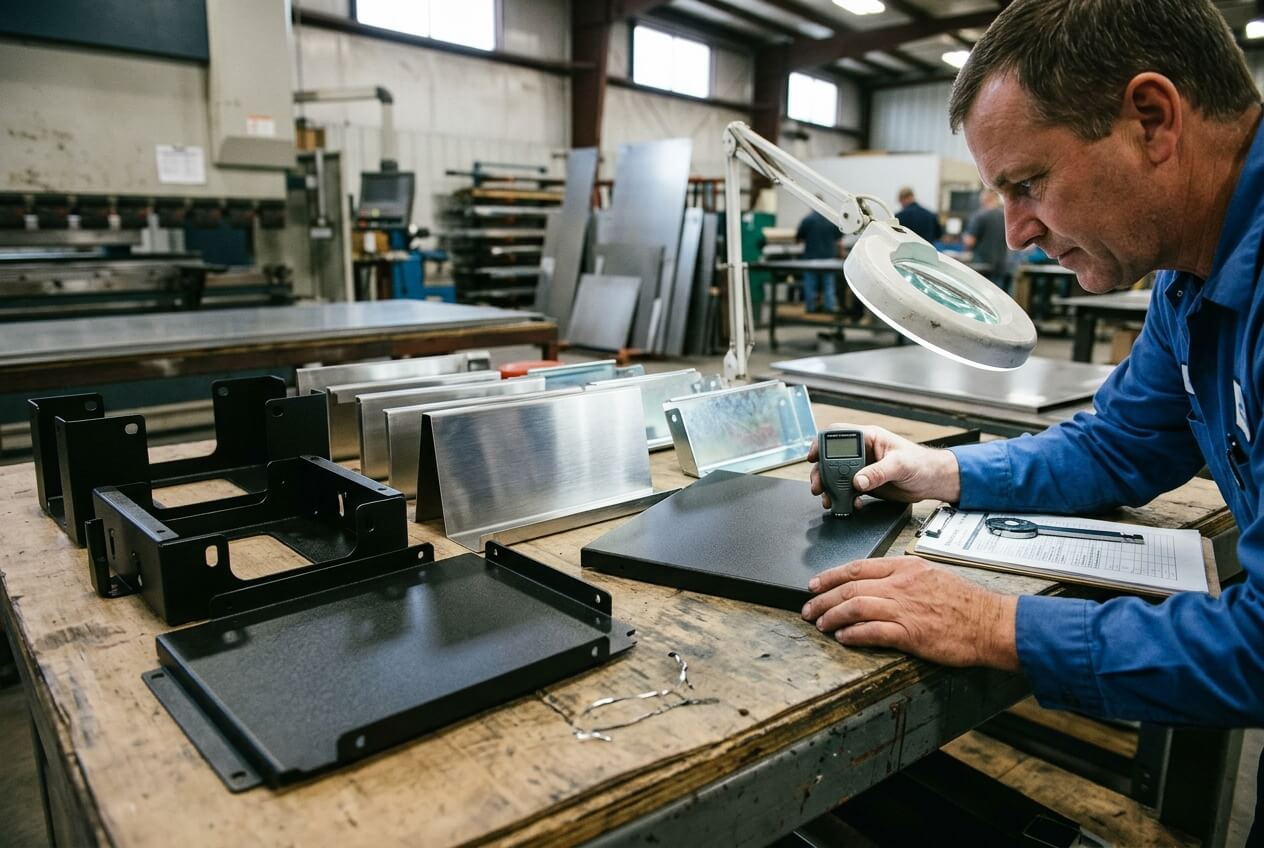
An OEM buyer may request quotes for a powder coated enclosure, a brushed stainless front panel, and several bent brackets. Three suppliers can return similar unit prices. The comparison looks simple until the first batch arrives and the finish fails inspection.
Powder may build up around hinge holes. Brushed grain may run in different directions. A stainless panel may show handling marks near visible edges. A coated bracket may fit during prototype approval but bind during batch assembly. The parts may match the basic drawing, yet still fail the buyer’s real acceptance standard.
This article focuses on one procurement risk: finish acceptance ambiguity in the RFQ. The issue does not start at the coating booth. It starts when drawings name the types of metals but do not define visible surfaces, masking zones, coating thickness, inspection method, packing, or assembly-critical features.
Cold rolled steel, galvanized steel, stainless steel 304, stainless steel 316, aluminum 5052, and aluminum 6061 can all work in custom sheet metal fabrication. Each one creates different finish and handling risks. Buyers reduce disputes when they define how the selected metal must look, fit, ship, and pass inspection before suppliers quote.
Where Finish Ambiguity Distorts Otherwise Comparable Quotes
A drawing note such as "steel, powder coated black" or "brushed stainless finish" does not create a complete purchasing requirement. It names the finish category, but it does not define the acceptance standard. Suppliers then fill the gaps with their own assumptions.
One supplier may include extra grinding, masking, thread protection, cosmetic packing, and sample matching. Another may quote standard fabrication and standard powder coating. Their prices may look close, but they do not cover the same work. The low quote often becomes expensive after sorting, rework, air freight, or delayed assembly.
Visible faces need different controls than hidden faces
A powder coated machine enclosure may have a front door, side cover, rear service panel, and internal mounting rails. The front door faces the customer. The rear panel may only face a wall. Internal rails may never be seen after assembly.
If the RFQ treats every surface the same, suppliers cannot price the right finish scope. Some may over-control hidden areas. Others may under-control customer-facing surfaces. Buyers should mark A-surfaces, secondary visible surfaces, and hidden surfaces on drawings or annotated photos.
Material grade does not define cosmetic outcome
The same problem appears with stainless steel panels. Stainless steel 304 and 316 describe corrosion resistance and material grade. They do not define grain direction, scratch limits, weld discoloration, protective film, or packing method.
A front control panel can use the correct stainless grade and still fail. The brushed grain may run vertically on one batch and horizontally on another. Laser-cut edges may show marks near screw holes. Operators may remove film too early and create fingerprints or light scratches. The buyer sees a cosmetic defect. The supplier may see a part made to the drawing.
Yishang often reviews drawings and finish notes together because these assumptions affect quotation, process planning, and inspection. A better RFQ does not ask only which types of metals cost less. It explains which surfaces must survive fabrication, finishing, packing, shipping, and installation.
Why Different Types of Metals Change the Same Finish Requirement
Procurement teams often compare types of metals by strength, weight, corrosion resistance, and price. Those factors matter. However, finish acceptance adds another layer because each metal reacts differently during cutting, bending, welding, coating, polishing, and handling.
Cold rolled steel can coat well but still rust at weak points
Cold rolled steel works well for enclosures, cabinets, brackets, frames, and welded assemblies. It cuts and bends cleanly. It also accepts powder coating after proper surface preparation.
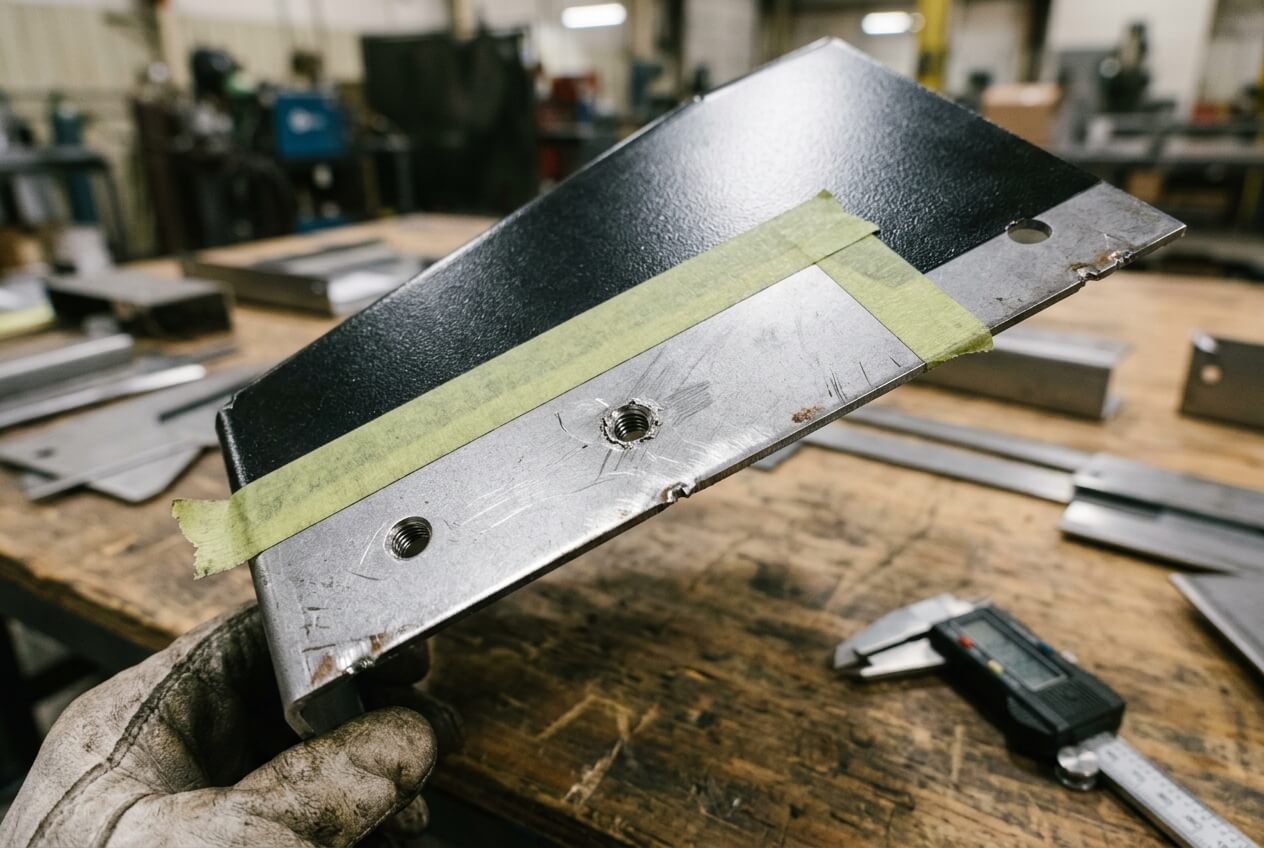
The risk appears at cut edges, weld seams, threaded inserts, and coating-damaged areas. If the RFQ does not define the service environment, a supplier may quote an indoor powder coat. Later, rust near a hinge, slot, or weld may trigger rejection. The buyer expected corrosion protection. The quote only covered a basic finish note.
Galvanized steel reduces corrosion risk but can raise appearance risk
Galvanized steel can help when corrosion matters. It may suit utility cabinets, outdoor brackets, support frames, or equipment bases. Yet the zinc surface can change pretreatment, adhesion, and final appearance.
A retail display rack, for example, may need a smooth black powder coat on visible faces. If the buyer chooses galvanized steel only for corrosion resistance, the final texture may not match the expected showroom finish. The RFQ should state both the environment and the cosmetic expectation. Otherwise, the material solves one risk and creates another.
Aluminum reduces weight but needs fit and handling control
Aluminum 5052 often suits formed covers, access panels, lightweight housings, and bent sheet metal parts. It bends better than many 6061 sheet applications. Aluminum 6061 can suit machined or structural parts, but it may create bending limitations in sheet metal designs.
Weight savings can introduce different finish problems. Thin aluminum panels dent during handling more easily than steel. Powder coating also adds thickness around holes, slots, and countersinks. If the buyer switches from steel to aluminum, the team should review bend radius, fastener fit, packing, and coating thickness before comparing quotes.
Stainless steel removes paint but not finish inspection risk
Stainless steel often looks safer because it does not need powder coating. That assumption can be dangerous. Stainless shifts the risk from coating defects to surface marks, grain direction, weld tint, polishing level, and protective film.
A stainless steel 316 outdoor cabinet door may resist corrosion better than stainless steel 304. Still, it can fail if the brushed finish looks inconsistent across doors. A food equipment cover may need weld discoloration removed. A medical cart panel may require strict scratch limits. The RFQ should connect the grade to the finish requirement, not treat the grade as the full specification.
How Missing Masking and Coating Thickness Notes Become Assembly Failures
Finish disputes do not always look cosmetic. Many appear as assembly problems. Powder coating, plating, polishing, and deburring can change the way parts fit. When drawings do not state whether dimensions apply before or after finishing, suppliers must guess.
Consider a powder coated steel cabinet with hinges, grounding studs, ventilation slots, and threaded inserts. The drawing may show correct hole locations. The prototype may assemble with extra care. During batch production, coating builds up in hinge holes and on mating faces. Doors become hard to align. Grounding points lose electrical contact. Workers chase threads after coating, adding labor and damaging the finish.
Small coating changes can create large assembly delays
A bracket with slotted mounting holes may look simple. If the powder coat adds thickness inside the slots, bolts may not slide during installation. A countersunk hole may also fail if coating prevents the screw head from sitting flush. These problems do not always appear during visual inspection. They appear on the assembly line, where delays cost more.
Buyers should mark assembly-critical features in the RFQ. These include hinge holes, slots, countersinks, tabs, locating pins, grounding pads, mating flanges, sliding surfaces, and threaded holes. The note should state whether the supplier must mask, plug, chase, ream, or inspect these features after coating.
Project example: enclosure doors that passed appearance but failed fit
An OEM sourced powder coated enclosure doors for equipment housings. The drawing specified cold rolled steel and black powder coating. It did not identify hinge holes as critical after coating. The first batch looked acceptable, but operators struggled to install hinges. Coating buildup reduced clearance and shifted the door position.
The issue started in the RFQ. The supplier priced standard coating without masking hinge areas. The buyer inspected color and surface marks, but not hinge fit with the final hardware. The fix required masking instructions, a coating thickness range near hinge holes, and a test assembly check during production inspection.
Why Prototype Approval Does Not Lock Batch Finish Without Written Controls
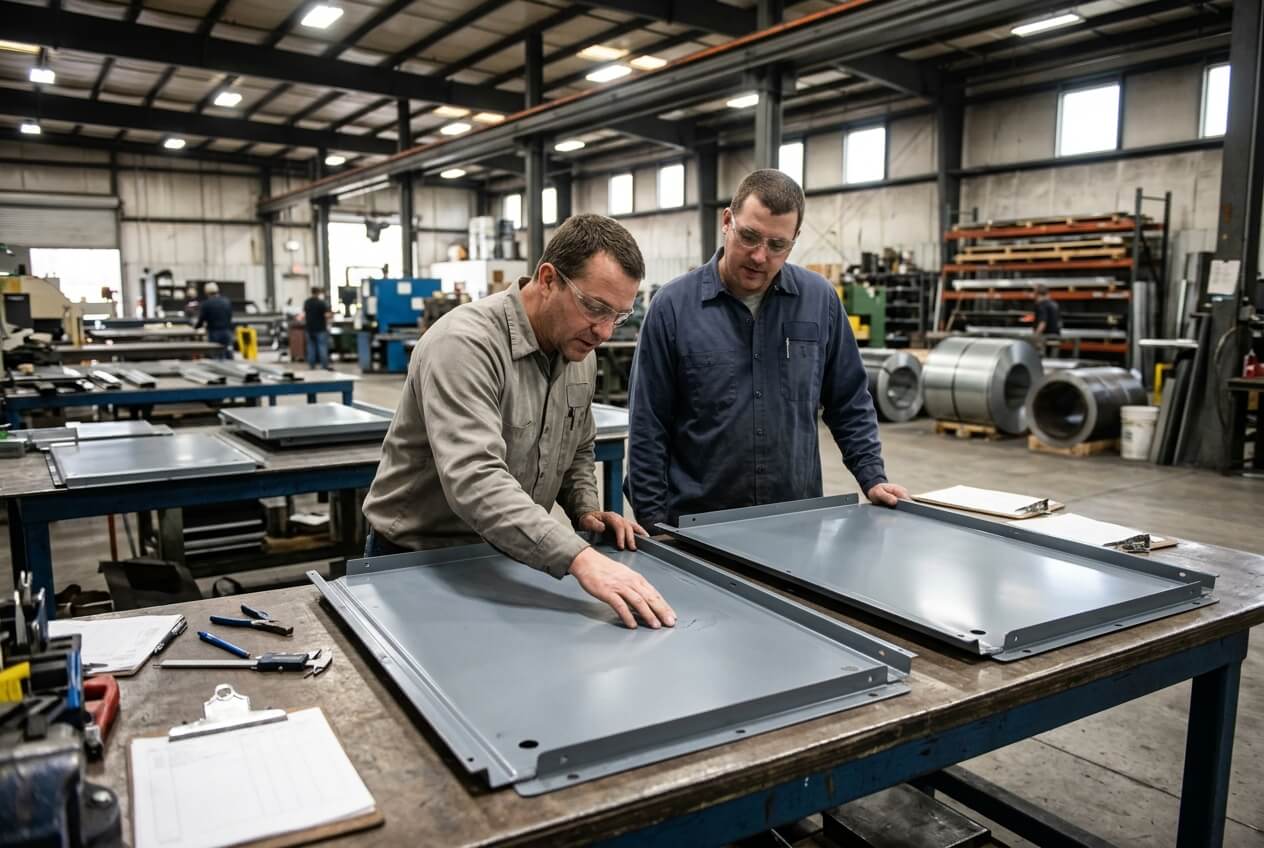
Prototype approval can create false confidence. A supplier may give one sample extra manual attention. A technician may hand-polish an edge, mask a hole carefully, adjust a bend, or pack the part individually. If no one records these details, batch production may follow a different standard.
Production parts move through laser cutting, CNC punching, bending, welding, grinding, coating, inspection, and packing in quantity. Small uncontrolled finish details become repeatable defects. The buyer may believe the approved sample defines the requirement. The supplier may believe the drawing and purchase order define it.
Prototype notes should separate requirements from sample luck
Buyers should review approved samples and ask which details must repeat. Does the grain direction matter? Must all exposed edges be smooth to touch? Should weld marks disappear on the front face? Do threaded holes need plugs during powder coating? Does each panel need protective film until final assembly?
These answers should move into drawings, inspection plans, or purchase notes before batch release. Photos help, but photos alone can mislead. A marked drawing gives suppliers a better basis for process planning, labor estimates, and quality checks.
Project example: welded frames that matched drawings but not covers
A buyer approved a prototype welded steel frame for a machine housing. The frame accepted cover panels during sample review. In batch production, welding heat distortion and grinding variation shifted several mounting points. Powder coating added another layer at the mating faces. Cover panels no longer sat flush.
The root cause was not one bad weld. The RFQ did not define post-weld critical dimensions, coated mating faces, or test assembly requirements. The supplier inspected the frame drawing. The buyer judged the frame as part of an assembly. Earlier clarification would have added welding control points, finish allowances, and cover-panel fit checks.
Mixed-material assemblies need even more control. A cabinet may combine a cold rolled steel body, stainless trim, aluminum access panel, and zinc-plated hardware. Each surface responds differently to finishing and packing. Batch consistency depends on controlling the interfaces, not only listing the types of metals on the bill of materials.
What Buyers Should Clarify Before They Compare Sheet Metal Quotes
A clear RFQ does not need to become a long textbook. It needs to remove the assumptions that drive finish rejection. Buyers should give suppliers enough information to quote the same scope, plan the same controls, and inspect against the same standard.
Start with the drawing. Mark A-surfaces, secondary visible areas, hidden areas, and assembly-critical features. Add material grades, thicknesses, tolerance requirements, and finish expectations. If the part needs powder coating, define color, gloss, texture, coating thickness range, and no-coat zones. If the part uses brushed stainless, define grain direction, scratch limits, protective film, and packing.
Next, connect finish to function. State which dimensions apply after coating. Identify holes, slots, countersinks, tabs, and mating faces that affect assembly fit. Provide mating parts, sample hardware, or inspection gauges when possible. These details help suppliers estimate labor, fixture needs, masking time, inspection time, and lead time more accurately.
Packing also belongs in the RFQ. Brushed stainless panels, polished aluminum covers, and powder coated doors can leave the factory correctly and arrive damaged after rubbing in transit. Export shipments increase handling time. If visible surfaces matter, specify separators, foam, edge protection, film, individual wrapping, or carton limits.
Supplier communication should happen before quote comparison, not after rejection. Ask each supplier to confirm assumptions about material, finish, masking, tolerances, inspection method, prototype controls, batch controls, and packing. If two suppliers answer differently, the RFQ still contains risk.
For custom sheet metal fabrication projects involving enclosures, brackets, frames, cabinets, or welded assemblies, Yishang can review drawings and finish expectations before quotation. Send drawings, material requirements, quantities, tolerances, finish expectations, cosmetic surface marks, assembly notes, prototype feedback, and any approved samples. This helps align the metal, process, finish, inspection, packing, cost drivers, and lead time before production starts.
Frequently Asked Questions
Why can the same finish note fail across different types of metals?
The same finish note can hide different fabrication and inspection risks. Cold rolled steel may need edge corrosion control. Galvanized steel may need closer adhesion and appearance review. Aluminum may need dent protection and clearance checks after coating. Stainless steel may need grain direction, scratch limits, and protective film.
What should buyers include in an RFQ for powder coated sheet metal parts?
Buyers should include material grade, thickness, color, gloss, texture, coating thickness range, no-coat zones, visible surface marks, assembly-critical features, tolerance requirements, inspection method, quantity, and packing needs. These details help suppliers quote the same finishing scope.
How do coating thickness and masking affect assembly fit?
Coating adds material to holes, slots, countersinks, hinges, tabs, and mating faces. Without masking or clearance planning, screws may not sit flush, hinges may bind, and grounding points may lose contact. Buyers should state which dimensions apply after finishing and which areas need protection.
Can a prototype pass inspection but the production batch fail?
Yes. A prototype may receive manual care that the batch process does not repeat. Hand polishing, careful masking, special packing, or one-off adjustment can hide production risk. Buyers should document required sample details before batch release.
How should buyers define cosmetic surfaces on metal enclosures or cabinets?
Buyers should mark A-surfaces, secondary visible surfaces, and hidden surfaces on drawings or photos. They should also define viewing distance, lighting expectations, scratch limits, weld cleanup, coating texture, and packing protection for customer-facing areas.
When should Yishang review finish acceptance risk?
Yishang can review finish acceptance risk before quotation, prototype release, or batch production. The review should include drawings, material grades, quantities, tolerances, finish notes, masking needs, assembly requirements, photos, and approved samples when available.