
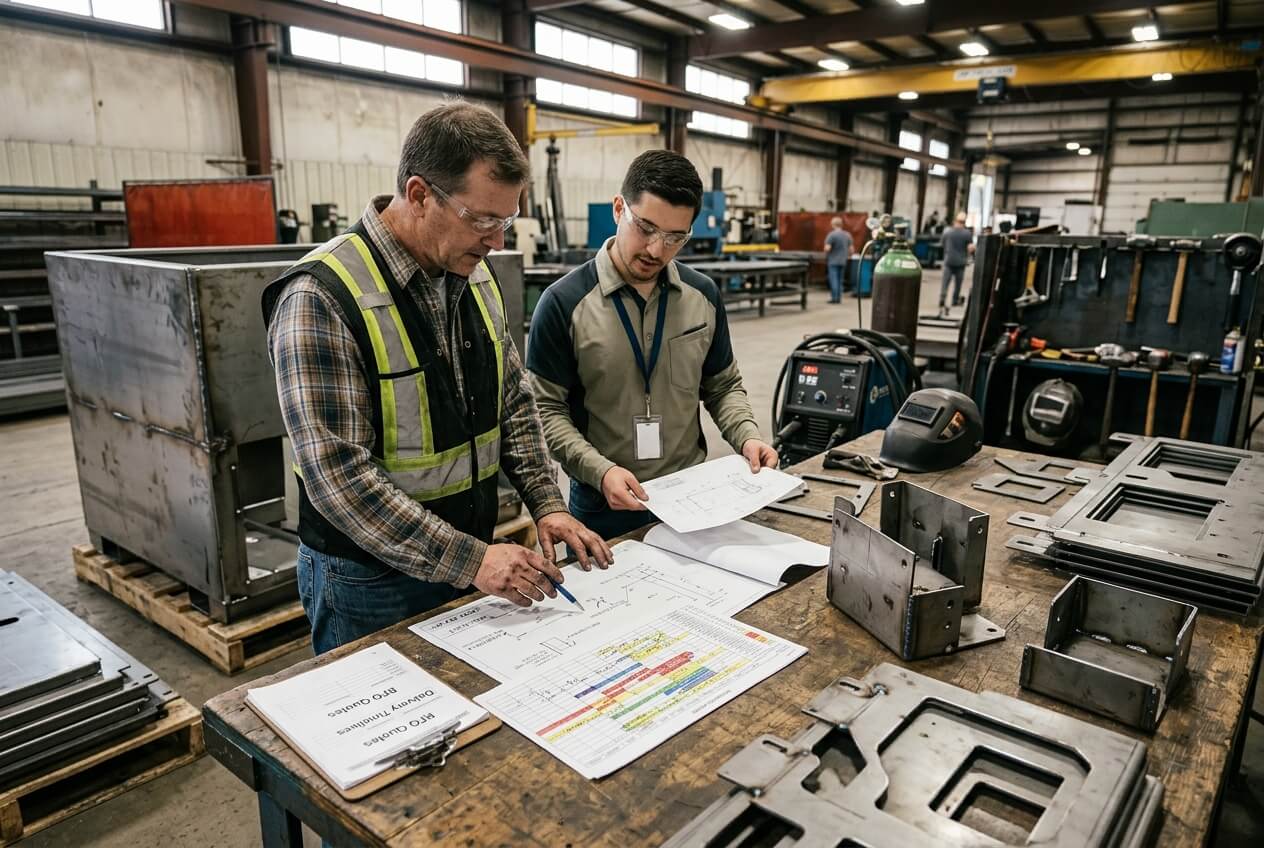
An OEM buyer sends one RFQ for a powder coated control cabinet, two welded support frames, and several bent internal brackets. The drawings show hole locations, bend dimensions, and material thickness. The weld note only says "weld as required."
Three suppliers quote the package. One assumes MIG welding with visible beads on non-cosmetic seams. Another assumes TIG welding with flush grinding on the cabinet corners. A third plans spot welding for internal flanges and asks for prototype approval before confirming the batch slot.
The buyer sees different unit prices and different lead times. The real problem is deeper. Each supplier priced a different welding process, fixture method, finishing sequence, inspection step, and rework allowance. If procurement selects the lowest quote without exposing those assumptions, the delay often appears after material purchase, fixture preparation, or first sample review.
This article focuses on one procurement risk: vague welding process notes make supplier quotes non-comparable and turn the production calendar into an assumption. The risk starts in the RFQ, but it can affect cost, assembly fit, powder coating, prototype approval, and batch repeatability.
Where Welding Process Assumptions Make Quotes Impossible to Compare
Buyers often treat welding as a shop-floor choice. That can work for simple hidden joints. It becomes risky on sheet metal enclosures, brackets, frames, cabinets, and welded assemblies where the weld affects appearance, distortion, strength, or fit.
A note such as "weld all around" or "weld as required" does not tell a supplier enough. The supplier must decide whether the joint needs MIG welding, TIG welding, spot welding, plug welding, laser welding, intermittent welding, or a mixed route. That decision changes labor time, operator skill, fixture needs, grinding time, inspection timing, and coating preparation.
The quote gap may not come from supplier margin
A low quote may exclude work that the buyer assumes. A high quote may include grinding, distortion control, and inspection that another supplier ignored. Both quotes can look reasonable on paper because both respond to the same unclear drawing.
Consider a wall-mounted electrical enclosure with a visible front frame. Procurement expects clean corners after powder coating. One supplier prices TIG welding, corner dressing, and surface preparation. Another prices faster MIG welding and leaves the bead visible because the drawing does not mark cosmetic faces. The second quote looks attractive until the sample arrives with weld buildup under the coating.
The consequence chain starts with an unclear weld note. The supplier fills the gap with its own process assumption. The quote then carries a hidden appearance standard. The buyer discovers the mismatch at sample review, when the calendar already includes cutting, bending, welding, and coating capacity.
Weld function should come before weld method
Procurement does not need to dictate every welding process. It should define what each weld must achieve. Is the weld structural, cosmetic, sealing, positioning, conductive, or temporary? Does the part need a continuous seam, stitch weld, spot weld pitch, or plug weld pattern? Which face remains visible after assembly?
Once the function is clear, the supplier can recommend the most stable route. For example, MIG welding may suit a carbon steel support frame because speed and strength matter more than bead appearance. TIG welding may suit a thin stainless panel with visible corners. Spot welding may suit internal flanges if electrode access and strength meet the design need.
Yishang can review drawings during the RFQ stage to separate buyer requirements from supplier assumptions. That review matters most when one package includes enclosures, brackets, frames, and powder coated assemblies with different weld functions.
How Vague Weld Notes Turn into Fixture, Fit, and Coating Delays
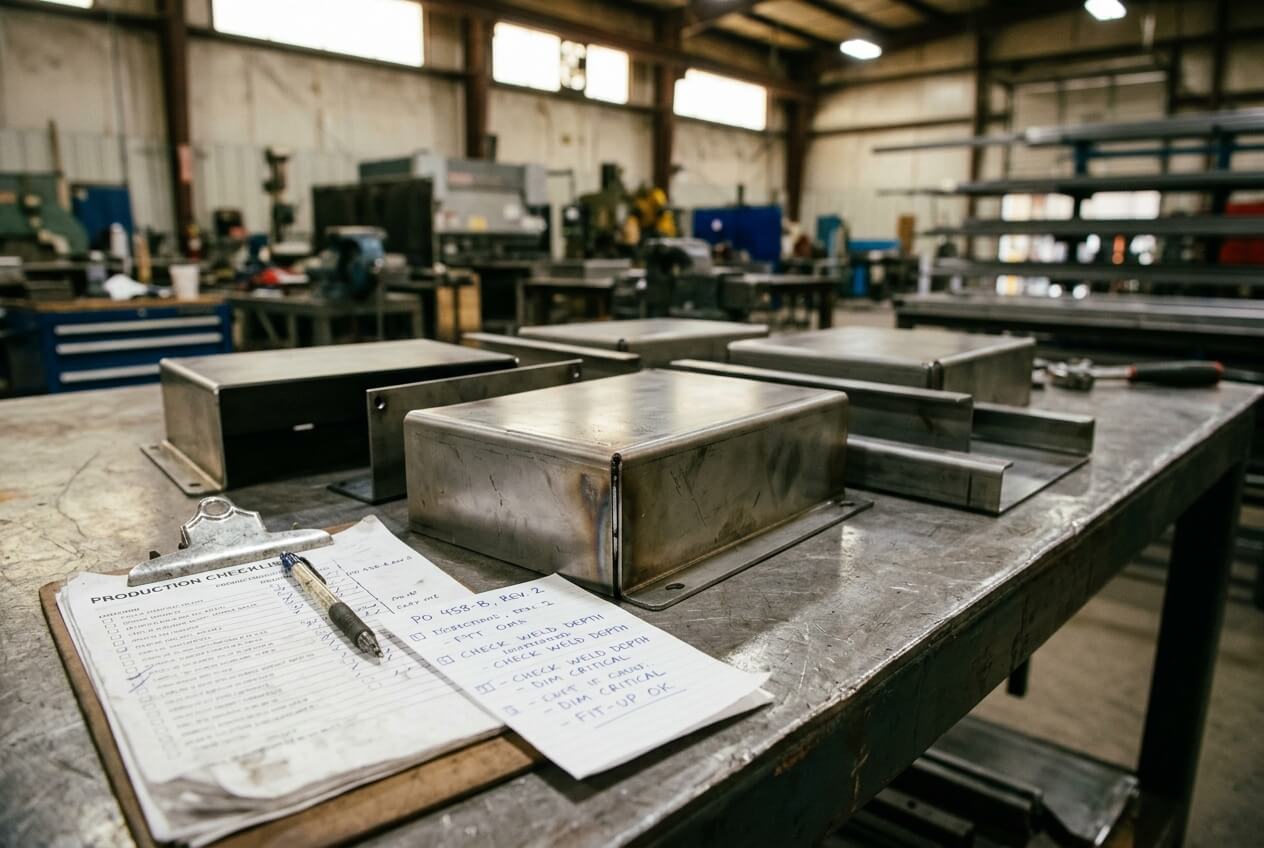
Many welding delays do not start at the welding station. They start when the RFQ fails to define weld length, datum control, cosmetic surfaces, tolerance priorities, or inspection timing. The supplier then builds a production route around missing information.
Sheet metal reacts to heat. Weld shrinkage can pull a door opening inward, twist a frame, move a bracket angle, or shift mounting holes. The welding process, weld sequence, and fixture method decide whether those movements stay controlled. If the quote ignores them, the first stable date in the schedule may not survive production.
Assembly fit suffers when datums remain unclear
A welded bracket assembly may look simple. Four bent brackets attach to a base plate. The drawing gives hole sizes and outside dimensions, but it does not identify which holes locate the assembly in the customer machine. The supplier welds in a practical sequence and meets loose outer dimensions. After installation, two mounting holes sit slightly out of position because weld pull changed the bracket angle.
The part may still pass a basic dimensional check. The buyer still loses time during assembly. Workers file holes, loosen mating parts, or request urgent replacements. The original RFQ should have marked the critical holes, datum faces, bracket angle tolerance, and inspection point after welding.
This is not only a tolerance issue. It is a welding process decision. More heat, longer welds, and poor sequence control can increase movement. A dedicated fixture may solve the problem, but the supplier needs to price and schedule that fixture before order release.
Powder coating makes hidden weld choices visible
Powder coating does not hide every weld. It can highlight spatter, pinholes, heavy grinding marks, undercut, sharp transitions, and uneven seam dressing. A cabinet that looks acceptable in raw metal can show uneven corners after coating, especially with glossy or smooth textures.
One common delay appears when inspection happens after coating. The buyer rejects visible seams or poor panel fit. The supplier then must strip, rework, refinish, or remake the part. That consumes more time than checking weld appearance, frame squareness, and door opening size before coating.
Procurement should connect finish expectations to welding notes. Mark visible faces. State whether weld beads may remain, whether seams need flush grinding, and whether grind marks are acceptable under the chosen coating. Also clarify masking areas, coating thickness concerns, and any fit checks after coating.
These details help suppliers schedule the correct route. A structural frame with hidden welds can move faster than a cosmetic enclosure with dressed seams. A quote should reflect that difference before the buyer compares price and lead time.
Why Prototype Approval Can Hide Batch Welding Risk
A prototype approval proves that one part can be made. It does not prove that 100 or 500 pieces will repeat the same weld appearance, flatness, hole position, and assembly fit. Procurement faces a false sense of security when sample approval does not freeze the production controls behind the sample.
A senior technician can hand-fit a prototype cabinet. They can adjust clamps, change the weld sequence, grind carefully, and correct small distortion before coating. The approved sample may look clean. Batch production then uses a faster fixture, a different operator, or a revised sequence. The door rubs after powder coating because weld shrinkage narrowed the opening.
The approved sample must define the route, not only the result
Buyers should ask what made the prototype acceptable. Did the supplier use a temporary clamp or a batch fixture? Which surfaces served as datums? Which welds came first? Where did the operator check squareness, flatness, or hole position? Did grinding happen before or after a fit check?
Without those answers, the approved sample becomes a visual reference only. It does not protect the batch calendar. When production starts, the supplier may need extra fixture work, added inspection, or slower welding to match the approved part. Those changes can move the ship date.
Small design changes can reopen welding assumptions
Prototype feedback often includes small changes. A buyer may ask for a thicker panel, a revised bracket location, a smoother corner, or a tighter door gap. Each change can affect the welding process. Thicker material may change heat input. A new bracket position may reduce torch access. A smoother corner may add grinding and polishing. A tighter gap may require fixture revision.
A display frame example shows the risk. The first sample uses stitch welds on hidden rear tabs. The buyer approves the fit but asks for cleaner visible side rails. The supplier changes weld positions and grinding steps. That improves appearance but introduces more heat near the rail. During the batch, the frame needs straightening before packing. The change looked cosmetic, but it altered the production route.
Prototype approval should record accepted weld appearance, critical dimensions after welding, fixture datums, weld sequence assumptions, grinding standard, coating result, and sample changes. Clear approval notes reduce arguments later. They also help the supplier protect the batch slot because the route stays defined.
What to Clarify Before You Lock the Quote and Production Calendar
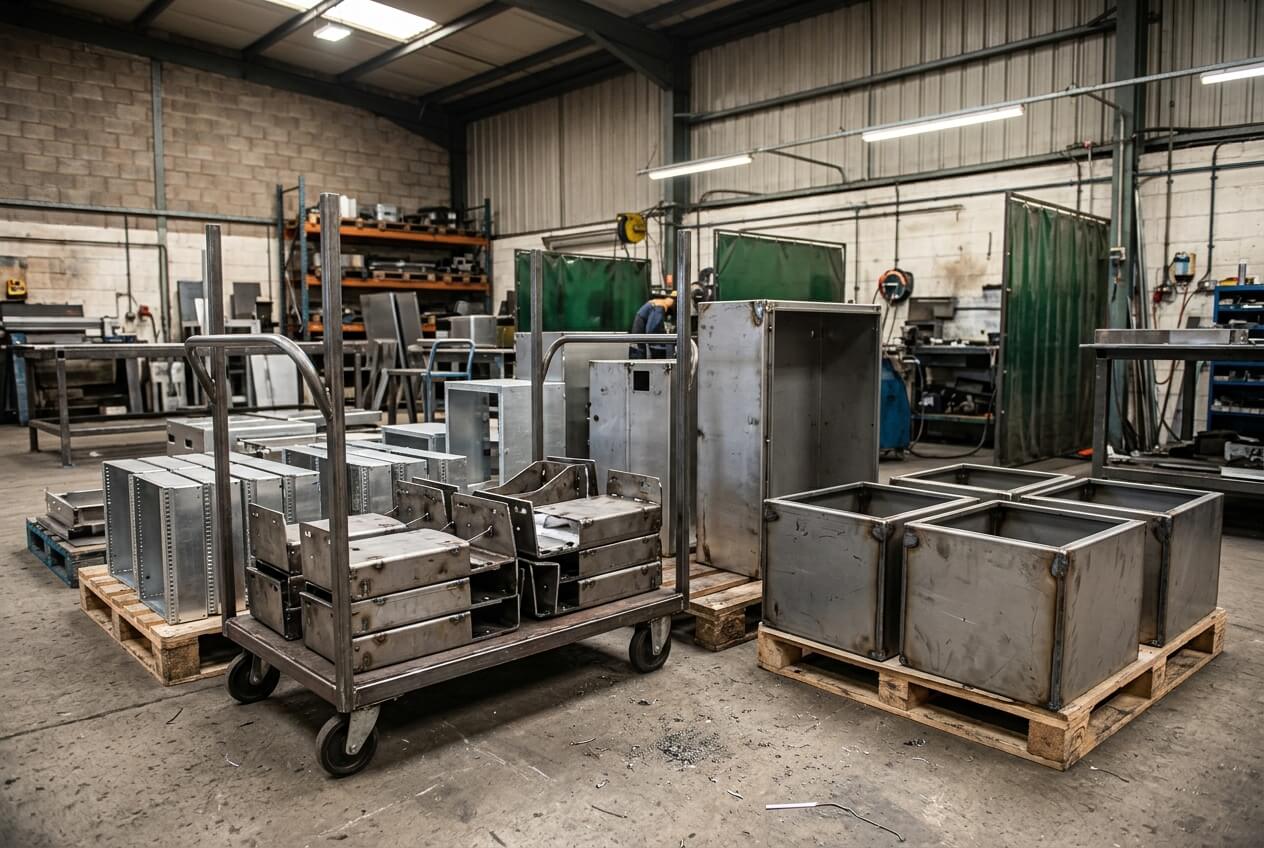
A reliable quote does not need a long document. It needs the right welding process assumptions in writing before procurement compares suppliers. Otherwise, the buyer may compare one quote that includes fixtures and grinding with another quote that excludes them.
Start with the drawing package. Add plain-language notes where weld symbols may not cover commercial expectations. Mark cosmetic faces, critical fit surfaces, datum holes, and inspection dimensions. State whether the supplier may recommend the welding process or must follow a specified process for certain joints.
Questions that expose hidden quote assumptions
Ask suppliers how they plan to weld each critical joint. Request notes on MIG welding, TIG welding, spot welding, plug welds, or laser welding where relevant. Ask which welds need continuous seams and which can use intermittent welds. Confirm whether visible welds require dressing, flush grinding, polishing, or no grinding.
Then connect those answers to production control. Which fixture will hold the assembly? Which dimensions will the supplier inspect after welding and before coating? Which tolerances matter most to assembly fit? Will the prototype use the same method as the batch? If not, ask what changes before mass production.
Commercial terms should match these steps. A welded cabinet project may need milestones for drawing confirmation, material purchase, prototype fabrication, sample review, fixture adjustment, batch welding, pre-coating inspection, powder coating, final assembly, and packing. One promised delivery date can hide too many approval points.
RFQ details that protect comparison and delivery
Include material grade, thickness, quantity, revision level, tolerance notes, and finish expectations. Add photos of mating parts or installation points when assembly fit matters. If the part replaces an existing welded assembly, send sample photos that show acceptable and unacceptable weld appearance.
For cost control, separate must-have requirements from preferences. A continuous cosmetic weld on every seam may add time and cost without improving function. A supplier may suggest hidden tabs, changed weld locations, added flanges, or spot welds to reduce distortion. Those suggestions only help when the buyer has already stated the true function of each joint.
Supplier communication should happen before purchase order release, not after the first sample fails. If a quote contains assumptions, ask the supplier to list them. If the drawing leaves weld length or surface treatment open, update the RFQ or confirm the requirement in writing. This keeps the negotiation focused on comparable work.
For custom sheet metal fabrication projects that include metal enclosures, brackets, frames, cabinets, or welded assemblies, send Yishang the drawings, material requirements, quantities, tolerances, finish expectations, assembly notes, and prototype comments. The team can review welding process assumptions, fixture risks, coating sequence, and inspection points before you lock the quote and production calendar. Share project details at https://zsyishang.com/.
Frequently Asked Questions About Welding Process Assumptions
Should buyers specify the welding process in every RFQ?
No. Specify the welding process when it controls appearance, sealing, strength, distortion, or assembly fit. For less critical joints, ask the supplier to recommend the process and explain the reason. This keeps quote assumptions visible without over-controlling manufacturability.
Why do two suppliers quote different lead times for the same welded enclosure?
They may have assumed different weld lengths, grinding standards, fixtures, inspection steps, or coating preparation. One quote may include TIG welding and flush dressing on visible seams. Another may assume faster MIG welding with visible beads. Clarify those assumptions before comparing delivery dates.
What weld notes reduce the risk of sample rejection?
Define weld intent, weld length, visible surfaces, grinding requirements, critical datums, and inspection timing. Add plain-language notes for continuous seams, stitch weld spacing, spot weld pitch, plug weld locations, and cosmetic faces. These notes help the supplier build the intended part the first time.
How can welding affect assembly fit after powder coating?
Weld heat can move holes, twist frames, narrow openings, and change bracket angles. Powder coating can add thickness and expose uneven seams. Check critical dimensions after welding and before coating whenever possible, especially on doors, mounting holes, frames, and mating brackets.
Does prototype approval guarantee batch welding consistency?
Not by itself. A prototype may rely on hand adjustment, temporary clamps, or extra grinding. Batch consistency needs a defined weld sequence, fixture method, datum plan, inspection points, and accepted appearance standard. Record these controls during prototype approval.
What should buyers send for a more reliable welded sheet metal quote?
Send drawings, material grade and thickness, quantities, tolerance notes, finish expectations, visible-surface requirements, assembly photos, and prototype feedback. If you already know preferred welding methods or critical fit areas, include those notes in the RFQ.