

An OEM buyer sends an RFQ for a powder coated control enclosure. The drawing pack shows laser cut panels, bent flanges, welded corners, pressed hardware, and several small round details. Those details include hinge pins, cable gland adapters, turned spacers, and threaded sleeves.
Three suppliers quote the same package. One includes the machined parts, coating masks, thread checks, and final assembly inspection. One assumes the buyer will supply the round parts. Another quotes only the sheet metal body and leaves the cylindrical details unclear.
This is where uses for a lathe becomes a procurement risk, not a workshop topic. Lathe work often hides inside sheet metal assemblies. If the RFQ does not define that scope, the quote comparison becomes unreliable. The buyer may choose the lowest price, then discover missing parts, tight threads, loose hinge movement, or extra subcontracting after production starts.
The dominant risk is RFQ ambiguity. A supplier may understand laser cutting, bending, welding, and powder coating correctly while still making different assumptions about turned components. Those assumptions affect cost, lead time, tolerance control, coating strategy, and final assembly fit. Buyers reduce that risk by identifying lathe-related features before comparing prices.
Where RFQ Ambiguity Turns Small Round Parts into Quote Gaps
Many buyers describe a project as a sheet metal enclosure, bracket, cabinet, frame, or welded assembly. That label can hide parts that do not come from sheet metal processes. A spacer may need faced ends. A hinge pin may need a controlled diameter. A threaded sleeve may need an internal thread after welding. A cable gland adapter may need a sealed face.
Suppliers handle those details in different ways. One may machine the parts from bar stock. Another may buy commercial hardware. A third may exclude them because the RFQ calls the project a sheet metal job. Each approach changes the quote. More importantly, each approach changes the production risk.
How the gap starts
The problem usually starts with a drawing pack that shows the assembly but does not separate fabrication scope from turned-part scope. The BOM may list a spacer without saying whether it is custom machined, saw-cut tube, or purchased hardware. The drawing may show a pin but omit diameter tolerance, chamfer, surface finish, or coating instructions.
Once the supplier fills those gaps, the buyer no longer compares the same work. A lower price may not mean better value. It may mean the supplier excluded turned components, skipped masking, or assumed general tolerances on a feature that controls fit.
How it affects production
Consider a wall-mounted electrical housing with four internal M4 standoffs. The enclosure body may pass laser cutting and bending inspection. During assembly, however, the PCB sits unevenly because two standoffs vary in height. The issue did not begin at final assembly. It began when the RFQ failed to define whether the standoffs were pressed hardware, welded bosses, or lathe-turned spacers.
A second example involves a welded guard frame with cylindrical spacers between two laser cut plates. The drawing gives spacer length but not face squareness. One supplier quotes saw-cut tube. Another quotes lathe-faced spacers. The second quote costs more because it includes a process that controls parallelism. The buyer should clarify the functional need before judging the price difference.
For mixed assemblies, ask suppliers to flag every non-sheet-metal operation in the quote. Yishang can review drawing packs for laser cutting, bending, welding, finishing, assembly, and unclear turned features. That review works best when the RFQ clearly states which cylindrical components the supplier must make, buy, install, and inspect.
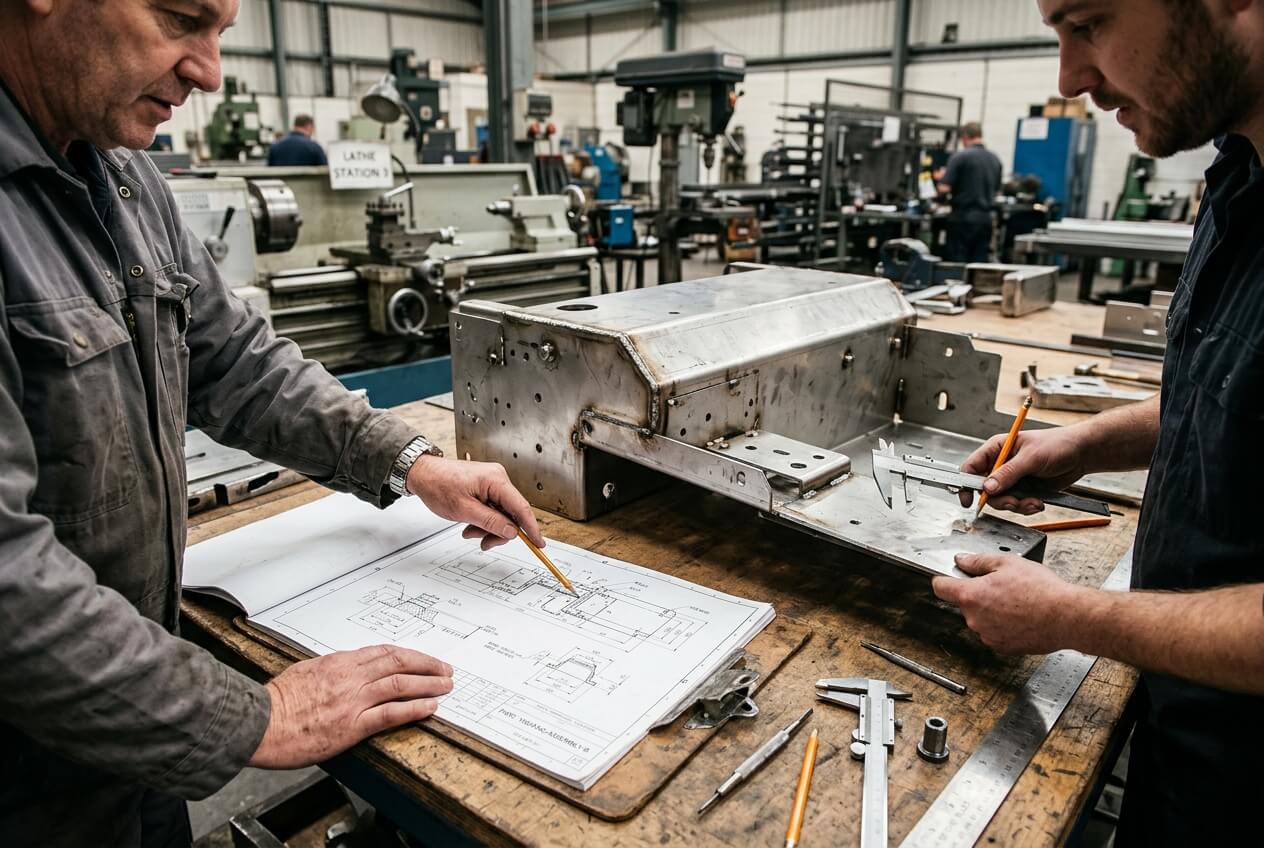
Undefined Lathe Features Create Hidden Assumptions About Fit
Common uses for a lathe in sheet metal assemblies include facing spacers, turning outside diameters, drilling bores, cutting internal or external threads, chamfering ends, producing hinge pins, and preparing bushings. These operations may look simple. RFQ risk appears when the drawing does not identify which surfaces matter.
A turned part rarely fails alone. It usually fails at the interface. A pin fits a hinge leaf. A sleeve fits a bracket hole. A spacer controls panel distance. A threaded boss receives a screw after coating. If the RFQ does not define the interface, each supplier chooses its own tolerance level and inspection point.
Functional surfaces need priority
Not every diameter needs tight tolerance. Over-specifying every turned feature increases machining time and inspection cost. Under-specifying the functional feature creates a different cost: rework, rejected assemblies, or field problems. The buyer should mark the surfaces that control movement, location, sealing, grounding, or appearance.
For example, a bent aluminum cover may include a round cable gland adapter. If the adapter only holds a rubber grommet, a simple deburred sleeve may work. If it seals against an O-ring, the face flatness, groove size, diameter, and surface roughness become important. Two suppliers can quote different prices because one saw a sealing surface and the other saw a simple sleeve.
Threaded features create the same problem. A drawing may call out M6 thread but omit depth, thread class, lead-in chamfer, and inspection method. One supplier may tap the thread before welding. Another may machine it after welding. A third may use a purchased insert. These choices affect fit, cost, and lead time.
Assembly fit should guide tolerance choices
Buyers should connect tolerance notes to the assembly function. A hinge pin that controls door swing may need tighter diameter and straightness than a hidden spacer. A bushing that guides a shaft may need concentricity control. A standoff that sets PCB height may need length tolerance and face squareness.
A useful RFQ does not simply demand tight tolerances. It explains the fit chain. Does the turned part align two brackets? Does it carry load? Does it guide motion? Does a mating part come from another supplier? Clear answers help the supplier quote the correct process instead of adding a safety margin or making a risky assumption.
Coating and Welding Change the Meaning of a Machined Dimension
Many quote disputes start because the drawing dimension describes a machined part before later processes change it. Welding can distort bores. Grinding can affect flatness near a sleeve. Powder coating can add thickness to threads and close-fit diameters. Polishing can change the appearance of visible spacers.
If the RFQ does not state when a dimension applies, suppliers may inspect at different stages. One may check a turned sleeve before welding. Another may check the bore after welding and coating. Both may believe they followed the drawing, yet only one controlled the final assembly condition.
Post-process dimensions need clear notes
Take a floor-standing cabinet with welded threaded inserts for leveling feet. The inserts may leave the lathe with clean threads. After welding and powder coating, the threads may bind. Assembly workers then force the leveling feet, damage the coating, and expose bare metal near the base. The cost appears as slow assembly and corrosion risk, not just as a thread issue.
The RFQ should state whether threads require masking, post-coating chasing, or final go/no-go inspection. It should also define which bores and diameters must stay free of coating. These details change price, but they prevent late rework and missed shipment dates.
Welded sleeves need similar control. A sleeve can meet bore tolerance before welding, then shrink or move during weld cooling. If the mating pin must pass through two brackets, the supplier needs to inspect alignment after welding. Otherwise, the assembly may require drilling, filing, or replacement during final build.
Visible turned parts carry finish assumptions
Finish expectations also affect lathe-related scope. A display rack may use stainless spacers between shelves. If those spacers sit in visible positions, the buyer may expect faced ends, smooth chamfers, polishing direction control, and protective packaging. A supplier that quotes saw-cut tube will submit a lower price, but the delivered finish may not match the retail environment.
The buyer does not need to over-document every cosmetic detail. However, visible surfaces need acceptance criteria. Photos, samples, finish notes, and packaging requirements reduce disagreement. They also help the supplier include the correct labor and inspection in the quote.
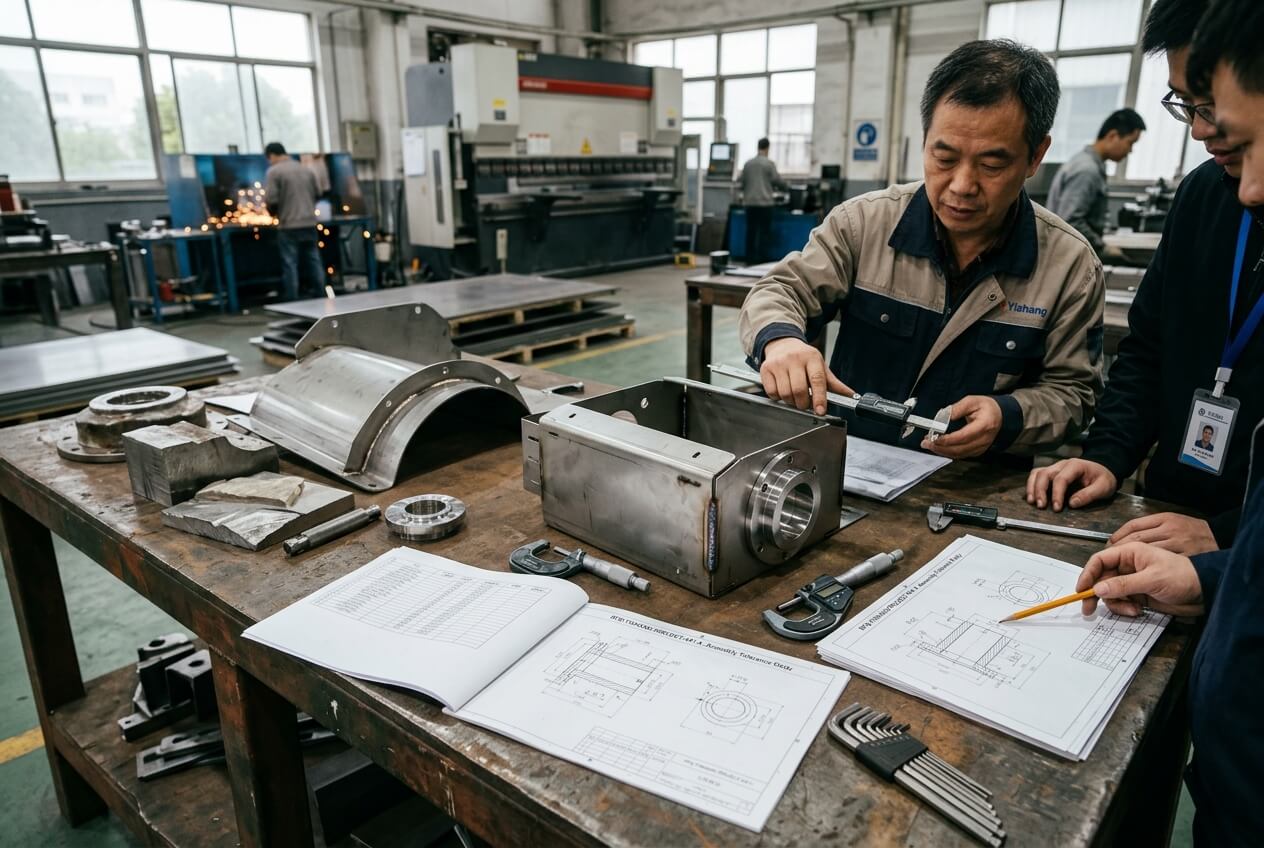
Prototype Approval Can Hide Unrecorded Lathe-Related Rework
A good prototype can create false confidence. Prototype teams often solve small fit problems with manual work. They sand a coated pin, chase a thread, file a bracket hole, or polish a spacer. The sample then looks acceptable, but the drawing pack still contains the original ambiguity.
Batch production exposes that gap. A one-off adjustment may take five minutes on a prototype. In a batch of 500 enclosures, it becomes a schedule problem and a consistency risk. Worse, different operators may adjust parts differently, so the approved sample no longer predicts the production lot.
Prototype comments must become production controls
Buyers should record every prototype observation that relates to fit, movement, thread engagement, or visible turned surfaces. If the door hinge felt tight, the drawing may need a clearance change or a coating mask note. If a spacer face looked rough, the finish requirement may need a clearer note. If a mounting boss needed filing, the supplier should review hole position, weld sequence, and post-weld inspection.
A control box provides a practical example. The prototype cover fits because the supplier lightly sands four turned alignment posts after powder coating. The buyer approves the sample. During batch production, sanding each post creates uneven fit and extra labor. A better decision would define the post diameter after coating, mask the locating area, or increase cover-hole clearance before release.
Another example involves a welded bracket with a turned bushing. The prototype aligns because one technician reams the bushing after welding. The batch drawing, however, only shows the pre-weld bore size. When production starts, several bushings fail pin insertion. The fix should have appeared in the RFQ or prototype review: inspect after welding, machine after welding, or adjust the clearance strategy.
Incoming parts also need batch rules
If a supplier outsources turned bushings, sleeves, or pins, incoming inspection becomes part of the risk control. Diameter, length, thread quality, burrs, face squareness, and surface finish may affect assembly. The RFQ should ask who controls those checks and what happens when a lot fails.
This does not mean every part needs full inspection. It means the inspection plan should match the consequence of failure. A hidden loose spacer may need only sampling. A hinge pin that affects door movement may need tighter control. A threaded insert that receives a safety-critical fastener may need documented thread checks.
What Buyers Should Clarify Before Comparing Sheet Metal Quotes
Quote comparison should start after scope alignment, not before. When a project combines sheet metal fabrication with turned features, the buyer should separate the assumptions that affect fit, cost, and lead time. Otherwise, the lowest quote may only be the least complete quote.
A stronger RFQ includes 2D drawings, 3D files, BOM, quantities, material requirements, finish expectations, tolerance notes, and assembly context. It should identify all spacers, pins, bushings, sleeves, adapters, threaded bosses, and close-fit cylindrical features. It should also state whether the supplier must manufacture, purchase, install, mask, and inspect each item.
Supplier communication should focus on consequence, not only dimensions. Tell the supplier which part controls door swing, PCB height, gasket compression, grounding, shaft alignment, or visible appearance. That context helps the supplier choose a practical process and avoid unnecessary cost on non-critical features.
Buyers should also ask what the quote excludes. Does the price include lathe-turned parts? Does it include commercial hardware? Are threads checked after powder coating? Are welded sleeves inspected after welding? Are visible spacers polished and protected during packing? These questions prevent hidden assumptions from moving into production.
Yishang supports custom sheet metal fabrication, metal enclosures, brackets, frames, welded assemblies, finishing, and assembly review. For mixed projects, the useful step is early drawing review. Send the full package before price comparison forces a rushed decision.
Practical next step: If your assembly includes turned spacers, pins, bushings, sleeves, adapters, threaded bosses, or close-fit cylindrical features, send your drawings, 3D files, BOM, material requirements, quantities, tolerances, finish expectations, mating-part details, and prototype comments to Yishang. Ask for a review that separates sheet metal fabrication scope from lathe-related assumptions, coating risks, and final assembly inspection points.
Frequently Asked Questions
What uses for a lathe are easy to miss in a sheet metal assembly RFQ?
Buyers often miss hinge pins, spacers, bushings, sleeves, cable gland adapters, threaded bosses, and custom standoffs. These parts may look minor beside the enclosure body, but they can control movement, spacing, sealing, or assembly alignment. List them in the BOM and state whether the supplier should make, buy, install, and inspect them.
Why can two suppliers quote different prices for the same turned spacer?
One supplier may assume saw-cut tube, while another may include lathe-facing, tight length control, deburring, polishing, and inspection. The correct option depends on the spacer function. Hidden spacers may allow wider tolerances. Visible or alignment-critical spacers need clearer requirements before price comparison.
When should dimensions apply after welding or powder coating?
Use after-process requirements when welding or coating can affect final fit. Examples include threaded inserts, close-fit bores, hinge pins, locating posts, and grounding points. If the supplier only inspects before welding or coating, the part may meet the drawing but fail during assembly.
How can prototype approval create batch production risk?
A prototype may pass because workers hand-fit pins, chase coated threads, polish spacers, or file holes. If the team does not record those fixes, batch production repeats the original problem. Convert prototype comments into drawing notes, inspection points, masking instructions, or tolerance changes before release.
Should every turned feature have tight tolerances?
No. Tight tolerances add cost and inspection time. Apply them where the feature controls fit, motion, sealing, grounding, or visible appearance. Use general tolerances for low-risk features, but clearly mark critical diameters, faces, threads, and post-process dimensions.
What should buyers send for an RFQ with sheet metal and turned components?
Send 2D drawings, 3D files, BOM, material requirements, quantities, tolerance notes, finish expectations, photos of mating parts, and prototype feedback. Also identify all spacers, pins, bushings, sleeves, adapters, and threaded bosses so the supplier can quote the same manufacturing scope.