
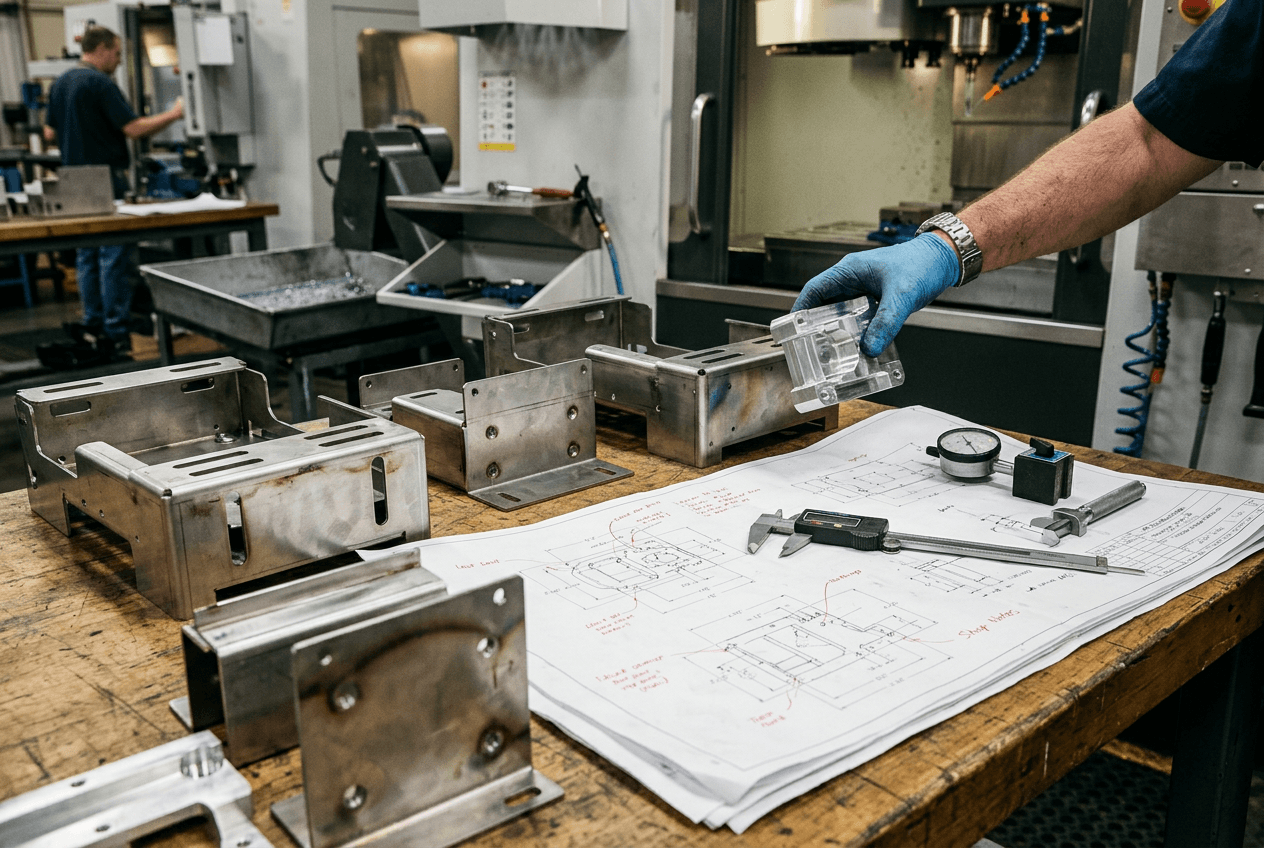
A buyer sends an RFQ for a laser-cut enclosure panel, a bracket set, and a welded frame with a few machined faces. Three suppliers answer in a day. Each says it can handle the vertical mill work. The prices land close together, but the assumptions do not. One supplier prices drilled holes only. Another includes slot cleanup after bending. A third adds fixture time for a welded pad.
The real risk is not the mill. It is RFQ ambiguity. When the drawing does not define the machining route, the datum, or the post-forming sequence, every quote reflects a different process. The lowest number can hide later rework, a change order, or a batch that no longer matches the approved sample. For sheet metal buyers, that is where a small wording gap turns into a production problem.
When the RFQ names the feature but not the operation, vertical mill pricing becomes a guessing game
The quote often starts to drift because the drawing names a feature without locking the operation. A hole can be drilled, reamed, tapped, or cleaned up with a mill. A slot can come from laser cutting, but its ends may still need an end mill. A face can be flat enough for one assembly, yet still need a milling pass if the part must mate to another component after bending. If the RFQ only says vertical mill, each supplier fills in the blanks differently.
That is why two quotes can look similar and still cover different work. One shop may assume a light cleanup pass on a flat blank. Another may assume multiple setups, inspection on a critical face, and extra time for burr removal. Both may be honest. Only one may match the actual part route. The buyer sees a price gap and thinks the suppliers disagree on efficiency, when they really disagree on scope.
A feature called machined is still not enough
A machined note does not tell the shop whether the part will stay flat, bend before machining, or weld before the final cut. It does not tell the operator which face controls the datum, whether a counterbore needs concentricity, or whether the part must stay clean for assembly. In an enclosure back panel, one supplier may drill the mounting holes and stop. Another may true the slot edges and face the contact area because the panel mates to a frame. Both quotes can look reasonable on paper. Only one quote reflects the full production route.
Project-style example: a buyer once asked for 200 steel brackets for a display rack. One supplier priced laser cutting plus drilling. Another assumed a vertical mill pass to correct slot length and clean the bend side. The second quote looked high until the buyer compared it with the assembly requirement. The higher number reflected the work needed to avoid hand rework on every bracket.
If the drawing leaves the machining path open, the shop will choose its own assumptions. That is where quote distortion starts. Buyers should make the RFQ tell the shop exactly which features need vertical mill work, which features stay as-cut, and which surfaces control fit.
How bending and welding change the milling job after the drawing is approved
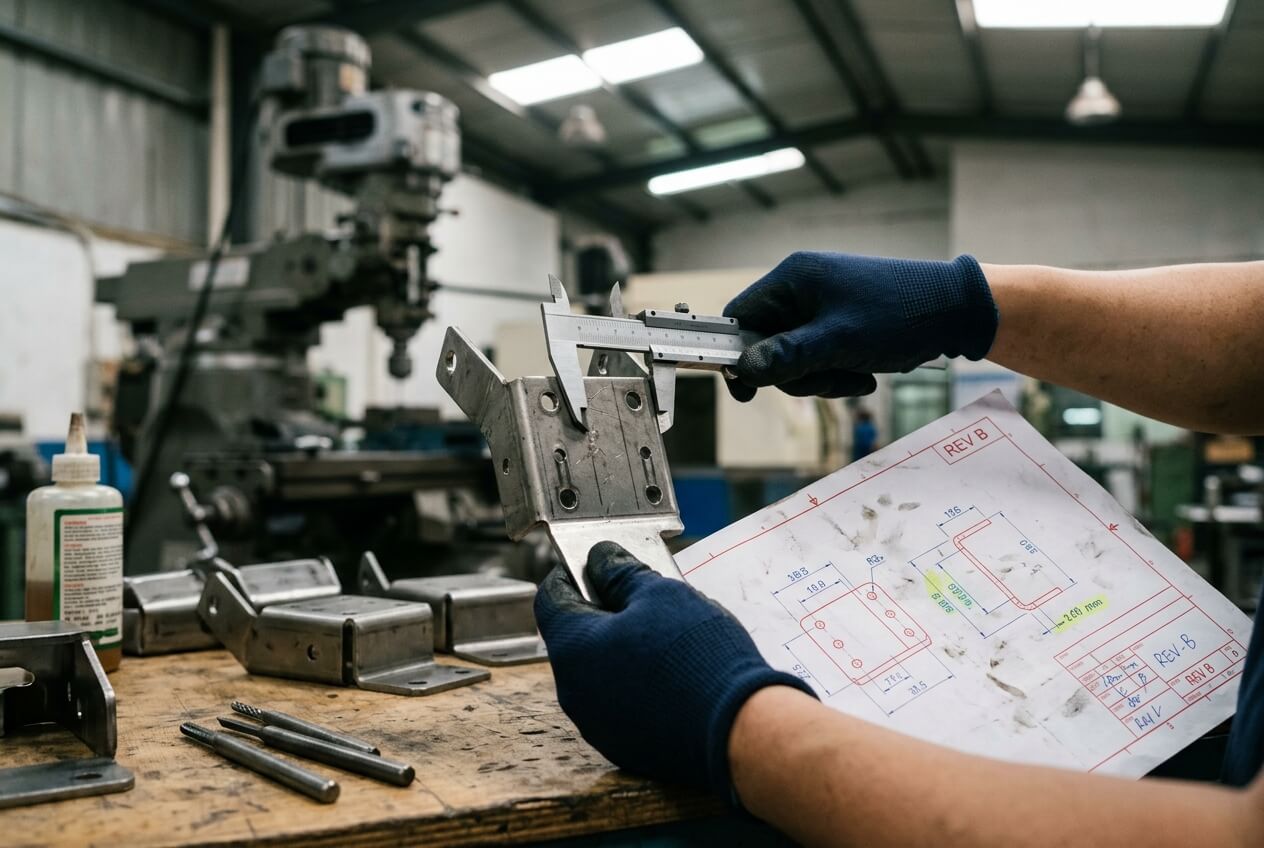
Once a flat blank turns into a bent or welded part, the milling job changes. The bend can move the reference edge. Weld heat can pull a face out of square. A slot that looked simple on the drawing may need a dedicated fixture after forming. A mounting pad that looked standard may need a second setup because the weld sequence distorted the part. Those extra steps are real cost drivers, and they often explain the price spread between quotes.
This is also where lead time begins to move. If the part needs milling after welding, the shop has to wait for the weldment to stabilize. If the part needs machining after coating, the team may mask functional areas or send the part back for touch-up. None of that appears in a loose line item. It shows up later as a schedule slip or a change order.
Fixture time matters more than the cutter path
A simple hole can still need a custom fixture if the datum face is irregular. A welded cabinet subframe may need the mill to true a bracket pad so the door aligns. In that case, the operator is not just removing metal. The operator is restoring geometry that the bending or welding step changed. Buyers should expect a different quote when the milling operation has to correct a formed part instead of finishing a flat blank.
Project-style example: a machine enclosure needed four tapped holes on a side panel and one milled opening for a connector plate. The first prototype looked fine because the shop hand-adjusted the bracket before drilling. The batch order exposed the real method. Once the run reached 80 panels, the supplier needed a fixed datum and a stable clamp plan. The quote that had assumed quick drilling turned into a change order because the original RFQ never locked the sequence.
Yishang can review drawings at this stage and flag when a part really needs milling after bending or welding, versus when the sheet metal route can stay simpler. That kind of review helps buyers compare prices on the same process basis.
Why a clean prototype can still hide batch-order failure
Prototype approval often gives buyers false confidence. A sample can pass because the shop spends extra time on hand fitting, edge cleanup, and test assembly. That flexibility disappears in a batch. Tool wear, fixture repeatability, and operator variation become visible. A vertical mill process that looked fine on one part can drift when the order reaches 30, 50, or 200 pieces.
This is where procurement risk becomes production risk. If the sample was adjusted by hand, the buyer should ask how the shop will repeat the same result without that handwork. If the answer is vague, the quote hides a process gap. Buyers see this often with brackets that fit one mating frame and miss the next one by a small but costly amount. The parts are not bad in a general sense. They are only good under a sample-only method.
Batch risk grows when the order mixes cosmetic and functional faces. A face that looks acceptable on a prototype may become a reject if the finish changes after the final mill pass. The same applies to tapped holes and tight-fitting slots. Once production starts, the shop needs to know whether the method must hold a cosmetic appearance, a mechanical fit, or both. That decision changes tooling, inspection, and price.
Another consequence chain often starts with an approved sample that never faced production speed. A prototype may use slower setup, more manual deburring, and extra checking between operations. A batch cannot rely on that level of attention. If the RFQ never asked how the shop would hold consistency across the run, the buyer may approve a sample that does not represent the order.
When fit-up, coating, and datums turn a small milling error into scrap
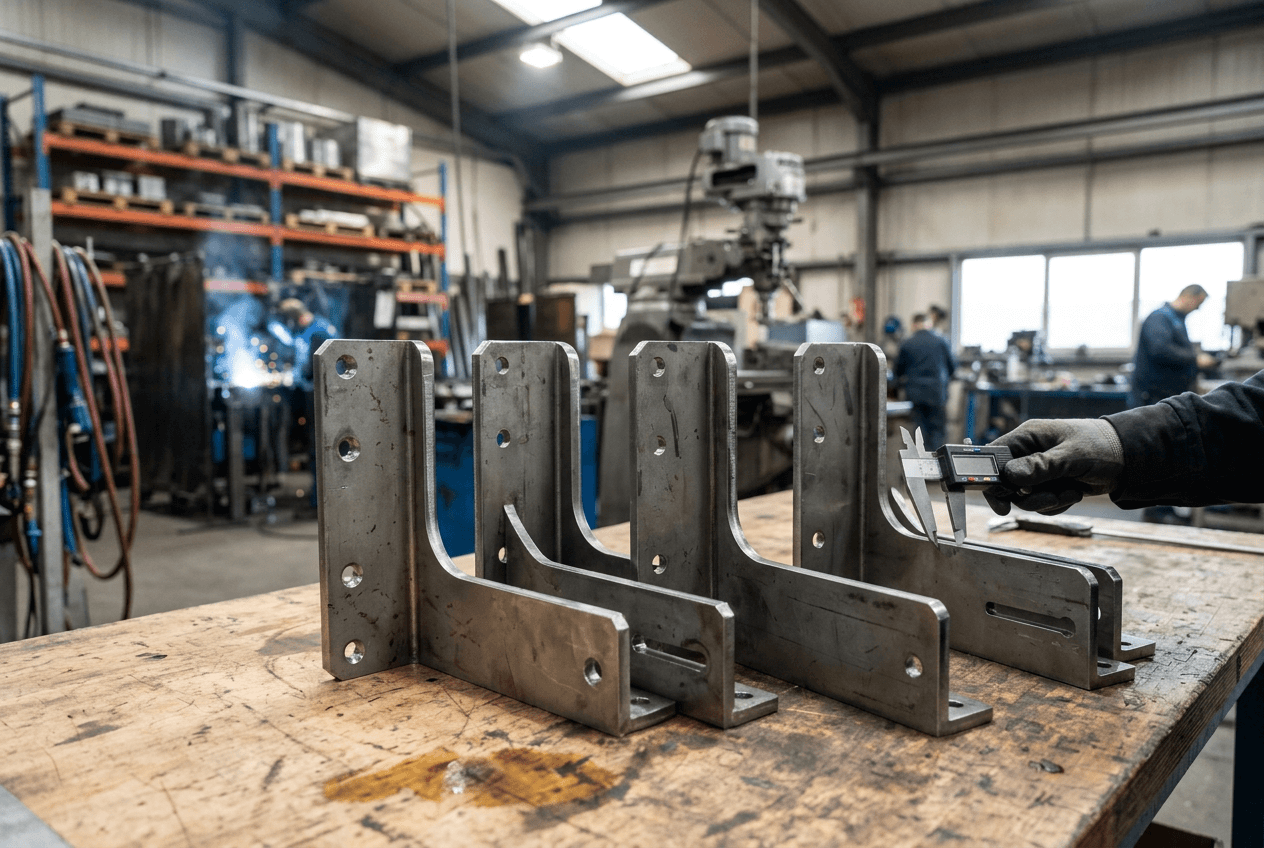
The biggest loss usually appears at assembly. A hole can measure correctly on the part and still fail when the installer brings it to a frame or enclosure. The issue is often not the size. It is the reference. If the drawing does not lock the datum face, the mill may create a feature that measures right but assembles wrong. The part passes inspection, then fails on the line.
Coating can make the problem worse. Powder coat, paint, or plating can change the effective fit on mating faces. If the RFQ does not say whether the milled surface is masked, finished after coating, or left functional before coating, the supplier may choose the wrong route. A buyer can lose time, rework money, and assembly confidence from one missing note.
The assembly step reveals what the RFQ left open
A welded frame with a milled mounting pad is a good example. The pad may look perfect at the mill. After welding and coating, the part may no longer seat the same way. If the buyer never identified the critical face, the supplier cannot choose the right inspection point. That is how a small machining miss becomes a rejected assembly or a late shipment.
Another example is an equipment cabinet with a machined opening for a connector plate. If the opening lands right on the flat blank but drifts after bending, the final hardware may not align. The buyer then pays for rework, not because the shop lacked skill, but because the RFQ never told the shop which dimension controlled the assembly.
For buyers who source welded assemblies or cosmetic enclosures, the key question is simple: what feature controls the fit after all upstream steps finish? If the RFQ cannot answer that, the vertical mill quote will not protect the assembly.
What buyers should freeze before comparing vertical mill prices
Before you compare quotes, freeze the parts of the request that change the machining route. Send the drawing set, the material requirement, the quantity, the tolerance notes, and the finish expectation together. Add the mating-part drawing or an assembly photo if the part has to line up with a bracket, door, rail, or frame. State which features need vertical mill work after cut, bend, or weld, and which features can stay as-cut. That one step removes a lot of quote noise.
This is also the right time to ask the supplier to confirm its assumption list. A useful reply should say what gets drilled, what gets milled, what needs fixturing, and what sequence the shop will use. It should also say whether the quoted method can hold the same result from prototype to batch. That kind of response lets buyers compare apples to apples instead of comparing a simple drill plan against a full machining plan.
If you buy enclosures, sheet metal parts, brackets, frames, or welded assemblies, send the full RFQ package to Yishang with the drawings, material requirements, quantities, tolerances, and finish expectations. A drawing review can surface hidden vertical mill assumptions before you release the order.
Frequently Asked Questions
What vertical mill details should buyers define before requesting a quote?
Buyers should define the functional requirement, drawing notes, critical dimensions, material or process expectations, and any inspection points related to vertical mill. This helps suppliers quote the same manufacturing scope instead of making different assumptions.
How can RFQ details affect cost, fit, or lead time?
RFQ details can change tooling, forming, welding, finishing, inspection, or rework requirements. If buyers do not clarify it early, two supplier quotes may look comparable while covering different production risks.
Why should drawing requirements be reviewed before prototype approval?
drawing requirements may look acceptable on a single sample but become harder to control during batch production. Buyers should confirm whether the prototype reflects the same process, finish, and inspection conditions expected for production.
What inspection points matter most for vertical mill projects?
Important inspection points usually include fit-critical dimensions, holes or mating areas, cosmetic surfaces, finish build-up, welded or formed features, and any dimensions that affect downstream assembly. These points should appear in the RFQ or drawing notes.
How can buyers reduce prototype approval risk before batch production?
Buyers can reduce risk by clarifying drawings, locking key material and finish assumptions, defining inspection timing, approving a representative sample, and confirming which dimensions or surfaces require tighter process control.
How can Yishang help review vertical mill requirements?
Yishang can review drawings, RFQ notes, material requirements, tolerance expectations, finish details, samples, and assembly needs to identify unclear assumptions before quoting or batch production.