
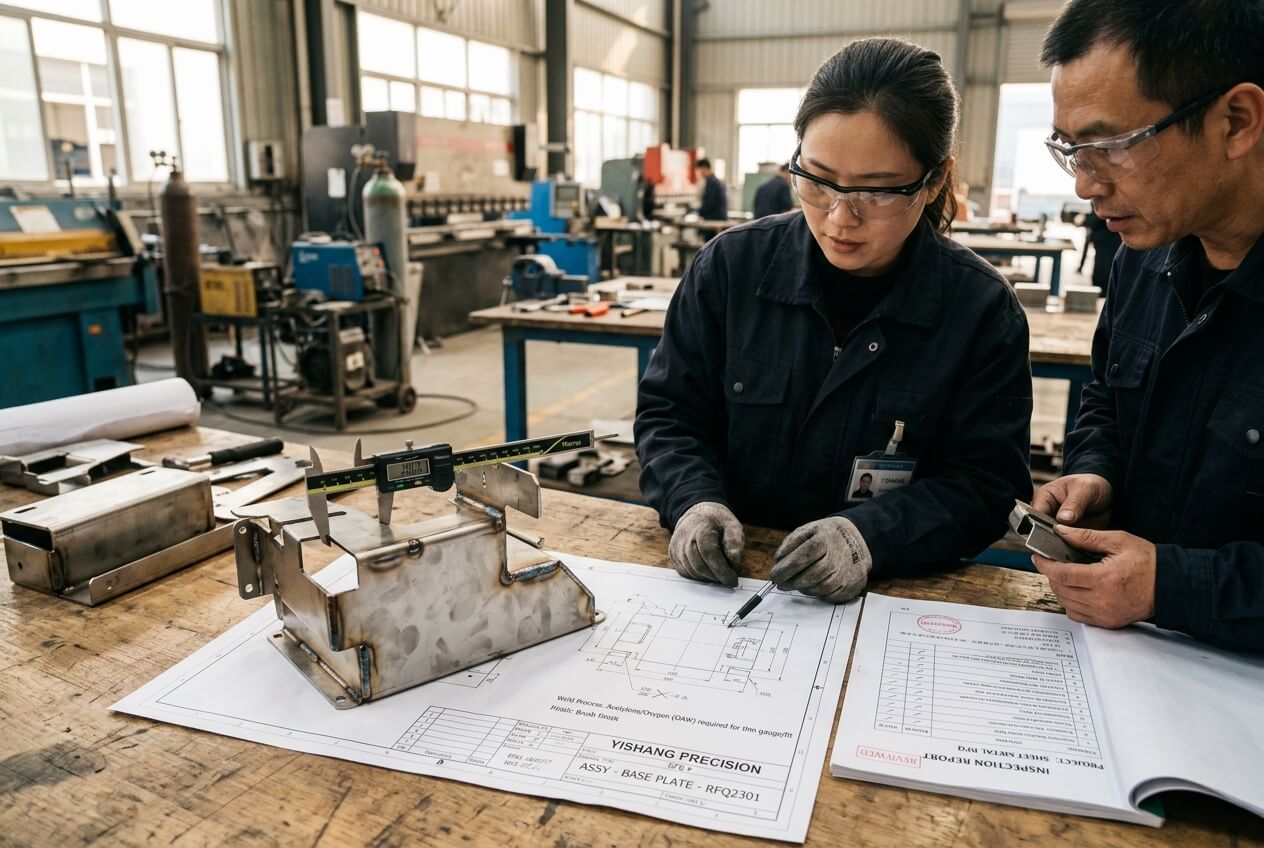
A sheet metal RFQ can look complete when it includes a drawing, material grade, quantity, and delivery target. Yet one missing detail can change the whole quote: the assumed fabrication route. When a supplier lists welding acetylene oxygen, oxy-fuel cutting, or torch work without explaining where it applies, the buyer may compare prices that do not describe the same part.
This article focuses on one procurement risk: RFQ ambiguity that lets suppliers quote different manufacturing assumptions against the same drawing. The risk does not start with the torch itself. Oxy-acetylene heating, repair, brazing, and rough cutting still have valid uses. The problem starts when the RFQ does not define which features need precision cutting, controlled welding, fixture location, cosmetic cleanup, or coating preparation.
For OEM buyers sourcing metal enclosures, cabinets, brackets, frames, racks, and welded assemblies, that ambiguity can turn into late cost increases. It can also create warped panels, rough coated edges, mismatched holes, unstable frames, and prototype results that do not repeat in batch production.
The Real Risk Is Not the Torch; It Is an Undefined Fabrication Route
A low quote can look attractive because it answers the price question quickly. It may not answer the production question. If the supplier assumes oxy-fuel cutting for profiles and manual welding for assembly, the quote may exclude the labor needed to grind edges, correct distortion, restore hole accuracy, or prepare surfaces for powder coating.
Another supplier may quote laser cutting, CNC bending, MIG or TIG welding, fixtures, deburring, inspection, and finish preparation. That price may look higher at first. In reality, it may include controls that the lower quote has not priced. Procurement teams then face a false comparison.
Buyers do not need to ban oxy-acetylene work. They need to know where the supplier will use it, why it fits the part, and what controls will protect fit and finish. A process name alone does not prove capability. It only tells you one possible tool in the route.
Cabinet frame example
A buyer requests a powder-coated control cabinet frame with welded corners and mounting points for a hinged door. The drawing shows overall size and hole positions, but it does not mark visible faces or require fixture welding. One supplier quotes manual torch-cut members and welded assembly. Another quotes laser-cut profiles, controlled bend parts, fixture welding, grinding, and powder coating preparation.
The torch-based quote starts lower. During production, rough member lengths create weld gaps. Heavy weld fill pulls the frame out of square. The door opening shifts, and the powder coating highlights uneven edge cleanup. The RFQ did not ask suppliers to disclose the route, so the buyer only discovers the hidden assumption during assembly.
Heavy bracket example
A heavy steel support bracket may tolerate oxy-fuel cut outer profiles if the edges remain hidden and tolerances stay loose. The same bracket becomes risky when it includes slotted holes that align with a machine base. If the RFQ does not define slot tolerance, burr condition, or whether holes must be laser cut, punched, or drilled, suppliers can price very different methods.
The price gap then reflects more than supplier margin. It reflects different assumptions about accuracy, cleanup, inspection, and rework. A buyer should clarify feature-level requirements before treating the quotes as comparable.
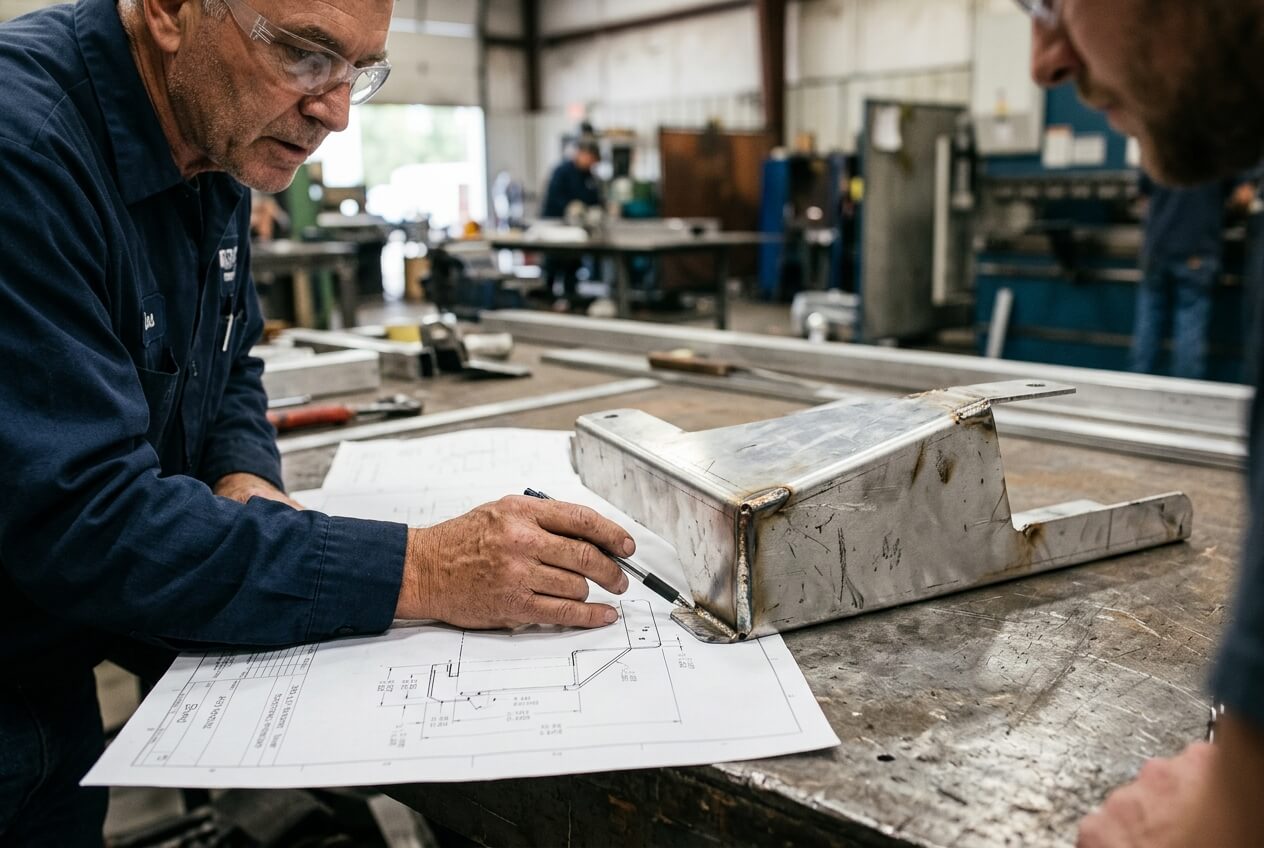
How Ambiguous RFQs Make Low Quotes Look Comparable
Most RFQ problems begin with reasonable pressure. Buyers need a budget fast. Engineering may still be finalizing the assembly. A purchasing team may send a PDF drawing, annual quantity, target unit price, and required delivery date. That information can support a rough estimate, but it rarely protects the buyer from quote assumptions.
Sheet metal parts combine features that need different levels of control. A hidden mounting tab may accept a rougher edge. A front enclosure cover may need clean laser-cut openings. A welded rack may need fixtures to hold squareness. A cabinet door frame may need controlled heat input to avoid twist. When the RFQ treats all features as equal, each supplier chooses its own route.
Drawing notes that stop suppliers from guessing
Useful RFQ notes do not need to over-engineer the part. They should identify the features that carry procurement risk. Mark critical hole patterns, mating slots, datum surfaces, visible faces, weld locations, and cosmetic areas. Add tolerance expectations where fit matters. State material grade and thickness clearly, because heat input and cutting route depend on both.
Finish notes also need detail. A note such as "black powder coat" does not explain edge smoothness, weld blending, threaded-hole masking, or visible surface quality. If the supplier uses oxy-fuel cutting on an edge that later receives powder coating, the buyer should know whether dross removal, grinding, and edge rounding are included.
Supplier communication that reveals quote assumptions
Ask suppliers to state their planned route by feature, not only by process category. Which features will they laser cut? Which holes will they punch or drill? Where will they weld, and what weld process will they use? Will they use a fixture for welded frames or brackets? What dimensions will they inspect after welding and coating?
These questions change the conversation. Instead of asking whether a supplier can perform welding acetylene oxygen work, the buyer asks whether that work suits the specific drawing. That shift exposes cost drivers early. It also reduces lead time surprises, because missing grinding, repair, fixture building, and reinspection can delay production after award.
Where Torch Heat Turns a Price Assumption into Assembly Rework
Oxy-acetylene welding and oxy-fuel cutting use high localized heat. On thick steel or repair work, that heat can serve a practical purpose. On thin sheet metal panels, long flanges, cabinet openings, and welded frames, heat can move the part before anyone sees the problem.
The consequence chain often starts with a cheaper route. Rough cutting creates gaps. Gaps require more weld metal. More weld metal adds heat. Heat causes shrinkage and twist. The assembly then fails at the stage that matters most to the buyer: doors bind, holes miss, covers rock, shelves do not sit flat, or brackets need force during installation.
Hand correction can hide this chain in a prototype. A worker can straighten a sample, grind a weld more carefully, or slot a hole slightly wider. Batch production rarely receives that level of individual attention unless the supplier priced and controlled it.
Internal brackets inside metal enclosures
Consider an enclosure with welded internal brackets for PCB rails or cable clips. The outside panel must remain clean because the customer sees it after installation. If the supplier welds brackets without a fixture or controlled sequence, the bracket can pull the panel. Grinding marks may telegraph through the visible face after coating.
The buyer may blame coating or inspection. The real cause began earlier, when the RFQ did not define visible surfaces, bracket position tolerance, and weld-control expectations. A small note on the drawing could have prevented a much larger production dispute.
Display rack tube frame
A retail display rack made from rectangular tube looks simple in a 2D drawing. If tube ends are roughly cut, the welder must fill inconsistent gaps. The frame can twist as the welds cool. Shelf panels then rock, and the rack may fail a flatness or appearance check.
A supplier that plans laser-cut tube features, locating tabs, a welding fixture, and final squareness inspection may quote higher. That quote may still reduce total landed cost. It avoids sorting, manual straightening, replacement shipments, and installation complaints.
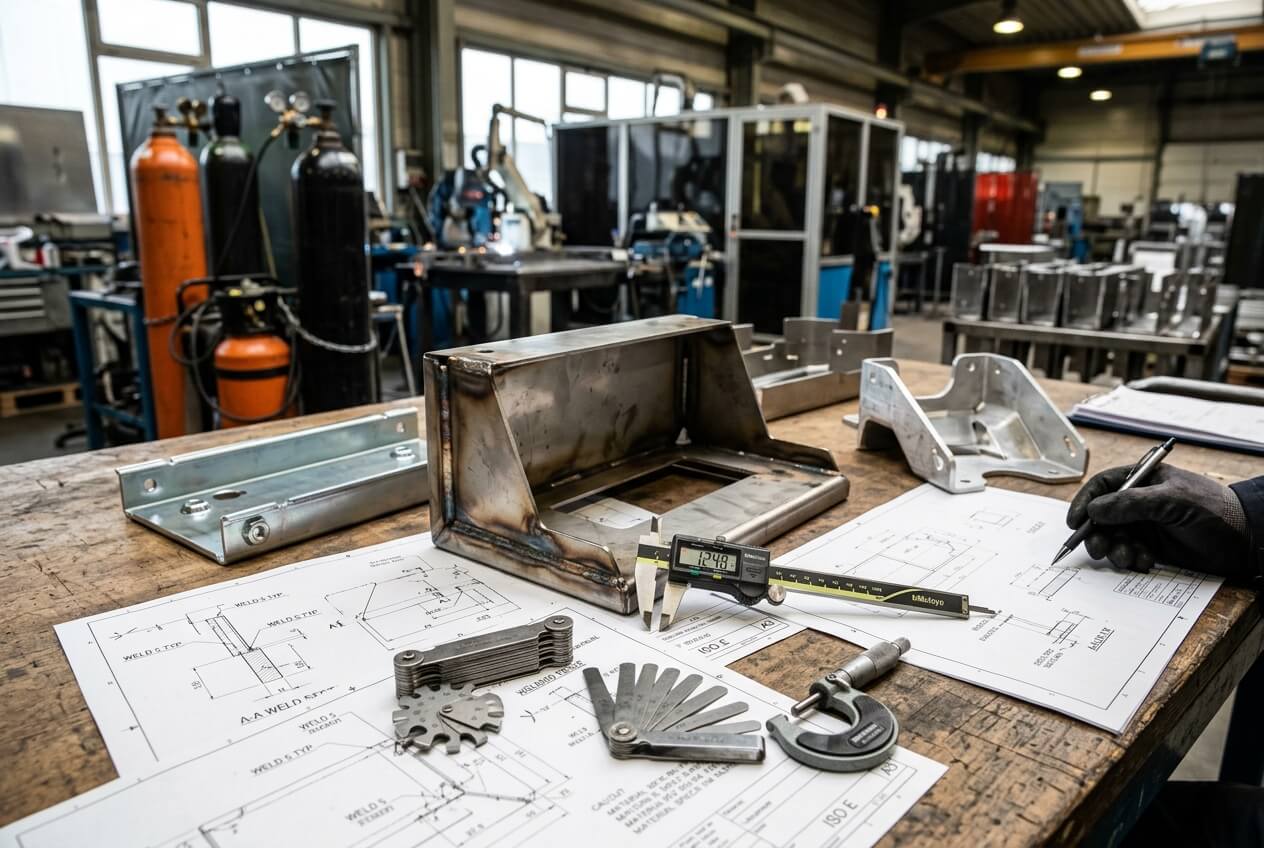
Finish and Coating Costs Expose the Hidden Quote Gap
Finish requirements often reveal route assumptions too late. Cutting and welding may finish on schedule, but powder coating exposes sharp dross, uneven ground edges, weld spatter, and heat marks. A supplier can remove these defects, but that work costs labor and time.
Oxy-fuel cut edges can require more cleanup than laser-cut edges, especially on sheet metal parts with visible contours. Manual welds may also need grinding, blending, or polishing before coating. If the quote does not include that work, the buyer may face a change request after the supplier already holds the order.
Coating does not hide every surface condition. Powder can cover color differences, but it can highlight heavy grinding lines, edge waves, weld undercut, and spatter. It can also reduce clearance in holes, slots, hinges, and mating features if the RFQ does not define masking or post-coating inspection.
Procurement teams should connect finish expectations to the fabrication route before award. A hidden industrial bracket may accept as-welded seams and rougher edges if corrosion protection remains adequate. A customer-facing cabinet door, display rack, or equipment panel needs cleaner cutting and controlled weld cleanup. The acceptable process changes because the acceptable final surface changes.
When Yishang reviews drawings for custom sheet metal fabrication, the most useful inputs include finish photos, visible surface notes, coating color and texture, masking requirements, and acceptable weld appearance. Those details help separate a realistic low-cost route from a quote that will grow after fabrication.
Prototype Approval Must Prove the Same Route Will Repeat in Production
Prototype approval should reduce risk. It can also create false confidence when the sample receives special treatment. A skilled worker may tune bend angles, grind seams longer, straighten a frame, or adjust a hole after welding. The sample then passes review, but the process has not proven repeatability.
This problem becomes serious when the prototype route differs from the batch route. The supplier may use one cutting method for the sample and another for production. They may weld the sample on a bench, then batch weld without the same checks. They may inspect only overall dimensions, while the buyer needs hole-to-hole distance, squareness, flatness, door gaps, and mating part fit.
Buyers should ask what will remain unchanged after sample approval. Confirm cutting method, bending sequence, weld process, fixture use, finish preparation, coating requirements, and inspection points. Also confirm whether the supplier priced production based on the approved route. If not, the approved sample becomes a cosmetic reference, not a production control.
Batch consistency matters most on assemblies. A single bracket can often be adjusted during installation. A welded cabinet, display rack, machine guard, or enclosure frame needs repeatable relationships between parts. Small movement in one welded plate can create large assembly time losses downstream.
Lead time also depends on route stability. If the supplier discovers after award that torch-cut edges need more grinding, or welded frames need extra straightening, the schedule slips. Clear RFQ details help suppliers price the right process before purchase order release, not after production starts.
What to Clarify Before Awarding a Quote That Mentions Oxy-Acetylene Work
When a quote mentions oxy-acetylene work, oxy-fuel cutting, manual welding, MIG, TIG, laser cutting, punching, or grinding, do not compare only the unit price. Compare the assumptions behind the price. The safest quote is not always the most expensive one. It is the quote that shows how the supplier will make the drawing repeatably.
Before award, clarify the route for critical features. Identify holes, slots, tabs, flanges, weld seams, visible surfaces, coated edges, and assembly interfaces. State material grade, thickness, quantity, tolerance needs, finish expectations, mating parts, and prototype approval criteria. Ask the supplier to confirm fixture use and inspection points for welded assemblies.
If the part will move from prototype to batch production, require the same process route unless both sides approve a change. A lower prototype price has little value if production requires extra grinding, straightening, inspection, or rework. Total cost includes scrap, sorting, assembly labor, late shipments, and field complaints.
To reduce this risk, send drawings, material requirements, quantities, tolerances, finish expectations, assembly notes, and any sample photos to Yishang for manufacturability and RFQ review. The review should focus on whether torch work fits the part, or whether laser cutting, CNC bending, fixture welding, MIG/TIG welding, finishing, and inspection controls will reduce production risk.
Frequently Asked Questions
What coating thickness details should buyers define before requesting a quote?
Buyers should define the functional requirement, drawing notes, critical dimensions, material or process expectations, and any inspection points related to coating thickness. This helps suppliers quote the same manufacturing scope instead of making different assumptions.
How can masking areas affect cost, fit, or lead time?
masking areas can change tooling, forming, welding, finishing, inspection, or rework requirements. If buyers do not clarify it early, two supplier quotes may look comparable while covering different production risks.
Why should powder coating be reviewed before prototype approval?
powder coating may look acceptable on a single sample but become harder to control during batch production. Buyers should confirm whether the prototype reflects the same process, finish, and inspection conditions expected for production.
What inspection points matter most for welding acetylene oxygen projects?
Important inspection points usually include fit-critical dimensions, holes or mating areas, cosmetic surfaces, finish build-up, welded or formed features, and any dimensions that affect downstream assembly. These points should appear in the RFQ or drawing notes.
How can buyers reduce assembly clearance risk before batch production?
Buyers can reduce risk by clarifying drawings, locking key material and finish assumptions, defining inspection timing, approving a representative sample, and confirming which dimensions or surfaces require tighter process control.
How can Yishang help review welding acetylene oxygen requirements?
Yishang can review drawings, RFQ notes, material requirements, tolerance expectations, finish details, samples, and assembly needs to identify unclear assumptions before quoting or batch production.