
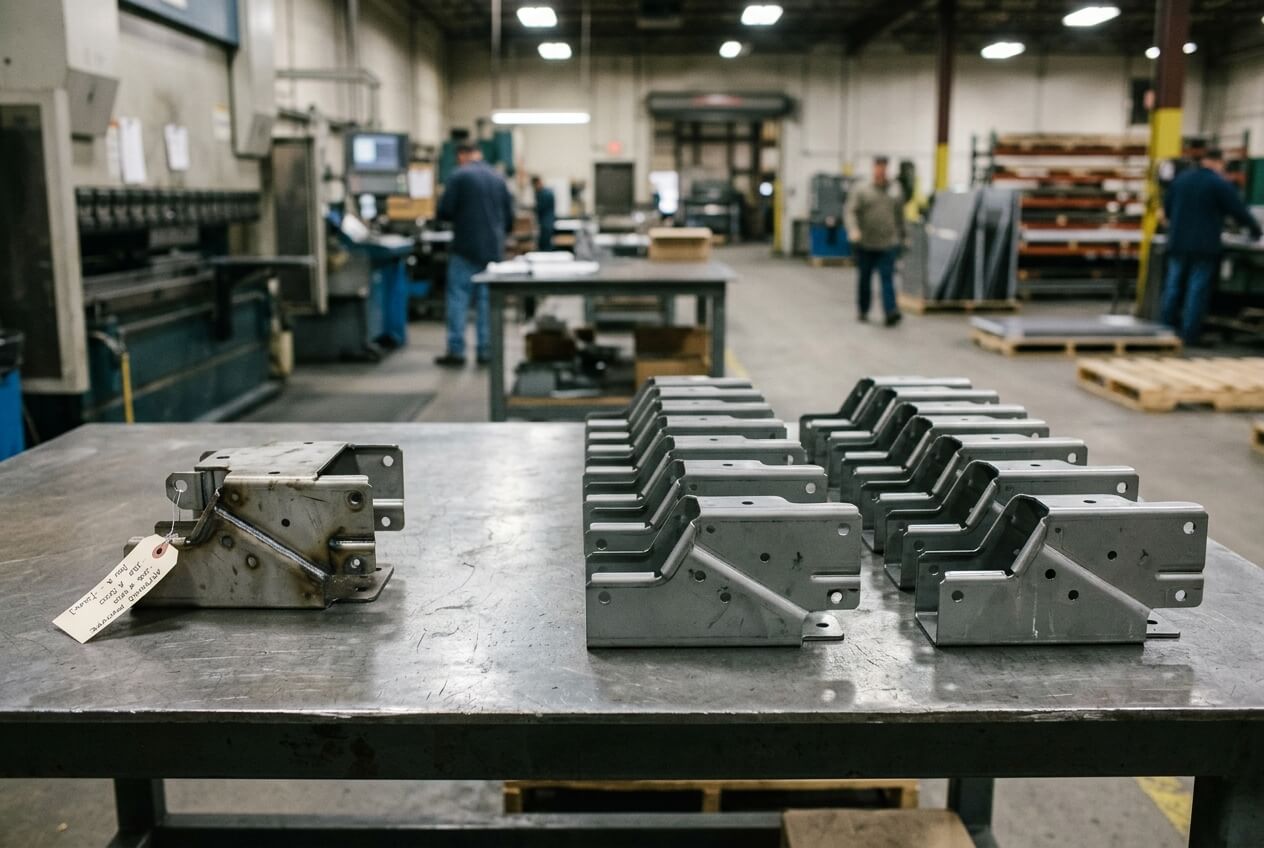
An OEM may approve one clean device housing and still receive a difficult batch. The prototype cover closes. The PCB holes match. The powder coating looks acceptable under office lighting. Purchasing then compares die casting, CNC machining, and custom sheet metal fabrication as if the sample has already removed the main risk.
That assumption causes expensive surprises. A prototype can hide hand filing, extra polishing, re-drilled holes, adjusted hinges, and one-off welding corrections. Batch production cannot rely on those quiet fixes. Once a casting die, bending program, welding fixture, coating mask, or inspection datum becomes fixed, the same unclear assumption repeats across many parts.
For buyers searching what is a die in casting, the useful answer is not only that a die is a metal mold. A casting die locks the production method into the product. It fixes release direction, draft, parting line, ejector mark locations, gate trimming areas, and many machining assumptions. Sheet metal production has similar lock-in points through bend tooling, weld fixtures, forming sequence, and coating controls.
This article focuses on one procurement risk: prototype approval can create false confidence when the RFQ does not state how the approved sample must repeat in batch production. The buyer’s job is not to write a long manufacturing manual. The job is to expose the few production assumptions that can change fit, appearance, quote price, lead time, and assembly performance.
Prototype Approval Becomes Risky When It Does Not Define the Production Method
A prototype proves that one part can exist. It does not automatically prove that hundreds of parts can repeat the same behavior. This matters when the buyer approves a sample without asking whether the sample used the planned batch process.
A sheet metal enclosure may start as a laser-cut, press-brake-formed, hand-welded sample. A senior technician may adjust the door gap after welding. Another person may chase threaded inserts after powder coating. The buyer sees a working enclosure, but the supplier may quote batch production with faster welding, standard deburring, shared coating line texture, and sampling inspection.
A casting project can hide the same gap. A prototype housing may come from CNC machining, 3D printing, or soft tooling before the final die exists. That sample can show the outer shape and rough assembly fit. It cannot prove where the parting line will sit, how much draft the cavity needs, where ejector pins will mark the surface, or whether critical areas need secondary machining.
Sample type should control approval language
Buyers should separate visual samples, functional samples, process-representative samples, and pre-production samples. Each one answers a different question. A visual sample checks form and appearance. A functional sample checks assembly. A process-representative sample checks whether the planned production route can repeat the features that matter.
Problems start when a buyer writes “approved” without naming the sample type. The supplier may treat the sample as a general target, not a controlled production standard. Later, the buyer may expect the same polished edges, tight gaps, and adjusted fit that the prototype had. The quotation may not include the labor needed to repeat those details.
Before batch release, ask how the sample was cut, formed, cast, machined, welded, finished, and inspected. If those steps differ from the batch plan, the approval should say what must repeat and what can change.
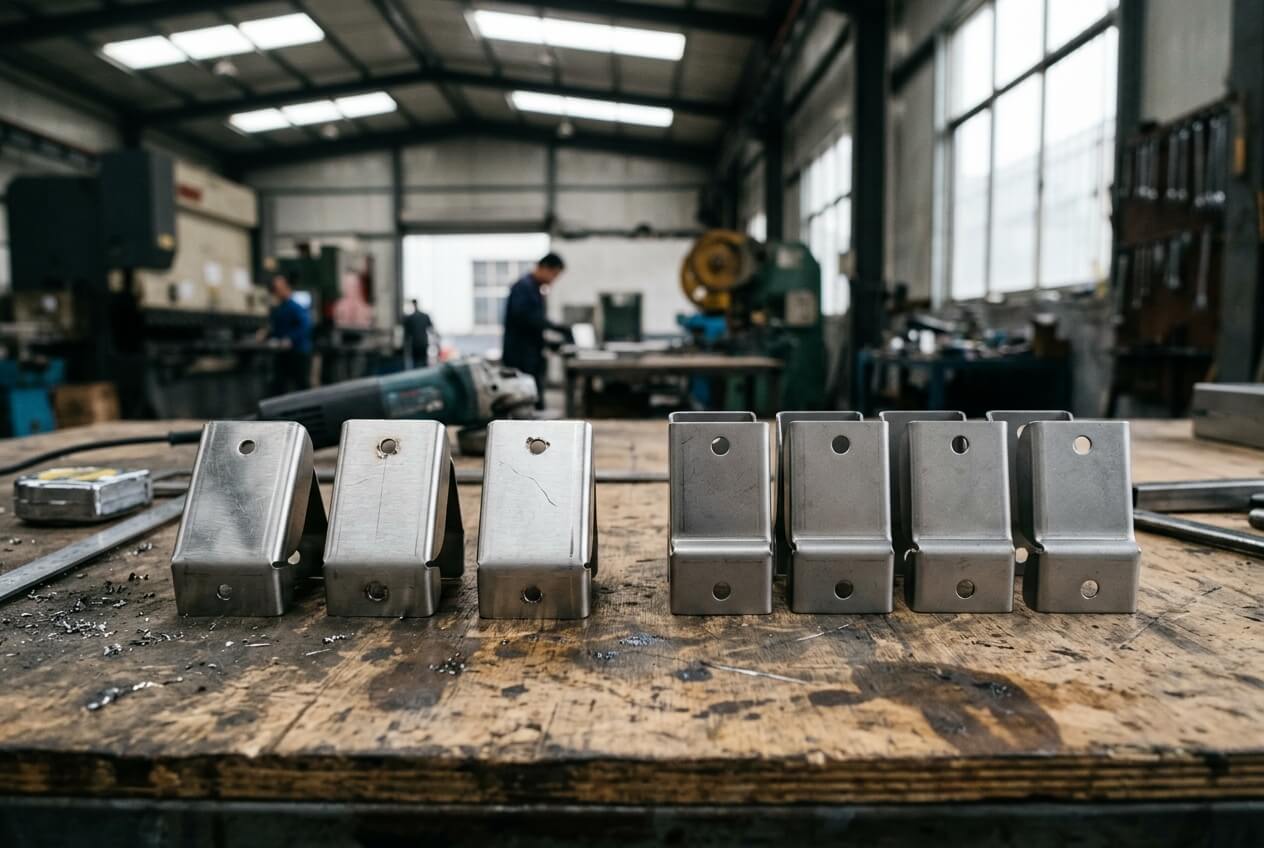
A Casting Die Locks More Than Shape, So Late Clarifications Become Costly
A die in casting is a hardened metal tool with a cavity shaped like the part. Molten aluminum, zinc, magnesium, or another alloy fills the cavity, cools, and exits through an ejection system. In production, the die also controls metal flow, cooling, part release, trim areas, and surface interruptions.
That control creates the main procurement risk. Buyers may approve geometry before they understand what the die will make permanent. Once the toolmaker builds the die, small drawing gaps become steel-safe or steel-expensive decisions. A missing cosmetic note may place ejector marks on a visible face. A late sealing-face requirement may add machining. A thick wall may increase porosity risk and extend trial correction time.
Tooling assumptions change the quote
Two casting suppliers can quote the same 3D model with different assumptions. One may include CNC machining on threaded holes, sealing faces, and tight datums. Another may quote more as-cast features. A third may reduce tooling cost by accepting a parting line location that affects appearance or trimming work.
The lowest quote may not be wrong. It may simply include a different production reality. Purchasing cannot compare those prices fairly unless the RFQ identifies cosmetic faces, machined features, draft limits, porosity-sensitive zones, and inspection points.
Lead time also changes when the buyer adds these details late. If the die needs modification after trial shots, the project loses time in tool correction, sampling, reinspection, and approval. That delay often costs more than the original tooling change would have cost during design review.
Sheet metal may protect designs that still move
Not every housing should become a casting. Many cabinets, brackets, access panels, welded frames, and device enclosures suit sheet metal because the design may still change after electronics testing or assembly trials. A display opening can move. Ventilation slots can increase. A mounting plate can gain new holes. These changes usually affect laser cutting files, bending programs, and fixtures, not a hardened casting die.
Example: an equipment maker approves a compact aluminum control housing. During final PCB testing, engineers move a connector by 8 mm. If the project has already committed to a casting die, the connector opening may require tool modification and new samples. In sheet metal, the supplier may revise the cut file, update bend notes, and confirm coating clearance around the new opening.
The right route depends on volume, design maturity, assembly loads, appearance, and future change risk. The key point stays the same: process lock-in must appear in the RFQ before buyers compare prices.
RFQ Ambiguity Turns One Approved Sample Into Several Different Quotes
Batch variation often starts before production begins. It starts when an RFQ shows the shape but not the production-critical intent. Overall dimensions, material grade, quantity, and finish color help, but they do not tell the supplier which features must repeat after forming, coating, welding, trimming, machining, or assembly.
For casting, missing notes about parting line, gate trim, ejector marks, machined surfaces, threads, coating, and sealing faces create wide quotation differences. The prototype may look excellent because someone machined or polished it. Batch parts may arrive with visible trim marks or slight mismatch because the RFQ never prohibited them on cosmetic faces.
For sheet metal fabrication, ambiguity appears in different places. A drawing may list a hole diameter but not say that the hole must align after bending and powder coating. A bracket may show a tight slot without naming the mating rail. A welded cabinet may show continuous seams without defining which exterior welds need flush grinding.
Clarify the features that drive repeatability
Buyers do not need to over-specify every edge. They need to mark the features that create assembly or appearance risk. Identify hinge holes, PCB mounts, display windows, rails, latch points, cover interfaces, sealing faces, load points, and cosmetic surfaces. Then state how the supplier should inspect those features in the finished condition.
Cost drivers become clearer when these details move into the RFQ. Tight formed-hole position may require a better fixture or post-form inspection. Flush exterior welds may add grinding time and finish control. Masked threads may cost less than chasing coated threads after finishing, depending on quantity and access.
Lead time also becomes more realistic. A supplier can plan fixture design, sample approval, coating masks, and first article inspection earlier. Without those details, the quote may look fast, but production may stop later for rework and clarification.
A short RFQ note can prevent a long dispute
Consider a wall-mounted sheet metal router enclosure. The buyer approves a prototype with a smooth front cover and clean ventilation slots. The batch RFQ only says powder coated black, same as sample. During production, coating builds up near the cover tabs, and some covers rub during assembly. The supplier followed a normal coating process. The buyer expected the adjusted prototype fit.
A better RFQ would state the coating thickness range, the critical cover gap, the inspection condition after coating, and any masking near tab interfaces. It would also state whether the approved sample was hand-adjusted. Those few notes align price, process, and responsibility before production starts.
Yishang can review sheet metal RFQ packages for enclosures, brackets, frames, cabinets, and welded assemblies when buyers need to identify which sample details must become production controls.
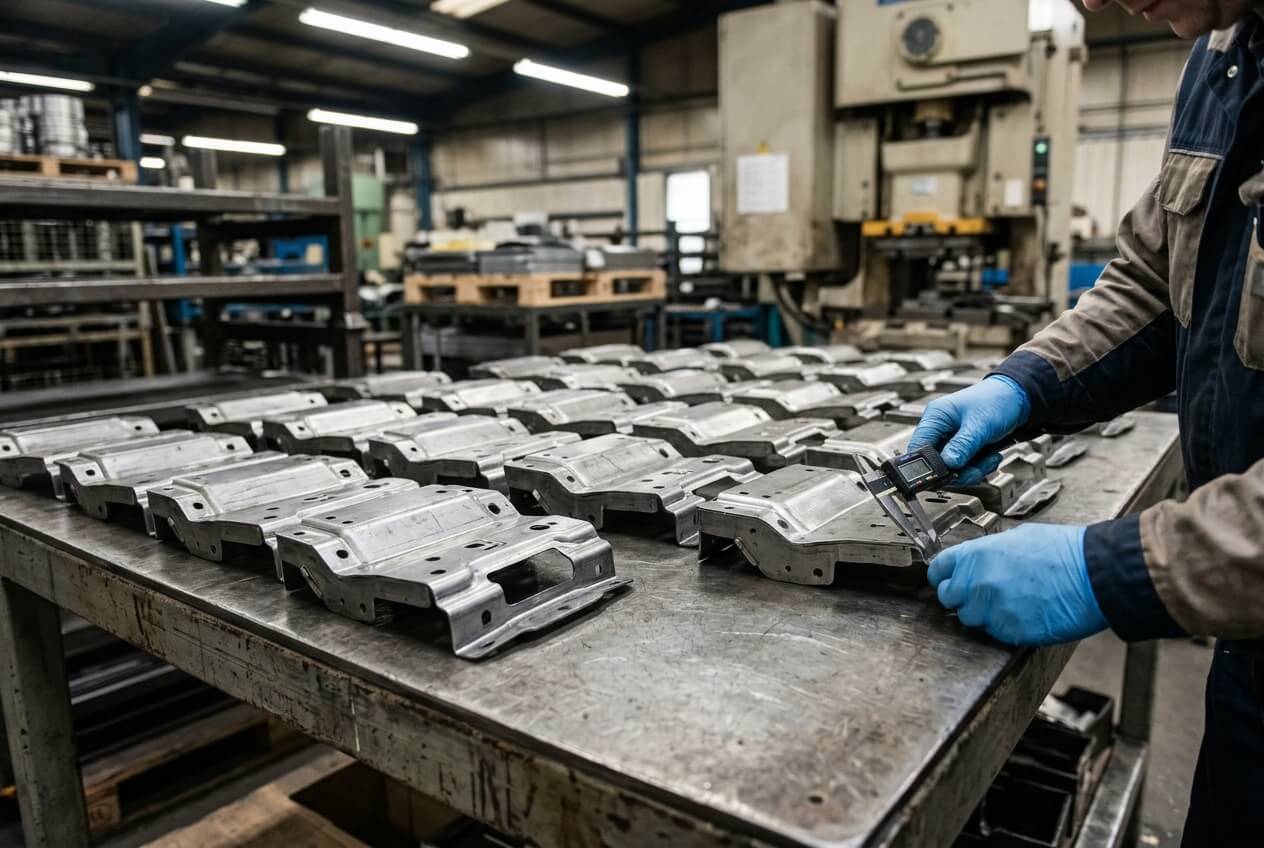
Assembly Fit Exposes Prototype-to-Batch Gaps Too Late
Many batch problems do not appear when parts sit alone on an inspection table. They appear when parts meet screws, hinges, PCBs, seals, cables, covers, and neighboring frames. Prototype approval should therefore include assembly behavior, not only part appearance.
A bracket shows this clearly. A simple L bracket depends on material thickness, bend radius, press brake tooling, hole location, and the datum used after forming. If the drawing measures hole position from the flat pattern, but assembly depends on the formed leg, two suppliers can inspect the same part differently. Both may believe they followed the drawing.
Now imagine that bracket supports a sensor rail. The prototype fits because a technician opens one hole slightly. In the batch, the rail does not sit square, and the installer forces screws into position. The issue began as an unclear datum. It became a quotation gap because no one priced tighter formed inspection. It became an assembly problem because the mating rail never appeared in the RFQ.
Welded parts add fixture and distortion risk
Welded frames and cabinets create another late-stage trap. A prototype frame can be tack welded, measured, corrected, and fully welded by hand. Batch production needs a fixture and a welding sequence that controls distortion. If the RFQ does not define diagonal tolerance, hole center consistency, shelf interchangeability, or front-face appearance, the batch may vary more than the prototype.
Example: a retail display frame uses welded tube sections and sheet metal shelves. The first sample stands straight after hand correction. In batch production, heat pulls the side frames inward by a few millimeters. Shelves fit tightly on some units and loosely on others. The drawing named outer size, but it did not define shelf interface datums or inspection after welding.
Die cast housings can fail in assembly for similar reasons. A trial part may fit after the supplier cleans threads and machines a mating face. Batch parts may show screw misalignment if porosity, shrinkage, coating buildup, or parting line cleanup affects the interface. The buyer should identify assembly-critical features before tooling and first article approval.
The practical question is not whether casting or sheet metal is better. Ask which process can repeat the features that affect assembly. Stable, compact, high-volume housings may justify die casting. Enclosures, panels, cabinets, brackets, and frames with expected revisions often benefit from sheet metal flexibility.
Turn Sample Approval Into a Controlled Production Gate
A strong approval record tells the supplier what must repeat, what can vary, and what needs correction before production starts. It also protects purchasing from comparing quotes that include different hidden assumptions.
Start with the approved sample. Record whether it represents the batch process. Note any hand adjustments, rework, polishing, drilling, bending correction, thread chasing, or assembly fitting. These details do not blame the supplier. They show which actions must either disappear through better process control or remain priced into production.
Next, connect the drawing to the real assembly. Mark critical holes, slots, cover interfaces, hinge areas, sealing faces, welded joints, load points, and visible faces. Add tolerances only where they protect function. Overly tight tolerances on noncritical features raise cost and inspection time without solving the main risk.
Finish expectations also need practical wording. Powder coating color, texture, thickness range, masking areas, acceptable orange peel, weld grinding level, edge treatment, and packaging protection can all affect the final product. These details matter most where they change assembly fit or visible quality.
First article inspection should check the finished part, not only the flat pattern or raw casting. For sheet metal, measure critical holes after bending and coating. Check door gap, hinge alignment, threaded hardware, formed datums, flatness, and coating coverage. For casting, review machined datums, threads, sealing faces, trim areas, ejector marks, and porosity-sensitive zones.
Supplier communication should stay specific. Instead of asking for “same as sample,” ask which features the supplier will control in batch and which changes may occur due to tooling, forming, welding, or finishing. This gives purchasing a fairer quote comparison and gives engineering a chance to approve practical manufacturability tradeoffs before money locks in.
Practical next step: If an approved prototype is moving toward batch production, send Yishang your 2D drawings, 3D files, material requirements, quantities, tolerance notes, finish expectations, prototype photos, and assembly concerns. The review can focus on bending, welding, coating, fixtures, inspection datums, and batch consistency before you confirm the production quote through Yishang.
Frequently Asked Questions
What is a die in casting in procurement terms?
A die in casting is the metal production tool that forms the part cavity and controls release, parting line, ejector marks, gate trimming, cooling, and many secondary machining needs. For buyers, it represents a production commitment. Once the die is built, late changes to cosmetic faces, openings, bosses, or sealing areas can add cost and delay.
Why can an approved prototype fail during batch production?
A prototype may include hand corrections that do not appear in the drawing or quote. Technicians may adjust holes, polish edges, clean threads, or correct welded distortion. If the RFQ does not state which results must repeat in batch production, the supplier may quote a standard process that cannot reproduce every prototype detail.
What should buyers clarify before approving casting tooling?
Buyers should confirm parting line location, ejector mark locations, gate trim areas, draft requirements, machined surfaces, threaded features, coating expectations, cosmetic faces, and inspection datums. These points affect tooling design, unit price, sample approval, and lead time. They become harder to change after the die is cut.
When is sheet metal fabrication safer than die casting?
Sheet metal fabrication can reduce risk when the design may still change, quantities are moderate, or the part uses panels, bends, removable covers, ventilation slots, brackets, frames, or welded assemblies. Buyers can often revise cut files, bend programs, and fixtures faster than they can modify a casting die.
How should first article inspection address prototype-to-batch risk?
First article inspection should check the finished production process, not only raw geometry. For sheet metal parts, inspect critical dimensions after bending, welding, and coating. For castings, check machined datums, threads, sealing faces, trim marks, ejector marks, and areas where porosity or warpage could affect assembly.
What information should buyers send for an RFQ review?
Send 2D drawings, 3D files, material requirements, quantities, tolerances, finish expectations, prototype photos, assembly notes, and any sample approval comments. Include mating parts or interface details when possible. This helps the supplier identify production assumptions before quoting, tooling, fixturing, finishing, or batch inspection.