
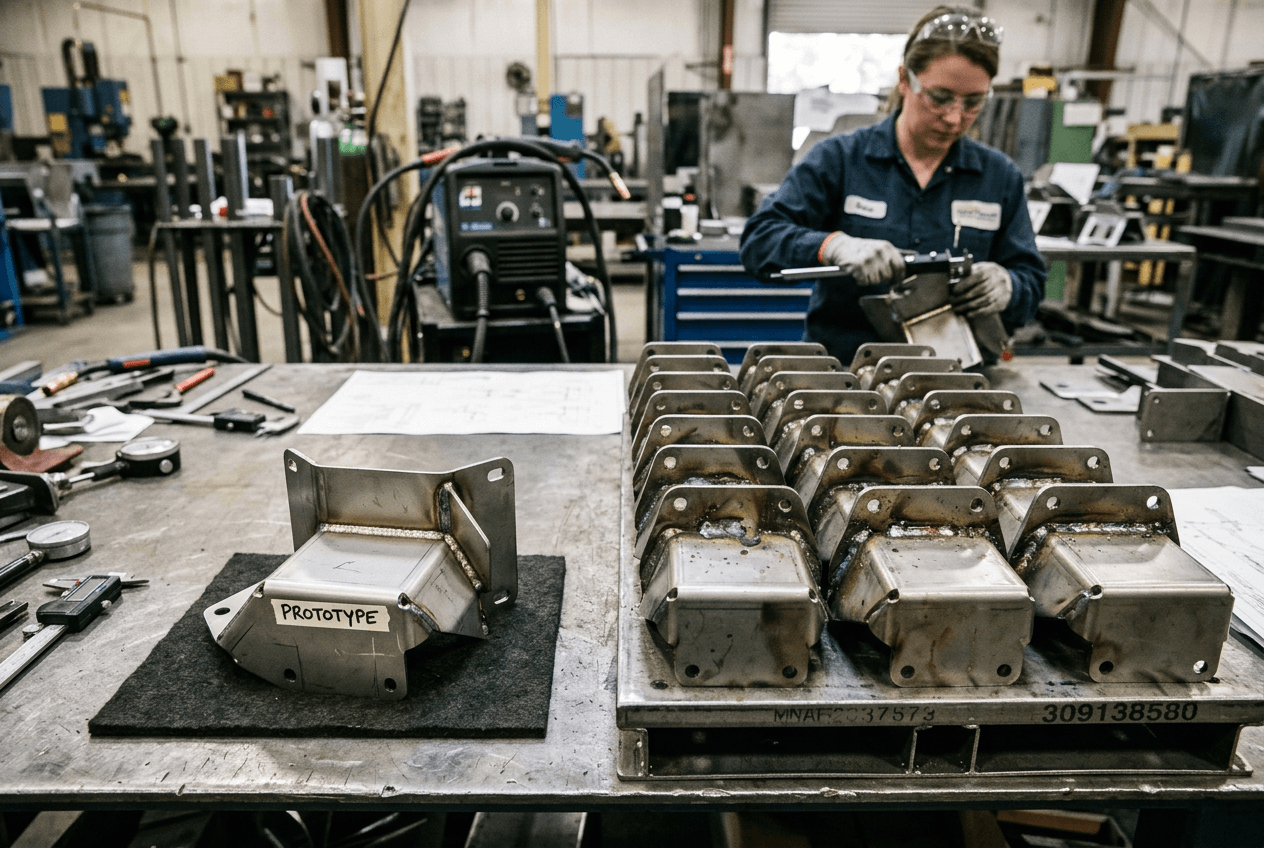
A buyer can approve a clean welded sample and still get a disappointing batch. That is the real procurement risk behind the question, what is a MIG welder? In sheet metal fabrication, MIG welding is often the fastest way to join brackets, frames, cabinets, and welded assemblies. It is also the step where hidden labor, fixture decisions, and heat distortion become visible. A prototype may look simple because a skilled welder corrected gaps by hand. Batch production does not forgive those corrections. It repeats them as cost, delay, and fit problems.
That is why MIG welding should never be treated as a narrow process question. Buyers need to understand where the first sample succeeded, what the supplier assumed during quoting, and which details will change when the order moves into quantity. If those points stay vague, the project can drift from a neat prototype to a costly production run. The gap is especially painful for metal enclosures, sheet metal parts, frames, and welded assemblies that must fit other components after welding and coating.
This article focuses on one dominant buyer risk: prototype approval creating false confidence in batch repeatability. Every section connects back to that risk. The goal is not to explain welding as a textbook topic. The goal is to help you spot where a sample can hide labor, where an RFQ can miss setup cost, and where a production release can fail because no one locked the repeatability requirements early enough.
Why a MIG-welded prototype can look right while the batch starts to move
A MIG welder joins metal with a fed wire and shielding gas. In fabrication, that simple description hides a lot of variation. One welder may clean edges by hand, press parts into position, and adjust the torch path until the sample looks perfect. The prototype may pass because the operator compensates for fit-up issues the drawing never resolved. Once the job reaches batch size, those small corrections become hard to repeat.
This is why prototype approval can mislead buyers. A first article often receives extra attention. The welder may spend more time aligning the part, removing spatter, and grinding visible seams. That makes the sample appear stable even when the design still depends on manual judgment. If the production plan has no fixture, no defined weld sequence, and no post-weld check, the batch will behave differently.
Where the sample hides labor
A welded enclosure might arrive as a flawless sample because the corners were hand-clamped and the doors were adjusted after welding. In production, the same enclosure may need a dedicated fixture to hold square. Without it, the side panels can pull inward and change the door gap. A buyer who only sees the approved sample may not realize that the first result came from labor that will not scale well.
The same pattern shows up on frames and brackets. A prototype bracket set can fit perfectly when one operator corrects the hole position after a test weld. The batch may drift because the second run uses the same laser-cut blanks but a different setup. The welder can no longer compensate piece by piece, and the assembly fit problem appears at final inspection instead of at quote stage.
Project example: a small control cabinet prototype passes inspection with clean corners and flush doors. The buyer releases 80 units. During the batch, the front frame twists slightly after welding, and the hinges no longer line up cleanly with the door leaf. The problem did not start in coating or assembly. It started when the prototype masked the need for a weld fixture and a measured post-weld square check.
Where RFQ gaps turn a weld process into a quote surprise
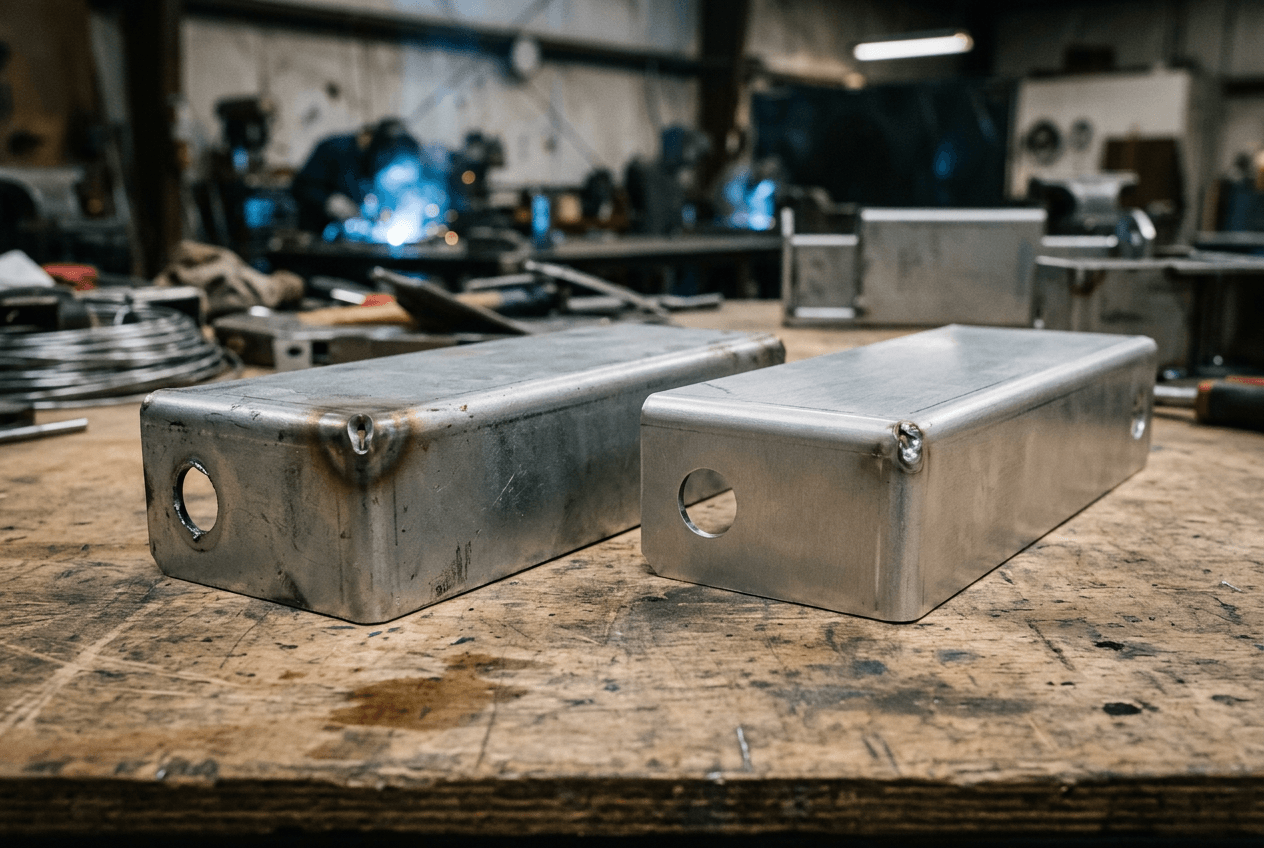
Most MIG welding quote disputes do not begin with the arc. They begin with missing RFQ detail. If the buyer does not define the material condition, weld visibility, cleanup scope, and inspection target, each supplier fills in the blanks differently. One shop prices raw welding time. Another includes grinding, fixturing, and post-weld inspection. The numbers look far apart because the assumptions are not the same.
This gap matters most when the sample already looks approved. Buyers often assume the production quote will simply scale up the prototype. In reality, the supplier may have used extra manual prep to make the sample look good. If that prep was never called out in the RFQ, the batch quote may rise once the shop reviews the drawing more carefully. That is not a surprise cost. It is a missing requirement surfacing late.
Details that change the quote before production starts
Surface condition is one of the biggest drivers. Mild steel with a clean edge behaves differently from oiled sheet, galvanized stock, or material with laser oxide. Batch parts may need more prep than a hand-finished sample. That adds labor and can affect weld consistency. Buyers should identify the actual material state, not just the base grade, because the coating or residue changes how much cleanup the supplier must budget.
Joint style also changes cost and risk. A short hidden tack weld is not the same as a continuous cosmetic seam on a visible enclosure face. A supplier may price those cases very differently. The same holds for intermittent welds, weld length, and access. If the design leaves little room for the torch, the shop may need smaller passes, more repositioning, or a different fixture concept. Those details affect both price and schedule.
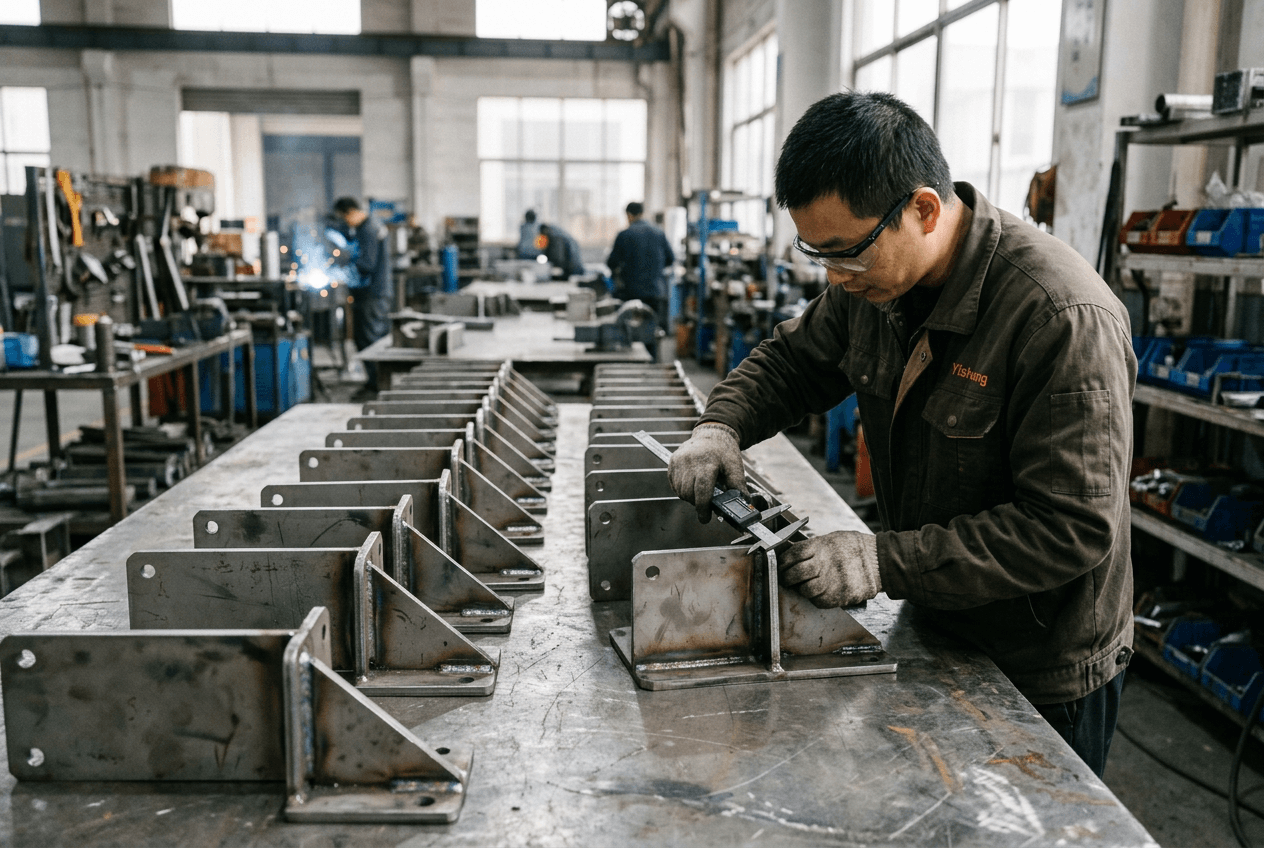
A welded bracket project shows the point clearly. One batch of bracket sets may seem simple until the buyer asks for tight hole alignment after welding. The supplier then has to protect the datum during heat input, inspect the post-weld hole location, and possibly rework parts that pulled out of position. The quote changes because the process changed, not because the supplier raised the price for no reason.
When a shop such as Yishang reviews a drawing set, the most useful RFQ is the one that removes guesswork. Clear drawings, material condition, quantities, tolerances, finish expectations, and prototype photos let the supplier price the actual production process instead of a best-case sample. That is where quote comparison becomes meaningful.
How weld heat and fixture choices decide whether parts still fit after welding
Heat is the silent source of most batch problems in MIG-welded sheet metal parts. The weld itself may be strong, but the surrounding metal moves as it cools. If the design depends on square corners, hole alignment, door gaps, or mating-panel fit, that movement matters more than the weld bead appearance. A clean sample can still fail once a larger quantity is welded with the same setup.
Fixture design controls much of that risk. A good fixture supports the part at known datums, holds the geometry during welding, and leaves room for access and inspection. A weak fixture does the opposite. It lets the part shift, then asks the welder to correct it by eye. That can work on one sample. It often fails in batch production because the corrections are inconsistent.
Why fit-up breaks after the first approval
Fit-up issues usually start before welding. Laser-cut tabs may be slightly different from one lot to the next. Bend angles may vary within the allowed range. A hole that looked safe on paper may end up too close to a weld zone. Once heat enters the part, those small differences compound. The result can be twist, bow, or a gap that the mating part no longer tolerates.
Project example: an industrial rack frame passes first article review. The sample fits the shelf module and the support feet sit level. In the batch, the same frame develops a slight diagonal pull after the long side welds cool. The shelves still mount, but the installer has to force alignment. The problem is not strength. It is repeatability. The buyer needed a weld sequence, a fixture reference, and a post-weld dimensional check before release.
That is why buyers should ask where the critical dimensions live. If the part must remain square after welding, then square is a post-weld requirement, not just a cutting requirement. If a bracket must locate another assembly, then the hole position after welding matters more than the hole position on the flat blank. The earlier these points are defined, the less likely the production run will drift away from the approved sample.
If the design is borderline, a manufacturer like Yishang can review the drawing and prototype photos together. That review should focus on weld access, locating surfaces, and likely distortion paths. It should not stop at visual approval.
Why finish and inspection gates must match the production reality, not the prototype mood
Prototype approval often centers on appearance. Buyers look at clean corners, smooth edges, and a neat weld bead. That matters, but it can also hide the real release risk. A sample may be polished, ground, and touched up more heavily than the batch will ever be. If the finish standard is not written down, the production team has to guess how much cleanup is acceptable after welding and before coating.
That guess can become expensive. Spatter, undercut, pinholes, and heavy grinding marks may disappear on a sample because one skilled operator removed them by hand. In production, those marks can show through powder coating or create rework at final inspection. The issue starts when the buyer assumes the visible sample already defines the finish standard. It does not unless the RFQ says so.
What to inspect before you release volume
Inspection should track the actual failure mode. If the part is a welded cabinet, then door alignment, flange flatness, and visible seam quality may matter more than raw weld count. If the part is a support frame, then square, twist, and mounting-point position may matter more than bead appearance. A production release should define the checkpoints that protect assembly, not only the checkpoints that make the sample look good.
The same logic applies to rework. If a batch part can be ground, straightened, or touched up after welding, the buyer should know the acceptable limit. Otherwise the supplier may either under-rework and ship nonconforming parts, or over-rework and lose time. Neither outcome helps schedule or cost. The more visible the part, the more important it is to write the finish expectation in practical terms.
For buyers comparing suppliers, the key question is not whether a sample looks acceptable. It is whether the production route can reproduce that result without hidden labor. That is the point where RFQ detail, drawing clarity, and shop capability must line up before the order is released.
Practical next step: if you are preparing a MIG-welded prototype or batch RFQ, send drawings, material requirements, quantities, tolerances, finish expectations, and any assembly photos to your manufacturing partner. Yishang can use that information to review manufacturability, estimate weld access, and flag repeatability risks before you compare quotes or approve production.
Frequently Asked Questions
What is a MIG welder in sheet metal fabrication?
A MIG welder joins metal with a continuously fed wire and shielding gas. In sheet metal fabrication, buyers use it for enclosures, brackets, frames, and welded assemblies because it supports fast production. The procurement risk appears when a clean sample hides the fixture, prep, or rework needed for batch consistency.
Why can a MIG-welded prototype still mislead a buyer?
A prototype often receives more manual correction than the batch. A welder may clamp it by hand, adjust gaps, and grind visible seams until it looks perfect. That can hide the real repeatability risk, which only appears when the same part must be built many times with the same setup.
What RFQ details matter most for MIG welding quotes?
The most important details are material condition, joint type, weld visibility, cleanup scope, and post-weld inspection points. If those items stay vague, each supplier will make different assumptions. That creates quote spread and makes the low price hard to trust.
How do weld heat and fixtures affect assembly fit?
Heat pulls metal as it cools, so even a strong weld can change square, hole position, or door gap. A fixture controls that movement and helps keep critical dimensions stable. Without it, the batch may drift even if the prototype looked perfect.
What should buyers confirm before approving a batch after prototype success?
Buyers should confirm the weld sequence, post-weld dimensions, finish standard, and any rework limits. They should also verify that the sample did not rely on hand correction that cannot scale. Those checks reduce the chance of surprise cost and assembly issues later.