
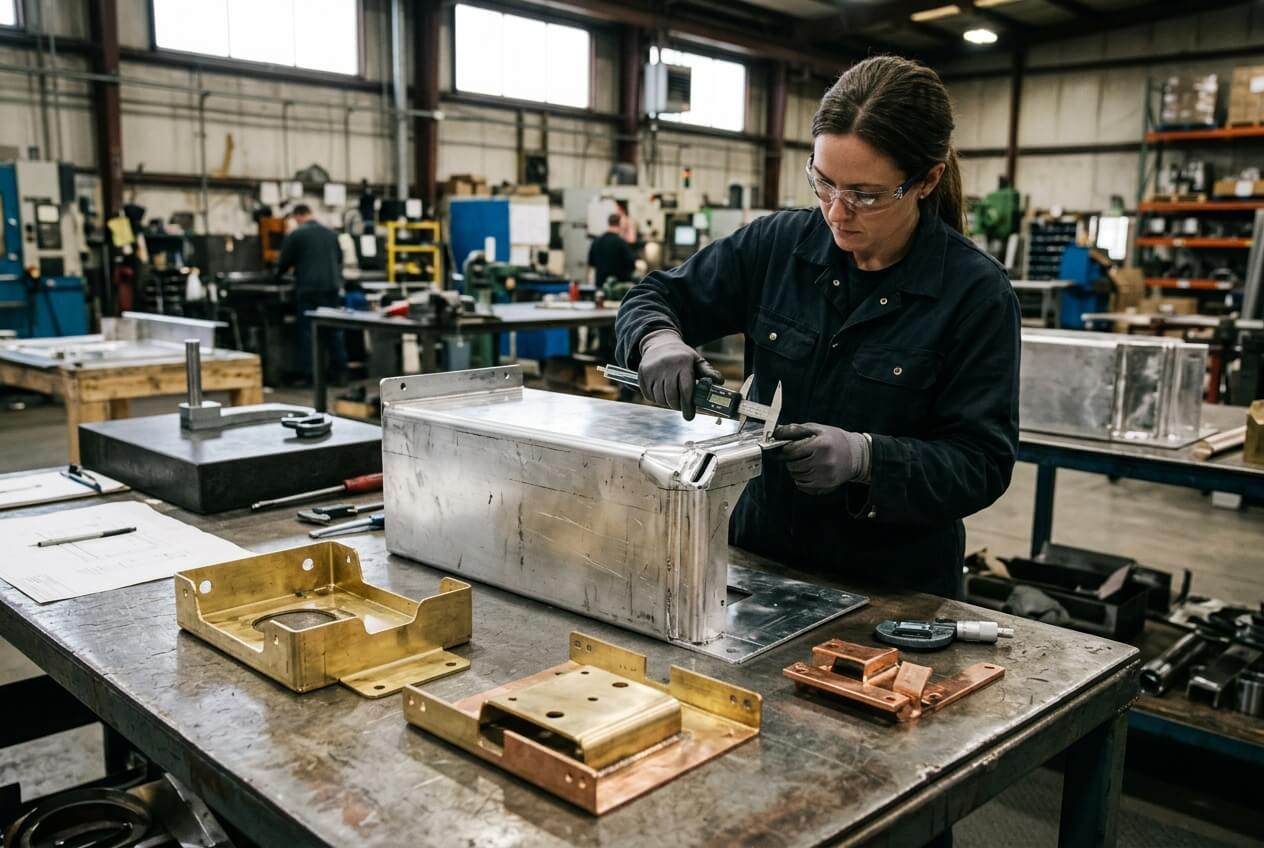
An OEM buyer sends an enclosure RFQ to three sheet metal suppliers. The drawing says “non-ferrous metal, 2.0 mm, powder coated.” One supplier quotes aluminum 5052. Another assumes 6061 because the panel needs stiffness. A third asks whether stainless steel can replace the note because the buyer also wrote “rust resistant.”
The buyer now has three prices, but not three comparable offers. The problem did not start with the suppliers. It started with an RFQ term that looked clear but left too many production decisions open.
This is where the search question “what is a non ferrous” becomes a procurement risk. A non-ferrous metal is not primarily iron-based. Aluminum, copper, brass, bronze, zinc, tin, nickel, and many specialty alloys fit the category. That definition helps with basic classification. It does not tell a fabricator which sheet grade to buy, which bend radius to use, which finish process to quote, or which dimensions must survive assembly.
In custom sheet metal fabrication, the phrase “non-ferrous” often hides the real requirement. The buyer may need low weight, corrosion resistance, conductivity, non-magnetic behavior, or a decorative surface. Each reason leads to different material grades, tooling decisions, inspection points, cost drivers, and lead time assumptions.
This article focuses on one dominant buyer risk: RFQ ambiguity that lets suppliers quote different manufacturing routes for the same drawing. When that happens, the lowest price may not be the best price. It may simply carry the most unspoken assumptions.
Where “Non-Ferrous” Starts to Distort Sheet Metal Quotes
Buyers often use “non-ferrous” as a shortcut. The term feels technical, so it looks safe on a drawing. In practice, it tells the supplier what the material is not. It does not explain what the part must do.
A wall-mounted control enclosure may need aluminum because installers must lift it easily. A copper part may need conductivity for grounding. A brass trim panel may need a warm decorative look. A marine-adjacent bracket may need corrosion resistance more than strength. All four parts could fall under a broad non-ferrous request, but they do not share the same fabrication path.
Quote distortion starts when suppliers fill those gaps themselves. One factory may choose a common aluminum grade with good forming behavior. Another may price a stiffer grade because the drawing shows a large flat door. A third may include extra surface protection because the enclosure will sit outdoors. Each quote may look reasonable, yet each quote answers a different hidden question.
The wrong comparison can reward missing work
Procurement teams usually compare unit price, tooling cost, sample time, and lead time. Those numbers only help when each supplier quotes the same part. If the RFQ leaves the grade, finish expectations, cosmetic faces, or inspection stage open, the comparison becomes unstable.
For example, an aluminum electronics cover may need deburred edges, masked grounding points, and coating thickness control around mounting holes. A low quote may include laser cutting, bending, and basic powder coating only. A higher quote may include pretreatment, masking, final assembly checks, and protective packing. The second quote costs more because it includes the work that prevents assembly failure.
Buyers should treat every broad material note as a source of quote assumption risk. If the RFQ only says “non-ferrous,” ask what the supplier must infer before production can start. Those inferred decisions often decide whether the finished sheet metal parts fit, look right, and repeat in batch production.
Why Material Assumptions Change Fit, Finish, Cost, and Lead Time
Material choice affects more than the metal price. It changes forming behavior, welding heat control, surface handling, available stock, coating preparation, and inspection planning. A supplier cannot quote accurately when the RFQ hides the reason behind the non-ferrous requirement.
Aluminum 5052 and aluminum 6061 show the problem clearly. Both are aluminum. Both are non-ferrous. Yet they behave differently during bending. 5052 often suits formed sheet metal panels and enclosures. 6061 can offer strength, but some tempers create cracking risk at tight bends. If the drawing shows narrow flanges, holes near bends, or cosmetic corners, the supplier needs the grade and temper before pricing.
Copper and brass create another assumption chain. Copper conducts electricity well, but it scratches easily and can deform under load. Brass can deliver a decorative surface, but fingerprints, polishing direction, clear coating, and packing may drive cost. A supplier who quotes only raw material and cutting time may miss the handling work that keeps visible parts acceptable.
Project example: outdoor aluminum cabinet
A buyer requests a powder coated outdoor cabinet and writes “non-ferrous sheet metal.” Supplier A quotes aluminum 5052 with pretreatment, masked threaded holes, and coating thickness control. Supplier B quotes a lower price but treats the finish as standard indoor powder coating. Supplier C offers stainless steel because the buyer also mentions rust resistance.
The issue starts with unclear intent. The buyer wanted a lightweight cabinet for outdoor use. That should have led to notes about aluminum grade, corrosion exposure, pretreatment, powder coating thickness, masked holes, and installation hardware. Without those details, the quotes measure different risk levels rather than different supplier efficiency.
Lead time also changes. A common aluminum grade may move quickly. A decorative brass sheet, special temper, or controlled cosmetic finish may require longer sourcing and inspection. If the buyer learns this after issuing a purchase order, the schedule can slip while the team revises drawings, confirms samples, or approves a material substitution.
Clear RFQ language does not need to be long. It should state the material grade if fixed. If alternatives remain open, it should state the function driving the non-ferrous choice. That gives suppliers room to suggest workable options without inventing the requirement.
How Drawing Gaps Turn Quote Assumptions Into Assembly Problems
Material ambiguity becomes more expensive when drawings also omit critical production details. Sheet metal fabrication links material, geometry, finishing, and assembly. A small missing note can shift cost from quotation to rework.
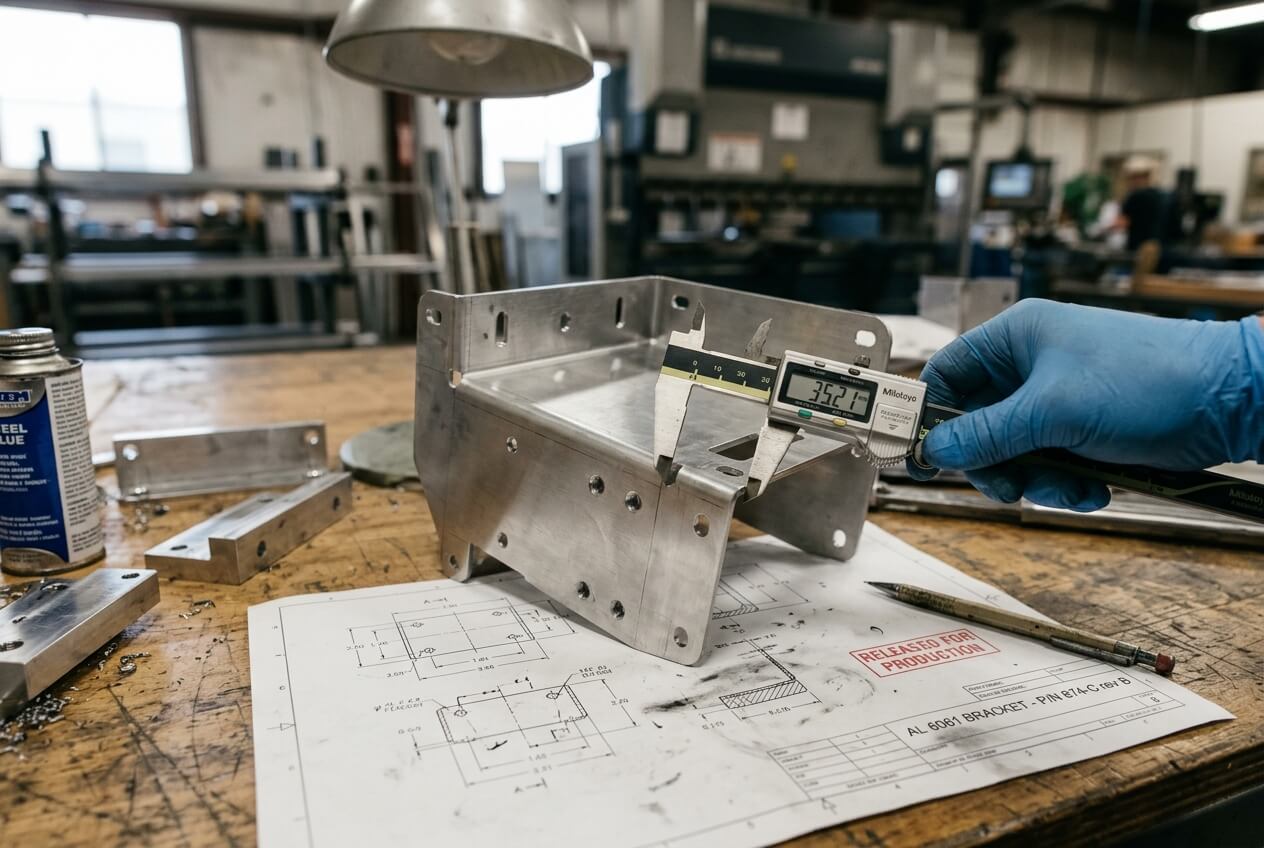
Hole locations near bends need special attention. A flat pattern may look correct, but forming can move or distort holes close to a flange. If the drawing does not define which dimensions matter after bending, the supplier may inspect the part before forming or use a standard sequence that fails the final assembly.
Finish thickness can also change fit. Powder coating adds buildup around holes, slots, tabs, and mating faces. If the buyer needs screws, hinges, PCB brackets, or PEM hardware to fit after coating, the RFQ should say so. A quote that excludes masking or post-coating checks may look cheaper until coated parts reach the assembly line.
Project example: formed bracket with mating holes
An equipment buyer orders non-ferrous brackets for an aluminum frame. The drawing shows four mounting holes, but it does not mark them as critical after bending. The supplier cuts the holes correctly in the flat blank. After forming, two holes sit slightly out of position, and the bracket no longer aligns with the frame.
The problem did not come from poor cutting accuracy. It came from missing assembly intent. The buyer needed the finished bracket to match a mating frame after bending and coating. That requirement should have appeared as a critical dimension, inspection stage, or assembly note in the RFQ.
Welded assemblies create the same risk. Aluminum frames can distort during welding more than buyers expect. If a drawing shows tight diagonals but omits weld sequence, visible faces, grinding limits, and straightening expectations, suppliers must guess how much control to include. One quote may include fixturing and post-weld inspection. Another may assume manual alignment and basic visual checks.
Use drawings to reduce interpretation. Mark cosmetic faces, grain direction, hole-to-bend limits, masked zones, assembly-critical dimensions, and inspection points. Send mating part drawings or photos when fit matters. These details help suppliers price the actual manufacturing route, not just the geometry on the page.
Why Prototype Approval Can Hide Batch Production Risk
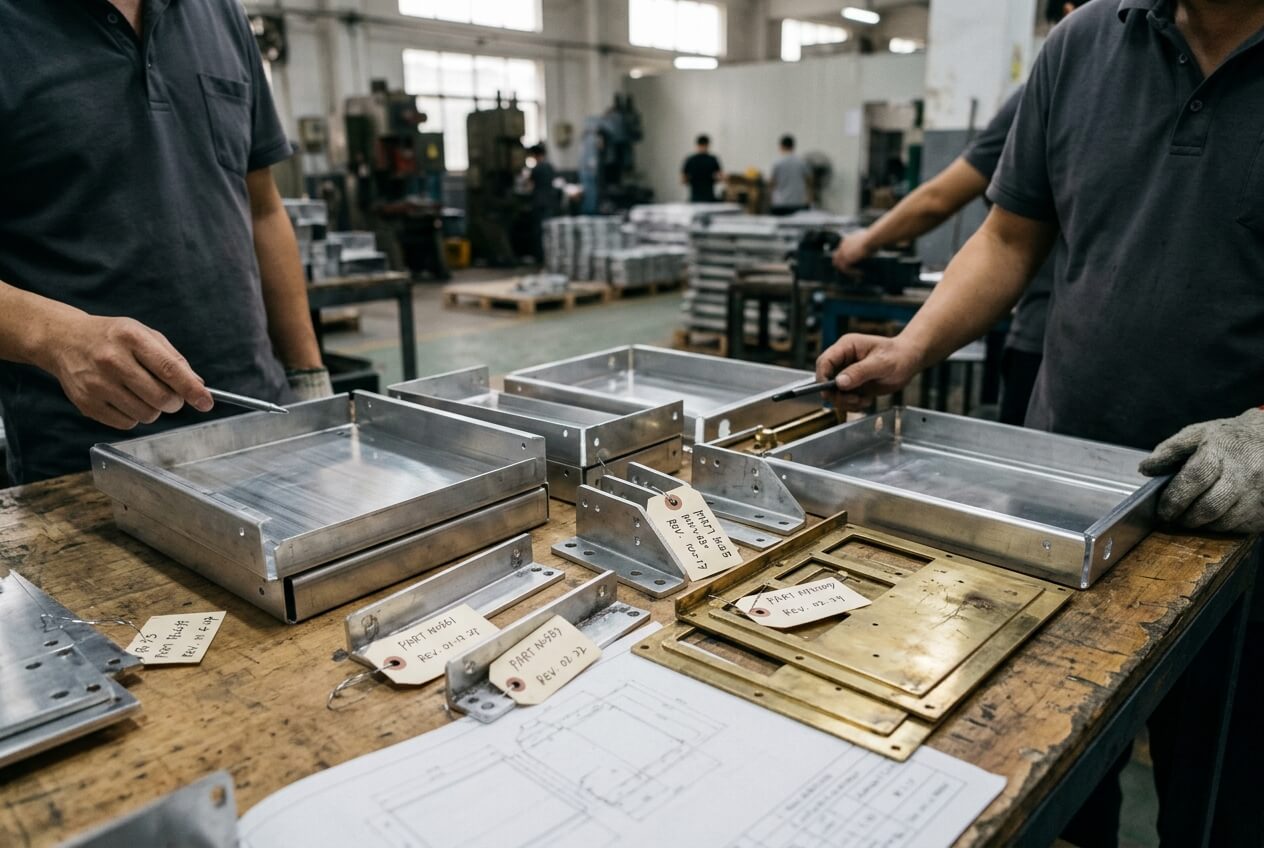
A prototype can confirm direction, but it can also hide unrecorded corrections. This risk grows when the RFQ uses broad material language and the drawing lacks production notes. One good sample does not prove that 500 or 5,000 pieces will repeat the same way.
Many prototypes pass because skilled technicians make small adjustments. They may open a slot after bending, polish a visible corner, remove coating buildup from a hole, straighten a welded frame, or pack a surface more carefully than the batch process allows. If those actions stay outside the drawing and quotation, they become disputes during production.
Non-ferrous metals often make this gap wider. Soft aluminum scratches during stacking. Thin aluminum can warp from welding heat. Brass and copper surfaces show handling marks quickly. Decorative faces may need film protection, separated packing, or special gloves. These steps affect cost and lead time, so suppliers must quote them before batch approval.
Turn sample fixes into production controls
Buyers should review the approved prototype as evidence, not as the full specification. Ask what changed between the drawing and the sample. Did the supplier adjust hole size after coating? Did the bend radius change to avoid cracking? Did the frame need straightening after welding? Did polishing happen before or after bending?
Those answers should update the production file. Add notes for critical dimensions, coating limits, cosmetic areas, packaging, inspection timing, and acceptable surface marks. If a sample passes only because one operator used extra manual work, the quotation should show that work or the design should change.
Yishang can review drawings, prototypes, and sample feedback before buyers move to batch production. That review has the most value when the buyer shares not only the approved sample, but also the assembly use, finish expectations, tolerance concerns, and known rework from the prototype stage.
Batch consistency depends on recorded decisions. Procurement teams reduce risk when they ask suppliers to list assumptions in the quotation and update drawings after sample approval. This step protects both sides. The buyer gets a clearer production target, and the supplier avoids absorbing hidden manual labor after the order starts.
What Buyers Should Clarify Before Comparing Non-Ferrous Supplier Quotes
Quote comparison should start before the spreadsheet. First, make sure every supplier prices the same manufacturing assumptions. Otherwise, unit price becomes misleading.
Begin with the reason behind the non-ferrous requirement. If the part must stay light, say so. If conductivity matters, state the electrical function. If the surface must look decorative, define the visible face and handling standard. If the part must resist corrosion outdoors, describe the environment and finish expectation.
Then connect that reason to drawings and inspection. State the material grade and temper when fixed. If you accept alternatives, ask suppliers to name the proposed grade and explain the tradeoff. Clarify bend radius, critical dimensions after forming, hole-to-bend distance, weld appearance, coating thickness, masked areas, and assembly checks.
Also ask each supplier to separate included work from assumptions. A useful quotation should identify material, thickness, finish process, tolerance basis, inspection stage, packing method, prototype scope, and batch lead time. It should also flag risks, such as bend cracking, coating buildup, weld distortion, or cosmetic handling concerns.
Supplier communication matters most before purchase order release. Once production starts, every missing note becomes a schedule or cost conversation. A short clarification can prevent a long recovery. For example: “Four front holes must align with the customer PCB bracket after powder coating; coating buildup inside these holes is not acceptable.” That sentence gives the supplier a production target and an inspection target.
Before awarding an order for custom sheet metal fabrication, send drawings, material requirements, quantities, tolerances, finish expectations, assembly notes, photos, samples, and prototype comments. If your RFQ only says “non-ferrous,” explain what function drives that requirement. Yishang can support RFQ review, manufacturability feedback, prototyping, finishing checks, and batch planning for enclosures, brackets, frames, cabinets, and welded assemblies through Yishang.
Frequently Asked Questions
What is a non ferrous metal in a sheet metal RFQ?
A non-ferrous metal is not primarily iron-based. Aluminum, copper, brass, bronze, zinc, tin, and nickel alloys can fit the term. In an RFQ, the phrase alone is too broad. Buyers should add the grade, temper, thickness, finish, and reason for using a non-ferrous material.
Why can “non-ferrous sheet metal” create wrong supplier quotes?
The term lets suppliers make different assumptions about material grade, bending behavior, surface finish, inspection, and packing. One quote may include coating control and assembly checks, while another may price only cutting and bending. Buyers should clarify the function and critical requirements before comparing prices.
Can stainless steel replace a non-ferrous material in an enclosure?
Not without buyer approval. Stainless steel resists corrosion, but it remains iron-based and normally counts as ferrous. It also changes weight, stiffness, forming force, welding method, and finish preparation. If stainless steel is an acceptable alternative, the RFQ should state that clearly.
Which drawing details matter most for non-ferrous brackets and panels?
Buyers should mark critical dimensions after bending, hole-to-bend distances, visible faces, bend radius, masked zones, coating thickness limits, PEM hardware, and assembly-critical holes. These notes help suppliers quote the real production process and reduce the risk of parts that fail fit checks.
Why can an approved prototype still fail in batch production?
A prototype may pass because a technician made manual corrections, such as opening holes, polishing faces, straightening welds, or clearing coating buildup. If those actions do not enter the drawing, quote, and inspection plan, batch parts may not repeat the approved sample.
What should buyers send for a clearer non-ferrous sheet metal quote?
Send drawings, material requirements, quantities, tolerances, finish expectations, assembly notes, photos, samples, and prototype feedback. Also explain why the part must be non-ferrous, such as weight, corrosion resistance, conductivity, appearance, or non-magnetic behavior.