
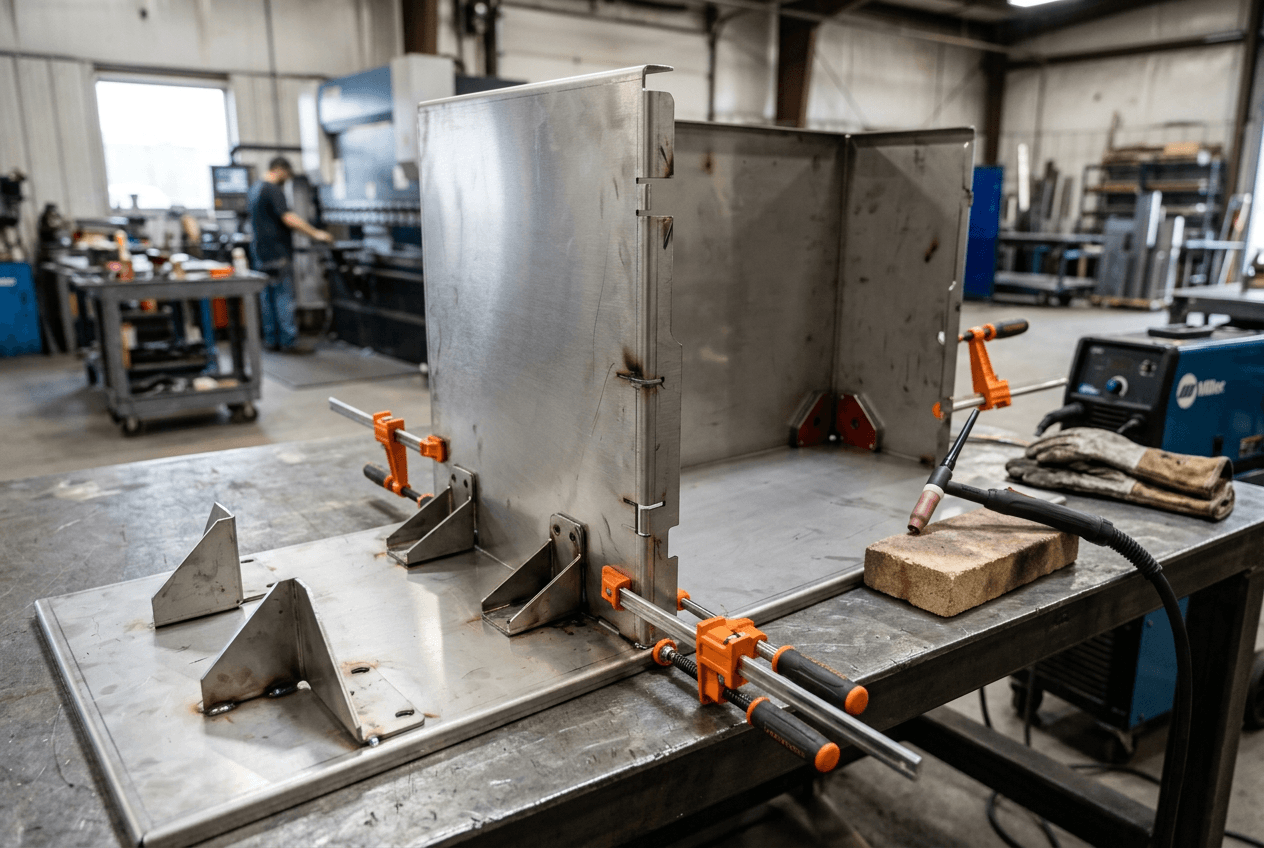
For a buyer, what is a tig welder matters less than what the process does to the finished part. TIG, or tungsten inert gas welding, gives tight heat control and a clean bead. That sounds straightforward until a welded enclosure still has to hold a door gap, a bracket still has to line up with a machine base, or a frame still has to stay square after finishing. In custom sheet metal fabrication, the real risk is not the arc. It is the gap between the drawing and the assumptions inside the quote.
Where RFQ Ambiguity Starts to Distort TIG Quotes
The quote usually goes wrong before the first weld. A drawing may say “TIG weld” or “weld all around,” but it may not say which seam is cosmetic, which face controls the datum, or whether the bead may stay visible. One shop prices a fast structural weld. Another prices visible seam cleanup. A third adds clamping time because it expects the part to move during welding. The drawings match, but the assumptions do not.
That matters in sheet metal fabrication because buyers often compare unit price without comparing process scope. A stainless control panel, for example, may need a clean outside corner and a flush seam after welding. If the RFQ does not say that, one supplier may quote raw weld time, while another includes grinding, polishing, and extra inspection. The lower number can look attractive and still miss the real production need.
The same problem appears on welded assemblies. A bracket may look simple on paper, but the mating hole pattern may only work if the supplier holds one face as the datum after welding. If the RFQ does not identify that face, the fabricator may build to the wrong reference and the part may pass inspection as a welded piece while still failing in assembly.
A bracket that looked simple on paper
One buyer once sent a TIG-welded angle bracket for a machine guard. The print showed the cut dimensions and the weld symbol. It did not show which side would sit against the machine base. One supplier priced a basic weld. Another assumed post-weld grinding and a fixture check. A third priced hole-location correction after welding. The quotes spread because the print left the fit decision open. The part was not difficult. The risk was that everyone priced a different version of the same bracket.
To reduce that spread, the RFQ should say which surfaces are cosmetic, which dimensions are critical after welding, and whether grinding or polishing is allowed. It should also show the mating part whenever the welded piece must align with another assembly. A single photo can prevent a lot of rework later.
- Mark the datum face that controls final fit.
- Identify the seam that must stay visible or be blended out.
- Show whether holes, studs, or PEM hardware are installed before or after welding.
- Add a photo or sketch of the mating part when fit matters.
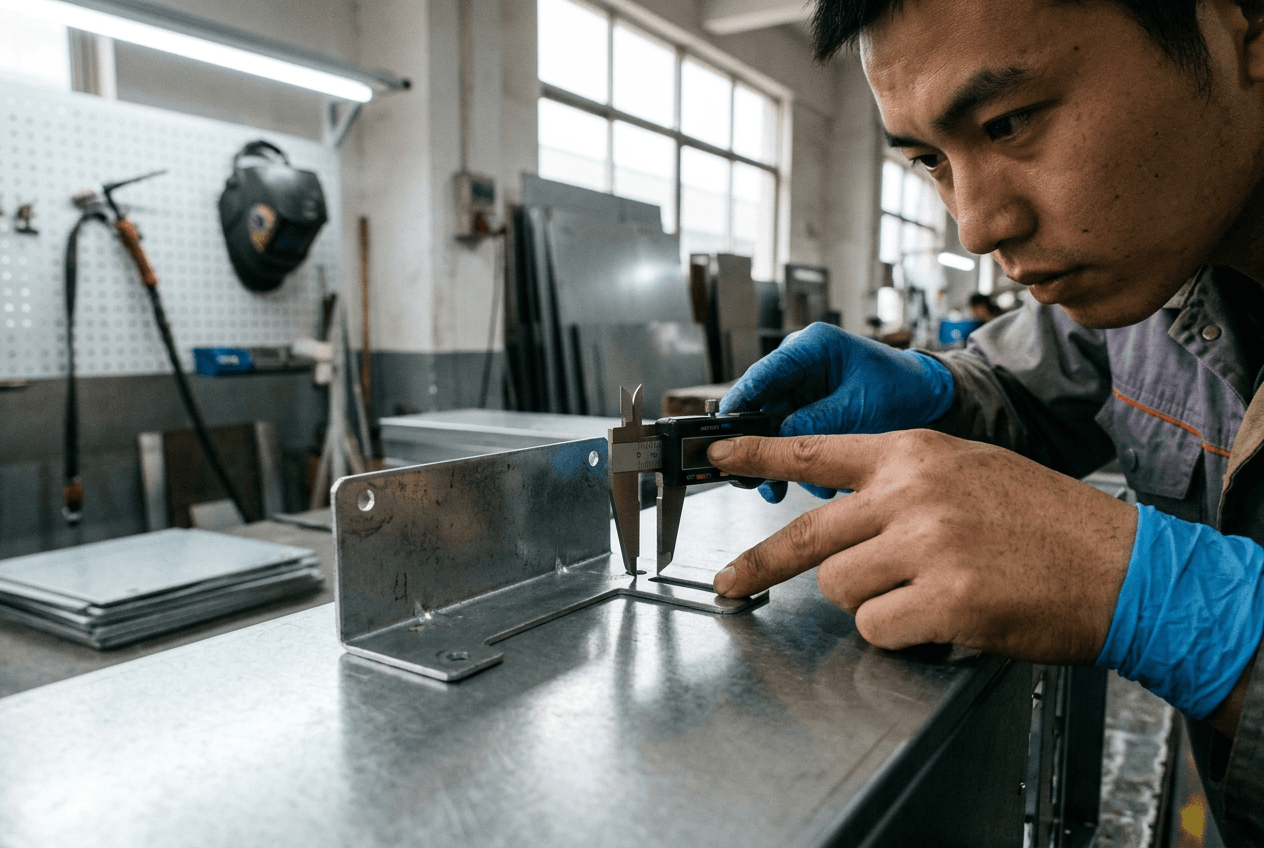
Why Joint Style, Datum Choice, and Thickness Change the Price of Fit
TIG welding does not behave the same way on every joint. A lap joint on a hidden support can be forgiving. A butt joint on a cosmetic panel needs tighter fit-up. A corner joint on a cabinet frame may look clean, but if the hinges and latch still have to land correctly, the weld sequence matters as much as the cut size. Buyers often ask for “just weld it,” yet the joint style can change setup time, heat input, and post-weld correction.
Thickness changes the quote for the same reason. Thin sheet pulls heat quickly and distorts sooner. Heavier material can need edge prep, more filler, and slower travel. The welder can still make a sound joint, but the process may require more clamping and inspection to keep the assembly square. That is why two brackets with the same outside size can price very differently once the drawing calls for a welded datum and a tight mating fit.
A welded enclosure makes this easy to see. If the front opening must accept a door, the fabricator needs to know which edge controls the reveal. If the buyer only supplies the cut dimensions, the shop may assume the outside frame controls the part. If the buyer instead freezes the door side as the reference, the supplier may choose a different weld sequence, add a fixture check, or leave a small amount of post-weld adjustment. Those choices affect both quote and repeatability.
A cabinet door frame example
One project involved a powder-coated cabinet door frame for industrial controls. The outside dimensions looked safe, but the latch side had to close against a gasket. The buyer had not marked the datum. One supplier quoted the frame as a simple welded box. Another quoted fixture time and straightening because it expected the door reveal to be critical. The spread was not a pricing error. It was a fit-risk problem that started with an unclear reference surface.
When the RFQ names the datum, the quote gets closer to reality. When it does not, the supplier guesses. For buyers, that guess can become a field adjustment, a delayed assembly, or a part that fits only after hand filing.
How Heat Input Turns a Good Prototype Into a Bad Batch
A prototype can hide a lot. One experienced welder can hand-fit tabs, adjust clamp pressure, and correct a small twist before the sample ships. That part may approve cleanly and still say very little about batch production. Once the job moves to twenty, fifty, or two hundred pieces, the same assembly has to repeat without hero work. If the fixture, weld sequence, and inspection method are not locked, the batch can drift even though the sample passed.
Heat input drives that drift. TIG gives control, but it still adds energy to the joint. The first few parts may stay square, then later parts begin to pull as the fixture warms or the weld sequence changes. A frame can bow. A machine guard can lean. A cabinet can lose its door reveal after grinding. The problem does not always show up in weld inspection. It shows up when the assembly reaches the next station and no longer fits.
Prototype approval also creates a false sense of safety when the sample received extra manual correction. If the sample was dressed by hand to make the holes line up, the batch may not have that correction available. Buyers should ask whether the approved part reflects the real process or a one-off rescue. That question matters for welded assemblies, not just cosmetic panels.
A welded frame example
A buyer once approved a welded machine frame after a perfect first article. The sample fit the baseplate because the welder adjusted the corners before final tack. The batch did not get the same treatment, and the hole pattern no longer landed square after welding. The frame itself was not defective. The process changed between sample and production. That is the kind of mismatch that turns an approval into a rework order.
When the buyer needs batch consistency, the RFQ should freeze the weld order, the inspection points, and the rework rule. If the part will be powder coated, the bare weldment should still be checked first. Coating can hide a slight warp until the assembly reaches the customer, when correction becomes slower and more expensive.
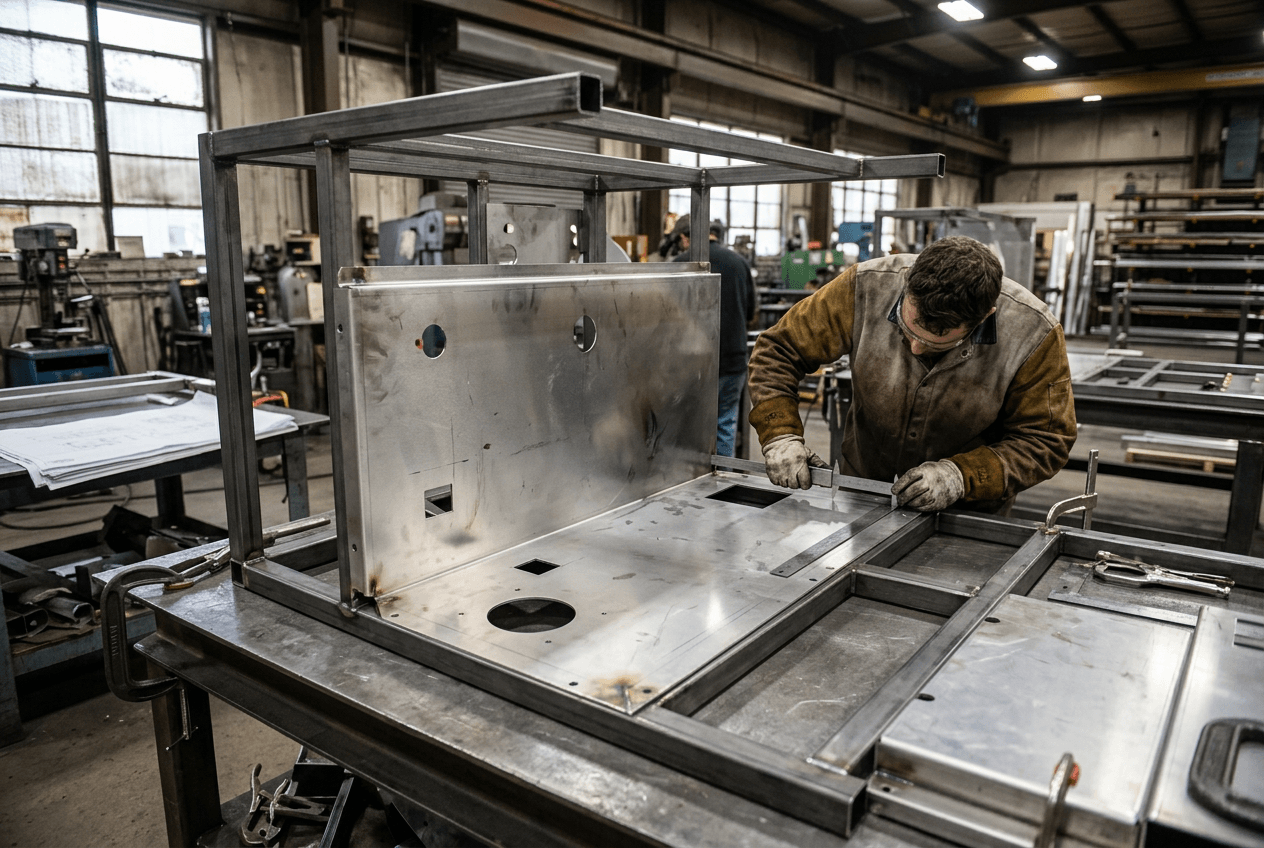
What to Freeze Before You Compare TIG Welded Quotes
A clear RFQ does more than ask for a price. It tells the fabricator what must fit after welding. That means the buyer should send drawings, material requirements, quantities, tolerances, and finish expectations together. If one of those items is missing, the supplier has to guess. A guess can be reasonable, but it rarely matches every buyer the same way.
For welded sheet metal parts, the best RFQs usually answer six questions. What surface controls the final fit? Which seam may stay visible? Which dimensions matter after welding instead of before it? What material and thickness are in scope? What finish follows welding? How many pieces need to repeat the same result? Those details affect setup, fixture design, inspection, and rework allowance. They also affect lead time, because a more controlled weld process usually takes longer than a quick tack-and-go job.
This is where suppliers such as Yishang can help with drawing review before quote release. A manufacturability check can flag missing datums, unclear weld symbols, or a finish callout that conflicts with the weld area. That review does not replace engineering. It reduces the chance that the buyer compares three quotes from three different interpretations of the same part.
- Send the latest drawing revision, not an old marked-up copy.
- State material, thickness, and any substitutions you will accept.
- List quantity, prototype count, and batch count separately if they differ.
- Call out post-weld dimensions, not only flat blank dimensions.
- Say whether the part will be painted, powder coated, polished, or left raw.
- Include a sample, photo, or mating-part sketch when assembly fit matters.
Once those items are frozen, the buyer can compare quotes on the same basis. The lowest number may still be the right choice. More often, the best quote is the one that shows the fewest hidden assumptions.
When Drawing Review Saves the Assembly, Not Just the Quote
The strongest procurement move is often not a better negotiation. It is a better drawing package. When the RFQ clearly defines the datum, the cosmetic side, the weld sequence constraints, and the final fit target, the fabricator can quote a real process. That helps on brackets, enclosures, frames, and welded assemblies that must install without filing at the customer site.
For buyers who work with Yishang or any similar fabrication partner, the useful conversation is not “Can you weld it?” It is “Can this drawing be built repeatably without hand correction?” That question exposes the true risk earlier. It also gives the supplier room to suggest fixturing, inspection points, or small design changes that protect assembly fit without changing the product intent.
If your next RFQ includes a TIG-welded enclosure, bracket, frame, or welded assembly, send the drawings, material requirements, quantities, tolerances, finish expectations, and any mating-part photos before you compare prices. If you already have a prototype, send that too. A fast drawing review can catch fit assumptions before they turn into extra machining, rework, or a batch that no longer matches the approved sample.
Frequently Asked Questions
What is a tig welder for sheet metal parts that still need to fit after assembly?
It is a welding process that uses a tungsten electrode for precise heat control. The process helps with thin sheet and clean seams, but it does not remove fit risk. Buyers still need to define the datum, the post-weld dimensions, and the cosmetic finish so the welded part installs correctly.
Why do two suppliers quote the same TIG-welded enclosure differently?
They often assume different work scopes. One may price only the weld time, while another includes fixture setup, seam cleanup, and post-weld inspection. If the RFQ does not say which surfaces are visible or which dimensions control fit, the quotes will spread even when the drawing looks identical.
Which drawing notes reduce TIG welding assumptions the most?
The most useful notes identify the datum face, the cosmetic side, the allowed level of weld blending, and any post-weld dimensions that matter for assembly. It also helps to show the mating part or add a photo when a bracket, frame, or cabinet must align with another component.
Why can a prototype pass and the batch still fail fit checks?
A prototype often gets extra hand fitting. The welder may adjust tabs, correct square, or dress the seam before shipping the sample. Batch production usually repeats the same part with less manual correction, so any hidden fit issue can reappear once the job moves into repeatable production.
What should I send before I ask for a TIG welding quote?
Send the drawing, material requirements, quantity, tolerances, finish expectations, and any mating-part photos or sample parts. If the part is a welded assembly, include the post-weld fit requirement and the inspection method. That lets the supplier quote the real process instead of guessing at the scope.