
Introduction
For wholesale buyers, burrs are rarely just a small finishing problem. They sit at the point where safety, assembly speed, surface treatment, and final product quality all meet. A part can be dimensionally correct and still fail inspection because a sharp edge damages a cable, blocks a fastener, scratches a coated surface, or creates a handling risk.
That is why deburring services matter in real procurement work. They are not simply about making a part look cleaner. Done properly, deburring helps turn laser-cut, stamped, drilled, milled, or machined components into parts that are safer to handle, easier to assemble, and more predictable in volume production. For buyers managing automotive, aerospace, medical, electronics, display, or equipment projects, this small step often prevents much larger problems later.
What is Deburring and Why It Matters for Wholesale Buyers
Deburring is the controlled removal of unwanted sharp edges, raised metal fragments, loose material, or rough edge formations left after manufacturing processes such as laser cutting, punching, drilling, milling, CNC machining, sawing, stamping, and forming.
For wholesale buyers, burrs usually create problems in three ways:
Safety and handling risk: Operators, installers, or end users may be cut by sharp edges during packing, assembly, maintenance, or field installation.
Assembly and fit problems: Burrs can interfere with holes, threads, clips, inserts, gaskets, electrical contacts, and moving interfaces. A small burr in the wrong place can slow an entire assembly line.
Surface and quality defects: Burrs can weaken coating adhesion, cause uneven powder coating, scratch adjacent components, or make finished products look less professional.
A reliable burr removal process gives buyers more than smooth edges. It supports consistent assembly, cleaner finishing, fewer complaints, and better control over batch quality.
Why You Need Deburring Services for Your Business
Professional deburring becomes especially important when orders move from prototypes to repeat batches. On one sample, a technician may be able to fix a rough edge by hand. On 5,000 parts, that same “small edge issue” can become delayed shipment, extra labor, higher scrap, or a difficult conversation with your own customer.
For buyers, deburring services bring several practical advantages:
Lower hidden rework cost: Burr-free parts reduce touch-up work during assembly and avoid last-minute correction before shipment.
More stable product quality: Controlled edge finishing improves repeatability across lots, which is particularly important for OEM and private-label programs.
Better finishing results: Clean edges support powder coating, anodizing, painting, plating, passivation, and brushing with fewer edge-related defects.
Safer handling and packaging: Smooth edges reduce injuries, torn packaging, and damage between stacked or nested parts.
Improved supplier accountability: When deburring is included in the process plan, the acceptance standard is clearer and easier to inspect.
In many projects, deburring is a modest cost item. But its effect on downstream efficiency can be surprisingly large.
YISHANG’s Deburring Services: Manual vs. Automated Solutions
There is no single deburring method that fits every part. The right choice depends on geometry, material, burr size, batch volume, edge requirement, tolerance sensitivity, and the surface treatment that follows. In practice, many production programs use more than one method—automated deburring for efficiency, plus manual finishing for difficult corners or visible areas.
Manual Burr Removal Services
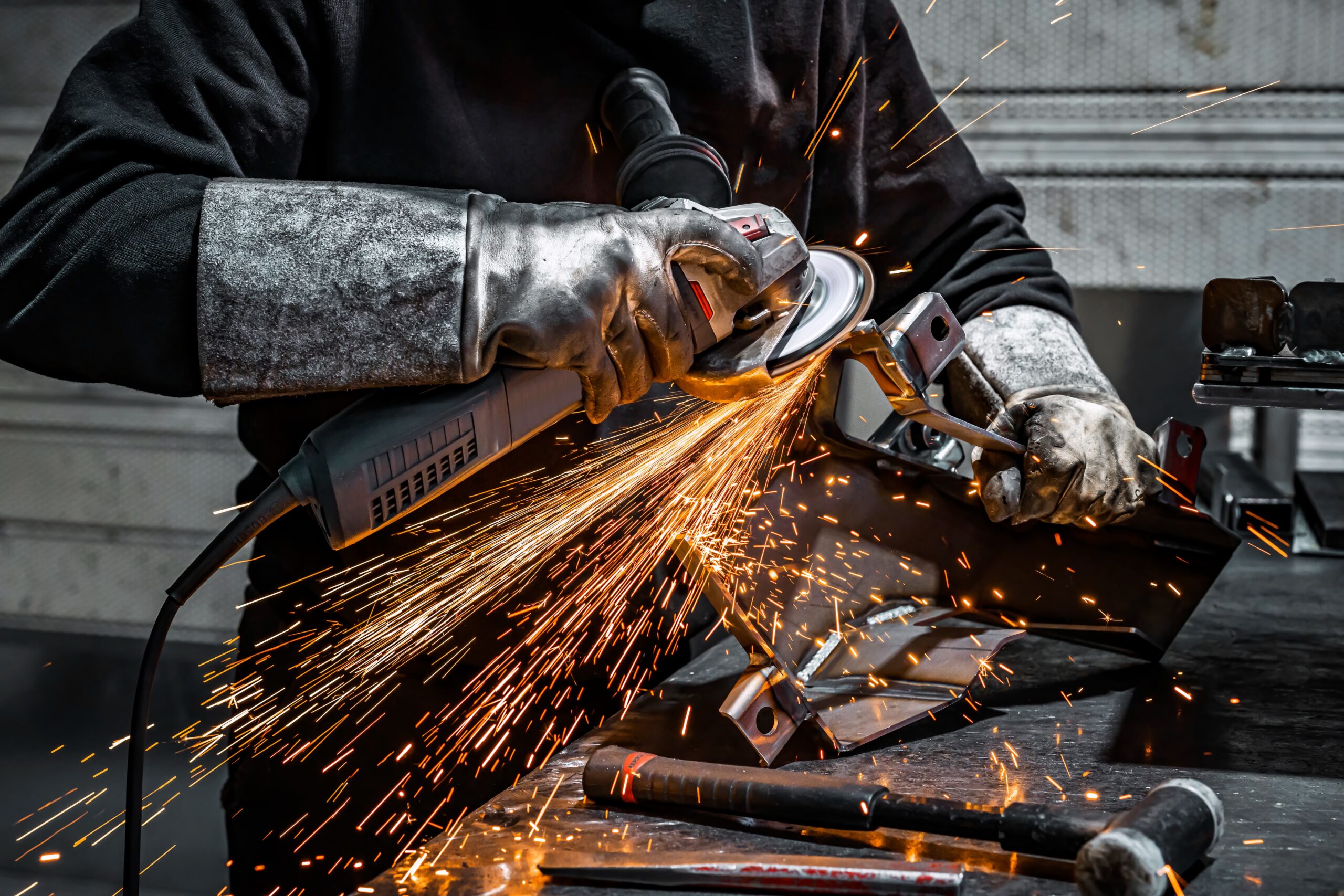
Manual deburring is still valuable, especially for prototypes, low-volume parts, irregular geometries, welded assemblies, cosmetic surfaces, and components with areas that machines cannot easily reach.
A trained operator can judge the edge condition by sight and feel, which is useful when the requirement is not simply “remove everything,” but “remove the burr without damaging the shape, coating area, or visible face.” This is often the better approach for complex brackets, small enclosures, display parts, medical-related housings, and parts with mixed edge requirements.
Automated Burr Removal Services
Automated deburring is usually the better choice when the order volume is high and the parts are repeatable. It reduces operator variation, improves throughput, and makes edge quality easier to standardize from batch to batch.
Common automated approaches include:
Rotary deburring: Efficient for flat panels, laser-cut plates, stamped parts, and larger sheet metal components.
Vibratory deburring: Suitable for batches of small metal parts that need smoother edges and light surface refinement.
Robotic deburring: Useful for repeatable finishing paths on larger, more complex parts where consistency matters.
Brushing or belt finishing: Often used where edge smoothing and surface appearance need to be controlled together.
Automation does not remove the need for process judgment. It simply makes a well-defined edge standard easier to repeat.
How to Choose the Right Burr Removal Service
The right deburring method should be selected before production starts, not after a batch has already created problems. A practical review usually looks at five questions:
| Decision Factor | What Buyers Should Check | Why It Matters |
| Material | Aluminum, stainless steel, carbon steel, brass, copper, galvanized steel | Different materials form different burrs and react differently to abrasive finishing |
| Part geometry | Flat panel, bent part, tube, bracket, enclosure, machined block | Complex shapes may need manual or robotic finishing |
| Edge function | Visible edge, handled edge, mating edge, sealing edge, hidden edge | Not every edge needs the same finish level |
| Downstream process | Powder coating, anodizing, plating, passivation, welding, assembly | Deburring affects adhesion, appearance, and fit |
| Order volume | Prototype, small batch, repeat order, mass production | Determines whether manual, automated, or mixed processing is most efficient |
For example, powder-coated parts often need cleaner edges than internal structural supports. Aerospace, medical, or precision electronics components may need controlled edge breaks and inspection records. General hardware, on the other hand, may only require safe handling and reliable fit.
Industry Applications: How Burr Removal Services Drive Efficiency and Cost Savings
Deburring adds value differently depending on the industry. Sometimes it protects workers. Sometimes it prevents coating failure. In other cases, it improves assembly speed or reduces the risk of fatigue cracks. The key is to match the burr removal standard to the actual use of the part.
1. Automotive Industry
Automotive parts often move through fast assembly environments where small defects can create big interruptions. Burrs on brackets, housings, stamped parts, mounting plates, gears, brake-related components, and structural supports may interfere with fit, damage adjacent parts, or create safety risks during handling.
Consistent deburring helps automotive buyers reduce rework, improve assembly flow, and maintain more stable batch quality. For parts that are later powder coated, plated, or assembled with rubber or plastic components, clean edges are even more important.
2. Aerospace
In aerospace-related manufacturing, edge quality carries more weight. Burrs can become stress concentration points, interfere with precision assembly, trap contamination, or compromise surface treatment. Even when a part looks acceptable at first glance, an uncontrolled edge can become a long-term reliability risk.
Typical parts that require careful edge finishing include:
engine brackets and mounting parts;
structural frames and supports;
high-stress connectors and mounts;
lightweight machined or sheet metal components;
parts prepared for anodizing, passivation, or coating.
For aerospace-related orders, deburring is not simply cosmetic. It supports fatigue resistance, assembly reliability, and documentation discipline. Depending on the customer’s requirements, inspection records, material reports, or first-article documentation may also be needed.
3. Medical Devices
Medical device and medical equipment parts must be safe to handle, clean, and consistent. Burrs on stainless steel housings, brackets, instrument parts, diagnostic equipment frames, or mounting structures can create inspection failures and, in some cases, hygiene concerns.
Controlled deburring helps prepare parts for cleaning, passivation, polishing, or coating. It also improves tactile quality, which matters more than many buyers expect—especially when the component is handled by technicians, clinicians, or end users.
4. Electronics
In electronics, burrs can cause practical failures that are easy to overlook during early sampling. A sharp edge may damage wiring insulation, interfere with grounding, scratch a PCB, disturb a connector fit, or create poor alignment in an enclosure.
For electronics housings, heat sink parts, shielding components, control panels, and small brackets, deburring improves assembly efficiency and helps protect sensitive internal components. It also supports cleaner surface finishing for visible consumer or commercial products.
How YISHANG Can Help You Streamline Your Production Process
Deburring works best when it is integrated into the manufacturing route rather than added as a rushed final correction. For sheet metal and CNC parts, edge finishing should be considered together with cutting, forming, welding, machining, surface treatment, inspection, packaging, and final assembly.
At Yishang, deburring is part of a broader fabrication workflow. That means the edge requirement can be reviewed together with the drawing, material, production method, coating plan, and export packaging. In practice, this helps avoid a common problem: parts that are technically finished, but still not truly ready for assembly or shipment.
Why Choose YISHANG:
Integrated fabrication support: Deburring can be combined with laser cutting, stamping, bending, welding, CNC machining, surface treatment, assembly, inspection, and packaging.
Method selection based on the part, not guesswork: Manual, rotary, vibratory, brushing, or robotic finishing can be selected according to geometry, material, and order volume.
Export-oriented quality control: Parts can be inspected and packed according to buyer requirements, reducing the risk of damage, rough edges, or unfinished details reaching the customer.
OEM/ODM flexibility: Suitable for prototypes, repeat orders, private-label projects, and bulk production programs.
Factory-side DFM support: Edge requirements can be reviewed early so buyers do not over-specify unnecessary finishing or under-specify critical areas.
FAQ
Q1: What are deburring services used for?
Deburring services remove sharp edges, raised fragments, and rough material left after machining, cutting, drilling, punching, stamping, or forming. The goal is to improve safety, fit, appearance, and process stability.
Q2: What types of deburring services are available?
Common methods include manual deburring, rotary deburring, vibratory deburring, robotic deburring, brushing, sanding, tumbling, belt finishing, and edge polishing.
Q3: How do I choose the right deburring method?
Start with material, geometry, burr size, tolerance requirement, surface finish target, batch volume, and downstream process. If the part will be coated, assembled tightly, handled frequently, or used in a safety-sensitive application, edge requirements should be defined more carefully.
Q4: Can deburring be integrated with other manufacturing processes?
Yes. In many projects, deburring is integrated with laser cutting, CNC machining, stamping, bending, welding, surface treatment, inspection, assembly, and packaging.
Q5: Does Yishang support customized deburring solutions?
Yes. Deburring can be customized according to part type, material, batch size, edge requirement, finish standard, and final application.
Q6: Can deburring support aerospace or high-precision parts?
Yes. High-precision parts may require controlled edge breaks, inspection records, surface reports, or customer-specific documentation. Requirements should be confirmed before production.
Conclusion
Deburring may look like a small finishing step, but it often decides whether a part feels safe, assembles smoothly, accepts coating properly, and reaches the customer without avoidable complaints. For wholesale buyers, its real value is not only in removing burrs. It is in reducing downstream cost and making production more predictable.
At Yishang Metal Products Co., Ltd., we support OEM and wholesale customers with custom metal fabrication and finishing services for automotive, aerospace, medical, electronics, display, equipment, and industrial applications. With 26+ years of manufacturing experience, we support processes including laser cutting, bending, stamping, welding, CNC machining, deburring, surface treatment, assembly, packaging, inspection, and shipment.
For burr-sensitive parts, we help customers select suitable finishing methods and align deburring with real production needs, export expectations, and final product requirements.
📩 If you are evaluating deburring services for your next batch of metal parts, send us your drawings or requirements to discuss the most suitable manufacturing approach.