
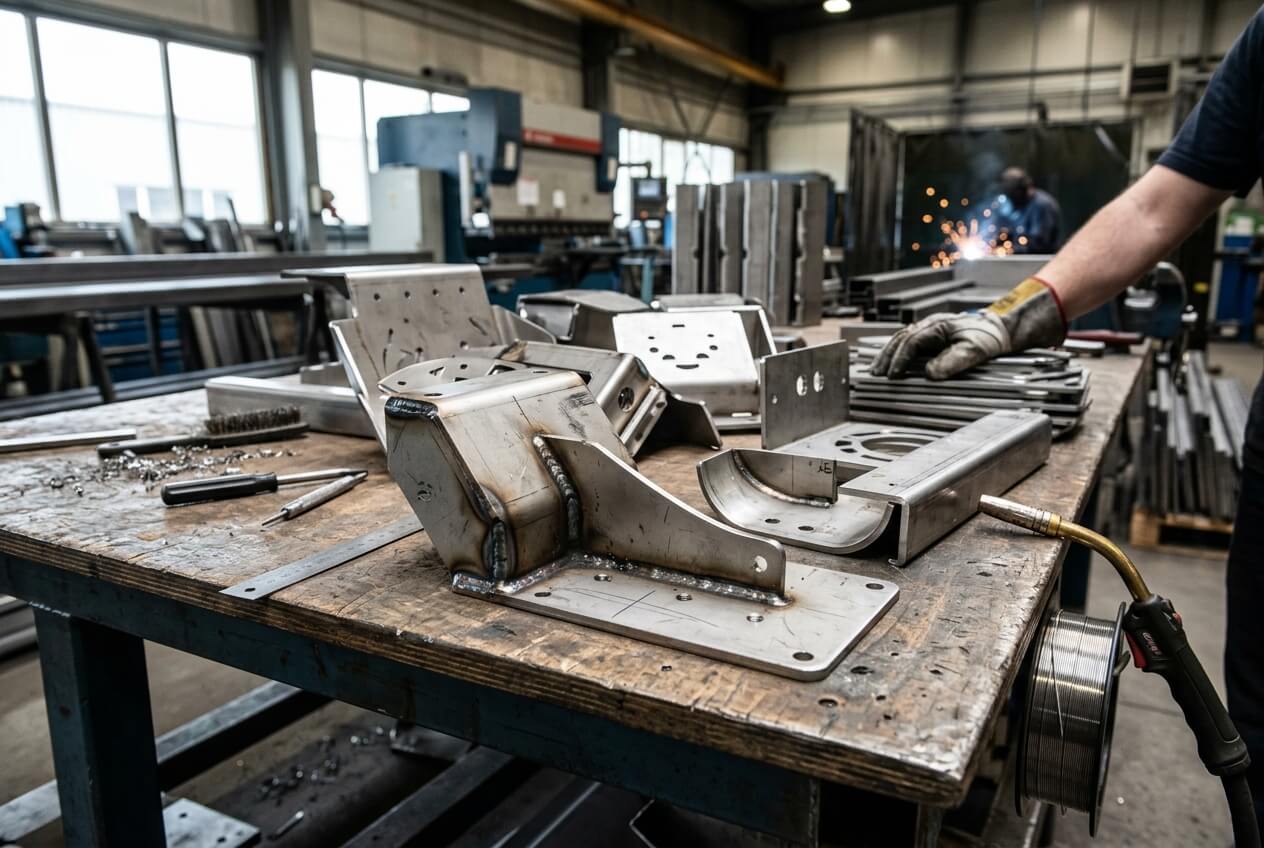
An OEM buyer sends an RFQ for an outdoor equipment frame made from 6 mm carbon steel plate, bent brackets, welded mounting tabs, and powder coating. The drawing includes one short note: “FCAW welding required.” Three suppliers return three very different prices. One quotes heavy continuous welds on nearly every joint. One reserves FCAW for thick frame joints and plans cleaner wire welding on lighter brackets. Another adds grinding, slag removal, coating preparation, and extra fixture time.
The buyer sees a price gap. The real gap sits in the welding assumptions. This is where the question “what is FCAW welding” becomes a procurement risk, not just a process definition. FCAW, or flux cored arc welding, can work well for thicker carbon steel frames, outdoor welded assemblies, heavy brackets, and joints that need high deposition rates. It can also add cleanup, heat input, inspection time, and finish risk when the RFQ applies it too broadly.
The dominant risk is RFQ ambiguity. A vague FCAW note lets each supplier decide weld size, weld length, cleanup level, shielding method, surface finish, and inspection scope. Those assumptions change the quote before anyone discusses price. Buyers reduce risk when they separate critical weld requirements from flexible manufacturing choices.
Where a Single FCAW Note Starts Changing the Quote Scope
Procurement teams often add FCAW to a drawing because the product feels heavy, exposed, or safety-related. That decision can help when the joint truly needs flux cored arc welding. It can also distort a sheet metal fabrication quote when the process name replaces the actual requirement.
FCAW uses a continuously fed tubular wire with flux inside the wire. Depending on the wire and setup, it may run as self-shielded FCAW or gas-shielded FCAW. The process can create strong welds with good productivity on suitable carbon steel and low-alloy steel. That does not mean every joint in a custom sheet metal assembly should carry the same FCAW requirement.
The quote changes before the buyer sees it
A supplier cannot price “FCAW required” in isolation. The estimator must decide whether the note means all joints, only structural joints, or only thick sections. They also need to assume fillet weld size, continuous or intermittent welds, bead appearance, grinding, slag removal, and inspection level. Each assumption changes labor, consumables, fixture time, and finishing cost.
Consider a retail display rack made from 3 mm rectangular tube and laser-cut mounting plates. The rack works indoors, and most welds remain hidden after final assembly. If the drawing says “FCAW all around,” one supplier may quote continuous flux cored welds and cosmetic grinding. Another may quote shorter welds on hidden joints and reserve heavier welds for load-bearing shelf supports. Both may believe they followed the RFQ, yet their unit prices will not compare cleanly.
The opposite risk also matters. A heavy outdoor battery cabinet frame may include lifting points, base plates, and welded brackets exposed to vibration. If the RFQ only says “weld as required,” a low quote may assume short fillet welds and limited inspection. Production may later reveal undercut, porosity, poor penetration, or insufficient weld throat size. The buyer then faces late rework, delayed assembly, and arguments about what the quote included.
Buyers should treat FCAW as a manufacturing option tied to joint duty. It should not act as a blanket shortcut for strength. Earlier clarification protects both cost and performance.
Why Vague FCAW Requirements Create Hidden Labor and Finish Risk
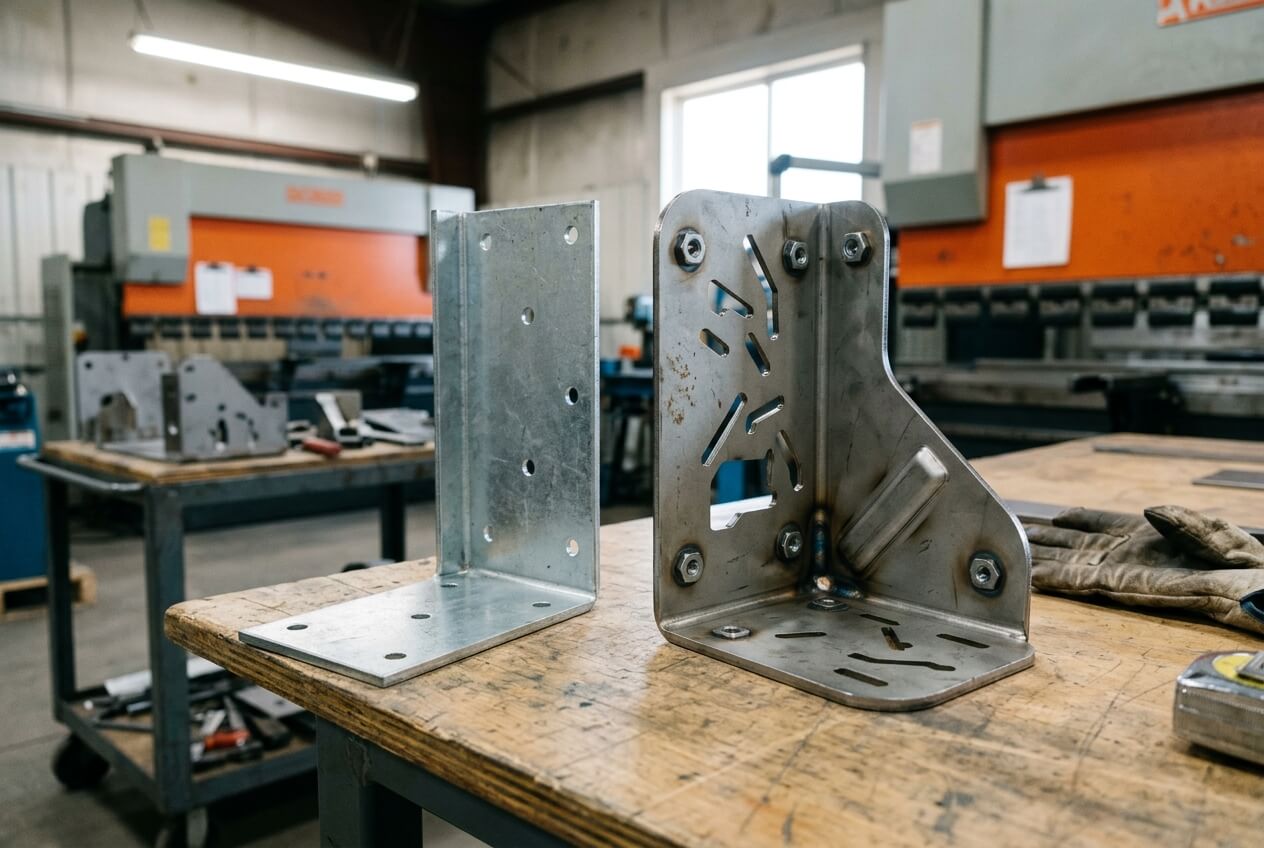
FCAW can improve productivity on heavier steel, but the RFQ must account for the work around the weld. Flux cored welding may create slag. Some wires create more spatter than cleaner gas metal arc welding processes. Larger welds add heat, and heat can pull brackets, panels, and mounting holes out of position.
Those effects turn into cost when the drawing also requires powder coating, visible surfaces, tight assembly fit, or repeatable batch production. The weld note starts the issue. The downstream cost appears in grinding, straightening, cleaning, masking, coating repair, and inspection.
Finish expectations can change the welding price
A metal enclosure drawing may call for continuous FCAW welds on all seams because an older product had weak corners. The current design may use thinner external panels, internal reinforcing ribs, and a powder-coated cosmetic exterior. Continuous welding on thin panels can create waviness, burn marks, and grinding shadows. If the RFQ does not define visible surfaces, one supplier may grind every seam smooth. Another may clean hidden welds only. The finished parts may look different even if both suppliers followed the same short note.
Powder coating magnifies weld preparation problems. Spatter can appear as raised points under the coating. Slag trapped near a weld toe can affect appearance or adhesion. Heavy grinding can flatten edges and create inconsistent gloss. These problems do not start in the coating line. They often start when the RFQ fails to define which welds need cosmetic preparation.
Distortion can damage assembly fit
Heat input also affects fit. A bracket welded to a cabinet base may move only 1 mm during welding. That small movement can stop a purchased lock, hinge, motor, or electrical component from aligning. A machine guard frame may look strong, but oversized welds can pull mounting holes out of position.
For buyers, the practical question is not whether FCAW is good or bad. The question is where flux cored welding improves the part and where it creates avoidable secondary work. A clearer RFQ tells suppliers which surfaces need a smooth coating, which dimensions matter after welding, and which joints can use another suitable process.
The Drawing Gaps That Make FCAW Quotes Impossible to Compare
Two suppliers can both understand FCAW welding and still quote different scopes. That happens when the drawing names the process but leaves the acceptance standard open. The largest quote gaps usually come from weld size, weld length, cleanup level, wire type, shielding method, and post-weld finish.
Words such as “strong weld,” “full weld,” and “weld firmly” create risk. They do not tell the supplier whether the joint needs a 3 mm fillet, a 6 mm fillet, intermittent welds, plug welds, or a full penetration joint. Larger welds need more filler metal, more arc time, more heat control, and more cleanup. Across 200 or 2,000 assemblies, that difference becomes material.
Process names do not replace weld symbols
Weld symbols matter because they define the work. Fillet size, weld length, intermittent spacing, all-around symbols, and full penetration requirements drive time and inspection. If these details are missing, one supplier may protect themselves with a conservative quote. Another may assume a faster minimum weld. The buyer then compares prices without comparing the same product.
Shielding assumptions can also change cost. Self-shielded FCAW can help when wind makes gas shielding difficult. Gas-shielded FCAW often suits controlled shop production and can reduce some cleanup on appropriate joints. For indoor sheet metal fabrication, the best choice depends on thickness, joint access, appearance, and volume. Buyers should not specify FCAW-S or FCAW-G unless the project needs that control.
Supplier flexibility should be intentional
Many custom sheet metal projects benefit when the buyer defines performance and allows process flexibility on non-critical joints. A welded cabinet might need defined fillet welds on lifting points, but short MIG welds or spot welds may suit internal locating tabs. A bracket assembly may need FCAW on a 6 mm load plate, while TIG or MIG produces a cleaner result on visible thin covers.
During drawing review, Yishang often asks buyers to separate structural welds from cosmetic or locating welds before quoting metal enclosures, frames, brackets, and welded assemblies. That review does not remove engineering responsibility from the buyer. It helps expose assumptions before they become quote differences, prototype surprises, or batch rework.
A practical RFQ should mark load-bearing welds, lifting-related welds, vibration-related welds, and safety-critical welds. It should also state visible surfaces, coating expectations, inspection points, and dimensions that matter after welding and finishing. These details let suppliers quote the same scope and recommend practical fabrication methods.
Why Prototype Approval Does Not Remove FCAW Batch Risk
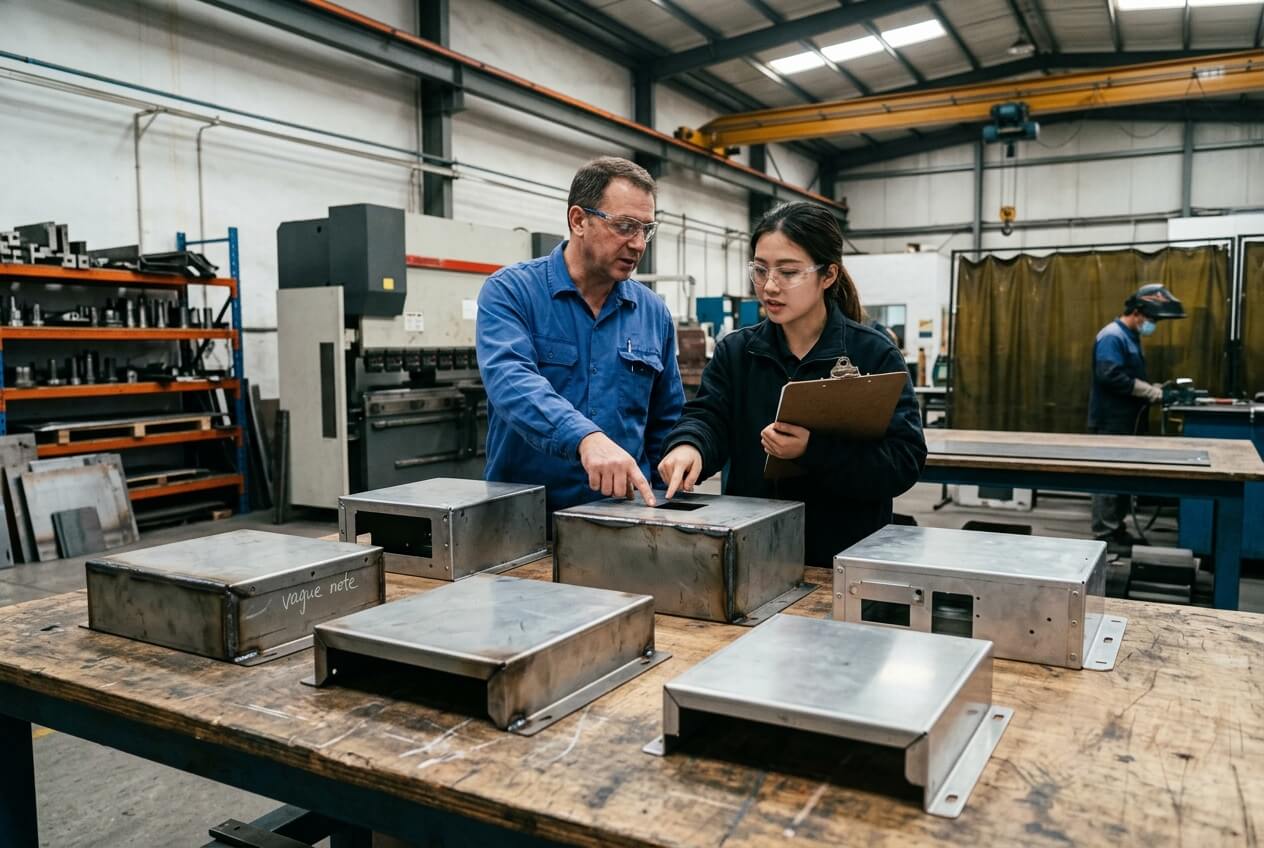
A prototype can look acceptable even when the weld requirements remain too vague for production. One skilled technician may spend extra time fitting, grinding, straightening, and correcting the sample. Batch production needs repeatable fixtures, stable weld sequences, measurable inspection points, and finish standards that do not rely on personal judgment.
This risk often appears in welded enclosures and frames. A prototype cabinet may pass review because a technician adjusts the door opening after welding. In a batch of 300 units, the same heat input may pull the opening out of square. Hinges no longer align. Door gaps vary. Powder coating hides light scratches but not panel waviness or raised spatter. If the buyer approved only the overall look, every shipment discussion becomes subjective.
Freeze the details that affect repeatability
Prototype approval should lock the features that drive assembly fit. If a display rack frame must stand level and accept bolted shelves, define the allowable diagonal difference and hole position after welding and coating. If a metal housing has cosmetic front edges, define which welds are ground flush and which internal welds can remain as-welded. If a bracket carries load, define weld size and inspection method rather than asking for “strong welding.”
Buyers should also avoid approving an over-finished sample without pricing the same finish for production. A prototype may receive full grinding and hand polishing for a presentation review. If the batch needs that finish, the RFQ should include it. If not, the buyer and supplier should agree on a realistic production standard before the purchase order.
Lead time also becomes fragile when FCAW assumptions change after prototype approval. Extra grinding, straightening, inspection, or coating repair may not fit the original schedule. Late clarification can force fixture changes or production rework. The RFQ should define critical weld and finish requirements before the prototype, not after the first batch exposes variation.
Yishang can review prototype feedback alongside drawings, tolerances, finish expectations, and assembly notes when buyers need to move from sample approval to batch sheet metal production. The goal is not to over-document every weld. The goal is to freeze the requirements that protect fit, coating appearance, and repeatable assembly.
What Buyers Should Clarify Before Comparing FCAW Quotes
FCAW belongs in the RFQ when it solves a defined fabrication problem. It may suit thicker carbon steel frames, outdoor structural parts, heavy brackets, and welded assemblies where productivity and penetration matter. It can add avoidable cost on thin cosmetic panels, small stainless parts, aluminum parts, or assemblies where appearance and low heat input matter more than deposition rate.
Start with joint duty. Mark which welds carry load, support lifting, resist vibration, or affect safety. Then define weld size, weld length, and whether the weld should run continuously or intermittently. That information controls quote scope more than the process name alone.
Next, define the surfaces buyers will inspect after finishing. A hidden base weld may only need cleaning. A visible powder-coated corner may need controlled bead shape, spatter removal, or grinding. A coated electrical enclosure may need welds that do not trap slag near sealed edges. These finish details change labor and inspection time, so they belong in the RFQ.
Assembly fit deserves the same attention. State the hole positions, bracket locations, frame squareness, door gaps, hinge alignment, or flatness requirements that matter after welding and coating. Suppliers can then plan fixtures, weld sequence, and inspection around the features that affect final use.
Finally, decide where the supplier can choose the process. Buyers may require FCAW on thick structural joints while allowing MIG welding, TIG welding, spot welding, or other suitable methods on non-critical sheet metal joints. This approach protects the risky areas without forcing costly cleanup across the entire assembly.
Send the weld package before prices are locked: If FCAW notes are creating quote gaps on a welded frame, cabinet, enclosure, bracket, or assembled sheet metal part, share the drawings, material requirements, quantities, tolerances, finish expectations, assembly notes, and prototype photos with Yishang. The review can identify which welds need stricter control and where a more practical fabrication or finishing approach may reduce avoidable cost before production.
Frequently Asked Questions
What is FCAW welding in a sheet metal fabrication RFQ?
FCAW welding, or flux cored arc welding, is a wire-fed welding process that uses tubular wire filled with flux. In an RFQ, the term should connect to specific joints. Buyers should define weld size, weld length, joint duty, visible surfaces, coating expectations, and inspection points instead of applying FCAW to the whole assembly by default.
Why can an FCAW note make supplier quotes hard to compare?
A short FCAW note leaves suppliers to assume weld size, weld length, continuous or intermittent welding, slag removal, spatter cleanup, grinding, shielding method, and inspection level. Those assumptions change labor and finishing cost. Clear drawings let buyers compare the same scope, not three different interpretations of the same note.
When does FCAW make sense for custom sheet metal parts?
FCAW can make sense on thicker carbon steel, heavy frames, outdoor welded assemblies, load-bearing brackets, and joints that need higher deposition rates. It may not suit thin cosmetic panels or parts where low heat input and clean appearance matter more. Buyers should tie the process to joint duty and finish expectations.
How do slag and spatter affect powder-coated welded assemblies?
Spatter can show as raised points under powder coating. Slag left near weld toes can affect coating appearance or adhesion. Buyers should state which welds need grinding, which need cleaning only, and which hidden areas can remain as-welded. This prevents suppliers from quoting different finishing levels.
Why can a prototype with FCAW welds pass but batch parts vary?
A prototype may receive extra fitting, grinding, and straightening from one skilled technician. Batch production needs fixtures, weld sequence control, heat management, and measurable acceptance criteria. Buyers should freeze frame squareness, hole positions, bracket locations, visible weld finish, and coating requirements before releasing volume orders.
What should buyers send before asking for an FCAW quote?
Buyers should send drawings, material requirements, quantities, tolerances, weld symbols, finish expectations, assembly notes, inspection points, and prototype or sample photos if available. These details help the supplier price the same scope and recommend where FCAW is necessary or where another welding process may work better.