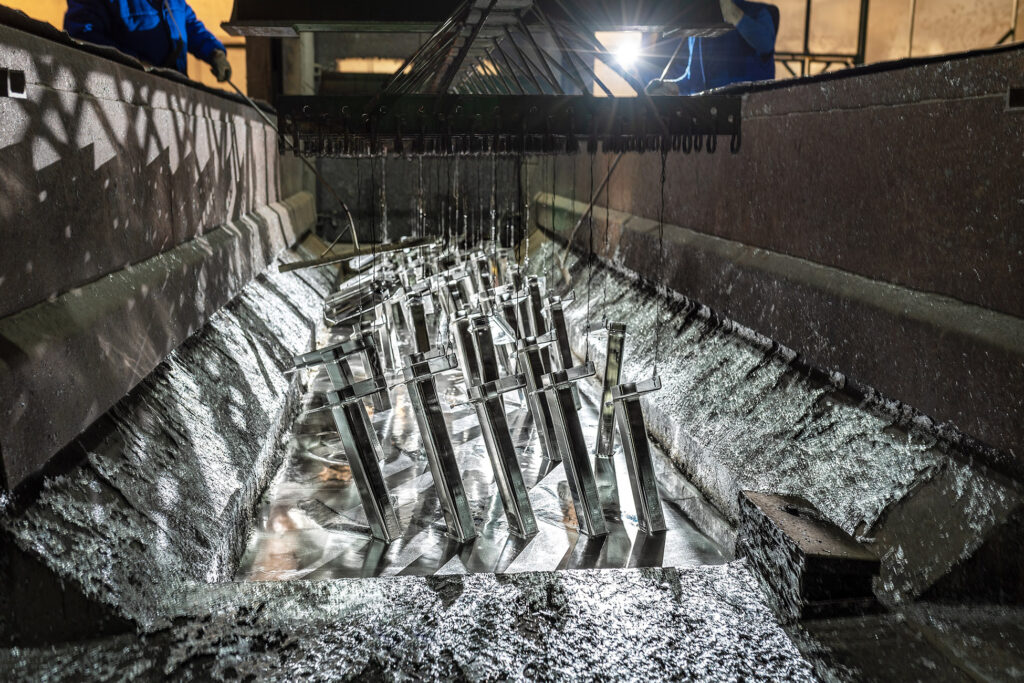
Galvanising is one of the most widely used corrosion-protection methods for steel and iron parts in industrial manufacturing. For buyers, it matters because the right galvanising process can affect service life, maintenance cost, standards compliance, and long-term project value.
In practical sourcing, galvanising is not just about adding a zinc layer. It is also about choosing the right method for the environment, geometry, appearance requirement, and downstream process.
This guide explains what galvanising means, how the main galvanising methods differ, where galvanised steel is commonly used, and what buyers should confirm before approving a project specification.
What Galvanising Means in Industrial Manufacturing
Galvanising is the process of applying zinc to steel or iron so the zinc layer protects the base metal from corrosion. In simple terms, the zinc coating helps delay rust formation and can continue protecting exposed areas to some extent because zinc acts sacrificially relative to steel.
For buyers, galvanising matters not only because it improves corrosion resistance, but also because it can reduce maintenance demand and improve service life in suitable environments.
Main Galvanising Methods and How They Differ
Hot-Dip Galvanising (HDG)
Hot-dip galvanising usually provides a thicker, more durable zinc coating and is often selected for outdoor, structural, or heavy-duty applications.
Electro-Galvanising
Electro-galvanising usually gives a thinner, smoother coating and is often used where appearance, dimensional control, or lighter-duty indoor performance matter more.
Galvannealing
Galvannealed surfaces are often selected where paintability is important, such as certain appliance or panel applications.
Pre-Galvanising and Sherardising
Pre-galvanised material may be suitable for some tube, mesh, or formed-product applications, while sherardising is more often associated with smaller hardware and parts needing more even zinc coverage in difficult areas.
Why Galvanised Steel Is Used in So Many Applications
Galvanised steel is widely used because it offers a practical balance between corrosion resistance, cost control, and broad industrial usability.
Why Buyers Often Choose Galvanised Steel
it can provide better corrosion resistance than untreated steel;
it may reduce repainting or replacement frequency in suitable environments;
it can support lifecycle cost planning more effectively than untreated carbon steel;
it is available in several process forms for different industries.
Typical Application Areas
Construction and Infrastructure
Galvanised steel is widely used for outdoor structural and support applications where weather exposure is a major concern.
Energy and Utilities
It is also common in energy-related supports, frames, housings, and outdoor utility components.
Automotive and Transport
Electro-galvanised and galvannealed materials are often reviewed for automotive and transport parts where finish consistency and corrosion control both matter.
HVAC, Appliances, and Electronics
Galvanised sheet can be useful where a combination of corrosion resistance, paint compatibility, and manufacturing efficiency is needed.
Agricultural Equipment
Agricultural equipment often benefits from galvanised surfaces because of moisture, outdoor exposure, and challenging service conditions.
How Buyers Should Choose the Right Galvanising Method
Before selecting a galvanising process, buyers should compare the actual project conditions rather than defaulting to one standard finish.
Key Decision Factors
1. Environment and Exposure
Outdoor, marine, industrial, or agricultural environments usually place much higher corrosion demands on the coating system than dry indoor applications.
2. Compatibility with Post-Processing
If the part will be painted, powder coated, welded, or formed after galvanising, the chosen method should be checked for process compatibility.
3. Cost vs Lifecycle Trade-Off
The lowest initial finish cost is not always the lowest total project cost. Buyers should compare expected service life, maintenance needs, and replacement risk.
4. Standards and Compliance
Common specifications such as ASTM A123, ISO 1461, or EN 10346 may matter depending on the product type and market.
What Buyers Should Confirm Before RFQ
Before requesting a quote for galvanised parts, buyers should try to clarify:
base material and part geometry;
expected environment and exposure level;
whether hot-dip, electro-galvanising, galvannealing, or another route is more suitable;
whether later painting, powder coating, or forming is required;
which coating standard or test requirement must be referenced.
A clearer RFQ helps prevent coating mismatch, unrealistic price comparison, and downstream performance disputes.
FAQ
What does galvanising mean in industrial manufacturing?
It generally means applying zinc to steel or iron to improve corrosion resistance.
Which galvanising method is usually better for outdoor protection?
Hot-dip galvanising is often preferred for heavier-duty outdoor exposure because it generally provides a thicker and more durable coating.
Can galvanised steel be painted or powder coated?
Yes, in many cases it can, but surface preparation and process compatibility should be reviewed before production.
How does galvanised steel compare with stainless steel?
Galvanised steel is often more cost-effective, while stainless steel may be more suitable in some highly corrosive or hygiene-sensitive environments. The correct choice depends on the project.
Galvanised Component Support from YISHANG
YISHANG Metal Products Co., Ltd. is a metal products factory with more than 26 years of experience in custom metal manufacturing for wholesale and OEM/ODM projects.
We support galvanised component production for applications such as brackets, structural supports, enclosures, utility parts, agricultural equipment parts, and other OEM metal products.
Our manufacturing capabilities include sheet metal laser cutting, bending, deep drawing, stamping, welding, CNC machining, surface finishing, assembly, packaging, quality inspection, and shipment support.
We are certified to ISO 9001 and RoHS. For galvanised part sourcing projects, we can support drawing review, process evaluation, sample development, and repeat bulk production.
If you have any questions or need a quote, please send us a message. One of our specialists will get back to you within 24 hours and help you select the correct valve for your needs.