
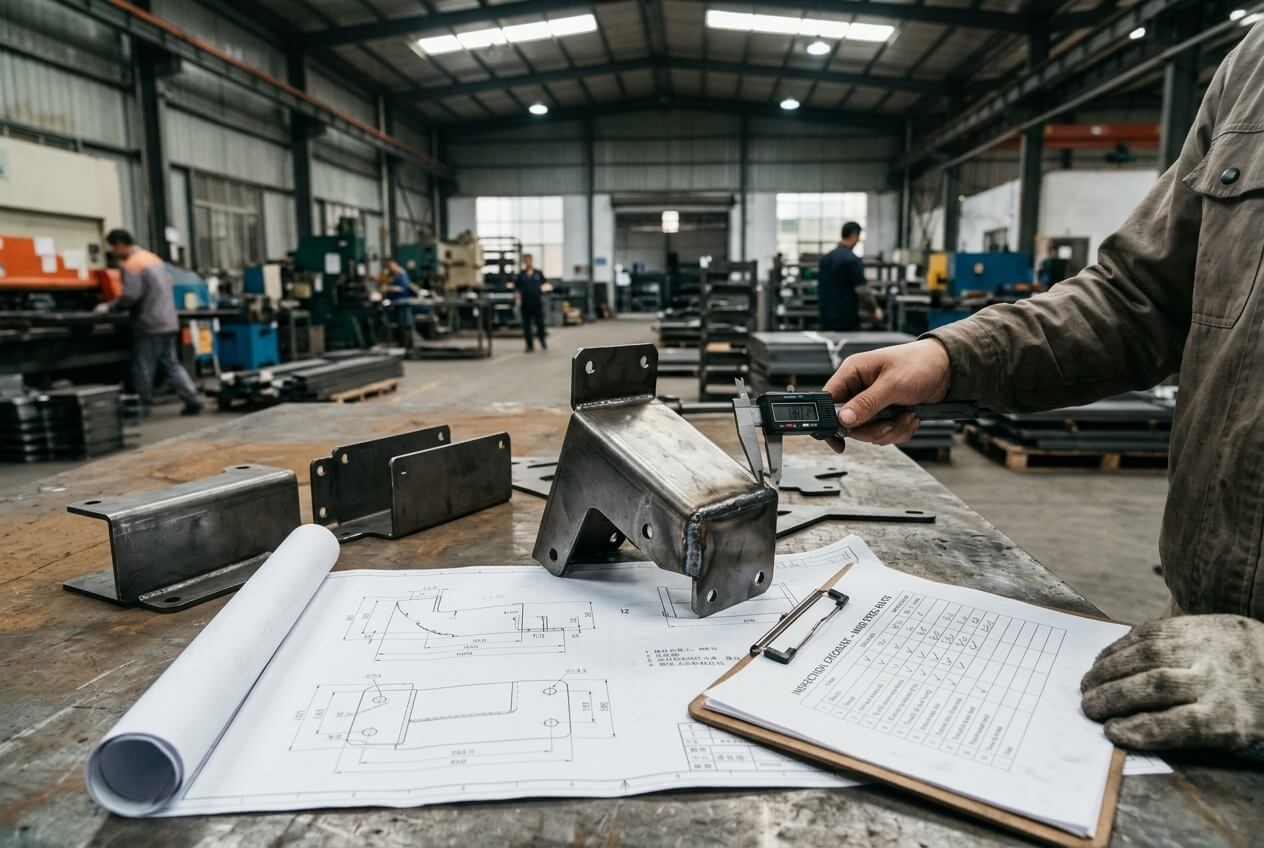
A buyer sends one drawing package for a powder-coated enclosure, a bracket set, and a welded support frame. The material line says mild steel. Three suppliers return prices that look close enough for comparison. One priced cold-rolled 1010 sheet. One assumed S235. Another used A36 plate and added more weld cleanup.
This is where the question what is mild steel becomes a procurement risk, not a dictionary question. In sheet metal fabrication, mild steel can mean several grades, thickness tolerances, stock conditions, forming behaviors, and finish routes. When an RFQ leaves those choices open, suppliers protect themselves with different assumptions.
The main buyer risk is quote ambiguity. Procurement may think it compares like-for-like offers, while each supplier has priced a different fabrication route. That gap can move from the quote table into production as cracked bends, warped weldments, coating failures, late clarification rounds, or assemblies that do not fit after coating.
Buyers do not need to over-specify every detail. They need to lock down the assumptions that affect cost, lead time, fit, and repeatability. A mild steel enclosure, cabinet door, bracket, frame, or welded assembly should tell the supplier which material basis to price, which features control fit, and which finish conditions matter after fabrication.
Where a Vague Mild Steel Line Turns Similar Prices Into Different Quotes
The quote problem starts before cutting, bending, or welding. It starts when the drawing lists mild steel without a grade, stock form, finish expectation, or approved equivalent. The supplier then decides what mild steel means for that part. That decision shapes the price before procurement sees the offer.
A36, S235, and S275 often fit structural frames, machine bases, and welded supports. AISI 1008, 1010, and 1020 usually appear in formed sheet metal parts that need cleaner bends or a better cosmetic surface. Hot-rolled plate, pickled and oiled sheet, and cold-rolled sheet can all fall under casual mild steel sourcing language.
Those choices change more than the raw material line. They affect laser cutting speed, punching quality, bend radius, springback, weld preparation, surface cleanup, coating readiness, and inspection time. A supplier that priced cold-rolled sheet for a visible enclosure skin did not quote the same work as a supplier that priced hot-rolled S235 for a welded base.
The quote table hides the first mismatch
Procurement teams often compare totals first because sourcing timelines are short. That shortcut creates risk when the material basis remains undefined. The lowest offer may exclude the surface cleanup, hole correction, weld blending, or coating preparation that another supplier included.
Consider a control cabinet with a formed door, internal brackets, and a welded floor frame. If the RFQ says mild steel only, one supplier may use 1.5 mm cold-rolled sheet for every formed panel and price a simple powder coat. Another may split the job into cold-rolled sheet for visible panels and S235 for the welded frame. The second quote may look higher, but it may reflect the real build.
The buyer should clarify grade, thickness, stock condition, and approved substitutions before comparing prices. If equivalents are allowed, the RFQ should state the performance requirement and the approval process. Yishang can review drawings at this stage and flag where a material assumption changes forming, welding, coating, or inspection work.
Why Material Assumptions Create Fit Risk Before Assembly Starts
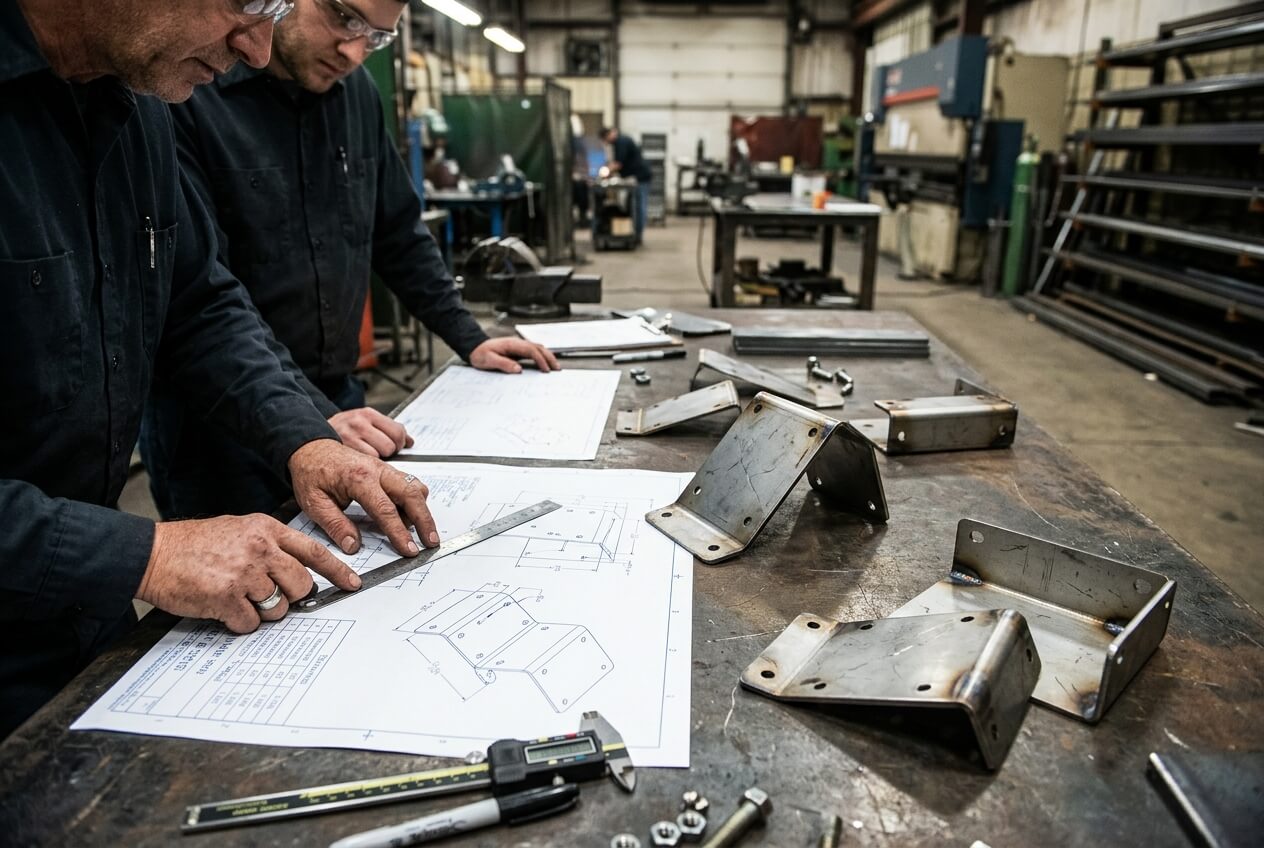
Quote ambiguity becomes production risk when the selected material does not match the geometry. Mild steel is generally workable, but different grades and stock conditions do not bend, cut, or weld in the same way. A small assumption can move a hole, shift a flange, or distort a welded frame.
Formed sheet metal parts expose this risk quickly. Lower-carbon grades such as 1008 and 1010 usually support tighter bends and cleaner cosmetic results. They often suit cabinet skins, enclosure doors, return flanges, and visible covers. A36 or S275 may suit heavier brackets and welded supports, but they may need larger radii or more conservative forming assumptions.
Cutting choices also affect fit. Laser cutting, CNC punching, drilling, and tapping create different hole quality and burr conditions. A hinge hole, latch slot, PEM insert hole, or mounting slot may look minor on the drawing. In assembly, it can control the entire fit relationship.
A bracket example shows the chain
A buyer requests a 2.0 mm mild steel mounting bracket with two bends and four slotted holes. Supplier A prices 1008 cold-rolled sheet and tight punching control. Supplier B prices A36 because the drawing mentions load support. Both quote mild steel, but the forming plan differs.
If procurement selects the lower price without resolving the grade, production may reveal the gap. The bend radius changes, the flange moves, and the slotted holes no longer align with the customer device. The supplier may then ask for a tolerance change, a tooling adjustment, or a new sample round. The part did not fail because mild steel was wrong. It failed because the RFQ let two different mild steel assumptions compete as if they were identical.
Critical features need names, not guesses
Buyers should mark the features that control fit. Common examples include hinge holes, latch points, mounting faces, slots, datum edges, welded tabs, insert locations, and surfaces that mate with another OEM component. The drawing should also state bend radii, angle tolerances, hole-position requirements, and whether dimensions apply before or after coating.
This does not mean every dimension needs a tight tolerance. Over-tight tolerances raise cost and may increase lead time. The stronger approach separates critical-to-fit features from general dimensions. Suppliers can then price the right inspection work and avoid treating every edge as equally important.
How Finish Expectations Turn RFQ Ambiguity Into Rework and Rust
Finish details often enter the RFQ as a color or a simple phrase such as powder coat black. That language does not define the corrosion plan. Mild steel can rust during storage, shipping, installation, or field use if the finish route does not match the environment.
The problem starts when buyers treat finish as decoration. For indoor office fixtures, a standard powder coat with proper pretreatment may work well. For humid warehouses, washdown zones, coastal use, outdoor cabinets, or loading dock equipment, the finish must protect cut edges, weld seams, threads, and hidden faces.
Suppliers may include different surface preparation steps in the same quoted finish. One may include degreasing, phosphating, masking, coating thickness checks, and careful edge coverage. Another may assume basic cleaning and one powder coat pass. Both quotes may say powder coating, but they do not carry the same risk.
Coating thickness can change fit
Finish also affects assembly. Powder coat adds thickness to doors, slots, tabs, and mating surfaces. If the drawing gives nominal sheet dimensions only, the coated part may bind. A cabinet door can pass fabrication inspection, then rub after coating. A sliding cover can lose clearance. A bracket hole can need chasing after paint.
Buyers should state whether key dimensions apply before finish or after finish. They should identify masked areas, grounding points, threaded holes, label zones, bearing surfaces, and surfaces that need no coating build. These details help suppliers price masking, rework prevention, and final inspection correctly.
A realistic example appears in outdoor service enclosures. The buyer may request mild steel with powder coating because the first unit looks clean. After installation, rust appears near punched vents and welded corners. The root issue started in the RFQ. It did not define pretreatment, edge coverage, exposure class, or whether galvanized material, e-coat, or a different coating system should replace basic powder coat.
Procurement should connect finish expectations to the use environment. Indoor dry use, humid storage, outdoor rain, chemical splash, and rough handling need different assumptions. That clarification reduces rework, warranty pressure, and late supplier debates over what the finish price included.
Why Prototype Approval Does Not Remove the Batch Risk
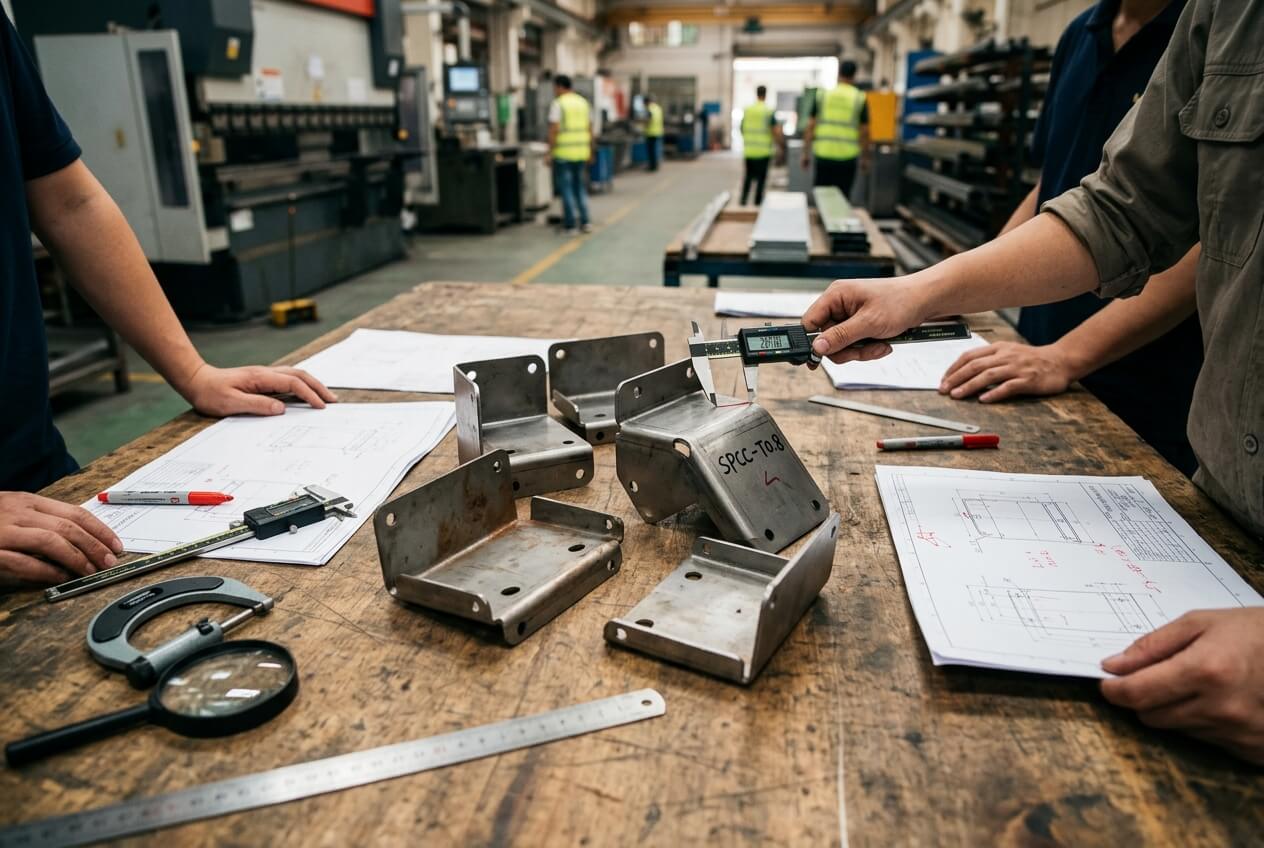
A prototype can pass because one operator, one material lot, one fixture, and one inspection method produced an acceptable part. Batch production removes that narrow control. If the RFQ never defined the material, fit features, finish condition, and inspection basis, the approved sample may not protect the order.
Welded assemblies show this risk clearly. Heat pulls mild steel. A frame may measure square after tacking, then move after full welding, grinding, and coating. Holes that matched during prototype assembly can drift outside the useful window during batch production. The drawing may still show broad general tolerances, so the supplier and buyer argue over function instead of specifications.
Formed enclosures create a similar problem. A door gap may look acceptable on the sample. In production, small changes in sheet thickness, bend angle, coating build, and hinge location accumulate. The result can be uneven gaps, latch pressure, or fasteners that need force during assembly.
Sample approval needs production controls
Buyers should treat prototype approval as a chance to lock the production method. The approval record should confirm the grade or equivalent, thickness, bend sequence, weld order, fixture approach, finish process, and inspection points. It should also capture any sample deviations that the buyer accepted temporarily.
For a welded display frame, the buyer might approve a prototype after checking appearance only. That creates risk if batch parts must bolt to a floor plate or carry shelves from another supplier. The RFQ should define the mounting-hole relationship, squareness requirement, weld distortion control, and final inspection after coating. Without those details, the production batch may meet a loose drawing but fail the actual assembly.
Lead time pressure often makes this worse. When production questions appear after purchase order release, suppliers must pause for clarification, remake samples, change fixtures, or source another grade. The schedule slips because the unresolved assumption moved from RFQ review into production.
Supplier communication should focus on the decisions that protect the batch. Ask what material they priced, what process controls they will use, what features they will inspect, and what changes would trigger re-approval. Yishang can support this discussion during manufacturability review, prototyping, and batch preparation for custom sheet metal parts.
What Buyers Should Clarify Before They Compare Mild Steel Supplier Quotes
The goal is not to create a long, rigid specification for every mild steel part. The goal is to stop suppliers from filling important blanks in different ways. A useful RFQ tells suppliers what must match, what may vary, and what outcome the part must support.
Start with the material basis. State the grade, standard, thickness, and stock condition. If the supplier may propose an equivalent, require them to name it in the quote. That single step makes price comparison cleaner and prevents hidden substitutions from appearing after award.
Next, connect geometry to function. Mark the holes, slots, faces, bends, and welded locations that control assembly fit. Separate them from noncritical dimensions. This helps suppliers plan bending, welding, drilling, tapping, and inspection around the features that decide whether the part works.
Finish details should describe both appearance and environment. State the color, gloss if relevant, pretreatment expectation, coating thickness range, masked areas, corrosion exposure, and surfaces that must stay functional after coating. If the part lives outdoors or in humidity, ask the supplier to recommend whether plain mild steel with powder coat is enough.
For prototypes, ask suppliers to quote the approval path, not just the first sample. The RFQ should explain how the buyer will review the sample, which deviations need written approval, and which inspection records should carry into production. Batch consistency depends on that discipline.
Cost and lead time become easier to judge after these details are clear. A higher quote may include better material control, more realistic weld correction, stronger coating preparation, or functional inspection. A lower quote may still win, but procurement can then understand what assumptions it accepts.
For custom sheet metal fabrication, buyers can send Yishang the drawings, material requirements or acceptable equivalents, quantities, tolerances, finish expectations, assembly notes, photos, and sample feedback. That information lets the fabrication team check the quote basis before mild steel ambiguity turns into rework, poor fit, or batch variation.
Have a mild steel enclosure, bracket, cabinet, frame, or welded assembly ready for quotation? Send Yishang your drawings, material requirements, quantities, tolerances, finish expectations, assembly interfaces, photos, and prototype notes. The earlier those assumptions are visible, the easier it is to quote the correct fabrication route and avoid price comparisons built on different scopes.
Frequently Asked Questions
What is mild steel in a sheet metal fabrication RFQ?
In an RFQ, mild steel should mean a defined material basis, not only low-carbon steel. Buyers should state the grade, thickness, stock condition, finish requirement, and approved equivalents. Otherwise suppliers may quote different materials and processes under the same label.
Why can two mild steel quotes have very different assumptions?
Suppliers may choose different grades, sheet conditions, cutting methods, welding plans, and coating preparation steps. One quote may assume cold-rolled 1010 sheet, while another assumes S235 or A36. The prices may look comparable, but the production scope may differ.
Is A36 the same as 1008 or 1010 mild steel for formed brackets?
No. A36 often suits structural parts and welded supports, while 1008 and 1010 usually form more easily in sheet metal work. For bent brackets, buyers should confirm bend radius, hole location, strength needs, and approved grade before awarding the order.
Should coating dimensions apply before or after powder coating?
That depends on the part function. If coated surfaces control clearance, sliding fit, hinge movement, or fastener alignment, the drawing should state the required condition after coating. This prevents a fabricated part from passing inspection before finish but failing assembly later.
Why can an approved mild steel prototype fail in batch production?
A prototype may pass because one fixture, operator, or material lot produced a good result. Batch production adds variation in bend angle, weld shrinkage, coating thickness, and hole position. Buyers should lock the inspection points and production controls during sample approval.
What should buyers include in a mild steel RFQ for custom sheet metal parts?
Include drawings, grade or approved equivalents, thickness, quantities, tolerances, finish expectations, critical-to-fit features, assembly notes, and prototype feedback. These details help suppliers quote the same scope and reduce rework, delays, and fit problems.