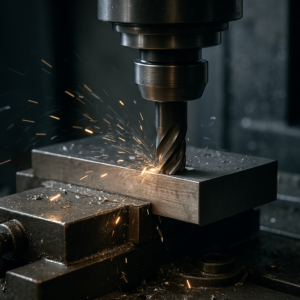
Milling is a machining process that removes material from a workpiece using a rotating multi‑edge cutting tool to produce precise shapes, slots, holes, and surfaces. In manufacturing, a milling machine (or mill machine) performs this process by moving the tool or the workpiece along multiple axes to achieve high accuracy, repeatability, and complex geometries.
This clear, standardized definition supports search intents such as define milling, milling meaning, milling definition, what is milling, and what does milling mean. It also helps Google identify this page as directly relevant to informational keyword searches.
What Is Milling in Metal Manufacturing?
When overseas buyers search for what is milling in manufacturing, they are usually not looking for a textbook answer. They want to know what milling does for their metal parts, how it impacts unit cost, and how to choose the right CNC milling supplier.
In metal manufacturing, milling is a subtractive machining process. A rotating cutting tool removes material from a solid workpiece—typically aluminum, steel, stainless steel, brass, or copper—until the final shape is produced. Modern CNC milling centers can create complex 2D and 3D features with tight tolerances and repeatable quality.
From a procurement point of view, milling is one of the core processes used to produce:
- precision brackets, flanges, and metal blocks
- functional faces on sheet‑metal housings and frames
- custom fixtures, jigs, and tooling components
- mounting plates, adapter plates, and heat sinks
- door panels, hinge components, and locking parts
Understanding how milling works—and how it is priced—helps purchasing managers control cost, reduce risk, and negotiate more effectively with suppliers.
How Does the Milling Process Work? (Step‑By‑Step)
This section directly matches search phrases like how do mills work, milling process, milling machine process, what does a mill machine do.
The milling process generally includes:
- Workpiece setup – The material is clamped onto a table, vise, or fixture.
- Tool selection – The operator or CNC program selects the correct cutter based on material, geometry, and tolerances.
- Programming feeds, speeds, and tool paths – CNC parameters control tool movement along X, Y, and Z axes.
- Material removal – The rotating cutter removes material through a controlled series of passes.
- Roughing and finishing – Rough cuts remove bulk material; finishing passes achieve final tolerances and surface finish.
- Inspection and deburring – Critical dimensions are measured and edges are smoothed.
- Post‑processing – The part may undergo anodizing, powder‑coating, plating, or assembly.
Milling vs. Turning, Casting, and Sheet Metal
For buyers, milling is often compared with other common manufacturing processes:
- CNC milling – Best for prismatic parts with flat surfaces, pockets, and holes.
- CNC turning – Ideal for round parts such as shafts, bushings, or threaded rods.
- Casting – Suitable for large volumes and complex shapes; requires mold tooling.
- Sheet metal fabrication – Best for enclosures, cabinets, and lightweight structures; milling may be added for precision features.
Milling is often integrated with sheet metal, welding, and fabrication to deliver final assemblies. This is why many international buyers prefer a one‑stop metal manufacturer.
What Is a Milling Machine? (Definition, Parts, and Types)
This section targets milling machine define, mill machine definition, milling machine meaning, milling machinery definition.
A milling machine is a machine tool that uses a rotating cutter to remove material from a workpiece. The machine controls tool movement along one or more axes to create precise surfaces, holes, contours, slots, and 3D forms.
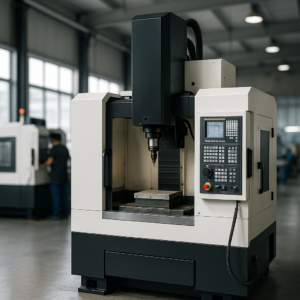
Main Parts of a Milling Machine
- Spindle – rotates the cutting tool
- Table – holds the workpiece
- Column / base – provides machine rigidity
- Control system – CNC controller or manual dials
- Tool changer – automatically swaps cutting tools (CNC only)
- Coolant system – reduces heat and improves surface finish
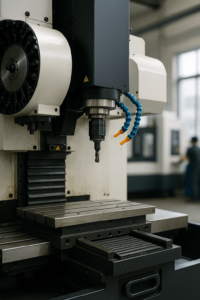
Types of Milling Machines
- Vertical milling machine – spindle vertical; most common for general manufacturing
- Horizontal milling machine – better for deep cuts and heavy material removal
- 3‑axis CNC milling machine – standard for most metal parts
- 4‑axis & 5‑axis CNC milling machines – used for complex surfaces and multi‑face machining
What Does a Mill Machine Do?
A milling machine can:
- drill, bore, and slot features
- create flat, angled, or contoured surfaces
- cut pockets and cavities
- machine precision mounting faces
- create threaded holes and tapped features
Why Milling Knowledge Matters for Overseas Procurement Teams
In global supply chains, procurement leaders must look beyond simple “price per piece” comparisons. CNC milling directly affects component performance, lifecycle cost, and supply reliability.
When buyers understand the basics of milling, they can:
- choose the right process (milling vs turning vs fabrication)
- avoid over‑engineering tolerances and surface finish
- compare supplier quotations more fairly
- reduce unexpected cost increases during production
- communicate technical requirements more clearly with engineers
This guide serves as a structured, procurement‑oriented reference for wholesale buyers, sourcing managers, and OEM/ODM project owners.
The Economics of CNC Milling: Tolerances, Precision, and Cost
One of the biggest hidden cost drivers in CNC milling is tolerance specification. Tight tolerances, when not truly necessary, dramatically increase machining time, tooling wear, and inspection cost.
The ISO 2768 Framework: Your Baseline for Cost Control
For general metal parts, the ISO 2768 standard defines four tolerance classes: Fine, Medium, Coarse, and Very Coarse. Most CNC machining quotations assume ISO 2768‑m (Medium) unless otherwise specified.
From a purchasing perspective, it is useful to think in terms of cost bands:
- using Medium tolerances keeps cost manageable for most parts
- switching to Fine tolerances may increase part cost by 20–50%
- requesting custom ultra‑tight tolerances may require special machines and dedicated inspection
Before issuing drawings, buyers should work with their engineers to standardize reasonable tolerance levels for common features (holes, slots, faces). This alone can unlock major savings across a product line.
The “Cost Cliff” at ±0.01 mm
Many buyers ask for “the tightest possible tolerance” without understanding the real price impact. In practice, there is often a cost cliff when tolerances move tighter than ±0.05 mm and especially around ±0.01 mm.
Ultra‑tight tolerances can require:
- slower machining speeds and smaller depths of cut
- multiple roughing and finishing passes
- controlled temperature in both machining and inspection
- more frequent tool changes and calibration checks
This means higher cycle time, more scrap, and more inspection work. Procurement teams should always ask: Does this feature truly need ±0.01 mm, or would ±0.05 mm be enough for function?
GD&T: Improving Functionality Without Always Increasing Cost
Moving from simple linear tolerances to GD&T (Geometric Dimensioning and Tolerancing) can actually improve function while reducing unnecessary constraints.
For example, specifying:
- flatness instead of extremely tight thickness tolerance
- true position instead of overly tight hole location dimensions
- parallelism instead of trying to control multiple faces individually
helps your CNC milling supplier focus on what really matters in the function of the part. The result is often better functional performance with less scrap and lower cost.
Surface Finish Requirements and Their Cost Implications
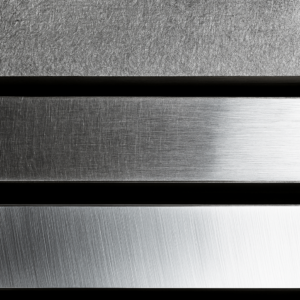
Surface roughness (Ra) is another common area where drawings are over‑specified. Smoother finishes require more machining time and sometimes secondary processes.
Cost Impacts Across Ra Levels
As a rough guide for milled surfaces:
- Ra 3.2–6.3 μm: Standard machined finish; suitable for many structural and internal surfaces.
- Ra 1.6 μm: 15–25% higher cost; typical for sliding or mating surfaces.
- Ra 0.8 μm: 40–60% higher cost; requires slower feeds and speeds and sharper tooling.
- Ra 0.4 μm: Often requires fine finishing or grinding; cost can be double compared with a standard finish.
When you receive quotations from different CNC machining suppliers in China or other regions, always check whether the same surface finish has been assumed. Misunderstandings here often explain price gaps between vendors.
Avoiding Over‑Specification on Coated Parts
If a surface will later be powder‑coated, anodized, painted, or plated, it may not need an ultra‑smooth machined finish. Discuss with engineering whether a standard Ra 3.2 μm milled surface is sufficient before coating.
Clear communication like “Ra 3.2 μm before powder‑coating, cosmetic faces only” helps your supplier set the right process route and avoid unnecessary rework.
Milling Strategy: Climb vs. Conventional
Modern CNC milling almost always uses climb milling, which generally provides better surface finish, longer tool life, and more stable cutting forces. Conventional milling is kept for special cases, such as when the material has a hard or abrasive outer layer.
From a buyer’s point of view, you do not need to dictate climb vs. conventional milling on the drawing. However, understanding that your supplier uses modern tooling strategies can increase confidence in their process capability.
Material Selection and Machinability: Procurement’s Hidden Lever
Material selection affects not only raw material price but also machinability, which directly influences milling cost and lead time. Sometimes a small change in material grade can dramatically reduce total part cost.
Machinability and Cost Comparison
Below is a general comparison that many CNC milling shops use as a reference:
- Aluminum 6061: Excellent machinability; very common for prototypes, enclosures, brackets, and heat sinks.
- Brass C360: Excellent machinability and beautiful appearance; good for visible hardware and fittings.
- Stainless Steel 304: Lower machinability; strong and corrosion‑resistant but more difficult to cut.
- Stainless Steel 303: Modified for better machinability; not recommended where welding is required.
- Low carbon steel (e.g., Q235, mild steel): Economical material with reasonable machinability.
- Titanium Ti‑6Al‑4V: Very strong but difficult and slow to machine; usually reserved for special industries.
Strategic Sourcing Considerations for Buyers
Procurement teams can work with engineers to explore options such as:
- switching from SS304 to SS303 when welding is not required, reducing machining cost by 15–20% in some cases
- using aluminum 6061 instead of steel when strength and temperature allow, cutting machining time significantly
- standardizing on a small number of material grades across product families to gain purchasing power
Suppliers that offer both CNC milling and sheet metal fabrication can also suggest hybrid designs: for example, a laser‑cut and bent sheet‑metal enclosure with a few CNC‑milled interfaces instead of a full milled block.
Hybrid Manufacturing: Fabrication + Milling for Maximum Efficiency
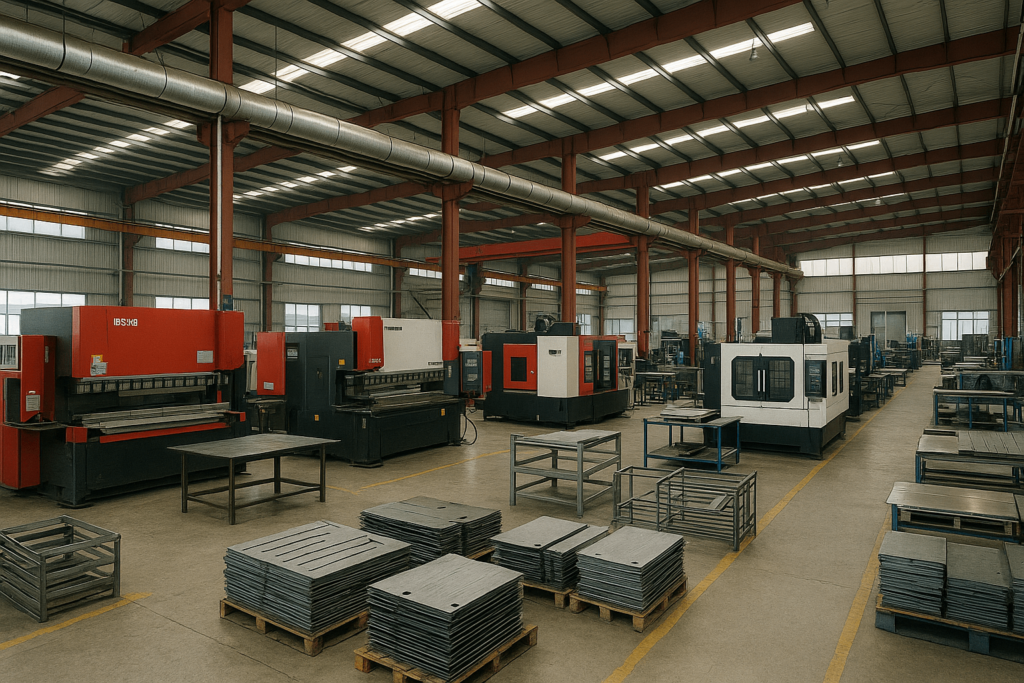
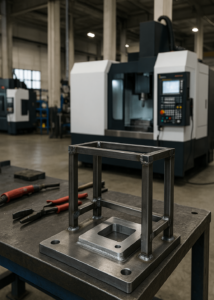
For medium‑ to large‑size parts and welded frames, machining everything from a solid block is rarely economical. A hybrid route combining sheet metal and CNC milling is usually more cost‑effective.
Typical Hybrid Workflow
A common process flow in integrated metal factories is:
- Laser cutting and punching of sheet metal blanks
- CNC bending to form panels and brackets
- Welding to build the frame or enclosure
- Stress relief (if required for precision parts)
- CNC milling of critical faces, holes, and reference points
- Surface treatment (powder‑coating, plating, anodizing, etc.)
- Final assembly, packing, and shipment
This approach reduces material waste, offers high structural strength, and still maintains machining precision where it is needed.
Managing Machining Allowances After Welding
To achieve the required accuracy after welding, engineers normally add 2–5 mm of machining allowance on critical surfaces. From a purchasing perspective, it is important to:
- confirm with the supplier how much stock will be left for final milling
- check that the drawings clearly mark the surfaces to be machined
- avoid excessive allowances, which increase both material use and machining time
Good communication here helps prevent disputes about tolerance control on welded assemblies.
Advanced Hybrid Approaches
In some high‑value industries, a combination of additive manufacturing (3D printing) and CNC milling is used, especially with expensive alloys like titanium and Inconel. The near‑net‑shape printed part is then milled only on functional surfaces, reducing raw material waste.
Even if your current projects use common steels and aluminum, it is useful for purchasing teams to understand how these hybrid concepts work. They show what is technically possible when you cooperate closely with an experienced CNC milling and fabrication supplier.
Quality Assurance: Ensuring Mill‑Level Precision in Real Production
A strong CNC milling partner is not only defined by nice samples. Long‑term cooperation depends on stable quality, clear documentation, and repeatable processes.
Essential Quality Control Elements in CNC Milling
When evaluating a supplier, overseas buyers can ask about:
- Material certificates (EN 10204 3.1) for key components
- First Article Inspection (FAI) for new or revised parts
- In‑process inspection with probes or measuring tools on the machine
- CMM (Coordinate Measuring Machine) reports for complex geometries
- traceability of batches, operators, and machines for critical parts
Suppliers who can provide these documents consistently usually handle OEM/ODM projects for demanding industries such as automotive, medical equipment, energy storage, and vending machines.
Common Milling Defects and How Suppliers Prevent Them
Some typical issues in CNC‑milled parts include:
- chatter marks caused by vibration or incorrect cutting parameters
- dimensional drift due to tool wear or machine temperature changes
- burrs and sharp edges that have not been fully deburred
- inconsistent surface finish after tool changes or different setups
A professional CNC milling supplier will have clear work instructions, tool‑life management, and deburring standards to avoid these problems or detect them before shipment.
Supplier Audit Priorities for Procurement Teams
During a factory audit—either on‑site or via video—buyers can focus on:
- the condition and maintenance records of CNC machines and auxiliary equipment
- whether there is a dedicated measuring room or metrology area
- how inspection results are recorded and stored
- how non‑conforming parts are handled and segregated
These points go beyond a simple “ISO certificate on the wall” and reveal the real maturity level of the supplier’s quality system.
Applications and Advantages of Milling in Manufacturing
This section targets keyword clusters like milling manufacturing, milling applications, milling machine uses.
Common Applications of Milling
- automotive brackets, mounts, housings
- electronics enclosures, heat sinks, frames
- medical device components
- vending machine structures and precision interfaces
- energy storage and power‑supply metal parts
- construction hardware, hinges, and locking systems
- agriculture and machinery fittings
Advantages of Milling Compared With Other Processes
- High precision – suitable for ±0.01–0.05 mm tolerances
- Flexible – ideal for prototypes, small batches, and design changes
- Capable of complex geometry – pockets, contours, 3D surfaces
- Cost‑effective for low/medium volume – no mold cost
- Easy integration with sheet metal fabrication and welding
This reinforces user search intent and enhances topical authority around milling.
Quality Assurance: Ensuring Mill‑Level Precision in Real Production
A strong CNC milling partner is not only defined by nice samples. Long‑term cooperation depends on stable quality, clear documentation, and repeatable processes.
Essential Quality Control Elements in CNC Milling
When evaluating a supplier, overseas buyers can ask about:
- Material certificates (EN 10204 3.1) for key components
- First Article Inspection (FAI) for new or revised parts
- In‑process inspection with probes or measuring tools on the machine
- CMM (Coordinate Measuring Machine) reports for complex geometries
- traceability of batches, operators, and machines for critical parts
Suppliers who can provide these documents consistently usually handle OEM/ODM projects for demanding industries such as automotive, medical equipment, energy storage, and vending machines.
Common Milling Defects and How Suppliers Prevent Them
Some typical issues in CNC‑milled parts include:
- chatter marks caused by vibration or incorrect cutting parameters
- dimensional drift due to tool wear or machine temperature changes
- burrs and sharp edges that have not been fully deburred
- inconsistent surface finish after tool changes or different setups
A professional CNC milling supplier will have clear work instructions, tool‑life management, and deburring standards to avoid these problems or detect them before shipment.
Supplier Audit Priorities for Procurement Teams
During a factory audit—either on‑site or via video—buyers can focus on:
- the condition and maintenance records of CNC machines and auxiliary equipment
- whether there is a dedicated measuring room or metrology area
- how inspection results are recorded and stored
- how non‑conforming parts are handled and segregated
These points go beyond a simple “ISO certificate on the wall” and reveal the real maturity level of the supplier’s quality system.
Strategic Sourcing in 2025: Risk, Regulation, and IP Protection
Global metal supply chains are under pressure from tariffs, logistics uncertainty, and stricter IP protection rules. Procurement teams responsible for CNC‑milled parts and metal assemblies need to consider more than just the ex‑works price.
Managing Global Supply Chain and Cost Risk
Key questions for purchasing managers include:
- How will tariffs and duties affect the landed cost of CNC‑milled parts?
- Is there more than one qualified supplier in your vendor base for critical components?
- Does your supplier offer safety stock or VMI options for key items?
- How do logistics disruptions (port congestion, shipping delays) affect project timelines?
Working with well‑organized suppliers in China and other manufacturing hubs can actually reduce risk when they have experience shipping to many countries and understand compliance requirements.
Protecting Design and IP When Outsourcing CNC Milling
When exporting drawings and 3D models, buyers should pay attention to design confidentiality. Good practices include:
- signing appropriate agreements (for example, NNN agreements in China)
- limiting full CAD access to key partners and critical features only
- using watermarking or version control to track drawing distribution
- clearly stating ownership of tools, fixtures, and inspection gauges in contracts
Serious CNC milling suppliers understand that long‑term cooperation depends on respecting customer IP and maintaining trust.
Example of an Integrated CNC Milling and Metal Fabrication Partner (YISHANG)
To make these ideas more concrete, consider how an integrated metal products factory like YISHANG positions itself for overseas wholesale buyers and procurement managers.
Capabilities Focused on Metal Products and Assemblies
YISHANG is a metal products manufacturer based in China, serving mainly B2B wholesale customers, brand owners, and project buyers. The factory focuses on OEM & ODM metal products, including:
- custom metal cabinets and enclosures
- metal display racks and retail fixtures
- welded metal frames and brackets
- CNC‑milled inserts, panels, and hardware for those assemblies
The company works with a range of materials such as stainless steel 304/316, low‑carbon steel, galvanized steel, aluminum, red copper, and brass, and supports many end industries: automotive, hardware, electronics, appliances, agriculture, construction, medical equipment, pet products, vending machines, energy storage, and advertising equipment.
Process Integration for CNC Milling Projects
For overseas buyers who need not only CNC‑milled parts but also complete assemblies, YISHANG offers an integrated process chain:
- design support and DFM suggestions
- sheet metal laser cutting, bending, and deep drawing
- stamping and welding of structural components
- CNC milling and CNC machining of precision features
- surface treatment (powder‑coating, plating, polishing, etc.)
- assembly, functional testing, packaging, and shipment
This one‑stop model helps procurement teams reduce supplier numbers, simplify quality control, and improve overall project visibility.
Quality and Compliance
YISHANG operates quality management in line with ISO 9001 and provides RoHS‑compliant finishes on request. For overseas buyers, this means:
- stable production processes designed for repeat orders
- standard inspection flow from raw material to finished goods
- documented checks that support incoming inspection at the customer side
Instead of hard selling, the focus is on being a reliable, long‑term metal partner that understands both technical requirements and international trade practices.
FAQ: Common Questions About Milling and Milling Machines
This section directly targets long‑tail queries and supports Google FAQ rich results.
Q1: What does milling mean in manufacturing?
Milling means removing material from a workpiece using a rotating cutter to create precise surfaces, holes, or shapes. It is one of the most widely used machining processes in metal manufacturing.
Q2: What is the definition of a milling machine?
A milling machine is a machine tool that rotates a cutting tool and moves it along multiple axes to cut metal or other materials into accurate shapes.
Q3: How does a milling machine work in simple terms?
A milling machine spins a cutting tool at high speed while moving it across the workpiece. Each pass removes material until the final geometry is achieved.
Q4: What does a mill machine do in a factory?
It produces precision surfaces, holes, slots, pockets, and features required for assemblies, enclosures, and mechanical components.
Q5: What is the milling process step by step?
Clamp the workpiece → load the cutter → run the CNC program → remove material through multiple passes → inspect → deburr → finish.
Q6: What is the difference between milling and turning?
In turning, the workpiece rotates and the cutting tool is stationary. In milling, the cutting tool rotates and the workpiece is fixed.
Final Recommendations: Turning Milling Knowledge Into Purchasing Advantage
To close, here are practical actions procurement managers and sourcing teams can take immediately when working on CNC milling and metal fabrication projects:
- Clarify the real functional requirements for each part before RFQ: tolerances, surface finish, and critical features.
- Challenge unnecessary tight tolerances and mirror‑like finishes. They are the biggest hidden cost drivers in CNC milling.
- Standardize materials and tolerance bands across product families to gain better pricing and simplify quality control.
- Favor integrated suppliers when projects require both CNC milling and sheet metal fabrication or welding. This reduces hand‑offs and margin stacking.
- Audit suppliers for process capability, not just sample quality. Ask about equipment, quality control, and documentation.
- Discuss hybrid process options (fabrication + milling) early in the design stage to reduce overall cost and lead time.
- Protect your drawings and IP with proper agreements and controlled data sharing.
- Build long‑term partnerships with a small number of proven CNC milling and metal fabrication suppliers in key regions.
By understanding what milling is and how it affects cost, quality, and risk, overseas buyers can move from “price takers” to strategic partners in the manufacturing process. This not only improves margins and delivery performance, but also strengthens the entire supply chain for complex metal products and assemblies.