
Introduction
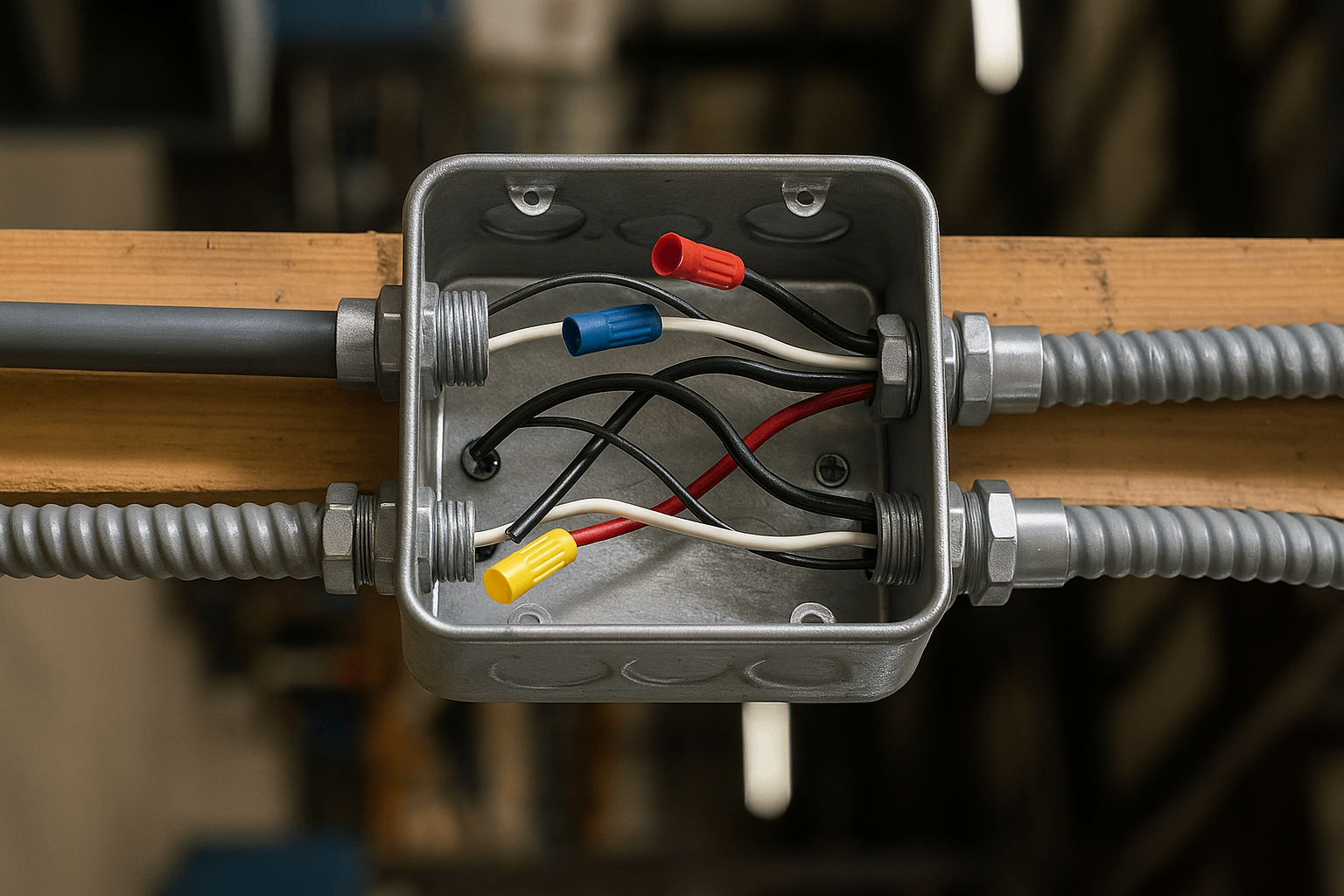
For international procurement teams sourcing electrical enclosures, the National Electrical Code is not just a technical reference. In North American projects, it often determines whether a junction box can be installed, inspected, and accepted without delay.
If a box is too small, lacks grounding support, has poor conduit spacing, or cannot remain accessible after installation, the issue may not appear during quotation. It usually appears later—during inspection, field installation, or customer acceptance. By then, the cost is much higher.
For OEM systems, data centers, commercial facilities, industrial plants, telecom projects, and infrastructure work, NEC compliance should be considered before production begins. It affects box volume, conductor layout, material choice, grounding design, weather protection, labeling, and documentation.
This guide explains the NEC requirements that matter most to junction box buyers and translates them into procurement language. The goal is simple: help sourcing teams avoid failed inspections, field rework, shipment rejection, and unnecessary redesign.
YISHANG supports global buyers with custom junction boxes, electrical enclosures, NEMA-rated housings, grounding-ready designs, and export documentation aligned with project requirements.
Understanding NEC: What It Means for Wholesale and OEM Procurement
The NEC, developed by the National Fire Protection Association, provides the core safety framework for electrical installations in the United States and many North America-related projects. Local jurisdictions may modify or add requirements, but NEC remains the dominant reference point for junction box design and installation.
For procurement teams, this means a supplier cannot simply fabricate a box that matches the drawing dimensions. The enclosure must also support safe installation according to code.
Several NEC articles are especially important for junction boxes:
- NEC 314.16 — box fill and volume requirements;
- NEC 314.28 — pull box and junction box sizing for conductors and conduit entries;
- NEC 314.29 — accessibility after installation;
- NEC 250.148 — grounding and bonding requirements.
These articles are not abstract code language. They affect real procurement decisions: box size, internal spacing, terminal block layout, conduit entry position, ground screw placement, removable cover design, and inspection readiness.
For buyers supplying North American projects, NEC-compliant junction boxes can become a competitive advantage. They reduce installer confusion, improve first-pass inspection rates, and help project teams avoid late-stage changes.
Box Fill and Volume Calculations: NEC 314.16 Explained
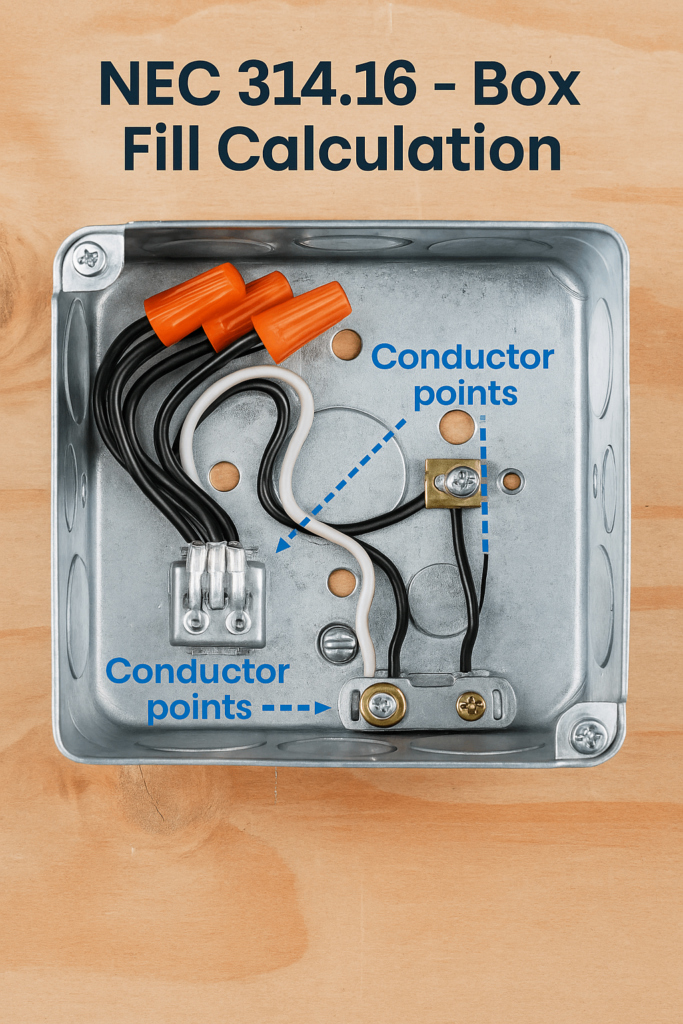
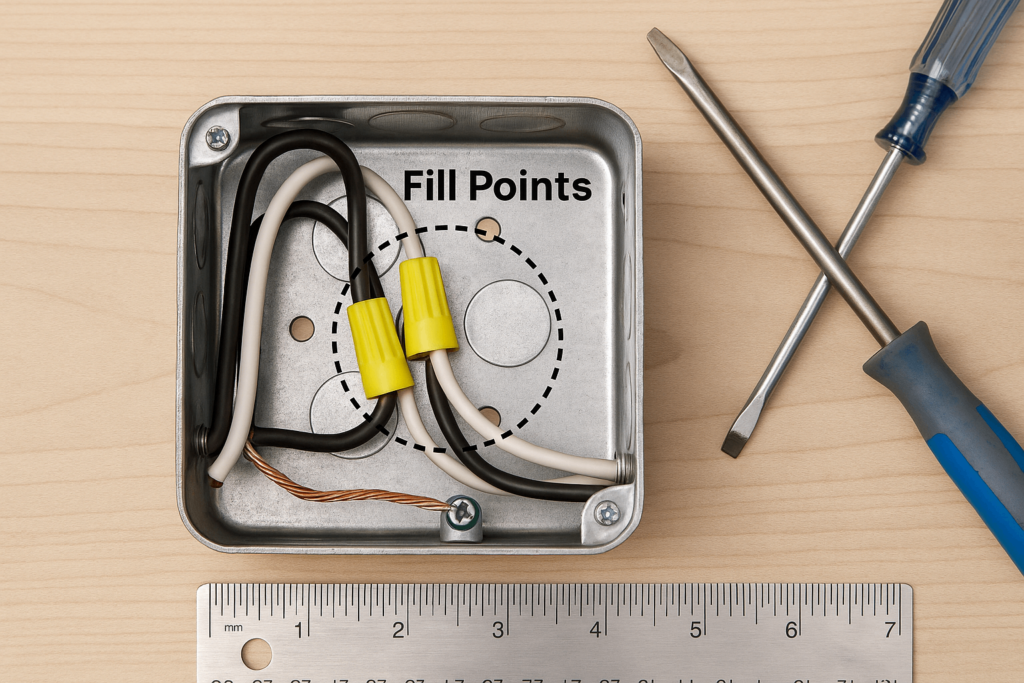
Box fill is one of the most common areas where procurement mistakes occur. NEC 314.16 defines how much internal volume a box needs based on the number and size of conductors, devices, clamps, and grounding conductors inside.
A junction box that looks large enough visually may still fail the box fill calculation.
Each conductor size has a volume allowance. The calculation ensures that wires are not overcrowded, overheating risk is reduced, and installers have enough working room.
| Component Type | Allowance (cu. in.) |
|---|---|
| #14 conductor | 2.00 |
| #12 conductor | 2.25 |
| #10 conductor | 2.50 |
| Grounding conductors | Counted once total |
| Internal clamps | 1x |
| Device yokes | 2x per yoke |
For example, a box with six #12 conductors, one grounding conductor group, and one duplex outlet requires enough cubic-inch capacity to account for all of those elements. If the box is undersized, it may violate NEC requirements even if the conductors physically fit inside.
For bulk buyers, this becomes a serious risk. If one box design is wrong, the same error can repeat across hundreds or thousands of units.
During quotation, buyers should provide:
- conductor size;
- conductor count;
- number of devices;
- clamps or internal fittings;
- grounding arrangement;
- terminal block layout;
- required free working space.
YISHANG can support box fill review during the design stage, helping buyers confirm whether the proposed enclosure volume matches NEC-related project requirements before fabrication begins.
Box Dimensions and Conduit Entry: NEC 314.28 Requirements
NEC 314.28 addresses spacing requirements for pull boxes and junction boxes, especially where larger conductors or conduit runs are involved. These rules help ensure that wires can be pulled, bent, and arranged safely without excessive strain.
For straight pulls, the box length must be based on the trade diameter of the largest conduit. For angle pulls or U-pulls, spacing depends on conduit size, entry position, and conductor routing.
This matters because conduit entry is often treated as a simple hole pattern on the drawing. In practice, it affects installation time, cable damage risk, bend radius, and inspection approval.
A box may fail in the field if:
- conduit entries are too close together;
- the box is too shallow for wire bending;
- side-entry layouts do not allow proper pull space;
- internal components block conductor routing;
- installers must modify the box on site.
For procurement teams, this means conduit layout should be reviewed before tooling or production. A low-cost enclosure can become expensive if installers need to drill new holes, relocate fittings, or replace the box entirely.
YISHANG supports CAD-based conduit positioning review, including flange depth, entry spacing, mounting layout, and installation access. This helps buyers reduce field modification and improve project efficiency.
Material, Environmental Ratings, and Export Considerations
Junction boxes are not used in identical environments. A box installed in a dry indoor control room faces very different risks from one used in a coastal telecom site, food-processing washdown zone, oil and gas facility, or outdoor agricultural system.
NEC 314.15 requires boxes in damp or wet locations to be suitable for those environments. For procurement teams, this often connects to NEMA or IP ratings.
Common enclosure ratings include:
- NEMA 3R for outdoor rain protection;
- NEMA 4 for watertight protection;
- NEMA 4X for watertight protection plus corrosion resistance;
- IP65/IP66 for dust and water protection in international projects.
Material selection should match the environment:
Steel
Strong, economical, and grounding-friendly. Best for indoor or protected applications when properly coated.
Aluminum
Lightweight and corrosion-resistant. Useful for outdoor, telecom, and weight-sensitive installations.
Stainless steel
Preferred for washdown, coastal, marine, chemical, and food-related environments. 316 stainless is often chosen where chloride exposure is expected.
Buyers should also confirm whether the project requires UL-listed enclosures, RoHS documentation, CE-related support, or specific labeling.
YISHANG can provide material options, NEMA-rated enclosure designs, grounding studs, lock-seamed edges, tamper-resistant closures, serialized datasheets, and export documentation according to project requirements.
Accessibility and Maintenance: NEC 314.29 in Practice
NEC 314.29 requires junction boxes to remain accessible after installation. This rule is simple, but it is frequently overlooked during layout planning.
A junction box hidden behind permanent panels, buried in insulation, blocked by equipment, or placed above an inaccessible ceiling may create compliance and maintenance problems. Even if the box itself is well made, poor accessibility can fail inspection.
For procurement teams, accessibility should influence enclosure design and mounting details.
Useful design choices include:
- removable front covers;
- modular access panels;
- clear cover labeling;
- visible junction point markings;
- mounting tabs positioned for service access;
- enough clearance for tools and inspection.
In large projects, access design can reduce long-term maintenance cost. Field technicians should be able to locate, open, inspect, and service junction points without damaging the surrounding installation.
YISHANG can integrate access-friendly features such as front-panel entry, laser-marked labels, service covers, and mounting provisions to help buyers avoid rework and inspection issues.
Grounding and Bonding Requirements: Inside NEC 250.148
Grounding is one of the most important safety requirements for metallic junction boxes. NEC 250.148 requires equipment grounding conductors to be properly spliced together and bonded to the metal box.
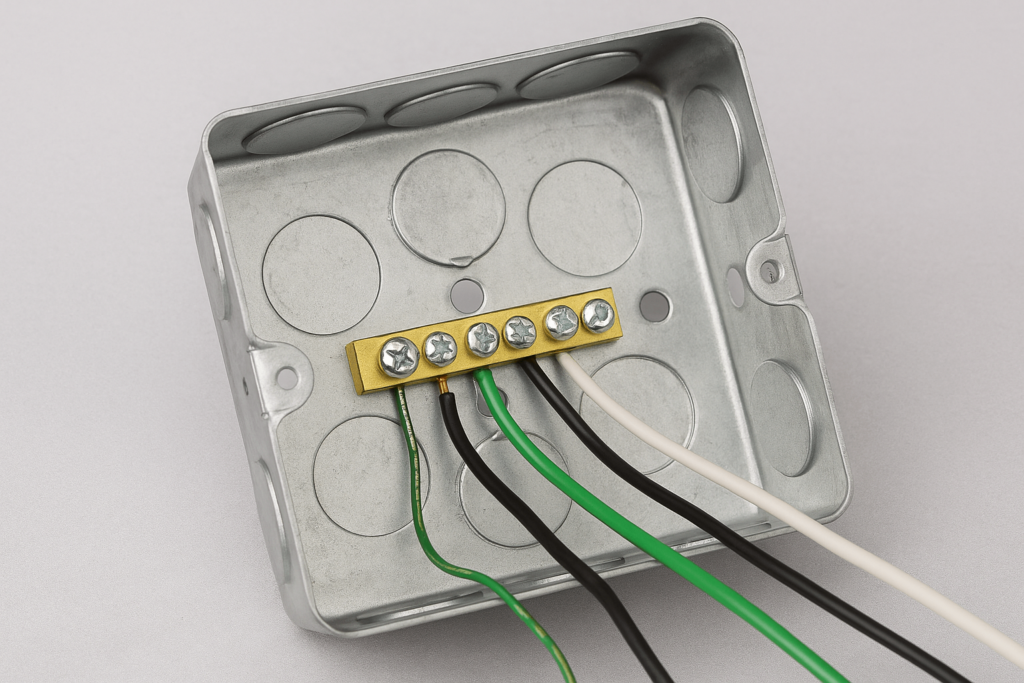
The grounding path should not depend only on the device yoke. A dedicated grounding screw, terminal, or listed grounding method is typically needed.
For procurement buyers, this means the junction box should be designed for secure grounding from the start. Field installers should not need to improvise.
Common grounding features include:
- pre-installed ground screws;
- welded or pressed grounding studs;
- internal grounding terminals;
- grounding bus bars;
- UL-approved clamps;
- clear grounding labels;
- corrosion-resistant contact surfaces.
Grounding errors are a common cause of inspection failure. They can also create safety risks, especially in commercial and industrial systems with multiple circuits and metallic raceways.
YISHANG can supply boxes with grounding terminals, bus bars, clamps, and bonding-ready layouts based on customer drawings and project standards.
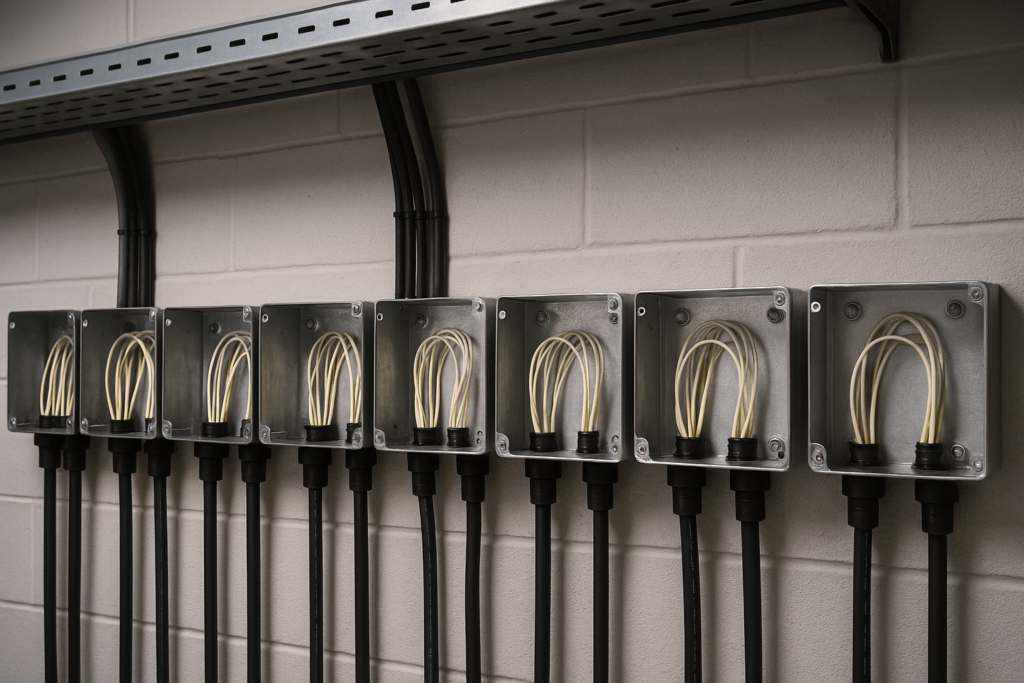
Case Study: How One OEM Achieved 100% First-Pass NEC Approval
A Canadian OEM required 2,000 custom junction boxes for a national data center rollout. The project required IP66/NEMA 4X-rated enclosures with pre-mounted terminal blocks, defined conductor spacing, side-entry conduit layouts, and grounding features that aligned with NEC-related inspection expectations.
The risk was not only product quality. The customer needed fast installation across multiple sites without inspectors flagging inconsistent box fill, conduit spacing, or grounding details.
By working early in the design stage, YISHANG reviewed internal layout, enclosure volume, conduit entry points, terminal block placement, and access requirements before production.
The delivered boxes passed inspection on the first attempt. The customer also reported faster installation because grounding points and access locations were already optimized.
For procurement teams, the lesson is clear: NEC compliance is easier and less expensive when it is designed into the box before manufacturing begins.
Integrating Compliance into Procurement Workflows
NEC-compliant sourcing should not be handled at the end of the project. It should begin at the RFQ stage.
A strong procurement workflow should include:
- Define installation market
Confirm whether the project is for the U.S., Canada, or another NEC-influenced market. - List applicable code concerns
Box fill, pull space, access, grounding, environmental rating, and labeling should be reviewed. - Provide complete electrical layout data
Include conductor count, wire gauge, conduit size, terminal blocks, devices, clamps, and grounding requirements. - Request supplier DFM and compliance review
The supplier should confirm whether the design supports fabrication and installation requirements. - Verify documentation before production
Datasheets, drawings, material records, test reports, and labeling requirements should be confirmed early. - Use traceable part numbers
For large projects, part numbering and batch tracking help manage installation, service, and future reorders.
YISHANG supports buyers with 3D models, compliance-related datasheets, ISO 9001 production records, prototyping, batch inspection, and export packaging support.
This type of workflow reduces the chance that a compliance issue appears only after boxes arrive at the job site.
Summary and Procurement Takeaway
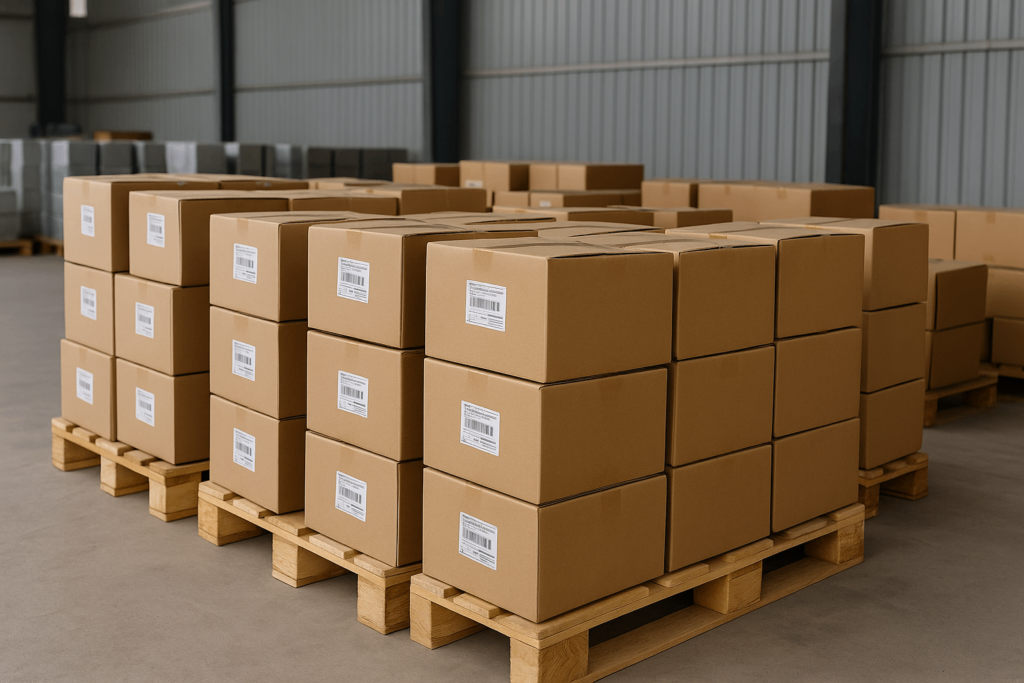
NEC requirements are not just code language for electricians. They affect how junction boxes are designed, fabricated, inspected, shipped, and installed.
For procurement teams, the most important areas are:
- box fill under NEC 314.16;
- conduit spacing under NEC 314.28;
- accessibility under NEC 314.29;
- grounding and bonding under NEC 250.148;
- material and environmental rating selection;
- documentation for export and project approval.
A compliant junction box is not only safer. It is easier to install, easier to inspect, and less likely to create costly project delays.
YISHANG helps global buyers integrate these requirements into custom junction box production, from design review and material selection to grounding features, NEMA-rated construction, documentation, and batch delivery.
References
- National Fire Protection Association (NFPA): https://www.nfpa.org
- NEC 2023 Edition Code Index: https://www.nfpa.org/70
- UL 50E Enclosure Rating Guide: https://www.ul.com
Frequently Asked Questions (FAQ)
Q: Do junction boxes have to follow NEC code in the USA?
Yes. Junction boxes used in U.S. electrical installations must comply with applicable NEC requirements, including size, fill, accessibility, grounding, and environmental suitability.
Q: What is NEC 314.16?
NEC 314.16 defines box fill requirements. It determines the minimum internal volume a box must provide based on conductor size, conductor count, devices, clamps, and grounding conductors.
Q: What is NEC 314.28?
NEC 314.28 covers sizing requirements for pull and junction boxes used with raceways and larger conductors. It helps ensure proper wire-pulling space and bending clearance.
Q: What is NEC 314.29?
NEC 314.29 requires junction boxes to remain accessible after installation. Boxes should not be hidden behind permanent building materials or placed where maintenance access is blocked.
Q: What grounding feature should a metal junction box include?
A metallic junction box should include a secure grounding method, such as a ground screw, grounding stud, terminal, clamp, or bus bar, depending on the design and installation requirements.