
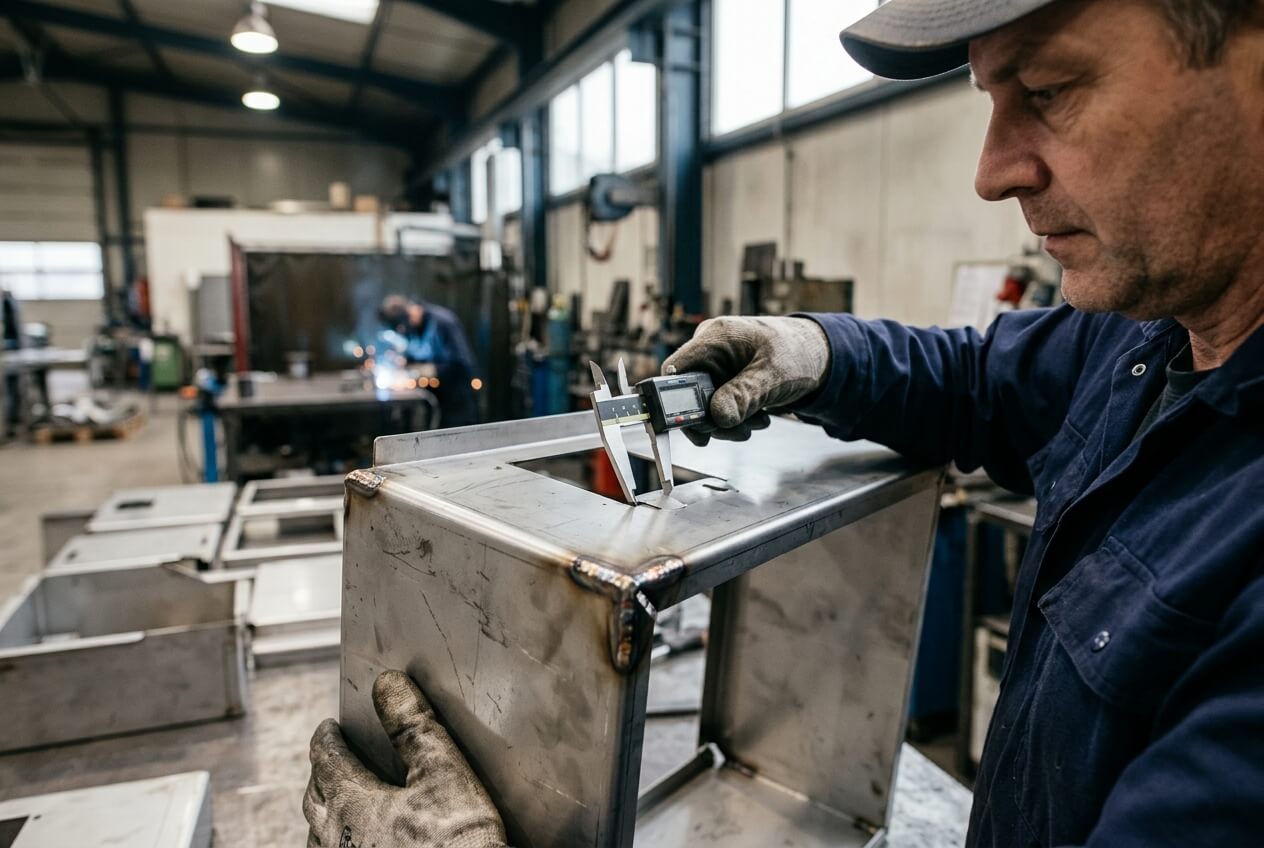
When a buyer asks, what is tungsten inert gas welding, the technical answer is simple. TIG, also called GTAW, uses a non-consumable tungsten electrode and shielding gas to create a controlled arc. For sheet metal sourcing, that definition is not enough. The procurement risk starts when the RFQ uses TIG as a shorthand for quality, but never defines what the weld must look like, what must be measured after welding, or which features must still fit during assembly.
That gap can distort quotes fast. One supplier prices full cosmetic welds and post-weld grinding. Another assumes hidden seams only need strength. A third assumes the part can be adjusted during fit-up. The unit price differences look large, but the real difference is often assumption scope. For enclosures, brackets, frames, cabinets, and welded assemblies, the buyer who controls those assumptions usually gets the most usable quote.
When an RFQ Says TIG Weld All Seams, Suppliers Still Make Different Assumptions
A drawing note like “TIG weld all seams” sounds clear, but it leaves key decisions open. Does that mean every seam must be continuous? Does it mean visible seams only? Must the weld be ground flush, brushed, or left as-welded? Should the supplier inspect before coating, after coating, or after final assembly? If the answer is unclear, two fabricators can quote the same print and still price very different work.
That is why the process name alone does not settle the quote. TIG gives fine control, low spatter, and clean-looking joints. It works well on thin stainless steel, aluminum, and visible corners. It also takes time. A supplier may need tighter fit-up, more tack welding, more heat control, and more finishing work. If the RFQ does not say which seams are cosmetic and which are structural, the supplier has to guess where to spend labor.
Process name is not acceptance criteria
The buyer should separate method from result. A process note tells the supplier how to weld. Acceptance criteria tell the supplier what must pass. Those are not the same thing. A hidden internal bracket may only need strength and location accuracy. A front-facing enclosure corner may need a smooth blend, no sharp edges, and no visible discoloration after finishing. If both joints receive the same blanket instruction, the quote may include unnecessary labor in one place and too little control in another.
Consider a stainless steel control enclosure. The front edges will sit in a customer-facing panel area, while the back internal bracket never shows. If the RFQ says TIG all around, one supplier may price cosmetic blending on every seam. Another may assume only the visible face matters. A third may keep welds short to reduce distortion and rely on grinding later. The lowest quote is not always the best price. It may simply assume less work.
How Weld Heat Moves Holes, Squareness, and Door Fits After Fabrication
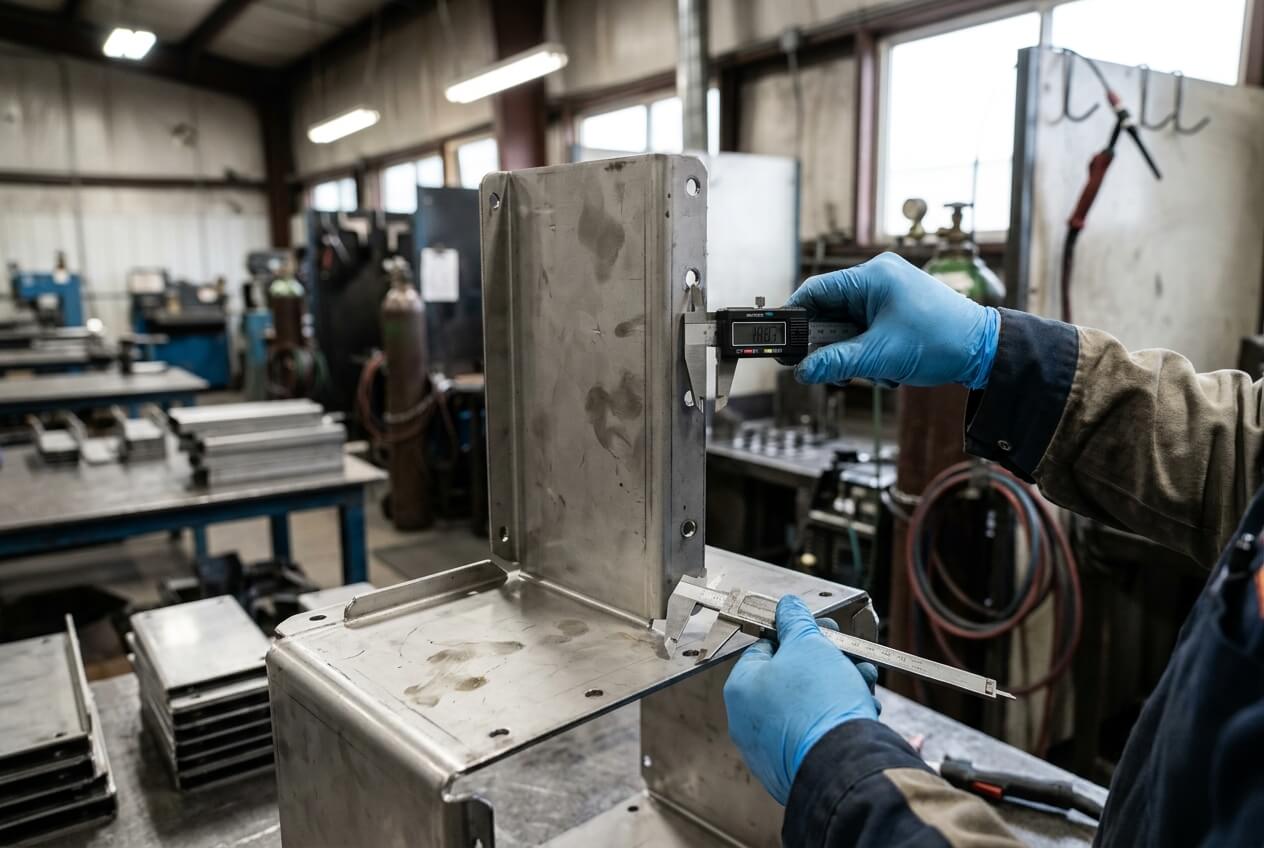
Even a well-controlled TIG weld adds heat. Thin sheet metal moves as it cools. That movement can be small enough to miss on the bench and large enough to create assembly trouble later. Holes drift, corners pull inward, and frames twist. If the RFQ only controls flat-pattern dimensions, the supplier may inspect the part before welding and still ship a unit that no longer fits its mating component.
This risk shows up often in cabinets and welded enclosures. A buyer checks hole size, then discovers the door gap is uneven. The hinge pattern is correct on the flat part, but the opening shifts after corner welding. A bracket set may pass laser-cut inspection, then fail during assembly because the base plate moved slightly during weld cooling. The defect starts in fabrication, but the consequence appears at installation.
Freeze the dimensions that affect assembly
Not every dimension needs equal control. Buyers get better quotes when they identify the features that actually matter after welding. For an enclosure, that may include door opening size, hinge center distance, latch position, mounting hole location, and diagonal squareness. For a frame, that may include base flatness, face coplanarity, and diagonal difference. For a welded assembly, it may include the relationship between a bracket and the part it supports.
That approach keeps the RFQ practical. It tells the fabricator where to spend fixture time and inspection effort. It also prevents over-control. If every dimension on the print is treated as final-critical, the quote often rises and the schedule slows. A better request says which features will be checked after welding and which can remain within normal fabrication variation. Yishang often reviews drawings with that split in mind, because the wrong inspection point can make a good part look bad on paper.
One realistic example is a powder-coated steel cabinet with internal mounting rails. The rails must align with a control board and a cable tray. If the RFQ does not say those hole locations are post-weld critical, the supplier may inspect them before welding and stop there. After welding, the cabinet can shift enough to make assembly awkward. The part still exists, but the production line absorbs the error.
Why Finish Notes Change Quote Scope More Than the Unit Price Suggests
Finish instructions often look simple, but they drive hidden labor. A supplier needs to know whether the weld will stay visible, be ground flush, be brushed, be polished, or be covered by powder coating. Those choices change arc time, cleanup time, rework risk, and inspection effort. When finish intent is vague, quotes can differ by more than material cost or labor rate.
Visible stainless welds are a good example. A clean TIG bead on a display rack may still need blending to match surrounding grain. If the buyer expects a smooth cosmetic line, the supplier must spend extra time on grinding, sanding, and finishing. If the same rack will be coated, the cosmetic target changes, but edge quality still matters. Heavy weld buildup, sharp corners, and uneven cleanup can telegraph through paint or coating even when the weld itself is sound.
A cosmetic weld can still hide a dimensional problem
Buyers sometimes focus on appearance and forget fit. That creates a second risk. A polished seam may look good while the hole pattern has already shifted. A welded frame may look square while the mounting face is slightly out of plane. The reverse also happens. A part can fit correctly and still fail the visual standard because the finish note never said whether weld marks were acceptable.
For that reason, finish instructions should support the real use case. If the part sits inside a cabinet, the buyer may accept visible internal welds as long as they do not interfere with assembly. If the part faces the customer, the buyer may require brushed blending and no sharp edges. If powder coating follows, the buyer should state whether weld discoloration before coating matters. These details change quote scope more than many sourcing teams expect, because they shift the balance between fabrication and finishing labor.
Short project-style example: a retail display frame uses TIG welds on the front corners because customers see them. The supplier quotes lower when the RFQ says nothing about surface blending. After first articles, the buyer wants the welds made less visible. That change adds grinding, rework, and inspection time. The original price was not wrong; it was based on a different finish assumption.
Why Prototype Approval Can Still Fail in Batch Production
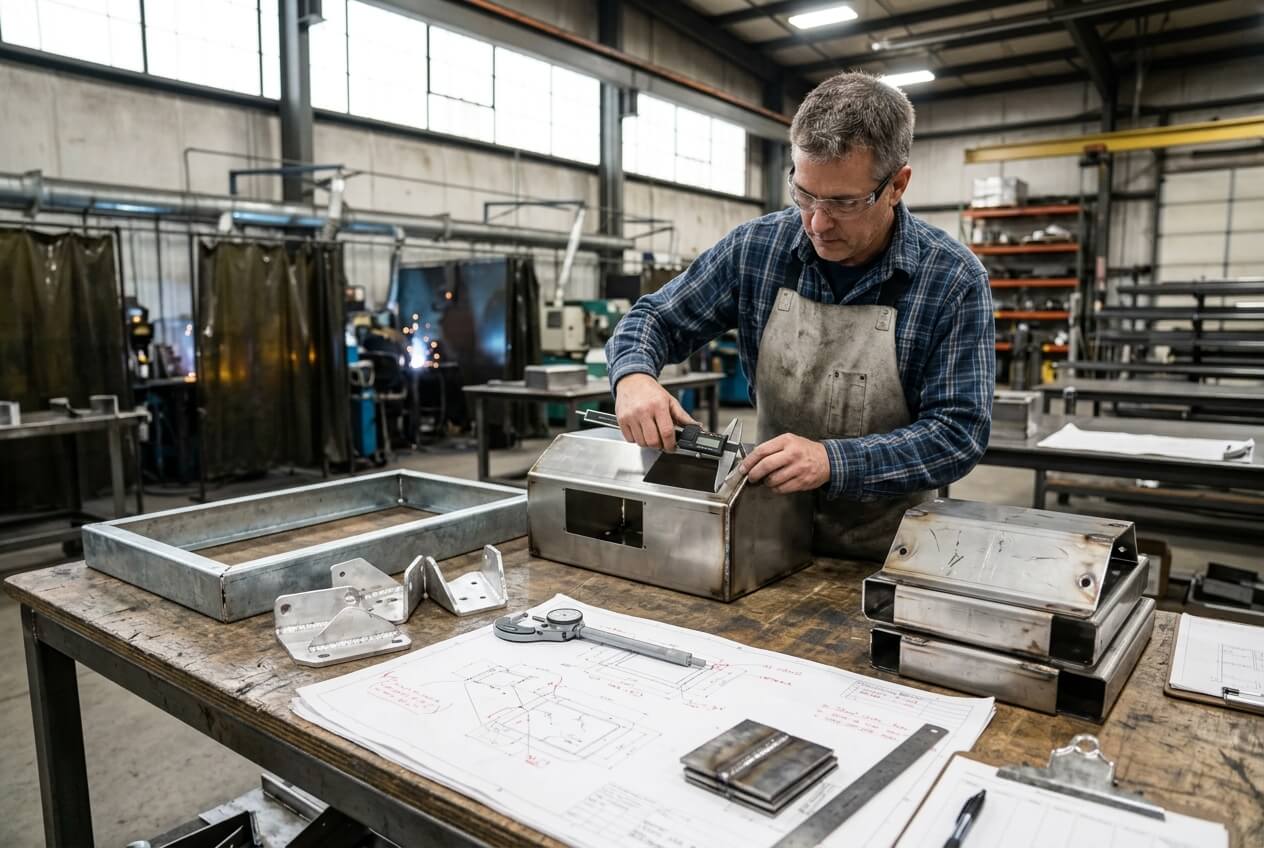
A prototype can pass for the wrong reason. One skilled welder may adjust fit by hand, tune heat in real time, and make the sample look excellent. Batch production cannot rely on that much individual correction. If the approval record does not capture weld length, fixture method, acceptable distortion, and final inspection points, the batch may drift away from the sample even when everyone believes they approved the same part.
This risk matters most on TIG welded sheet metal parts where cosmetics and fit interact. A sample enclosure may arrive with perfect door alignment because the operator corrected it before shipping. The production run may not hold that same result if the correction was never documented. The same issue appears on welded brackets and small frames. A prototype can be hand-finessed. A batch needs repeatable setup.
Record the sample in terms production can repeat
The approval notes should capture more than “sample okay.” They should record the weld locations, visible surface requirements, acceptable grinding level, and the dimensions that were measured after welding. If the part mates to another assembly, include the mating part or a photo of it. If the part will be coated, note whether the sample was approved before or after finish. Those details reduce the chance that batch production interprets the sample differently.
Another realistic example is a welded electrical cabinet with a hinge bracket. The prototype fits because the welder corrected the opening by hand. The batch does not fit because the weld sequence is different and the correction step disappears. The issue did not start with the hinge. It started with a prototype record that described appearance but not the method that produced the fit.
Buyers can reduce that risk by asking for drawings, samples, and feedback to be reviewed together. Yishang can help translate prototype comments into manufacturing notes when the part needs the same result at quantity, not just a good one-off appearance.
What to Put in the RFQ Before You Compare TIG Quotes
The safest RFQ does not try to describe everything. It focuses on the points that change process scope, inspection effort, and fit risk. Start with the drawing, then add the details that stop the supplier from guessing. That usually means material grade, thickness, quantity, weld locations, post-weld critical dimensions, finish expectations, and assembly context. If the part has a mating component, include that drawing or a clear photo.
For TIG welded enclosures, brackets, frames, and welded assemblies, the buyer should also state which dimensions are final inspection dimensions. If the supplier must hold a door opening, mounting pattern, or frame diagonal after welding, say so. If cosmetic seams will be visible, define what acceptable looks like. If coating follows, state whether the surface must be clean before coating or only after coating. These clarifications reduce quote noise and make supplier comparisons more useful.
They also help with lead time. A quote that includes fixture development, prototype validation, or extra inspection will usually take longer and cost more. That is not automatically a problem. The problem is finding out after award that the supplier assumed a faster method. Clear RFQs help the buyer compare not just price, but the real manufacturing plan behind the price.
If you want a quote that reflects the real fabrication scope, send Yishang the drawings, material requirements, quantities, tolerances, finish expectations, and any prototype comments before you lock the purchase order. That gives the review team enough context to check weld method, assembly fit, finishing scope, and inspection points against the part you actually need.
Send your drawings, material requirements, quantities, tolerances, and finish expectations before you compare TIG welding quotes. If you also have mating-part details, sample photos, or prototype notes, include those too. Yishang can review the RFQ for weld scope, fit risk, and batch consistency before production starts.
Frequently Asked Questions
What is tungsten inert gas welding in sheet metal fabrication?
It is a precise arc welding process that uses a tungsten electrode and shielding gas. In fabrication, buyers care less about the definition and more about how the process affects seam appearance, distortion, and final fit after welding.
Why do TIG quotes vary so much for the same enclosure drawing?
Suppliers often assume different weld lengths, finish levels, fixture needs, and inspection steps. One quote may include grinding and post-weld checking, while another may only cover basic welding. The drawing alone may not settle those assumptions.
Which dimensions should buyers treat as post-weld critical?
Focus on dimensions that affect assembly, safety, and customer-facing appearance. Common examples include door openings, hinge locations, latch positions, mounting holes, diagonal squareness, and flatness on mating faces.
Can TIG welding control distortion on thin sheet metal parts?
It helps, but it does not remove the risk. TIG gives better heat control than many alternatives, yet thin panels, long seams, and unsupported corners can still move during cooling. The RFQ should state which final dimensions matter after welding.
How should a buyer define cosmetic acceptance for TIG welded parts?
Say whether seams should stay as-welded, be ground flush, be brushed, or be polished. If powder coating follows, note whether appearance must be acceptable before coating, after coating, or at both stages.
What should be included when asking for prototype-to-batch repeatability?
Record weld locations, fixture method, measured post-weld dimensions, finish level, and the exact acceptance stage. Photos help, but they should support measurable notes so the batch can reproduce the approved sample instead of guessing it.