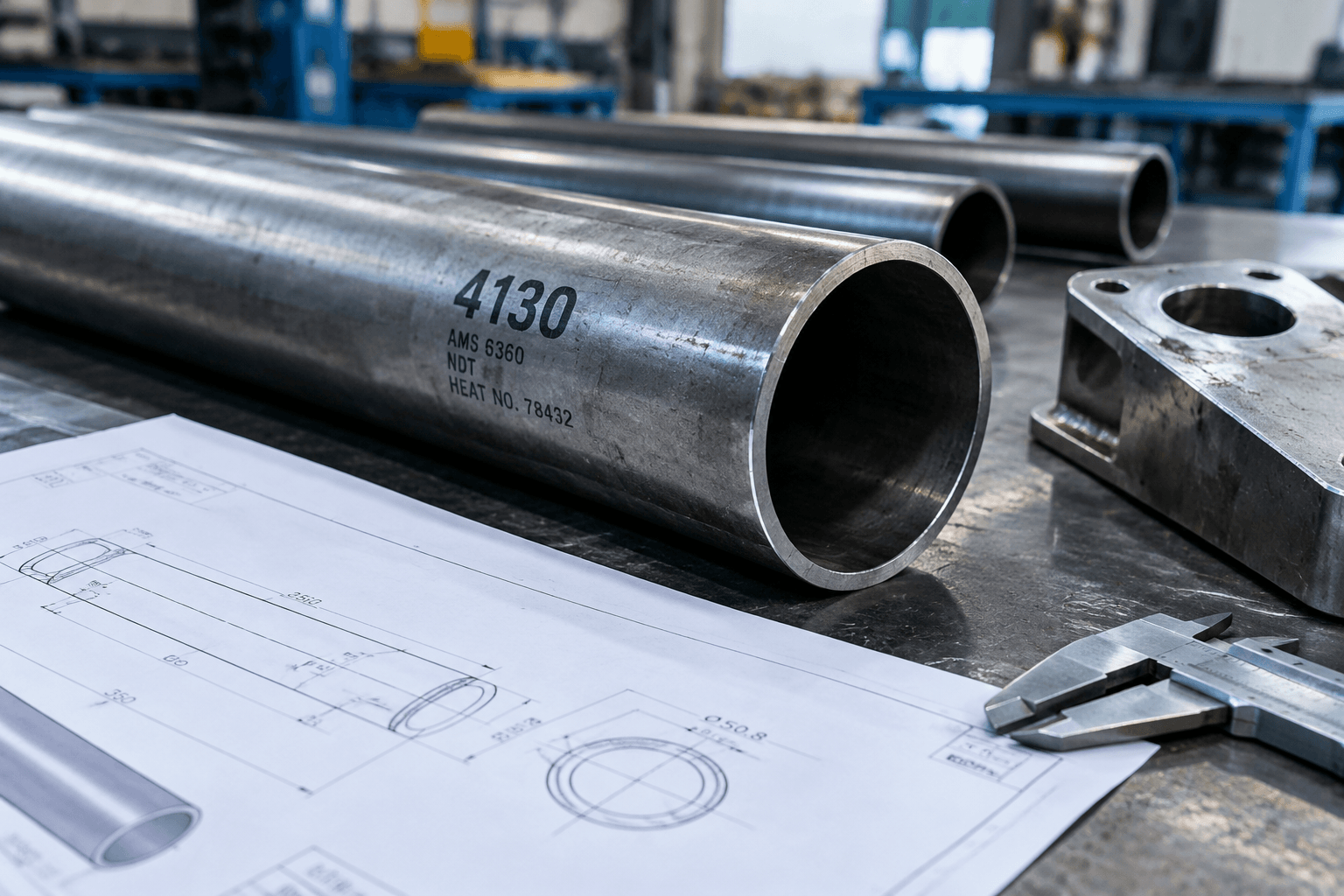
4130 steel is a chromium-molybdenum low-alloy steel used for engineered components in forms such as sheet, plate, tube, bar, and machined stock. In industrial sourcing, “4130 chromoly” is a material description, not a complete manufacturing specification, and it should not be confused with stainless steel.
The practical question is not simply whether a part is made from 4130. The part’s supplied form, material condition, geometry, end use, joining method, finish, and inspection requirements determine whether it should be formed, cut, welded, machined, turned, milled, or produced through a combination of routes.
What 4130 Steel Means in Industrial Purchasing
4130 identifies a low-alloy steel grade associated with chromium and molybdenum as alloying elements. The term “chromoly” is commonly used as shorthand for chromium-molybdenum steel, especially in tube, frame, and transport-related discussions. However, the word alone does not tell a supplier enough to purchase material or release a part for production.
A usable specification should distinguish at least four things:
- Material designation: State the required grade or material description clearly, including any purchasing or drawing designation used by your organization.
- Product form: Identify whether the requirement is sheet, plate, tube, bar, forging, or another supplied form. The same grade name does not make every product form interchangeable.
- Material condition: State the required supplied or processed condition when it affects forming, machining, welding, dimensional stability, or inspection. Do not assume that a generic stock description answers this question.
- Part specification: Define the geometry, dimensions, tolerances, surface requirements, joining details, quantity, and acceptance criteria.
4130 is not stainless steel. A buyer should therefore treat corrosion protection, surface finishing, storage, and packaging as separate decisions rather than assuming that the base material provides stainless behavior. The correct finish depends on the part’s environment, appearance requirements, contact with other components, and specified protection system.
Search results can also create confusion. Queries involving 4130 bicycles, bicycle frames, or consumer reviews may use the same material term, but those pages do not answer an OEM question about a fabricated bracket, welded assembly, machined interface, or production inspection plan. Use bicycle references only to clarify search context; use the engineering drawing and end-use requirements to define an industrial part.
Match Part Geometry to the Manufacturing Route
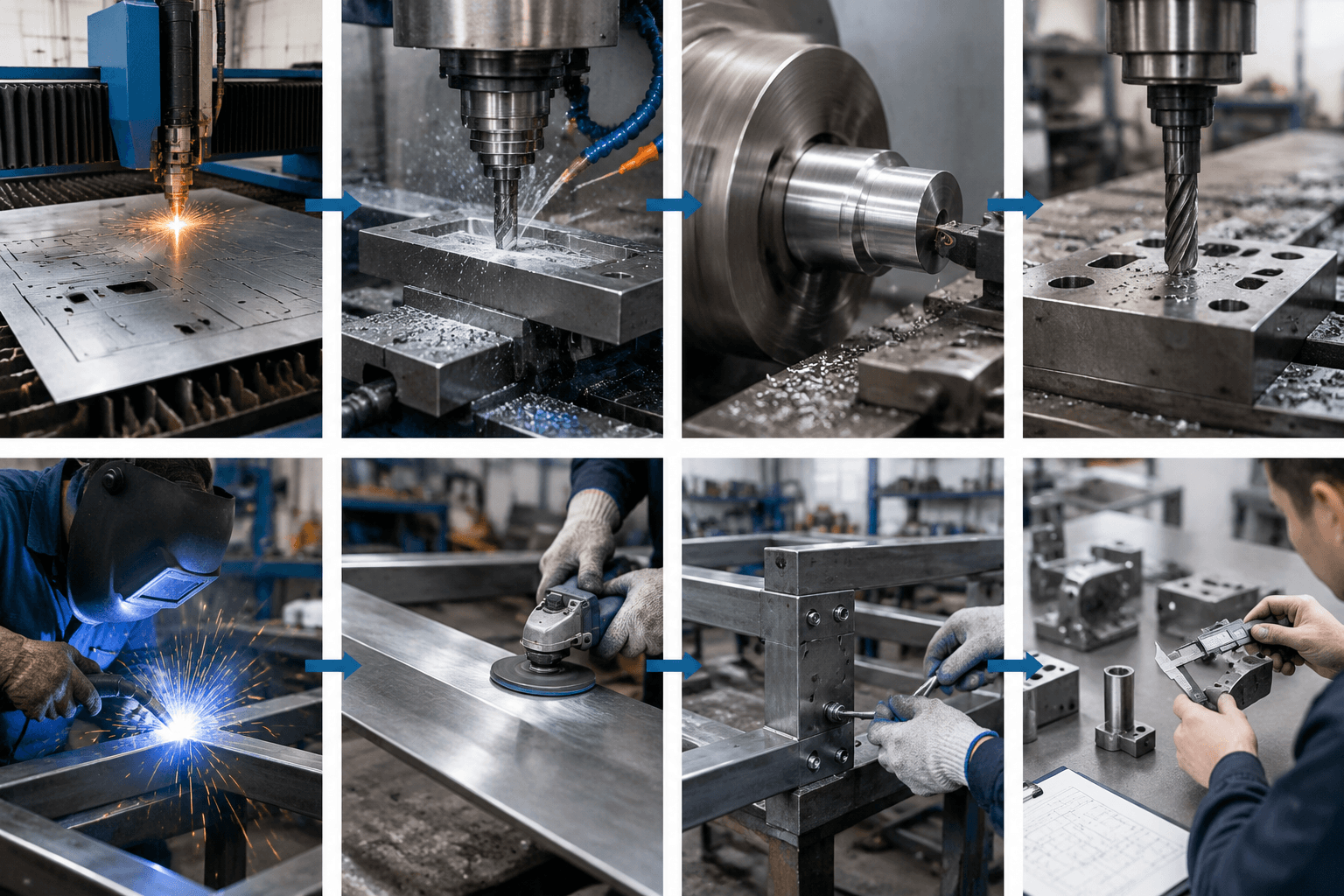
The manufacturing route follows the part’s geometry and supplied stock, not the material name alone. A 4130 component may require one process or several connected operations. Keeping those operations conceptually separate helps prevent incomplete quotations and unrealistic assumptions about what a supplier is being asked to deliver.
| Part feature or requirement | Relevant route | Information the supplier needs |
|---|---|---|
| Flat or formed profile from sheet or plate | Sheet metal fabrication, including cutting, forming, and deburring as specified | Material form and thickness, bend locations, bend-related dimensions, hole details, tolerances, and edge requirements |
| Defined faces, holes, pockets, or interfaces | CNC machining | 3D model or drawing, datums, critical dimensions, tolerance blocks, surface requirements, and inspection points |
| Round stock with axial features | CNC turning | Finished diameters, lengths, threads, shoulders, concentricity-related requirements, and stock or condition information |
| Prismatic features or off-axis details | CNC milling | Feature locations, datum scheme, hole and pocket requirements, tool-access considerations, and critical tolerances |
| Permanent joined components | Welding, followed by any specified finishing or inspection | Joint locations, weld symbols or written requirements, assembly dimensions, distortion-sensitive features, and acceptance criteria |
| Appearance or corrosion-protection requirement | Finishing or coating operation | Required finish, areas to mask, appearance standard, contact surfaces, and protection expectations |
| Multi-part deliverable | Assembly | Component list, hardware, orientation, torque or functional requirements when applicable, and packaging instructions |
| Release and acceptance evidence | Inspection and documentation | Inspection dimensions, sampling or reporting expectations, material records, revision level, and required documentation |
Sheet metal fabrication applies when the part begins as sheet or plate and its main identity comes from cut profiles, holes, bends, or formed features. A sheet metal route is not automatically appropriate for a thick machined interface or a component that begins as round bar or tube.
CNC machining is a broad subtractive manufacturing category. Turning is a machining process focused on rotational work, while milling creates features using a different workpiece and tool relationship. They may be used together, but turning is not sheet metal fabrication, and a machined 4130 part should not be quoted from a sheet metal description alone.
Welding, finishing, assembly, and inspection are additional decisions rather than interchangeable names for fabrication. Welding can affect the completed assembly’s dimensions and appearance. Finishing must be defined for the required surfaces. Assembly must identify what the supplier receives and what the customer expects back. Inspection should focus on the dimensions and functions that control fit, alignment, and use.
For components with defined machined interfaces, the route may need a machining review in addition to a fabrication review. Yishang’s custom CNC machining route page is relevant when the 4130 requirement includes repeatable holes, pockets, turned diameters, or other controlled features.
4130 Part Planning: Material, Process, and Drawing Inputs
A supplier can evaluate a 4130 requirement more reliably when the information is organized around the finished part rather than only the raw material. The following sequence is useful during design review or RFQ preparation.
- Define the material: State 4130 and the required product form. Include the required material condition or purchasing requirement if it matters to forming, welding, machining, or inspection.
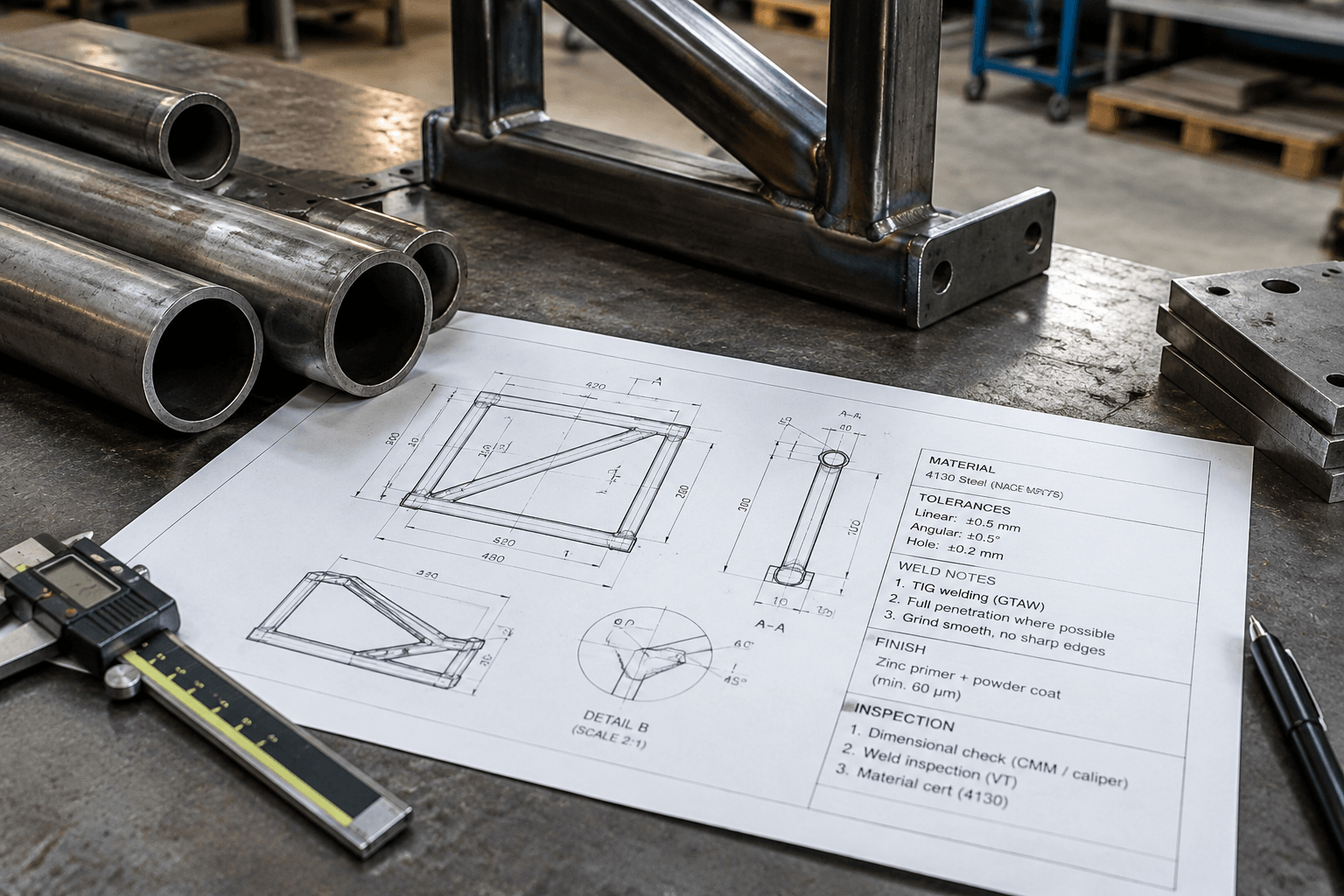
- Define the geometry: Supply the current drawing and, where useful, a 3D file. Mark critical dimensions, datums, hole patterns, bend locations, machined interfaces, and features that control assembly fit.
- Define tolerances: Identify general tolerances and tighter requirements separately. A supplier needs to know which dimensions are function-critical rather than treating every dimension as equally important.
- Define joining: Show weld locations and assembly relationships. State whether the delivered item is a loose component, welded subassembly, or completed assembly.
- Define the finish: Specify the required surface treatment, appearance, corrosion-protection expectation, masking areas, and any surfaces that must remain available for fit or electrical contact.
- Define quantity and revision: State prototype quantity, expected production range if known, drawing revision, and whether the quotation covers one-time samples or repeat batches.
- Define inspection and documents: List required inspection dimensions, report format, material documentation, traceability expectations, packaging, and any customer-specific records.
These details help a supplier provide feasibility feedback instead of a generic grade-based response. The review should explain the proposed process sequence, identify assumptions, flag ambiguous drawing details, and state what must be confirmed before production.
For a drawing-led bracket or formed component, a relevant reference is custom metal brackets built to drawings. The important point is not the product category itself, but the need to review geometry, interfaces, finish, and inspection as one connected part definition.
At this stage, Yishang can review OEM and ODM manufacturing information for custom metal products. Send the drawing or 3D file, required 4130 designation and form, expected quantity, critical tolerances, welding requirements, finish, assembly scope, and inspection criteria so the appropriate production route can be evaluated from the supplied design information.
4130 vs 4140: Choose Against the Part Specification
The common question “Which is better, 4130 or 4140?” cannot be answered as a universal ranking. The choice depends on the design requirement, product form, material condition, geometry, joining plan, machining needs, operating environment, and the specification accepted by the end customer. A different grade may be appropriate for one component and unsuitable for another, even when both are described as alloy steels.
Ask the supplier to compare the grades against the actual part requirements rather than against a general strength claim. Useful questions include:
- Does the proposed material match the drawing and required product form?
- Will the planned forming, machining, turning, milling, or welding sequence change the part’s dimensional or inspection requirements?
- What material records or traceability documents can be supplied for the ordered batch?
- How will prototype revisions be recorded before repeat production?
- Which features will be checked on the first sample and on later production batches?
Prototype-to-production consistency should be discussed explicitly. The approved revision, material description, process sequence, inspection points, and finish requirements should remain identifiable when the order moves from an initial sample to a production batch. If the customer changes a hole location, bend, weld, finish, or tolerance after the prototype, that change should be reflected in the controlled drawing and supplier communication.
For automotive or transportation-related components, the end-use context may increase the importance of assembly fit, documentation, inspection planning, and revision control. It does not automatically determine the material or process. A transportation bracket, a formed enclosure, a machined interface, and a welded frame component may all involve 4130 while requiring different manufacturing conversations. Yishang’s automotive and transportation metal fabrication information can provide relevant context for this type of application review.
Frequently Asked Questions
Is 4130 steel the same as chromoly, and is it stainless steel?
4130 is a chromium-molybdenum low-alloy steel grade, while “chromoly” is a broader informal term for chromium-molybdenum steel. The terms should not be treated as a complete purchasing specification. 4130 is not stainless steel, so finish and corrosion-protection requirements must be defined separately.
Which is better for a part, 4130 or 4140?
Neither is automatically better. The suitable choice depends on the design, product form, material condition, geometry, manufacturing route, end use, and customer specification. Ask for a comparison against the actual drawing and acceptance requirements rather than choosing from grade names alone.
What is 4130 steel commonly used for in industrial products?
It may be specified for engineered components such as tubes, brackets, frames, structural parts, and machined components. The use case does not establish suitability by itself; the supplier still needs the part geometry, form, joining method, finish, and inspection requirements.
What information should be included when requesting a 4130 fabricated or machined part?
Provide the drawing or 3D file, 4130 designation, product form and material condition, dimensions and tolerances, datums, weld details, finish, quantity, revision status, assembly scope, inspection criteria, packaging requirements, and any required material or inspection documents.
A 4130 requirement becomes actionable when the material description is connected to a defined part and a controlled production route. For a technical feasibility review, send the current drawings or 3D files together with the required 4130 form and condition, quantity or expected production range, critical tolerances, welding and finish requirements, assembly details, and inspection criteria. That information allows the appropriate fabrication, machining, joining, finishing, and inspection questions to be addressed before pricing or production commitment.