
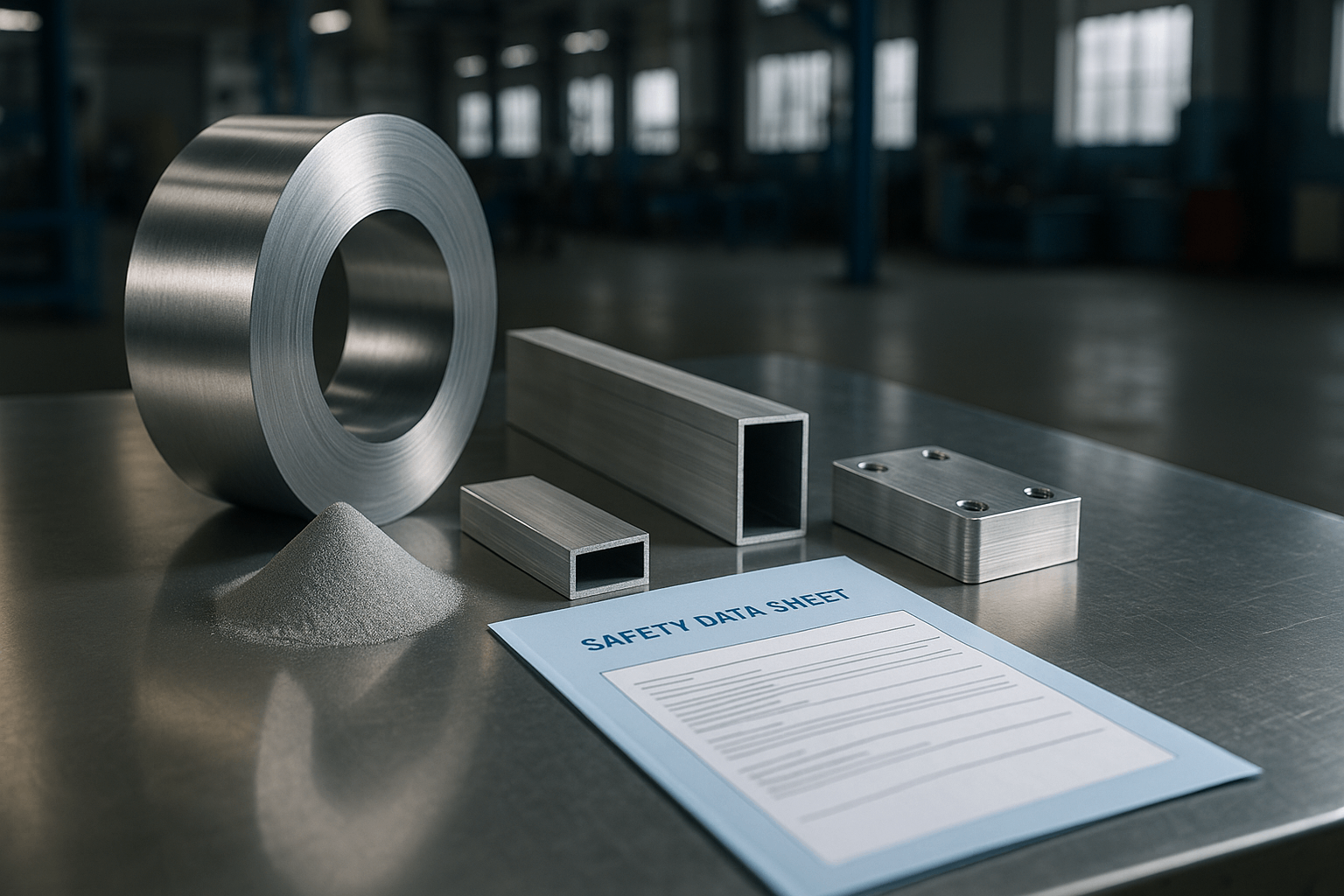
Why Aluminum SDS Matters to Global Buyers
For international B2B buyers sourcing aluminum enclosures, metal junction boxes, or structural sheet metal parts, the Aluminum Safety Data Sheet (SDS) is more than just a regulatory document—it’s a critical procurement and compliance asset. It provides direct visibility into a supplier’s material transparency, regulatory alignment, and safety accountability.
In highly regulated industries like telecommunications, EV charging infrastructure, and energy storage, aluminum housings are frequently exposed to heat, moisture, vibration, and corrosive chemicals. Selecting the wrong alloy—or failing to verify coating and treatment stability—can result in equipment failure, compliance violations, or delayed certification.
That’s why procurement officers and compliance engineers often include SDS review in RFQs, first-article inspections, and third-party audits. Distributors and OEM buyers rely on SDS documentation to:
- Match aluminum grades with technical specifications (e.g., 5052-H32, 6061-T6)
- Verify compliance with RoHS, REACH, Prop 65, and country-specific laws
- Assess durability for specific installation scenarios (IP rating, heat, corrosion)
➡️ This guide explores how SDS data impacts aluminum sourcing decisions—and why global buyers must treat it as a core due diligence tool.
The Functional Role of SDS in B2B Supply Chains
SDS as a Strategic Qualification Tool
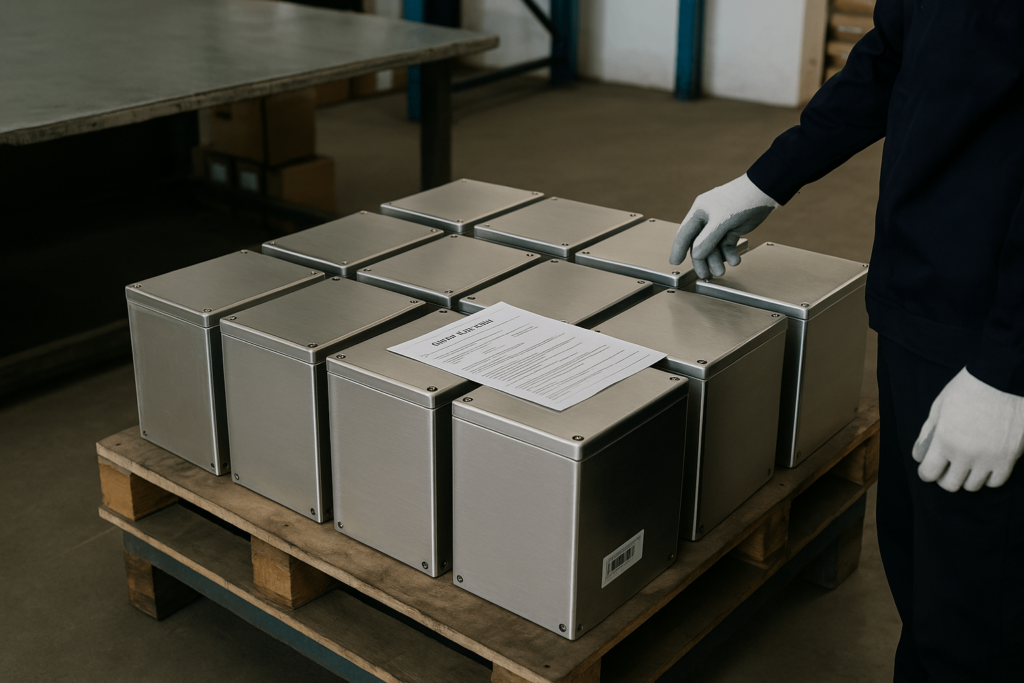
For procurement professionals sourcing NEMA-rated enclosures, solar battery boxes, or powder-coated control cabinets, SDS documents are more than formality—they’re part of the vendor screening matrix.
A complete, GHS-compliant SDS from YISHANG signals that:
- The aluminum alloy meets durability and conductivity benchmarks
- Hazardous ingredients are within safe, regulated limits
- Coatings or finishes are suitable for the target environment (e.g., outdoor IP66 or IP67 usage)
Providing an SDS early streamlines global shipments and supports audit documentation, especially for regions with strict import controls like the EU, Middle East, and North America.
SDS vs. MSDS: Why Terminology Still Matters
Legacy terms like “MSDS” are still in circulation, but global buyers should only accept SDS formatted under the GHS (Globally Harmonized System) framework. A compliant SDS includes:
- 16 harmonized sections from identification to disposal
- Pictograms, signal words, and hazard classifications
- Localized formatting per target market (e.g., OSHA HazCom, EU CLP)
📌 For international trade, GHS-aligned SDSs help avoid customs clearance issues and internal compliance gaps.
Identifying Aluminum Risk Factors by Use and Form
Powder, Solid, or Fume—Each Carries Its Own Hazards
Aluminum’s safety risks vary greatly depending on its form. While solid aluminum panels or extrusions have minimal reactivity, powdered aluminum—used in thermal spraying or 3D printing—can be combustible and inhalation-sensitive.
- Machining dust is a fire and respiratory hazard in CNC fabrication lines
- Welding fumes may release oxides dangerous to human health
- Fine aluminum powders may be regulated as hazardous during air or sea freight
Buyers should assess SDSs in relation to processing environments, not just the final part.
Where the Hazards Manifest in Real-World Use
Risk increases in certain installation contexts:
- Outdoor exposure without coating leads to accelerated corrosion
- High-heat zones (e.g., transformers) may stress alloy stability
- Chemical-prone environments (labs, refineries) require compatibility checks
Sections like “Handling and Storage,” “Exposure Controls,” and “Reactivity” are key for determining if an aluminum product is truly fit-for-purpose.
🛠 Never assume aluminum is universally safe—match SDS specs with real-world application.
Analyzing SDS Section-by-Section for Aluminum Products
Section 1 – Identification
Details the aluminum form (sheet, billet, powder), alloy grade (e.g., 6061-T6), and manufacturer info. Essential for verifying supply chain traceability.
Section 2 – Hazard Identification
Highlights health and fire risks, especially for dust or powder forms. Flags inhalation sensitivity and explosion potential.
Section 3 – Composition and Ingredients
Breaks down alloy elements—Si, Fe, Cu, Mn, Mg—that affect weldability, conductivity, and corrosion resistance. Crucial for spec-matching to ASTM or EN norms.
Section 4 – First Aid Measures
Important during fabrication or warehouse handling. Also indicates risk thresholds during shipping or field installation.
Section 7 – Handling and Storage
Provides best practices for warehouse storage (dry, well-ventilated, away from oxidizers) and PPE recommendations—vital for powder storage and panel stacking.
Section 9 – Physical and Chemical Properties
Covers melting point, conductivity, flammability, and physical state—relevant for applications involving heat, current, or outdoor use.
Section 10 – Stability and Reactivity
Outlines incompatible materials (acids, halogens) and environmental limits. Helps buyers preempt failures in corrosive or unstable settings.
✅ Well-structured SDS documents from YISHANG demonstrate mature upstream QA/QC practices.
FAQs on Aluminum SDS for Procurement Teams
1. Do all aluminum grades need individual SDS?
Yes. Each alloy has a distinct chemical profile—5052 vs. 6061 vs. 7075. Always request grade-specific SDSs.
2. Is SDS still needed for fully fabricated aluminum products?
Yes. Even painted or welded parts may release compounds. Customs, logistics, or auditors may request SDSs regardless of form.
3. Can aluminum powder ship without restriction?
No. Fine powders may be classified as flammable solids or hazardous materials. Always check Section 14 for transportation compliance.
4. Should SDSs be localized?
Absolutely. SDSs must meet language and formatting rules of the destination country. Examples: EU CLP format, US OSHA HazCom.
5. Is MSDS format still accepted?
No. Only GHS-compliant SDS formats are recognized for international trade.
✅ YISHANG provides localized, GHS-ready SDSs tailored to your shipment’s end market.
How SDS Data Affects B2B Procurement Strategy
SDS information informs not just compliance, but commercial qualification and technical feasibility:
- Telecom enclosures must verify grounding and conductivity values
- EV components require coating stability and fire resistance
- Factory automation housings must endure vibration and humidity cycles
Procurement teams use SDSs to:
- Confirm alloy suitability before PO issuance
- Align packaging and labeling with transport regulations
- Support documentation in RFQs, audits, and certifications
🧾 Make SDS review a fixed step in your technical spec validation process.
Conclusion: Why SDS Is a Must-Have in Your Aluminum Procurement Checklist
An SDS is not just paperwork—it’s a strategic safeguard. It ensures that your aluminum products:
- Comply with safety and material standards
- Suit the environmental and installation conditions
- Are eligible for global market entry and certification
Whether you’re sourcing powder-coated enclosures, IP-rated housings, or laser-cut panels, an accurate SDS from YISHANG gives you confidence in material quality and regulatory clarity.