
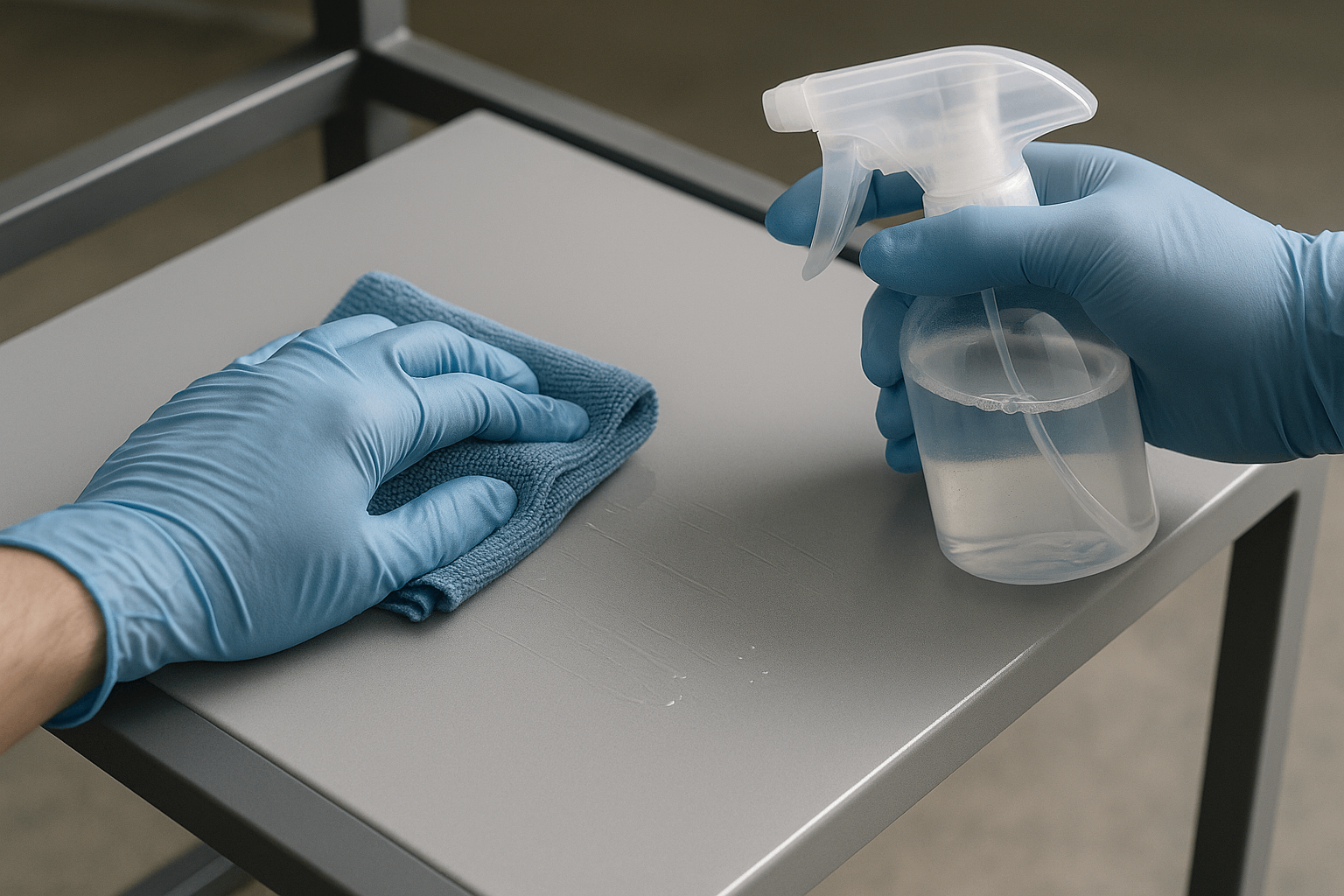
Powder coated metal is widely used in industrial equipment, shelving, frames, enclosures, automotive accessories, architectural components, and commercial fixtures. For overseas wholesale buyers and OEM procurement teams, proper cleaning and maintenance are more than appearance matters—they directly influence coating longevity, lifecycle cost, warranty performance, and customer satisfaction. A surface that cleans easily and retains its finish over time is often a strong indicator of stable pretreatment quality, consistent curing, and appropriate coating formulation.
This guide provides a comprehensive, engineering‑oriented explanation of how to clean powder coated metal correctly, why certain methods work, how different environments affect maintenance planning, and how these insights help buyers evaluate supplier capability. All recommendations here reflect real manufacturing and field usage scenarios commonly faced by global OEMs and bulk buyers.
Quick Answer — How to Clean Powder Coated Metal
To clean powder coated metal effectively without damaging the finish:
Use a soft microfiber cloth or non-abrasive sponge to prevent scratches.
Prepare warm water with pH-neutral detergent, suitable for industrial powder coated surfaces.
Wipe gently using overlapping strokes, avoiding aggressive scrubbing.
Rinse thoroughly with clean water to remove all detergent residue.
Dry completely with a soft cloth to prevent water spots.
Do not use bleach, acidic cleaners, strong solvents, abrasive pads, or high-alkaline chemicals.
This simple method works for most surfaces. For heavy contamination, industrial equipment, or oily residues, additional guidance in later sections will help you refine the process.
Why Cleaning Matters for Procurement and Lifecycle Cost
Cleaning as a Practical Indicator of Coating Quality
For overseas OEM buyers and industrial maintenance teams, a powder coated surface that cleans easily indicates proper pretreatment, correct resin selection, and consistent film thickness.Cleaning performance serves as an early, low-cost indicator of coating quality, helping identify potential issues before visible degradation occurs.Cleaning behavior provides early signals.
If dust adheres strongly, stains penetrate quickly, or oil residues cannot be removed without aggressive cleaners, it may reflect weak pretreatment, insufficient curing, or incorrect resin selection. These issues often show up long before visible corrosion appears. This makes cleaning behavior a reliable, low‑cost method for procurement teams to evaluate suppliers without waiting for long‑term durability results.
Cleaning and Warranty‑Related Risks
For overseas wholesale buyers, returns and complaints related to coating failure can be costly. Customers frequently associate fading, chalking, and rust with improper cleaning—yet the real cause is often environmental exposure combined with inadequate coating performance.
A correct cleaning program reduces perceived defects, prevents premature aging, and minimizes friction between OEM buyers and their downstream customers. Understanding correct cleaning practices also helps buyers communicate realistic expectations to end users and strengthens post‑sale support.
Understanding Powder Coating Behavior Before Cleaning
How Powder Coatings React to Environment
Powder coatings are thermoset polymer films created through crosslinking. While durable, their performance depends heavily on exposure conditions:
UV exposure affects gloss retention and may cause fading or chalking over time.
Salt and moisture accelerate corrosion, particularly at welds and edges.
Industrial contaminants such as oils, metal dust, and fumes increase cleaning frequency and maintenance needs.
Temperature fluctuations influence coating performance and cleaning behavior.
Understanding this behavior helps buyers predict maintenance frequency and evaluate whether the coating system aligns with its intended application.
Cleaning Based on Soil Type
Different contaminants require different cleaning approaches:
Light soil (routine cleaning): airborne dust, dirt, pollen — clean with microfiber cloth and mild detergent.
Medium soil (moderate cleaning): fingerprints, pollution, road film — use pH-neutral detergent with gentle wiping.
Heavy soil (industrial cleaning): oil mist, grease, metal dust — apply industrial powder coat cleaner, 1–3 min dwell, gently agitate with soft bristle brush.
Surface degradation: chalking or powdering from UV exposure — evaluate coating integrity before cleaning.
B2B buyers should consider real use environments—industrial workshops, coastal regions, warehouses, agricultural sites—and choose cleaning workflows that match expected contamination.
Pre‑Cleaning Assessment for More Effective Maintenance
Checking the Surface Condition
Pre-cleaning assessment: inspect the surface to avoid damage and detect potential coating issues.
Common conditions include:
- Chalking: UV-related white powder, normal in outdoor conditions.
- Staining: mineral deposits, oil mist, or pollution residues.
- Edge rust or bubbling: indicates pretreatment or coating defects.
- Peeling or flaking: signals adhesion failure.
If contaminants lift easily with mild detergent, the coating is performing as expected. If aggressive cleaning is required for basic dirt, procurement teams should investigate whether the coating formulation or pretreatment process needs revision.
Preparing the Surface for Cleaning
Effective preparation prevents accidental damage:
Rinse the surface with clean water to remove loose debris.
Use a soft brush to clean corners and crevices.
Do not clean hot surfaces to avoid water spots.
Perform cleaning in shaded areas for consistent results.
These steps ensure cleaning agents work uniformly and reduce streaking.
The Correct Cleaning Process for Powder Coated Metal
Light to moderate contamination: clean with warm water and pH-neutral detergent using a soft microfiber cloth. Apply gently, rinse thoroughly, and dry completely.
Heavy contamination: use an industrial powder coat cleaner, allow 1–3 min dwell, agitate gently with a soft-bristle brush, rinse thoroughly to avoid residue.
Powder Coat Cleaner — When and How to Use It
When Powder Coat Cleaners Are Necessary
Mild soap cleans most surfaces, but specialized cleaners are needed when:
- Surfaces are exposed to oils, greases, lubricants, and metal particulates.
- Equipment accumulates carbon dust, soot, or industrial fallout.
- Standard detergents leave a film or fail to lift contaminants.
An industrial powder coat cleaner is formulated to break down manufacturing residues without damaging the coating.
Choosing a Safe Powder Coat Cleaner
When selecting a cleaner:
- Ensure it is labeled safe for powder coated surfaces.
- Prefer neutral or slightly alkaline solutions.
- Avoid strong solvents (MEK, toluene, acetone).
- Review MSDS for compatibility with polyester and epoxy‑polyester coatings.
These criteria help buyers avoid long‑term coating degradation.
Using Powder Coat Cleaners Correctly
Apply the cleaner, allow it to dwell briefly, agitate gently, rinse thoroughly, and dry. Avoid letting chemicals dry on the surface, as residue can cause streaking or dull the finish.
Common Mistakes That Damage Powder Coated Metal
Abrasive Cleaning Tools
Avoid:
- Steel wool
- Wire brushes
- Scouring pads
These cause micro‑scratches, making the surface attract more dirt and reducing gloss.
Strong Solvents and High‑Alkaline Agents
Do not use:
- Bleach
- Oven cleaner
- Acidic cleaners
- MEK/acetone
These chemicals may discolor or weaken the coating, accelerating aging.
Incorrect Use of Pressure Washers
Pressure washing is acceptable with caution:
- Stay below 2000 PSI
- Maintain 30–50 cm distance
- Avoid direct spray at panel edges
High pressure can undermine coating integrity.
Maintenance Frequency Based on Environment
Different locations require different cleaning schedules:
| Environment Type | Examples | Recommended Cleaning Frequency |
|---|---|---|
| Low Exposure | Indoor warehousing, retail fixtures | Every 6–12 months |
| Moderate Exposure | Urban outdoor use, logistics facilities | Every 3–6 months |
| High Exposure | Coastal areas, industrial workshops | Every 1–3 months |
| Severe Exposure | Chemical plants, marine installations | Monthly or as needed |
This table helps procurement teams set realistic maintenance expectations based on real‑world conditions.
Application‑Specific Cleaning Considerations
Outdoor Architectural Metal
Railings, fences, outdoor furniture, and metal structures face UV, humidity, and pollution. Use mild cleaning agents and maintain consistent schedules. For coastal installations, salt removal is critical.
Industrial and Warehouse Equipment
Equipment racks, vending machine shells, switchgear enclosures, machine guards, and metal cabinets accumulate oils and dust. Regular degreasing with safe cleaners extends lifespan and maintains appearance for branding‑sensitive sectors.
Automotive and Transportation Components
Frames, carriers, brackets, and exterior accessories experience road film and environmental exposure. Routine cleaning preserves both aesthetics and protective performance.
FAQ for Professional Buyers and Maintenance Teams
Can I use vinegar to clean powder coated metal?
Not recommended. Vinegar is acidic and may dull or damage the coating.
Is bleach safe for powder coated finishes?
No. Bleach can degrade the resin layer and cause discoloration.
Can I pressure wash powder coated surfaces?
Yes, with controlled pressure and distance. Avoid aggressive spraying near edges.
Do I need a specialized cleaner for industrial equipment?
Yes, if oil, grease, or heavy industrial dirt is present.
How often should powder coated railings be cleaned?
Every 3–6 months, or more frequently in harsh environments.
Correct cleaning and maintenance protect powder coated surfaces, reduce lifecycle cost, and provide valuable insights into coating quality from a procurement standpoint. With proper workflows—ranging from mild cleaning for routine use to specialized powder coat cleaners for industrial settings—buyers can maintain product longevity and performance across diverse applications.
For custom powder coated metal products designed for long‑term performance, contact YISHANG for engineering support and bulk manufacturing solutions.