
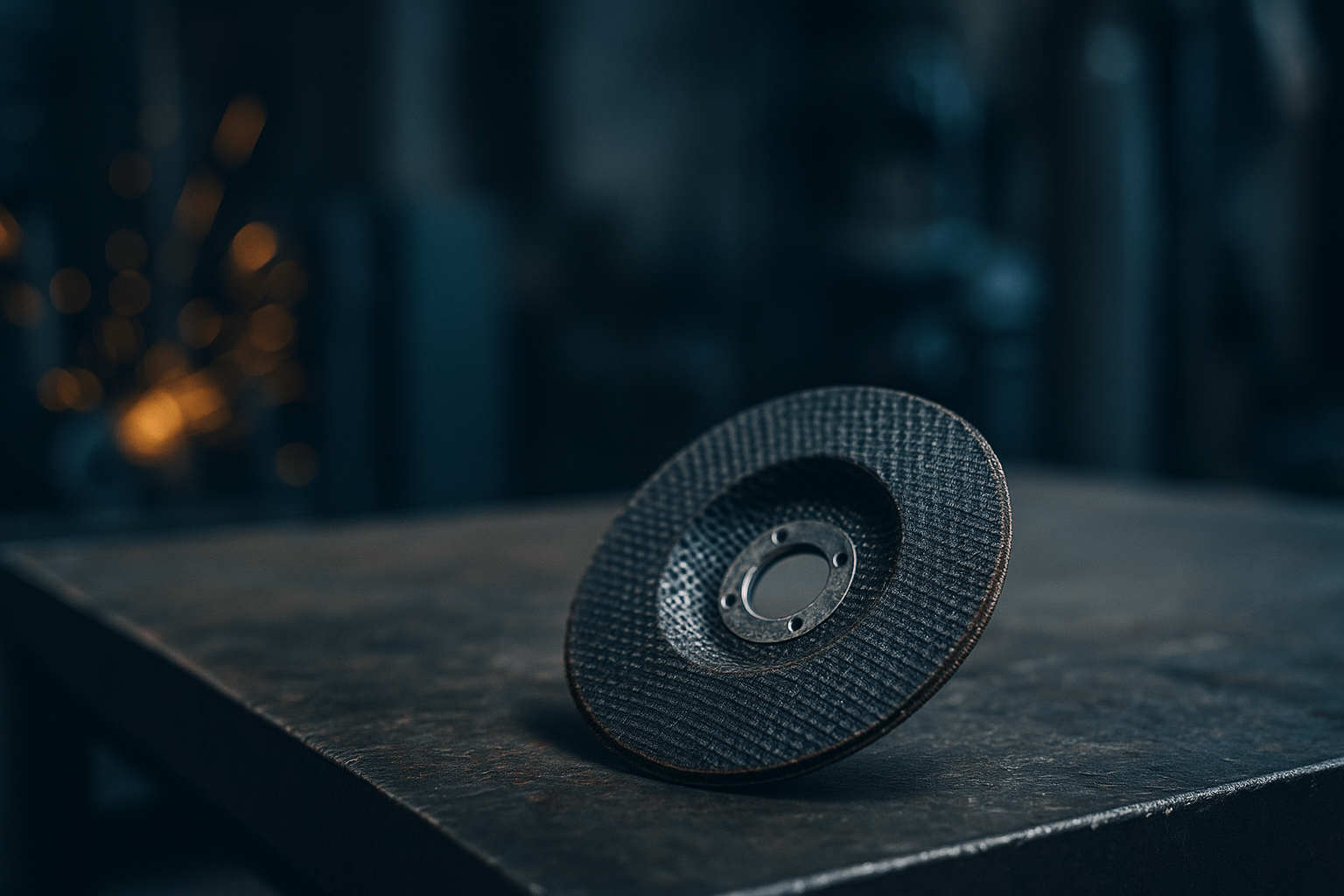
Grinding discs may look simple, but for wholesale importers, distributors, and industrial procurement teams, understanding what grinding discs are made of is directly linked to purchasing risk, long‑term cost, and customer satisfaction. In B2B supply chains, the real question is not how a disc performs in a single test, but how it behaves across hundreds or thousands of pieces over multiple shipments.
This article is written from a practical, buyer‑oriented angle. It explains the internal materials and structure of industrial grinding wheels, connects those details to procurement decisions, and uses terms and formats that match how professional buyers actually search, compare, and evaluate grinder wheel types online.
In simple terms, most grinding discs are engineered composites made from abrasive grains, a bonding system (usually a resin), internal reinforcement such as fiberglass mesh, and controlled voids or pores that provide chip space and help with cooling. Different grinder wheel types use different combinations and proportions of these elements, which is why two discs with similar size and grit can behave very differently in real use.
Why Material Composition Matters to Wholesale Buyers
For industrial buyers, grinding discs are not just low‑value consumables. They have a direct influence on:
- grinding efficiency and labor productivity,
- scrap and rework rates,
- heat damage and surface quality,
- safety margin at high RPM,
- warranty claims and brand reputation.
In many fabrication shops, abrasive cost is only a small percentage of total production cost, but poor disc quality can increase labor time per part, cause overheating, or lead to customer complaints. When you purchase a container or pallet of grinding discs, you are effectively committing to a certain performance profile for your downstream users.
Most recurring field problems—rapid disc wear, glazing, burning, vibration, cracking—are not random. They are typically caused by specific weaknesses in abrasive grain quality, resin bond chemistry, or fiberglass reinforcement. Knowing the basics of grinding wheel material composition helps buyers ask better questions and filter unreliable suppliers early.
From a search and research perspective, buyers looking for reliable suppliers often search phrases like what are grinding discs made of, industrial grinding discs for steel, or grinding wheel specs for stainless. This article is aligned with that intent: not marketing slogans, but technical clarity that supports real purchasing decisions.
Grinding Discs Operate Under Extreme Stress—Materials Must Match These Conditions
To understand why grinding wheels are made of specific materials, it helps to visualize the stresses they face in operation. At 6,000–12,000 RPM on an angle grinder, a disc is exposed to:
- strong centrifugal forces pulling the body outward,
- sharp thermal spikes from friction at the contact zone,
- repeated impact loads as grains engage and disengage with the workpiece,
- side‑pressure when operators grind at angles or on edges,
- and dust and debris buildup that can clog the cutting surface.
No single material can provide all the necessary properties: hardness for cutting, toughness to resist impact, flexibility to absorb shock, heat resistance, and tensile strength under centrifugal load. That is why grinding discs are designed as composite systems rather than solid metal or ceramic plates.
For a buyer, this means that when comparing grinder wheel types, you are comparing different solutions to the same engineering problem. Some designs focus on aggressive cutting, others on cool grinding or long life. A supplier that can clearly explain how their grain, bond, and reinforcement work together is usually more reliable than one that only provides diameter and grit size.
The Three‑Layer Architecture Behind High‑Quality Industrial Grinding Discs
Most bonded abrasive discs share a similar internal architecture. Understanding these three layers helps procurement teams interpret grinding wheel specs and evaluate whether a supplier has genuine technical capability or is reselling generic products.
Abrasive Grains: The Cutting Component
Abrasive grains are the actual cutting edges. They break into smaller fragments during grinding, constantly renewing sharp points. The most common abrasive types in industrial grinding discs include:
- Aluminum Oxide (A) – the standard choice for steel, with a good balance of hardness, toughness, and cost.
- Silicon Carbide (C) – extremely sharp and hard but more brittle; used for non‑ferrous metals, cast iron, stone, and concrete.
- Zirconia Alumina (ZA) – very tough and durable; designed for heavy weld removal and high‑pressure grinding.
- Ceramic Alumina – engineered micro‑fracturing grains that maintain sharpness longer on stainless steel and hard alloys.
- Diamond and CBN – used in special grinding material applications, such as carbide tools or very hard surfaces.
For bulk buyers, abrasive grain choice is not just a technical detail. It directly influences:
- disc life per job (how many welds or meters can one disc handle),
- the shape of your product range (economy vs heavy‑duty vs stainless lines),
- performance consistency from batch to batch.
When comparing offers from different factories, checking whether they specify the abrasive composition—and whether they can provide test data on cutting performance—is a good indicator of their professionalism.
Resin Bond System: The Mechanical Control Layer
The resin bond is what holds abrasive grains together and controls how they behave under heat and load. Most metal‑grinding discs use phenolic resin as the main bond system. It must strike a balance between being strong enough to hold grains in place and weak enough to release them when dull.
A well‑designed bond system:
- holds grains securely during high‑load grinding,
- sheds worn grains to expose fresh cutting edges,
- resists softening or cracking at elevated temperatures,
- maintains even hardness across the disc surface.
If the bond is too soft, the disc will feel very aggressive at first but wear out quickly. If it is too hard, grains will stay embedded after they are dull, causing glazing and overheating. For procurement teams, asking how a supplier controls resin mixing, pressing pressure, and curing temperature is more than a technical curiosity—it is a way to predict batch stability.
Fiberglass Reinforcement: The Safety Backbone
Fiberglass mesh is the structural skeleton of a grinding disc. It is embedded inside the resin and abrasive mixture to provide tensile strength and prevent burst failure at high RPM.
Good reinforcement design:
- allows the disc to withstand its rated maximum speed,
- keeps the disc flat and dimensionally stable,
- reduces the risk of cracking when operators apply side pressure,
- ensures compliance with EN12413, ANSI B7.1, and other safety standards.
Lower‑grade products may use thinner or fewer fiberglass layers to reduce cost. For a wholesaler, this can translate into higher rejection rates or, worse, safety incidents. When selecting OEM or private‑label grinding discs, it is reasonable to ask for burst‑test data, fiberglass specifications, and documentation of safety compliance.
Material Trade‑Offs and What They Mean for Procurement
Each combination of grain, bond, and reinforcement represents a different balance of performance factors. There is no single “best” grinding disc—only discs that are better or worse suited to specific applications.
Some of the key trade‑offs that buyers should be aware of include:
- Cutting aggressiveness vs. lifespan – very sharp, fast‑cutting discs may wear faster; longer‑lasting discs sometimes feel slower.
- Bond hardness vs. overheating risk – hard bonds improve life but can cause glazing and heat buildup if mismatched to the material.
- Reinforcement stiffness vs. operator comfort – more rigid discs feel stable but can be less forgiving in difficult grinding positions.
- Cost vs. structural uniformity – very low‑priced discs may use inconsistent materials, leading to performance variation within the same shipment.
For overseas buyers, understanding these trade‑offs is useful when building a product range. You can define different SKUs for general fabrication, heavy‑duty grinding, stainless steel work, or stone and concrete, and then align each SKU to a specific material design. This structure makes your catalog easier to position and improves conversion when customers search for targeted phrases like grinder wheel types for weld removal or grinding wheel material for stainless steel.
How Material Composition Influences Real‑World Performance
End users rarely talk about grain microstructure or bond strength. They talk about how a disc “feels” and how long it lasts. Material composition is what turns those impressions into measurable performance.
Cutting Behavior and Operational Efficiency
A disc made with consistent, well‑matched grain and bond will cut predictably from the first piece to the last. It provides steady removal rates, so operators can develop a stable working rhythm. For large shops, this translates into more parts processed per shift and better predictability in labor planning.
On the other hand, discs with poor grain quality or mismatched bonds may start sharp but slow down quickly or become grabby. Operators compensate by increasing pressure, which accelerates wear and increases fatigue. Procurement teams often hear this feedback as “these discs are not as strong as the last batch” or “we need more force to get the same result”—clear signs that the internal material system is not well tuned.
Heat Behavior and Surface Finish
Heat generation is another area where material design plays a major role. If grains do not fracture properly or the bond holds them for too long, the disc stops cutting and starts rubbing. This turning of cutting action into friction is what causes burn marks, blue coloring on steel, and sometimes structural changes in heat‑treated parts.
Discs designed with appropriate abrasive composition, bond hardness, and structure open‑ness tend to run cooler. They remove material by cutting, not rubbing, which keeps temperatures lower and produces cleaner surfaces. For buyers serving industries such as stainless steel fabrication or coating and painting, this behavior is critical to reduce rework and maintain quality.
Vibration Behavior and Structural Safety
Operators can quickly sense whether a grinding disc runs smoothly. Excessive vibration is not only uncomfortable; it can indicate density variations, poor reinforcement integration, or imbalanced manufacturing.
High vibration increases fatigue, makes it harder to control the tool, and can shorten disc life by introducing local stress concentrations. From a procurement perspective, if vibration complaints suddenly increase from a particular shipment, it can signal a change in materials or process at the factory. Consistent reinforcement design and balanced production are essential for stable performance.
Failure Modes Linked to Material Quality
Recognizing typical failure modes helps procurement teams ask focused questions and avoid suppliers with weak process control.
Premature Wear
If discs wear much faster than expected, especially under normal pressure, the likely causes include:
- abrasive grains with low toughness or poor microstructure,
- a bond system that is too soft for the application,
- or inconsistent grain distribution.
Premature wear increases consumption per job and can erase any savings from lower purchase prices.
Overheating and Glazing
When discs generate excessive heat, leave burn marks, or become shiny and smooth on the working face, it usually points to:
- bonds that are too hard for the workpiece material,
- grain types not suited to the hardness of the workpiece,
- or a structure that does not allow enough chip space.
These issues reduce grinding efficiency and increase rework, especially in stainless or coated parts.
Cracking or Bursting
Cracking or bursting is the most serious failure mode. While rare in properly designed discs, risks increase when reinforcement is reduced or curing is not well controlled. Warning signs include:
- discs that break under moderate side pressure,
- visible cracks around the bore,
- or inconsistent thickness and hardness.
For safety and liability reasons, buyers should only source from manufacturers that can demonstrate compliance with relevant safety standards and provide documentation of burst‑test performance.
A Practical Selection Framework for Procurement Teams
Instead of trying to memorize every technical code, procurement teams can apply a simple, three‑step framework when selecting grinding discs or building a product line.
- Define the main workpiece materials.
Are your customers working mostly with mild steel, stainless steel, cast iron, hardened alloys, or non‑ferrous materials? Different grinding material combinations suit each group. - Clarify the grinding task.
Is the primary need heavy weld removal, edge chamfering, surface preparation, or fine finishing? Cutting discs and bonded abrasive wheels should be matched to real‑world usage, not just general labels. - Assess heat and surface sensitivity.
For stainless steel or thin materials, cooler‑cutting designs are essential. For rough structural steel work, aggressiveness and life may be more important.
Using this framework, buyers can decide which combinations of grain type, bond hardness, and reinforcement level should go into economy, general‑purpose, and premium SKUs. It also makes it easier to answer customer questions and to optimize search visibility around long‑tail phrases like grinding wheel specs for stainless or heavy‑duty grinding discs for weld removal.
Reading Grinding Wheel Specs as a Buyer
Grinding wheel markings may look complex at first, but they contain valuable information for buyers comparing offers. A typical specification might include:
- abrasive type (A, C, ZA, etc.),
- grit size (coarse for fast removal, finer for smoother finish),
- grade or hardness, often shown as a letter,
- bond type, typically resinoid for angle‑grinder discs,
- structure, reflecting grain spacing,
- maximum RPM, linked to reinforcement and safety,
- standard codes, such as EN12413.
Understanding these codes allows procurement teams to verify that two discs being compared are truly equivalent. It also helps in building clear online product listings, so that when users search for what are grinding wheels made of or industrial grinding discs for metal, your catalog information is aligned with their expectations.
Manufacturing Consistency Is as Important as Raw Materials
Even when two factories use similar raw materials, their grinding discs can perform very differently. The difference lies in process control and production consistency.
Critical factors include:
- accurate weighing and mixing of abrasive and resin,
- controlled pressing pressure and temperature,
- proper curing cycles,
- careful integration of fiberglass mesh,
- and batch‑level quality checks and traceability.
For overseas buyers, this is where audit reports, sample testing, and long‑term cooperation records are valuable. A factory that documents its processes and is open about test results is usually a more reliable partner than one that only focuses on price.
Safety and Certification Signals Buyers Should Look For
When you compare grinding wheel offers, safety and compliance details are as important as the material description. Professional‑grade grinding discs in many markets are expected to comply with standards such as EN 12413 for bonded abrasives, and reputable manufacturers may also participate in independent safety initiatives like oSa or similar schemes. These frameworks focus on burst‑speed testing, side‑load testing, labelling rules, and traceability.
From a buyer’s perspective, checking the wheel markings is a simple but effective first filter. A clear specification line, maximum operating speed, conformity mark (for example EN 12413), traceable batch code, and appropriate safety pictograms all indicate more serious process control. If a supplier cannot explain or document how their products are tested against relevant safety standards, it is usually a warning sign—especially for high‑volume importers.
For EU‑bound products, some buyers also look for additional quality documentation such as ISO‑based quality management, internal burst‑test records, or voluntary certifications that go beyond the minimum legal requirements. While these markings do not replace your own due diligence, they support the E‑E‑A‑T signals that matter to both search engines and professional users: tested safety, documented procedures, and traceable responsibility.
FAQs: Common Questions Buyers Ask About Grinding Disc Materials
What are grinding discs made of?
Most grinding discs are made of three main elements: abrasive grains that do the cutting, a bonding system that holds and releases those grains under load, and reinforcement, typically fiberglass mesh, that gives the disc tensile strength at high RPM. In many bonded wheels, controlled pores or voids are also considered part of the structure because they provide space for chips and help with cooling.
What are grinding wheels made of, and is that different from grinding discs?
The core composition of grinding wheels and grinding discs is similar: both rely on abrasive grains, a bond, and internal reinforcement. In everyday use, “wheel” often refers to thicker, more rigid shapes for bench or surface grinders, while “disc” is commonly used for thinner, depressed‑centre wheels and fiber‑backed products for angle grinders. For procurement and catalogue building, it is useful to be clear about shape and application, even though the material principles are the same.
Which grinding material is best for steel and stainless steel?
When evaluating grinding materials for carbon steel and general fabrication work, buyers often find that aluminum oxide and zirconia alumina discs offer a practical mix of durability and cost‑effectiveness. For stainless steel and high‑alloy applications, ceramic alumina or upgraded zirconia blends maintain cutting efficiency under sustained pressure while running noticeably cooler. In situations involving extremely hard or wear‑resistant surfaces, more advanced options—such as CBN or diamond wheels—are typically selected due to their superior hardness and long‑term stability in demanding grinding environments.
Which grinding wheel specs should buyers focus on first?
When scanning grinding wheel specs, buyers usually focus on four elements: abrasive type (A, C, ZA, ceramic, etc.), grit size (coarse vs fine), grade or hardness (how strongly the bond holds the grains), and maximum operating speed. Together, these values tell you what kind of grinding tasks the disc is suited for. Structure and bond type provide additional detail, but those four items are a practical starting point when comparing offers or building an online catalogue.
YISHANG, as a metal products manufacturer with long‑term exposure to grinding and fabrication environments, pays close attention to how materials behave under real workshop conditions. That practical experience shapes how we evaluate grinding wheel suppliers and how we support customers in choosing suitable abrasive solutions.
If you want to discuss grinding disc material options for your market, optimize your SKU structure, or evaluate supplier proposals more effectively, you are welcome to contact the YISHANG team. We are glad to share practical insights from a manufacturing perspective to support your sourcing decisions.