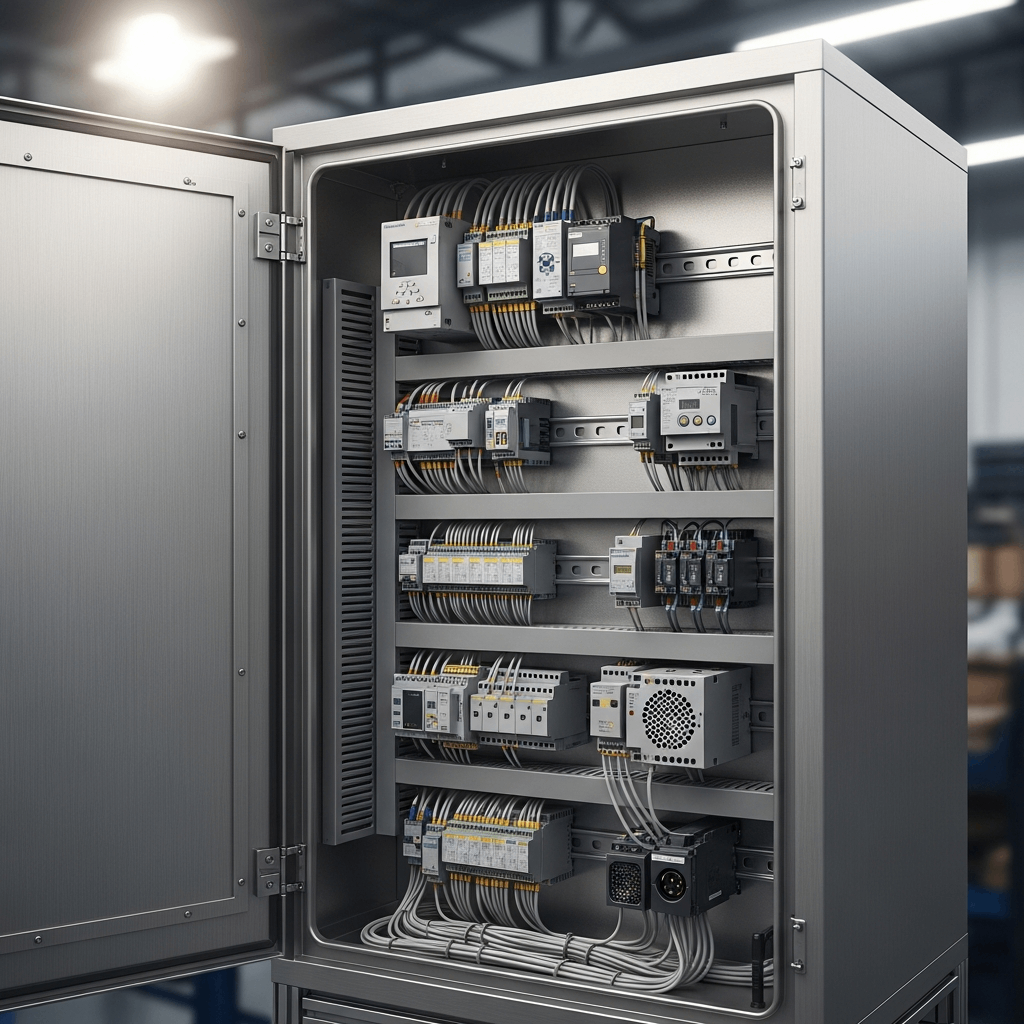
For OEM procurement directors, securing low unit prices on individual components no longer protects annual profit margins. Fragmented supply chains create severe operational vulnerabilities. Buying bare metal from one shop, shipping it elsewhere for finishing, and using a third party for assembly adds risk.
This approach silently inflates your Total Cost of Ownership (TCO). It adds hidden administrative burdens, compounds lead times, and increases defect rates. Forward-thinking buyers now recognize the need for strategic vendor consolidation. Partnering with a comprehensive contract manufacturer transforms your procurement strategy. You can move from daily troubleshooting to a predictable production powerhouse.
Diagnosing the Hidden Costs of Fragmented Sourcing
At first glance, sourcing components from specialized micro-vendors might seem to optimize your purchase order. However, this decentralized strategy masks heavy engineering and administrative costs. The most critical failure typically occurs during the transition from the metalworking shop to the electrical assembly line.
The Reality of Tolerance Accumulation When you separate these two phases, OEMs frequently encounter costly structural mismatches. Consider a standard scenario. Your team sources a custom sheet metal enclosure from Vendor A and internal brackets from Vendor B. Both suppliers deliver parts that pass their isolated quality inspections. Yet, natural manufacturing variations often cause structural interference when combining these parts. A mere 0.5mm deviation can make it impossible to mount sensitive printed circuit boards or align external I/O ports.
This mismatch forces your engineers to perform manual modifications on the assembly line. These changes instantly wipe out any savings achieved during the sourcing phase.
The Administrative Trap A fragmented electromechanical assembly supply chain creates a debilitating administrative burden. Procurement teams must manage dozens of purchase orders and track multiple shipments. They must also coordinate sequential production schedules across different time zones. Furthermore, when assembly failures occur, separate vendors often deflect responsibility. This finger-pointing leads to agonizing delays. Your quality assurance team then spends days identifying the root cause of the defect.
Engineering Product Design and Unified Manufacturing
Transitioning to a single-source model requires a partner with a heavy manufacturing pedigree. Successful electromechanical integration always begins with the raw metal chassis. The ideal partner commands state-of-the-art in-house capabilities. They build the foundational structure to your exact engineering product design specifications before technicians route any wires.
Precision Metal Forming as the Foundation
A reliable source executes advanced tube laser cutting, high-speed CNC punching, and robotic welding operations entirely under one roof. A single supplier controlling the machining, forming, and welding processes eliminates structural blind spots. The engineering team designing the metal bends also handles the final electrical fitment. This ensures that mounting points align perfectly for the downstream assembly process.
Seamless Surface Treatment and Electrical Integration
Surface finishing expertise becomes the next crucial step after establishing the metal framework. An advanced manufacturer features dedicated facilities for powder coating, silk screening, and plating. In-house assembly powder coating ensures technicians apply protective layers immediately after forming the metal. This prevents oxidation and minimizes handling damage.
Integrating finishing with electrical assembly requires highly specialized knowledge. A premier partner understands the importance of proper masking during the coating phase. This ensures perfect electrical grounding continuity. Finally, technicians integrate the core electrical components into the freshly coated enclosures. They install wire harnesses, power distribution units, and delicate PCBs. This cohesive workflow validates every physical and electrical parameter in one secure location.
Leveraging DFM and DFA for Superior Production ROI
Proactive Design for Manufacturing (DFM) and Design for Assembly (DFA) support unlocks the true power of consolidation. This moves your project beyond simple fabrication into Value Engineering.
- Standardization of Hardware: Standardizing fastener sizes reduces tool changeover time and simplifies your Bill of Materials. Using M4 screws throughout the frame often cuts labor costs during assembly by up to 15 percent.
- Weldment Optimization: Our engineers review your frames to identify better manufacturing methods. Replacing complex weldments with advanced CNC bending techniques maintains structural integrity. It also reduces production lead times and the risk of thermal warping.
- Thermal Management Integration: During the metal forming phase, we optimize vent patterns and mounting points. This ensures efficient cooling for the internal electronics and prevents costly design revisions later.
The Roadmap: 4 Stages to Successful Supply Chain Consolidation
Switching to a consolidated model should be a risk-free transition. A professional partner follows a structured roadmap to ensure mass production stability and transparency:
- Technical Review and BOM Audit: We analyze your current assembly process to identify material waste and redundant logistical steps.
- Rapid Prototyping and NPI: Our team builds the initial unit under one roof. We verify that metal tolerances and electrical components interact perfectly before mass production begins.
- Production Scale-up: We transition from prototype to mass production using a single, ISO 9001 certified system. This system monitors every stage from punching to final assembly.
- Just-In-Time (JIT) Delivery: We implement a synchronized delivery schedule. This reduces your inventory carrying costs and frees up working capital for your organization.
Strategic Applications: Industries That Benefit Most
Specific industries with stringent structural demands see the most dramatic benefits from a unified approach.
Energy Storage Systems (ESS) Commercial battery cabinets require heavy-duty metal enclosures. These structures must withstand immense weight while housing sensitive battery management systems. The synergy of expert metal forming and precise electrical integration ensures safety and compliance.
Self-Service Kiosks and Vending Machines These machines require intricate internal electromechanical routing for dispensing mechanisms. They also need flawless external surface treatment to meet strict NEMA or IP65 weather-resistance ratings.
Telecommunications and Industrial Hardware Pre-cabled telecom shroud units and backup power cabinets require in-house continuity testing. This ensures they are ready for immediate implementation upon arrival at remote field locations.
FAQ: Electromechanical Assembly Consolidation
Q: How does consolidation reduce my lead times? A: We remove the transit and packaging time between separate metal shops and assembly houses. This typically shortens the total production cycle by 15 to 25 percent.
Q: Can you manage the procurement of electronic components? A: Yes. A comprehensive contract manufacturer handles BOM procurement. We manage everything from standard connectors to specialized wire harnesses so you receive a plug-and-play product.
Q: Is it cost-effective for smaller production runs? A: Wholesale volumes offer the best ROI. However, consolidation also helps mid-sized runs by reducing the administrative costs of managing multiple vendors.
Conclusion: Taking the Next Step in Your Procurement Strategy
Transitioning away from a disjointed multi-vendor network is a fundamental shift toward a profitable procurement strategy. Demanding a unified approach bridges the gap between raw metal fabrication and intelligent electronics. Buyers receive products that are ready to deploy out of the box.
If your organization wants to streamline its next mass production project, partner with a specialized source like YISHANG. We offer over 26 years of precision metal fabrication experience and integrated assembly capabilities. We help you eliminate the friction of supply chain management. Contact us today to discover how our end-to-end manufacturing solutions can optimize your operations and protect your bottom line.