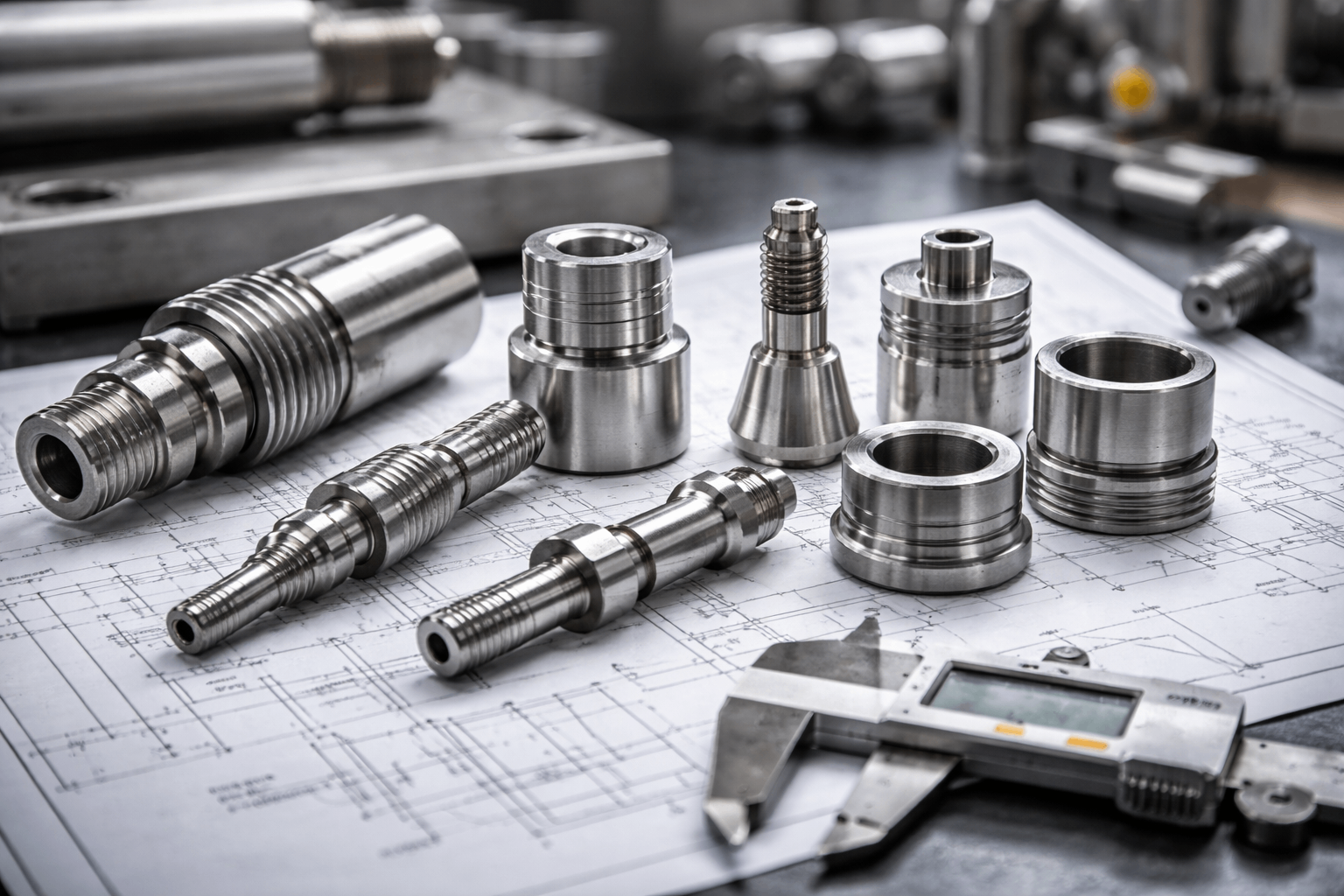
Why lathe-turned parts matter earlier than many buyers expect
For overseas wholesale buyers, the value of a turned part is rarely judged by appearance alone. In most sourcing programs, buyers are evaluating whether lathe turned parts can move from sample approval to stable batch production without creating avoidable risk. A component may look clean in a sample review and still create receiving issues, assembly delays, or performance complaints later. In most industrial programs, the real purchasing decision is tied to repeat orders, stable quality, predictable lead time, and controllable total cost. That is why the benefits of lathe-turned metalwork matter long before a part reaches final use.
Buyers in this segment usually do not read supplier blog content the way end users do. They are not looking for a basic explanation of how a lathe works. They are trying to judge whether a supplier understands fit-critical features, repeatability, drawing requirements, and production risk. In practical terms, they want to know whether precision turned parts will stay consistent after sample approval and across future orders.
That makes this topic especially relevant for custom metal parts and OEM supply. Engineering teams may focus on tolerance, fit, and function, while procurement teams focus on landed cost, reorder confidence, and complaint risk. This shared logic helps engineering and procurement evaluate the same part with fewer misunderstandings. A turned feature is not only a machining detail. It is often the point where later assembly stability, inspection effort, and supplier reliability begin to take shape.
What wholesale buyers are really evaluating
When a buyer searches for CNC turning for batch production, custom turned parts supplier, precision turned components, or custom metal parts for assembly, the goal is usually risk reduction. They want fewer receiving surprises, less rework, and more confidence that the next shipment will match the approved sample. In practical terms, turning quality affects how confidently a buyer can approve, receive, and reorder the part.
This is the lens YISHANG uses when discussing custom turned parts with wholesale buyers. The point is not to make lathe turning sound complicated. The point is to show why certain features need tighter process control and how that control supports smoother receiving, easier assembly, and more dependable replenishment. When buyers ask the right questions early, they reduce the chance that a small process variation will grow into a much more expensive issue after shipment.
What better turning changes in production, assembly, and total cost
The most useful way to evaluate turned parts is to look beyond shape and ask what the process controls. This is especially true for drawing-based custom parts, where feature relationships often matter more than nominal size alone. Lathe turning is especially effective for cylindrical or rotational features where diameter consistency, concentricity, straightness, thread accuracy, and surface finish directly affect function. These are not abstract technical terms. They influence whether a component fits a mating part, rotates smoothly, seals reliably, or stays aligned after repeated use.
That is why the benefits of lathe-turned parts are not limited to precision itself. Precision matters because of what it prevents. A small variation in diameter can lead to forced assembly or unstable fit. A slight shift in concentricity can create runout, vibration, or uneven wear. A rough sealing surface can increase leakage risk or shorten service life. In practice, turning quality often decides whether a problem is prevented at the machine or discovered later in receiving, assembly, or customer use.
| Turning-stage factor | What buyers care about later | Commercial risk if unstable |
|---|---|---|
| Diameter control | Fit with mating parts | Sorting, forced assembly, rejection |
| Concentricity | Smooth rotation and alignment | Noise, vibration, wear |
| Thread accuracy | Reliable fastening and sealing | Cross-threading, leakage, weak fit |
| Surface finish | Contact behavior and service life | Friction, wear, inconsistent sealing |
| Batch repeatability | Confidence in repeat orders | Complaint handling, delivery risk |
Why repeatability matters more than a good sample
Repeatability deserves special attention because it is where technical quality becomes purchasing value. In practice, sample approval is not the same as production approval, which is why repeatability matters so much in high-volume production and repeat-order supply. One accurate sample is useful, but wholesale buyers usually need much more than a good first article. They need the next batch to behave like the approved batch. They need the parts in the next shipment to match the parts now being assembled. That is why repeatability matters more than a single impressive sample.
This is also where good machine shops separate themselves from average ones. Equipment matters, but process discipline matters more. A supplier may have advanced CNC turning service capacity and still struggle if tool control, inspection points, and operator standards are inconsistent. By contrast, a disciplined team using the right workholding, process settings, and in-process checks can produce far more dependable results. For export manufacturing, the goal is not just to machine parts quickly. It is to hold the functional center of the specification across production runs.
Why total cost is shaped after machining
Surface finish adds another layer of value that buyers sometimes underestimate. In many custom metal components, finish is not only cosmetic. It affects friction, sealing, wear, coating performance, and long-term part behavior. When turning is followed by secondary steps such as powder coating, marking, or assembly, the base machining quality still matters. A stable machined surface supports more reliable downstream results and reduces the chance that appearance or function will drift after later operations.
The same logic applies when turning is part of a broader manufacturing route. Buyers often prefer suppliers who can manage related processes such as laser cutting, CNC machining, forming, welding, finishing, and assembly because every handoff between suppliers creates additional coordination risk. Better turning creates the most value when it fits into a workflow that improves accountability and reduces variation between steps. For procurement teams, this is not just a capability issue. It is a control issue.
A simple example makes the point clearer. Imagine a turned connector used inside an electromechanical assembly. If thread quality is inconsistent, the problem may not be obvious when the batch leaves the machine shop. It may appear later, after coating, hardware installation, packaging, and shipment have already been completed. By that stage, the true cost is much higher than the original machining quote suggested. This is one reason experienced buyers care about how the part will behave after each downstream step, not just how it was cut.
How wholesale buyers can evaluate a machine shop with more confidence
For overseas buyers, the best sourcing decision usually comes from matching process capability to commercial need. Not every metal part needs turning, and not every turned part needs the same level of control. A simple spacer for low-load use is different from a shaft, sealing feature, threaded fitting, or precision sleeve used in repeated assembly. The right supplier should help clarify where tolerance matters, where surface finish matters, where a turning-first approach is more suitable than general machining, and where tighter process control is worth the added cost.
This is where supplier communication becomes part of quality. Good suppliers do not only quote drawings.
- They review them. They flag features that may be sensitive in volume production.
- They explain whether a feature should be completed in a single setup, whether additional machining support is needed, and how secondary operations may affect the final part.
For buyers managing multiple SKUs or ongoing replenishment, that kind of early discussion reduces risk far more effectively than late troubleshooting.
Questions that matter more than marketing claims
The table below shows the type of questions that often matter more in B2B buying than general marketing claims.
| Buyer question | Why it matters in procurement |
|---|---|
| Can the supplier review drawings before sampling? | Reduces avoidable manufacturability issues |
| Can repeatability be maintained after sample approval? | Protects batch-to-batch consistency |
| Are key dimensions tied to clear inspection points? | Improves receiving confidence and traceability |
| Can related processes be managed together? | Reduces handoff risk and scheduling friction |
| Is packaging planned for export handling? | Protects finished parts during shipment |
These questions matter because real orders rarely fail for one simple reason. Problems usually come from a chain of smaller gaps: drawing intent was not fully understood, receiving criteria were not aligned, secondary operations changed the part condition, or no one took ownership of the final result. A supplier that connects turning to inspection, finishing, packaging, and delivery is usually easier to work with over time because responsibility is clearer and problem-solving is faster.
What stronger suppliers make easier for buyers
Experienced buyers also know that procurement decisions are rarely made on unit price alone. They compare landed cost, defect risk, response speed, communication quality, and the effort required to manage the relationship. That is why a capable machine shop team, backed by stable process control and clear technical communication, often wins more repeat business than a lower-priced but less predictable source. In wholesale purchasing, predictability is not a soft benefit. It is often the deciding factor.
For buyers evaluating custom turned parts, the most practical takeaway is simple: better turning reduces uncertainty. It helps receiving teams inspect with more confidence, assembly teams work with fewer interruptions, and purchasing teams reorder with less hesitation. That is the real commercial value behind the process.
Conclusion: Better turning reduces uncertainty across the supply chain
For overseas wholesale buyers, the value of lathe turning is not limited to making round parts accurately. It lies in how well the process protects fit, repeatability, inspection confidence, and downstream stability. When turning is controlled well, the parts approved today are far more likely to behave the same way in the next batch, the next shipment, and the next reorder.
That is why the benefits of lathe-turned metalwork are closely tied to supply reliability. A better turning decision can reduce rework, simplify receiving, improve assembly flow, and lower the hidden costs that often appear after shipment. If you are reviewing custom metal parts for a new or ongoing program, YISHANG can help you assess the machining route, tolerance focus, first article priorities, and production readiness before volume supply begins.