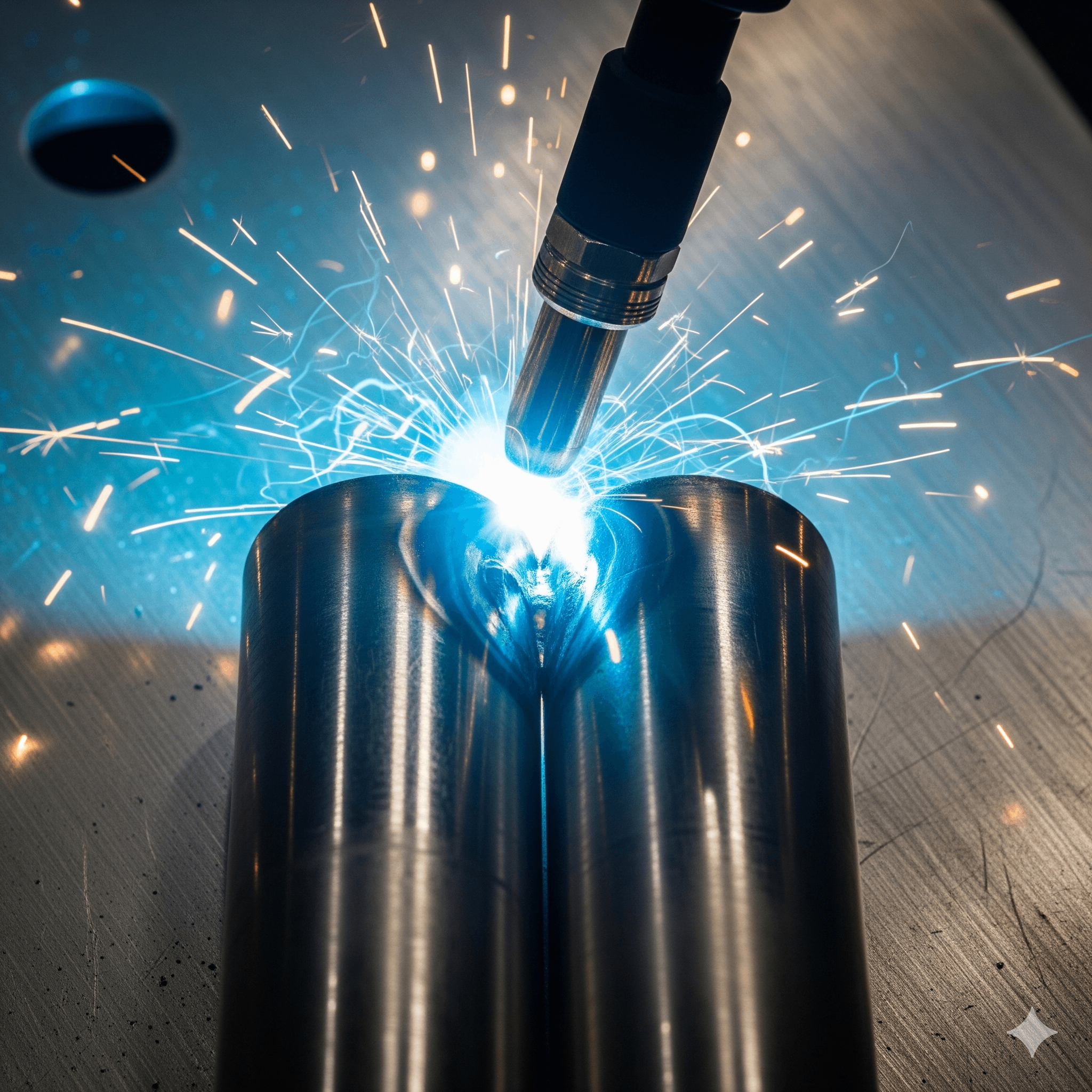
In the precision-driven world of B2B procurement, the structural integrity of a welded joint is critical. Often, it represents the thin line between a successful global roll-out and a catastrophic supply chain failure. For overseas wholesale buyers, tube welding is far more than a simple assembly task. In fact, it is a sophisticated metallurgical commitment. When you source custom metal tubing for critical infrastructure, you aren’t just buying parts. Instead, you are investing in the molecular reliability of a joint. Consequently, this joint must withstand decades of environmental stress and mechanical fatigue.
At YISHANG, we have found that procurement leads prioritize supplier certainty over mere factory capacity. Admittedly, anyone can buy a welding machine. However, high-performance welding is truly about eliminating those hidden failure points. These flaws often lead to expensive and reputation-damaging field recalls. Achieving this level of performance at scale requires a specialized partner. This partner must blend deep material science with precision geometry while optimizing the Total Cost of Ownership (TCO). Therefore, this guide explores the variables that define a world-class welding operation, aligned with rigorous standards like AWS D1.1 and ASME Section IX.
Strategic Sourcing: Why Advanced Tube Welding Optimizes Enclosure Integrity
Deciding on the right way to fabricate metal tubing is a fundamental choice. Ultimately, this decision dictates the longevity of the final product. For high-vibration applications, bolted assemblies are often prone to fatigue. For instance, solar battery enclosures or industrial control stations frequently face mechanical loosening. It is an old problem. A properly fused weld, however, transforms separate components into a monolithic entity. This ensures that the enclosure electrical meter remains hermetically sealed. Consequently, it meets NEMA 4X or IP66 standards as a matter of course.
From a technical design perspective, the versatility of tube welding is a major advantage. It can be applied to various geometries, which facilitates rapid scaling for your bill of materials (BOM). When YISHANG assists you in mounting electrical enclosure units, our focus remains squarely on Design for Manufacturability (DFM). We utilize advanced CNC tube laser cutting to ensure near-zero-gap fit-up. In addition, this process simplifies your assembly lines. Furthermore, it helps strip away the logistical overhead that often plagues large-scale projects involving hundreds of galvanized steel enclosure units.
Wholesale procurement is rarely about a one-off purchase. Instead, it is about finding a scalable partner with genuine automated capabilities. Perhaps your project calls for a weight-sensitive aluminum enclosure. Alternatively, you might need a robust steel enclosure with a carbon base for heavy machinery. In either case, our integration of robotic tube welding ensures batch-to-batch consistency. By getting the tube welding practices right during the prototyping phase, we ensure your product is ready for certification. Therefore, your enclosure push button or meter box will easily meet the standards required by bodies like UL or CE.
Technical Mastery: Decoding the 6G Benchmark and ASTM Standards
To truly audit a supplier’s technical depth, one needs to look past the surface. It is essential to understand the layered complexity of the welds. In high-performance fabrication, the root pass is arguably the most critical element. As the foundation of the tube, it ensures full penetration. It is followed by fill and cap passes. Crucially, these must match the parent metal’s tensile strength. At YISHANG, our technicians handle these passes with surgical precision. This ensures no internal voids or “sinking” occur during the cooling phase. Moreover, we strictly adhere to ISO 15614 protocols.
The 6G welding position is widely regarded as the ultimate benchmark for technical excellence. In this advanced position, the tube remains fixed at a 45-degree angle. This specific slope requires the welder to move around the tube. Consequently, they must transition through overhead, vertical, and flat planes in a single, continuous bead. It is a demanding task. Nevertheless, a supplier capable of consistent 6G welding demonstrates technical maturity. This expertise allows them to handle complex geometric designs without the constant threat of rework or delays.
| Enclosure Application | Material Choice | ASTM/ISO Standard | Technical Priority |
|---|---|---|---|
| Solar Battery Enclosure | Aluminum 5052-H32 | ASTM B209 | Thermal Dissipation & Salt Spray |
| Junction Box NEMA | Stainless 316L | ISO 3506 | Acid/Alkali Corrosion Resistance |
| Control Station Enclosures | Carbon Steel Q235B | ASTM A36 | Structural Rigidity & Impact |
| Electrical Meter Box | Stainless 304 | ISO 15614 | NEMA 3R/4 Weatherproofing |
Root Cause Analysis: Solving Quality Risks in Mass Production
From a technical perspective, our authority at YISHANG is proven by our proactive problem-solving. We strive to solve issues before they ever touch a shipping container. Take incomplete fusion in a solar battery enclosure, for instance. This is a catastrophic risk that could lead to structural collapse. Therefore, we mitigate this by maintaining tight control over shielding gas flow. Typically, we use 99.99% Argon. In addition, we monitor wire feed speed closely. Ultimately, it is about ensuring a stable arc according to the Welding Procedure Specification (WPS).
Porosity is another common industry headache. Often, it is caused by nothing more than atmospheric moisture or surface contamination. To prevent these tiny, troublesome holes, our facility utilizes climate-controlled storage. Furthermore, we implement rigorous pre-weld degreasing protocols. By staying ahead of these tube welding problems, we ensure that every mount electrical enclosure meets international safety standards. Specifically, this proactive risk management is what separates a strategic partner from a mere vendor in a volatile market.
Testing your tube welding is the final, non-negotiable pillar of our commitment. We utilize Non-Destructive Testing (NDT) methods. For example, Dye Penetrant (PT) helps us catch surface cracks. Additionally, Hydrostatic pressure tests verify seal integrity. For critical components like a NEMA junction box, this data-driven assurance is vital. Consequently, it provides you with the peace of mind to manage projects from overseas without needing constant on-site inspections.
Economic Reality: Lowering Total Cost of Ownership (TCO)
For global procurement managers, the “cheapest” quote is often a facade. In reality, it masks hidden operational costs. Total Cost of Ownership (TCO) includes the cost of quality and the logistics of handling returns. Moreover, it encompasses the intangible value of supply chain stability. By partnering with YISHANG, you are tapping into 26 years of DFM lessons learned. We don’t just “find” tube welding solutions. Instead, we optimize them for your bottom line. As a result, we strip away unnecessary secondary operations like grinding or straightening.
As you look to secure your global supply chain, remember that every weld is a reflection of your commitment. Whether you seek a carbon steel hybrid or a standard electrical meter box, YISHANG is here to provide the engineering support you demand. Indeed, our industrial history is the foundation upon which your next project can be built.
Quick inquiry now for your custom tube welding projects.