
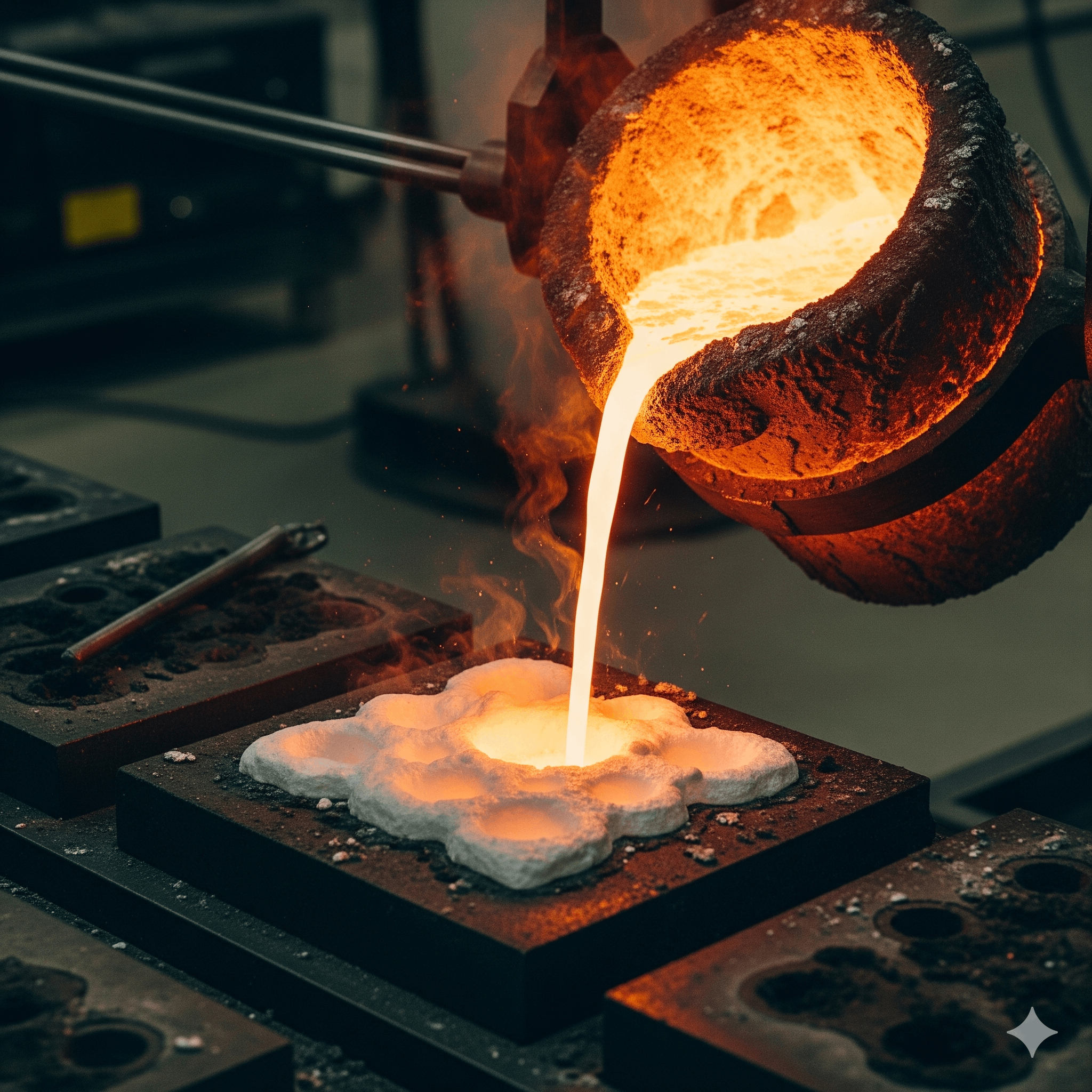
For most procurement managers, the search for “lost foam casting process definition how it works” begins with a specific headache. Often, a component is either too complex to cast reliably or too expensive to machine. At YISHANG, we have learned that high-volume wholesale is more than just a transaction of metal parts. Instead, it is a calculated move to drive down the total cost of ownership (TCO). Consequently, Lost Foam Casting (LFC) has become the go-to solution for industries that demand high durability without the baggage of traditional, multi-part manufacturing.
This process is frequently called the “vanishing act” of the foundry world. It centers on a sacrificial foam pattern that simply evaporates the moment it meets molten metal. To a buyer looking at a massive annual order, this is not just engineering magic. Rather, it is a practical path to precision. By mastering the shape of the foam pattern cluster, we deliver integrated parts like rugged NEMA junction boxes or intricate solar battery enclosures. These integrated solutions are difficult for traditional methods to produce without a mountain of secondary labor.
When you start your inquiry today, look past the textbook definitions of foam aluminum casting. Success in strategic sourcing comes from partnering with the right team. Specifically, you need a partner that treats lost foam as a precision tool for a zero-waste future. Whether your industry is automotive or renewable energy, this guide will help you navigate the process. Furthermore, it ensures every surface finish and internal detail aligns with your exact NEMA requirements and industrial benchmarks.
1. The Real-World Efficiency of the Lost Foam Process
Scaling Through Integrated Molding
The biggest win for any wholesale buyer in the lost foam casting process is the disappearance of expensive secondary machining. At YISHANG, we begin by molding the product pattern from high-density expanded polystyrene. These foam pieces are then assembled into a pattern cluster. This “tree” of parts allows us to cast multiple units in one single pour. For example, we can cast an electrical meter box and a push button enclosure simultaneously. Consequently, this kind of scalability is the secret to keeping lead times in check for the largest orders.
Precision Without Parting Lines
True engineering mastery happens when we coat the foam and nestle it into a flask of unbonded sand. Unlike older casting methods that rely on messy chemical binders, LFC uses 3-D vibration. This makes the sand flow like a liquid into the tightest corners of the pattern. Therefore, if you are sourcing a carbon steel enclosure or a galvanized steel enclosure, you get a final product free of parting lines or core shifts. These are the common gremlins in traditional sand casting that usually lead to scrapped parts and delayed shipments.
Enhancing Surface and Logistics
As the molten metal meets the foam, the pattern vanishes instantly. As a result, the metal takes its exact place. We use advanced thermal monitoring to keep the risk of gas entrapment to a minimum. This is a level of control you will not find in every foundry. Moreover, this precision delivers a surface finish far superior to traditional methods. Consequently, this saves you the cost of extra grinding or polishing. When you send an inquiry to YISHANG, this technical edge effectively shortens your procurement cycle.
Keeping an eye on manufacturing costs also means looking at the logistics. Specifically, lost foam aluminum casting allows for optimized, thinner walls without losing strength. Because of this, we often see weight reductions that save our clients up to 15% on international freight. Whether it is a steel enclosure aluminum hybrid or a galvanized steel enclosure for the outdoors, we engineer every pattern for maximum material efficiency. In short, it is a proactive way to keep your project under budget and ahead of the curve.
2. Choosing Your Battle: A Transparent Decision Matrix
No process is a silver bullet. Therefore, we believe transparency is the best way to protect your supply chain. Choosing LFC over sand casting is a strategic decision based on your specific project needs.
Why LFC Often Wins:
- Geometric Freedom: We can cast internal shapes that are “impossible” by any other standard. This is because we do not need draft angles or parting lines.
- Scale and Savings: Lower unit prices become a reality as your order volume grows. This happens because we drastically cut down on CNC time and material waste.
- Ready-to-Use Surfaces: Your control station enclosures look professional right out of the mold. Specifically, we achieve an Ra 125-250 finish.
- Parts Integration: We often take a five-part assembly and cast it as one single piece. Consequently, this slashes your inventory SKUs and removes weak welding points.
The Trade-offs to Consider:
- Upfront Tooling: High-quality aluminum molds for foam patterns require an initial investment. For this reason, LFC is a powerhouse for wholesale volumes but less ideal for a few prototypes.
- Pattern Handling: Foam is light and fragile. Therefore, it takes a professional touch to handle and coat these patterns so the final shape is flawless.
- Material Nuance: Not every alloy behaves the same way during pyrolysis. Specifically, it takes experience to avoid carbon defects and ensure structural integrity.
3. The ROI of Lost Foam vs. Traditional Sand Casting
Breaking the Complexity Barrier
The debate between foam casting vs sand casting usually ends when a procurement officer looks at complexity. Specifically, modern solar battery enclosures or stainless steel enclosures often require intricate internal geometries. Traditional sand casting is a reliable workhorse, but it struggles with complex cores. Those cores are where defects usually hide. By simplifying the mold, LFC removes the risk of core-shift and assembly errors before they ever happen. As a result, your yield rate improves significantly.
Beyond the Price-Per-Pound
We often remind our partners that the ROI of lost foam goes far beyond the price per pound. For instance, if you order a massive run of carbon steel enclosure components, the absence of draft angles allows for a tighter design. This is a game-changer for solar battery enclosures where every millimeter matters. By hitting these “net shape” targets, you spend less time in the machine shop. Furthermore, you get your products to market much faster than your competitors.
Surface Quality as a Strategic Asset
Surface quality is another silent deal-breaker in the procurement process. Traditional casting can leave a gritty texture. Consequently, it requires heavy bead blasting just to look presentable. In contrast, the lost foam process creates a smoother “skin.” For a galvanized steel enclosure destined for harsh environments, this smooth surface is vital. Specifically, it ensures the protective coating adheres better and lasts longer. At YISHANG, we monitor every detail of the mold and metal to ensure your parts are ready for the assembly line immediately.
4. Picking the Right Material: Stainless Steel and Aluminum
Sourcing a stainless steel enclosure or a steel enclosure aluminum variant is more than just picking a metal. At YISHANG, we specialize in matching the alloy to the LFC process. This ensures maximum longevity. For medical-grade control station enclosures, for example, stainless steel provides the necessary chemical resistance. Furthermore, our optimized techniques ensure these parts are cast with a non-porous, high-density finish that meets sterile environment standards.
The cooling phase is where the final quality of the metal is decided. Specifically, when we handle high-volume wholesale orders for solar battery enclosures, we use thermal sensors. These sensors manage how heat dissipates through the sand. As a result, we prevent the warping that can happen with large, flat panels. Whether we are pouring a steel enclosure carbon or a specialized alloy, this thermal control ensures every part stays within tight tolerances.
This is manufacturing with an eye on your future supply chain. When you choose a push button enclosure from YISHANG, you get a part backed by rigorous analysis. Specifically, we use Spectrographic Analysis to verify every batch. This ensures your stainless steel or galvanized aluminum enclosures are 100% compliant with RoHS and ISO 9001 standards. Ultimately, we believe that this kind of transparency is the only way to build a real wholesale partnership.
5. Risk Management and the “YISHANG Standard”
Every professional buyer knows that risk mitigation is part of the job. In the lost foam process, the biggest hurdle is managing how the foam vaporizes. If it does not happen cleanly, you get carbon residue. We solve this by finding the perfect “thermal window.” Specifically, we ensure the metal enters the mold at the exact superheat temperature needed to vaporize the foam fully. Consequently, this leaves a pristine metal structure with no rework required.
B2B Quick Reference: Common Questions from the Field
- What is a realistic MOQ? Due to upfront tooling costs, we usually suggest LFC for orders of 500 to 1,000 units. This is the “sweet spot” where your ROI truly kicks in.
- How does this affect my freight costs? LFC allows us to optimize wall thickness. Consequently, we can make parts 10-15% lighter without losing strength. For overseas buyers, this is a direct hit on shipping costs.
- Can we prototype before the big run? Absolutely. We use 3D-printed foam patterns to give you a physical sample without the cost of a metal mold. Therefore, it is a great way to verify your design before committing to wholesale.
The work does not stop once the metal is poured. Specifically, we implement 24-48 hour stabilization cycles for our foam patterns. While this seems like a small detail, it is actually the difference between a part that fits and one that is a millimeter off. For an overseas wholesaler, this technical reliability is the ultimate form of cost protection.
If you are ready to see how these efficiencies can work for your next project, a quick inquiry now can save you weeks of error. YISHANG is more than just a foundry. Rather, we are here to help you navigate the complexities of lost foam aluminum casting and industrial enclosure manufacturing. Send us your inquiry today, and let us build a more resilient future for your product needs.