
Why Powder Coat Texture Choices Can Make or Break Your Project
Powder coat textures offer more than just aesthetic appeal; they directly influence durability, manufacturability, and even long-term supply chain stability. Whether you’re sourcing textured powder coating for custom sheet metal enclosures, industrial assemblies, or consumer-facing products, the decisions you make during the specification phase ripple through the entire production lifecycle. Missteps here can lead to rework, cost overruns, or even product failure in the field.
To reduce sourcing risks, you need to understand how texture affects coating performance, how it interacts with your substrate material, and how your supplier’s capabilities can impose unforeseen limitations. This article will go beyond the surface to help you make informed choices that align with your project’s technical, economic, and aesthetic goals.
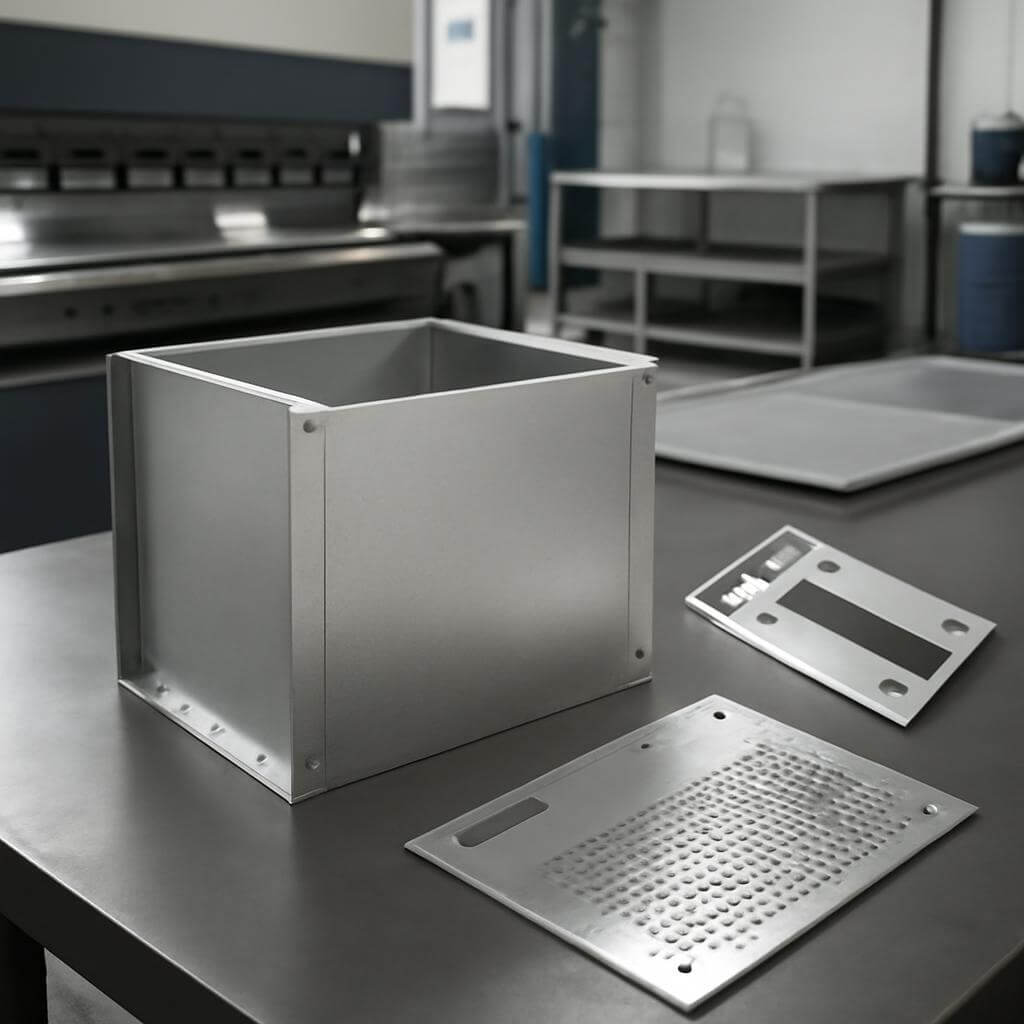
How Powder Coat Texture Impacts Durability and Appearance
Powder coat textures range from fine and smooth to rough and dramatic, with finishes like hammertone, wrinkle, and sand textures offering varying levels of gloss and tactile feedback. But these aren’t just visual or design decisions—they’re engineering decisions that can affect everything from scratch resistance to corrosion protection.
Surface Texture and Wear Resistance
Rougher textures, such as wrinkle or sand finishes, tend to mask minor surface imperfections and scratches better than smooth finishes. However, they can also trap dirt or contaminants, potentially complicating cleaning and maintenance in industrial or outdoor applications. For example, a finely textured black powder coat may perform well in a controlled office environment but could face accelerated wear in a high-traffic industrial setting where abrasive dust is present.
Coating Thickness and Texture Compatibility
Texture often correlates with coating thickness. A thicker application may be necessary to achieve certain textures, but this can introduce challenges in maintaining tight tolerances. For example, if your sheet metal part has threaded holes or tight slots, excess coating buildup can interfere with assembly, requiring secondary operations like masking or post-coating thread cleaning. These steps add cost and complexity, which are often overlooked during the quoting phase.
What Smart Buyers Should Do
When specifying a texture, clarify where the coating will be applied and how it interacts with the part’s geometry. Include details like corner radii, hole diameters, and areas requiring masking in your RFQ. This ensures your supplier can evaluate whether the desired texture is feasible without compromising critical dimensions or assembly fit.
Sourcing Risks: When Texture Assumptions Lead to Project Failures
One of the most significant risks in specifying powder coat textures is assuming that all suppliers can deliver consistent results. Texture application depends not only on the powder material but also on the equipment and expertise of the coating provider. Variability in texture can lead to mismatched aesthetics, uneven durability, or even non-compliance with your functional requirements.
Inconsistent Texture Across Batches
Texture consistency depends on factors like curing temperature, application technique, and even the humidity during production. For instance, a wrinkle powder coat applied in a poorly controlled environment may exhibit uneven patterns, leading to visual inconsistencies across parts. This is particularly problematic in consumer-facing products where uniformity is critical to perceived quality.
Prototype vs. Production Differences
Prototypes often receive more attention to detail than production runs. A supplier may manually adjust settings or rework parts during prototyping to achieve your desired texture, but these adjustments may not scale efficiently. For example, achieving a fine-textured finish on a small batch might involve multiple passes or specific curing profiles that are impractical for high-volume production. Without addressing these scalability issues upfront, you risk delays or quality deviations during mass production.
What Smart Buyers Should Do
During supplier evaluation, ask for texture samples from both prototype and production runs. Request detailed process documentation, including curing profiles and application techniques, to ensure consistency. Additionally, verify whether the supplier has quality control measures in place to monitor texture uniformity across batches.
Material and Geometry: How Substrate Choices Affect Texture Feasibility
The interaction between powder coat texture and substrate material is often underestimated. Different metals—such as aluminum, mild steel, or stainless steel—react differently to powder coating processes, with factors like surface preparation, heat conductivity, and material thickness playing critical roles.
Substrate Surface Preparation
Achieving a consistent texture requires proper surface preparation. For example, aluminum may need a chemical etch or conversion coating to ensure adhesion, while steel often requires shot blasting or phosphating. Inadequate preparation can lead to weak adhesion or uneven texture, especially in areas with complex geometries like sharp bends or deep recesses.
Geometry Challenges
Complex part geometries can create challenges for texture application. For example, recessed areas or narrow slots may not receive an even coating due to Faraday cage effects, where the electrostatic charge causes powder to repel from tight corners. This can result in texture inconsistencies that compromise both appearance and durability.
What Smart Buyers Should Do
Provide detailed engineering drawings with your RFQ, highlighting areas of concern such as deep recesses, sharp corners, or areas requiring uniform texture. Discuss these challenges with your supplier to determine whether additional steps, such as manual touch-ups or alternative application techniques, are necessary.
Cost Implications of Powder Coat Textures
While textured powder coatings can enhance both aesthetics and performance, they often come with cost implications that are not immediately apparent. Understanding these cost drivers can help you make more informed decisions and avoid budget overruns.
Powder Material Costs
Specialized textured powders, such as hammertone or wrinkle finishes, tend to be more expensive than standard smooth powders. Additionally, some textures may require higher film thicknesses, increasing material consumption per part. For example, a coarse-textured powder may require a film thickness of 100–150 microns compared to 60–80 microns for a smooth coat, effectively doubling material costs.
Labor and Process Costs
Textured finishes often require more precise application techniques, increasing labor costs. For example, achieving a uniform wrinkle texture may involve adjusting spray gun settings or applying multiple coats. Additionally, parts with complex geometries may require manual application or masking, further driving up costs.
What Smart Buyers Should Do
Request a detailed cost breakdown in your quotation, specifying material, labor, and process costs for the desired texture. This transparency allows you to evaluate trade-offs, such as whether a slightly less textured finish could achieve your goals at a lower cost.
Reducing Sourcing Risks with Yishang
At Yishang, we understand that powder coat textures are more than a finish—they’re a critical part of your product’s performance and perception. With over 26 years of experience in sheet metal fabrication, we offer comprehensive OEM and ODM support, from prototype to mass production. Our expertise in laser cutting, CNC punching, bending, welding, and surface finishing ensures that your textured powder coating meets both aesthetic and functional requirements.
Whether you need a fine-textured black powder coat for a consumer product or a durable wrinkle finish for industrial equipment, Yishang’s technical team will help you navigate design, material, and process decisions to reduce sourcing risks and ensure project success.
FAQs
- What is textured powder coating?
Textured powder coating is a type of finish that adds a tactile and visual texture to a surface, often used to enhance aesthetics, mask imperfections, or improve grip. - When should you not use texture powder?
Texture powder may not be suitable for parts with very tight tolerances, intricate geometries, or areas requiring high cleanliness due to its tendency to trap dirt. - What are the downsides of powder coating?
Potential downsides include limited thickness control, challenges with complex geometries, and the need for proper surface preparation to ensure adhesion. - Is texture powder better than gel?
The choice depends on the application. Texture powder offers better durability and environmental resistance, while gel coatings may provide higher gloss or specific aesthetic effects. - What are the best textured powder coatings?
The “best” texture depends on your application. Hammertone and wrinkle finishes are popular for industrial durability, while fine textures are ideal for consumer products. - How do you ensure consistent texture across batches?
Consistency requires controlled application conditions, precise curing profiles, and robust quality control measures. Work with a supplier like Yishang that has proven expertise in batch consistency.