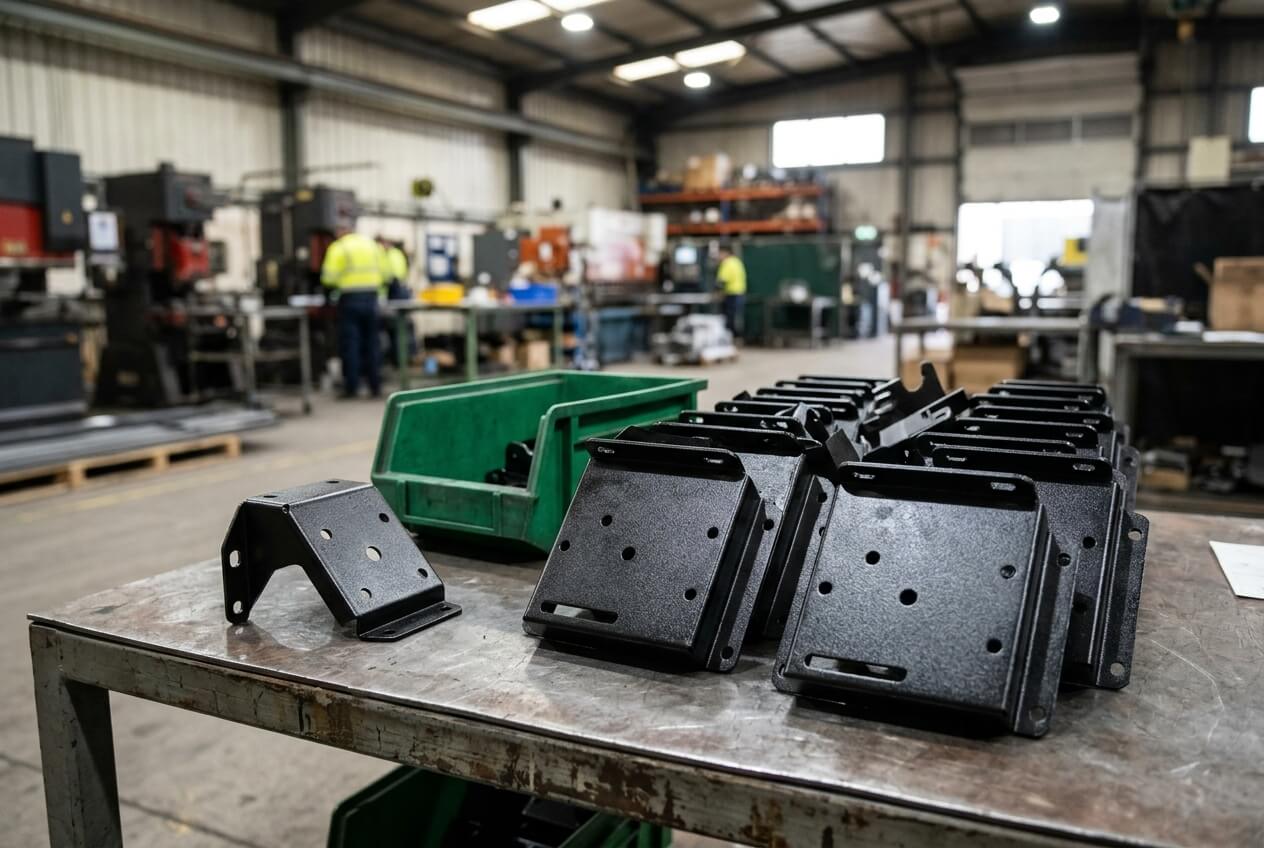
An approved powder coated prototype can give procurement a false sense of control. The door swings correctly. The hinge holes line up. The black finish looks close to the sample. Purchasing releases 300 or 500 sets because the part appears ready for batch production.
Then the first shipment arrives with tighter gaps, blocked threads, rubbed panels, gloss variation, and small bubbles near welded corners. The supplier says the parts follow the drawing. The buyer says they do not match the prototype. Both sides may have a point.
The dominant risk is not powder coating itself. The risk is treating one good prototype as a production standard without locking the assumptions behind the powder coated material. A prototype can hide hand cleaning, extra weld grinding, special masking, a favorable rack position, or a powder batch that production will not repeat.
For custom sheet metal fabrication, that gap affects more than appearance. It changes quotation scope, assembly fit, inspection method, packaging, lead time, and landed cost. Buyers can avoid many disputes by converting prototype approval into controlled batch requirements before they issue the PO.
Prototype Approval Creates Risk When It Approves the Part but Not the Process
Many sourcing teams approve prototypes under schedule pressure. They check the visible faces, confirm the color, test the lock, and measure several mounting holes. Those checks matter, but they do not prove that the production process can repeat the same result.
A prototype often receives more attention than a normal batch part. A technician may clear threads by hand, polish a weld line twice, or hang the enclosure in the best oven position. The sample may also use a small powder quantity from one lot. None of that automatically transfers to a production run.
Procurement risk starts when the approval email says only, “sample approved, proceed.” That sentence approves a result, not the manufacturing controls that produced it. During batch work, the supplier must make choices about pretreatment, masking, film thickness, curing, inspection, and packing. If the RFQ and drawing do not define those choices, the supplier will quote and produce based on assumptions.
A simple enclosure example
Consider a wall-mounted control enclosure made from cold rolled steel. The prototype fits because four M5 threads get cleaned after coating. The drawing only says “powder coated material, black, RAL 9005.” It does not mention thread masking or post-coating thread inspection.
In a 500-set order, those four threads become 2,000 potential rework points. If the quote did not include plugs, cleaning, or final thread checks, the low price no longer reflects the real work. Assembly teams may lose hours retapping holes or reject covers that should have shipped ready to install.
Before batch release, buyers should ask whether the approved prototype represents the exact production route. If it does not, request a controlled pre-production sample or a first article inspection that includes coating, assembly, and packing. Yishang can review drawings, prototype photos, and approval comments to identify which finish and assembly points need tighter control.
Quote Comparisons Become Distorted When Finish Assumptions Stay Unwritten
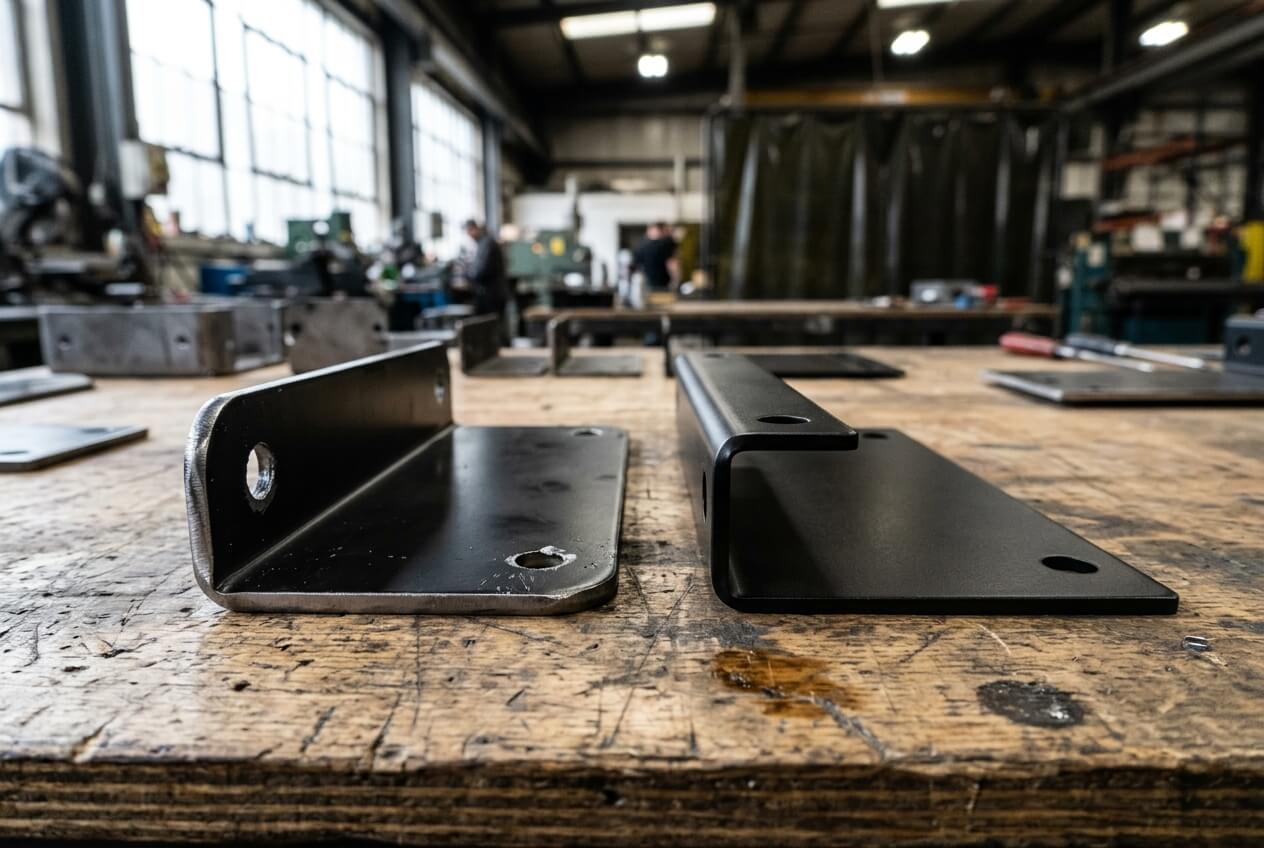
Two suppliers can quote the same sheet metal part with very different powder coating scopes. One price may include indoor polyester powder, basic cleaning, no masking, loose visual inspection, and bulk packing. Another may include a defined pretreatment, plug masking, gloss control, sample panels, film thickness checks, and separators for export shipment.
Both quotes may look valid because both mention powder coating. The problem sits in the missing detail. A finish note such as “powder coat black” does not tell the supplier how much process control the buyer expects. It also does not show which surfaces matter most.
Substrate details add another layer. Cold rolled steel, galvanized steel, stainless steel, and aluminum do not behave the same way during preparation and curing. Galvanized parts may outgas or need different pretreatment. Aluminum panels may need suitable cleaning and conversion steps. Welded steel assemblies need attention around ground edges, inside corners, and weld seams.
When buyers compare only unit prices, the cheapest quote may simply exclude work that the approved prototype quietly required. That does not make the supplier dishonest. It means the RFQ left room for different interpretations.
Where the cost difference hides
Masking creates a common price gap. Thread plugs, tape, labor, removal, and inspection all add cost. If the drawing does not mark grounding points, gasket seats, sliding slots, or PEM nut threads, a supplier may price the job without protection. The finished batch may look acceptable but fail during assembly.
Film thickness also affects both cost and fit. A wide coating range gives production more freedom. A tighter range may require better process control and more inspection time. For loose industrial covers, a broad range may work. For overlapping enclosure doors or sliding brackets, it can create binding.
Lead time can shift too. A stocked powder color may run faster than a matched custom color. A project that needs outdoor-grade powder, sample panel approval, or grouped coating of matching panels may need more planning. Buyers should clarify these points during RFQ, not after the batch reaches inspection.
A practical RFQ should identify the substrate, powder color reference, gloss or texture, film thickness target, cosmetic faces, masking zones, corrosion expectation, and packing method. If a physical sample controls the finish, state whether it controls color only or full acceptance. That one sentence can prevent a major dispute later.
Coating Build-Up Turns Tolerance Decisions Into Assembly Failures
Powder coating adds material to surfaces, edges, holes, slots, and corners. A bare metal part can pass dimensional inspection and still fail after finishing. This risk grows when drawings define metal dimensions but do not say whether critical dimensions apply before or after coating.
Buyers often see the problem only when the first batch reaches assembly. Mounting holes feel tight. PEM nuts contain powder. A removable cover scrapes. A hinge binds near the latch side. The fabrication process may have hit the metal tolerance, but the finished part no longer fits the mating component.
Powder build-up does not affect every feature equally. Edges, inside corners, small holes, and recessed areas can collect more coating. Ground welds may show texture variation. Tight bends and corners may also reveal coverage differences if the process lacks clear acceptance limits.
The consequence chain can move quickly. A tight coated hole leads to drilling. Drilling damages the finish. Damaged finish leads to touch-up or repainting. Repainting delays shipment and creates a second appearance risk. In export projects, the same issue may not appear until the parts reach the buyer’s assembly line.
A bracket and frame example
A buyer sources powder coated brackets for a machine frame. The brackets must slide into an aluminum extrusion slot. The prototype slides because the supplier lightly sands the coated edges. The drawing shows the slot width but does not define final coated clearance.
During batch production, the supplier follows the drawing and skips sanding because the quote did not include it. Half the brackets require force during assembly. Some coating chips at the edges, and the customer rejects the visible damage. The issue started as a missing tolerance and finish relationship, not as a simple coating defect.
Close-fit features need special attention before prototype approval becomes a PO. Mark holes that require plug masking. Identify threads that must remain clean. Show grounding areas that need bare metal contact. Define sliding surfaces, gasket seats, hinge zones, and mating faces that need inspection after coating.
Buyers should also clarify whether inspection happens before coating, after coating, or both. For functional features, final inspection after coating usually matters most. A sheet metal enclosure that fits only before finishing has not proven batch readiness.
Visual Consistency Fails When the Prototype Does Not Define Batch Matching Rules
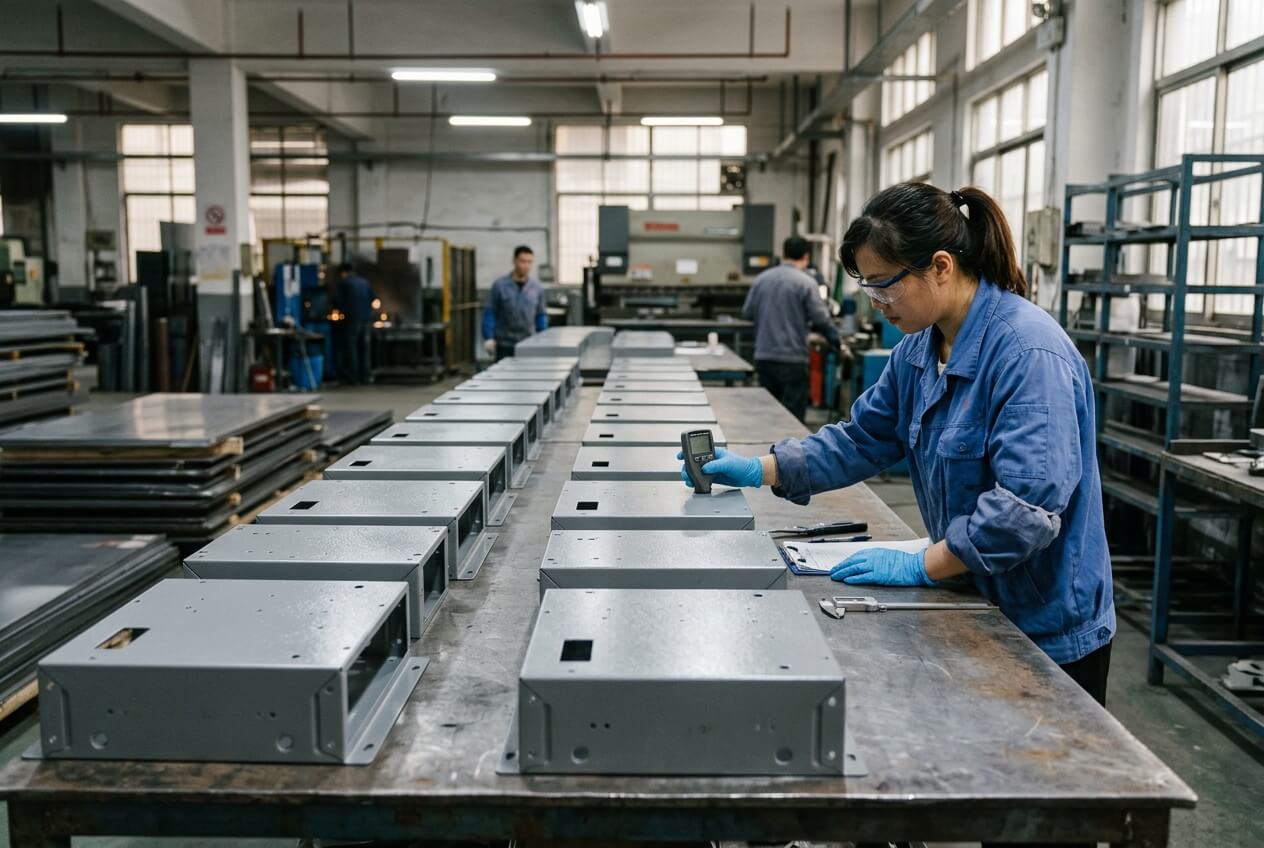
Powder coated material is not judged by color code alone. Gloss, texture, orange peel, edge coverage, and viewing angle affect the final appearance. A single approved prototype can pass inspection, while assembled batch panels show mismatch under normal lighting.
This risk increases with cabinets, machine housings, retail display racks, and multi-panel enclosures. Doors, side panels, removable covers, brackets, and frames may sit next to each other in the final product. A slight gloss shift that looks acceptable on one loose part can look obvious after assembly.
Variation can come from powder lot, curing time, oven load, rack position, part thickness, or hanging orientation. Mixed parts can also absorb heat differently. If the RFQ only states a RAL color, production has no clear rule for how tightly assembled panels must match.
A welded display frame gives a useful example. The front uprights face the customer, while hidden rear braces only need protective coating. If the drawing does not separate cosmetic and non-cosmetic faces, the supplier may apply one general standard. The buyer may then complain about visible weld shadows or texture change on the front face, while the supplier argues that the coating meets a normal industrial finish.
How to make appearance control quotable
Buyers do not need to over-specify every surface. They need to rank surfaces by risk. Mark customer-facing faces, adjacent panels that must match, hidden faces, and areas where weld grinding affects appearance. Define the master sample by date, revision, photo, or sample panel number.
Inspection lighting also matters. Natural light, a light box, and warehouse lighting can show different results. If the product will sit under retail lighting or next to branded panels, state that condition early. For basic internal brackets, a simpler standard may be enough.
Packaging can ruin otherwise acceptable coating. Panels that rub during ocean shipment may arrive with bright marks, especially on textured or semi-gloss finishes. If the part has visible front surfaces, specify separators, bagging, corner protection, or carton layout. Packing belongs in the same risk conversation as coating because damage after finishing still becomes a buyer complaint.
When the appearance standard affects cost, suppliers should price it openly. Matched panels, tighter gloss limits, extra weld dressing, and protective packing all change production effort. Clear expectations help buyers compare real scope instead of comparing incomplete quotes.
Before the PO, Turn the Prototype Into a Batch Control Record
The safest approval record does more than praise the sample. It explains what the batch must repeat. This record can stay short, but it must remove the assumptions that affect price, lead time, inspection, and assembly fit.
Start with the drawing revision and the approved prototype reference. Add photos that show important surfaces, door gaps, weld areas, and masked features. Then record the finish details that matter: substrate, powder type or color code, gloss or texture, film thickness range, and pretreatment expectation when relevant.
Next, connect the finish to function. State which dimensions require final checking after coating. Mark clean threads, PEM nuts, grounding points, hinge areas, gasket seats, and sliding zones. If buyer-supplied parts control fit, send those parts or provide interface drawings.
Finally, define acceptance for the first production run. A first article inspection may need assembled checks, not only loose-part measurements. For enclosures, confirm door swing, latch engagement, cable entry holes, and mounting-hole condition after coating. For welded assemblies, inspect visible weld areas after finishing because coating can reveal grinding inconsistency.
Supplier communication should happen before the PO locks the price. Ask what the quote includes, what it excludes, and what changes if the prototype finish becomes the batch standard. Clarify whether masking, sample panels, special packing, or post-coating inspection appear in the unit price. These questions protect both sides from late commercial disputes.
RFQ action for buyers: If your project uses powder coated material, send drawings, material requirements, quantities, tolerances, finish expectations, color or sample references, masking areas, assembly notes, and prototype comments before batch release. Yishang can review custom sheet metal parts, enclosures, brackets, frames, and welded assemblies for manufacturability, coating risk, and repeatable production scope. Visit Yishang to share files for an RFQ and drawing review.
FAQs About Controlling Powder Coated Material From Prototype to Batch
Why can a powder coated prototype pass but the batch still fail?
The prototype may include manual cleaning, extra weld grinding, special hanging, or a powder lot that production does not repeat. If the approval does not define those controls, batch production may follow different assumptions. Buyers should turn prototype approval into written finish, masking, inspection, and assembly requirements.
What should an RFQ include for powder coated sheet metal parts?
Include the material, drawing revision, quantity, color reference, gloss or texture, film thickness range, cosmetic faces, masking zones, corrosion expectation, packing needs, and final assembly checks. Also state whether the approved prototype controls color only or full production acceptance.
Should critical dimensions apply before or after powder coating?
For functional holes, threads, sliding slots, hinge areas, and mating faces, buyers should usually define final requirements after coating. Bare metal inspection alone may miss clearance loss caused by coating build-up. The drawing should identify which dimensions need post-coating verification.
How do masking decisions affect quotation and production risk?
Masking adds plugs, tape, labor, removal, and inspection time. If the RFQ omits masking, a low quote may exclude protection for threads, grounding points, gasket seats, or close-fit holes. That can create rework during assembly and disputes after delivery.
How can buyers control color and gloss consistency across assembled panels?
Define the master sample, gloss or texture target, inspection lighting, cosmetic faces, and acceptable mismatch between adjacent panels. For cabinets or housings with visible doors and covers, ask whether matched parts should run together and whether sample panels are needed.
When should a buyer request first article inspection after coating?
Request it when the part has tight clearances, visible customer-facing surfaces, threaded features, hinges, latches, gasket areas, or assembled panel matching. First article inspection should confirm finish, fit, masking results, and packing before the supplier completes the full batch.