
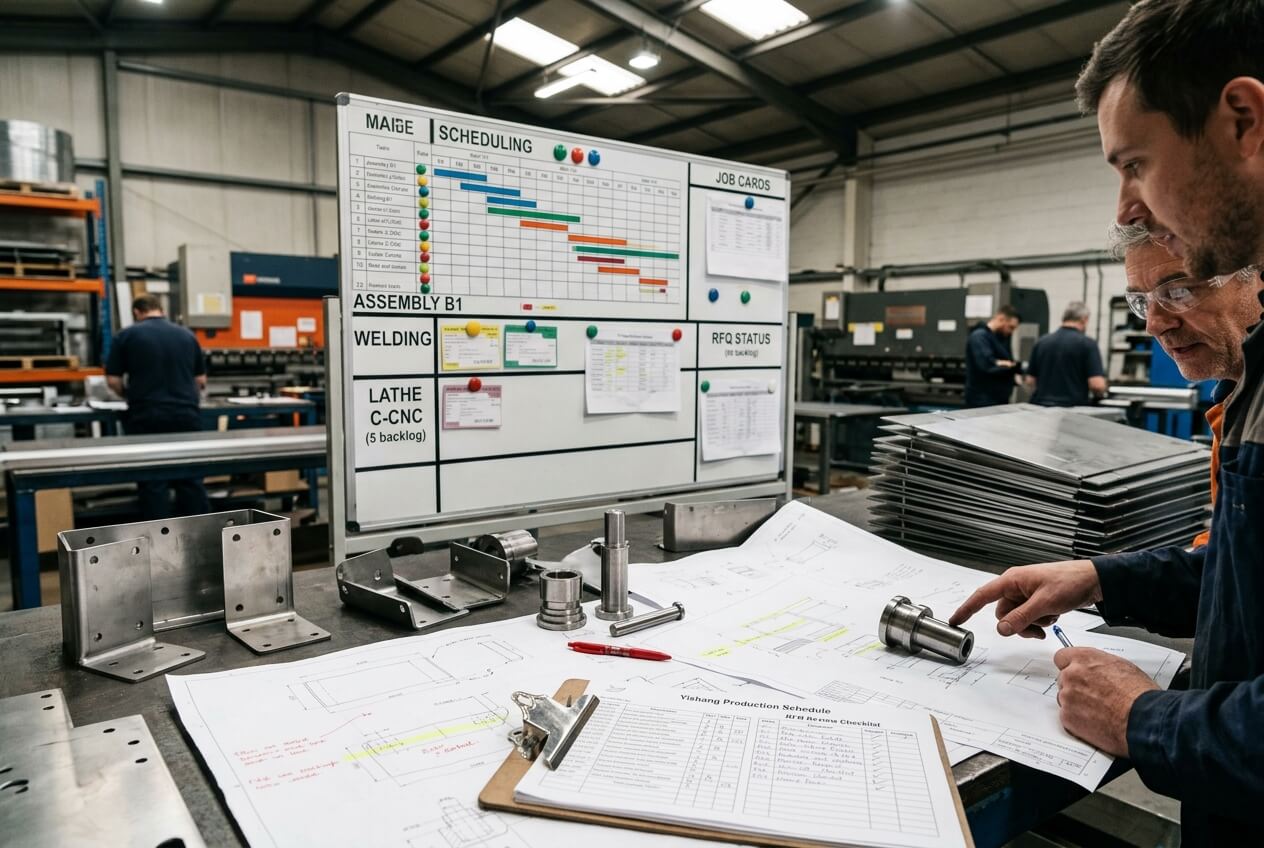
An OEM buyer asks three suppliers to quote a powder-coated control enclosure. The drawing package includes laser-cut panels, bent flanges, a welded base, mounting brackets, and several round spacers inside the 3D model. The buyer compares unit prices and selects the supplier with the shortest delivery.
Two weeks later, the panels have moved through cutting and bending. Welding can start, but final assembly cannot. The round spacers need separate machining. The powder coating sample still needs approval. The inspection datum for the rear mounting holes does not match the buyer’s machine frame. The fastest quote now creates the highest schedule risk.
Many buyers search for things to make on lathe and think of simple parts: spacers, pins, bushings, knobs, threaded feet, shafts, collars, or decorative caps. In a sheet metal assembly order, those small round parts rarely fail because they are technically difficult. They fail because the RFQ does not state who owns them, how suppliers should quote them, and when they must arrive for assembly.
This article focuses on one procurement risk: RFQ ambiguity that makes suppliers quote different scopes. When an RFQ blends sheet metal fabrication, welding, powder coating, purchased hardware, and lathe-made accessories without clear boundaries, buyers compare numbers that do not mean the same thing. The result can be late approvals, re-quoting, coating delays, inspection disputes, and missed shipment dates.
Where RFQ ambiguity turns small lathe-made parts into schedule blockers
Small turned parts often hide inside a model. A cabinet may need hinge pins. A display rack may need adjustable feet. A metal enclosure may use aluminum spacers between internal plates. A welded frame may require round bosses for bolted equipment. These parts look minor compared with doors, panels, frames, and powder coating. Yet they can decide whether the assembly ships on time.
The problem starts when the RFQ describes the main sheet metal item but treats accessories as obvious. A supplier may quote only the fabricated panels. Another may include purchased standard hardware. A third may assume custom lathe work. All three prices can look valid, but the scopes differ. Procurement then selects a quote without knowing which supplier included the parts that actually complete the assembly.
A realistic enclosure example
Consider a wall-mounted electronics enclosure with stainless standoffs. The 3D file shows eight standoffs between the back plate and an inner mounting panel. The PDF drawing, however, lists only the sheet metal body, door, hinge, and latch. One supplier prices the standoffs as purchased hardware. Another excludes them. A third plans to machine them after cutting and bending finish. The buyer sees a three-day lead-time difference and assumes all quotes cover the same product.
After the purchase order, the gap appears. The selected supplier asks whether the standoffs need stainless steel, zinc-plated steel, or aluminum. The buyer sends the question to engineering. Engineering checks grounding requirements. Purchasing waits. The enclosure panels sit ready, but assembly cannot move. The delay did not start on the shop floor. It started when the RFQ allowed each supplier to define the scope differently.
Buyers can reduce this risk by moving every round component from the model into the formal BOM. Spacers, hinge shafts, collars, threaded bushings, knobs, feet, and decorative end caps need ownership notes. State whether each item is custom machined, supplier-sourced, buyer-supplied, or standard purchased hardware. Add material, finish, thread, quantity, and drawing number when the part affects assembly fit.
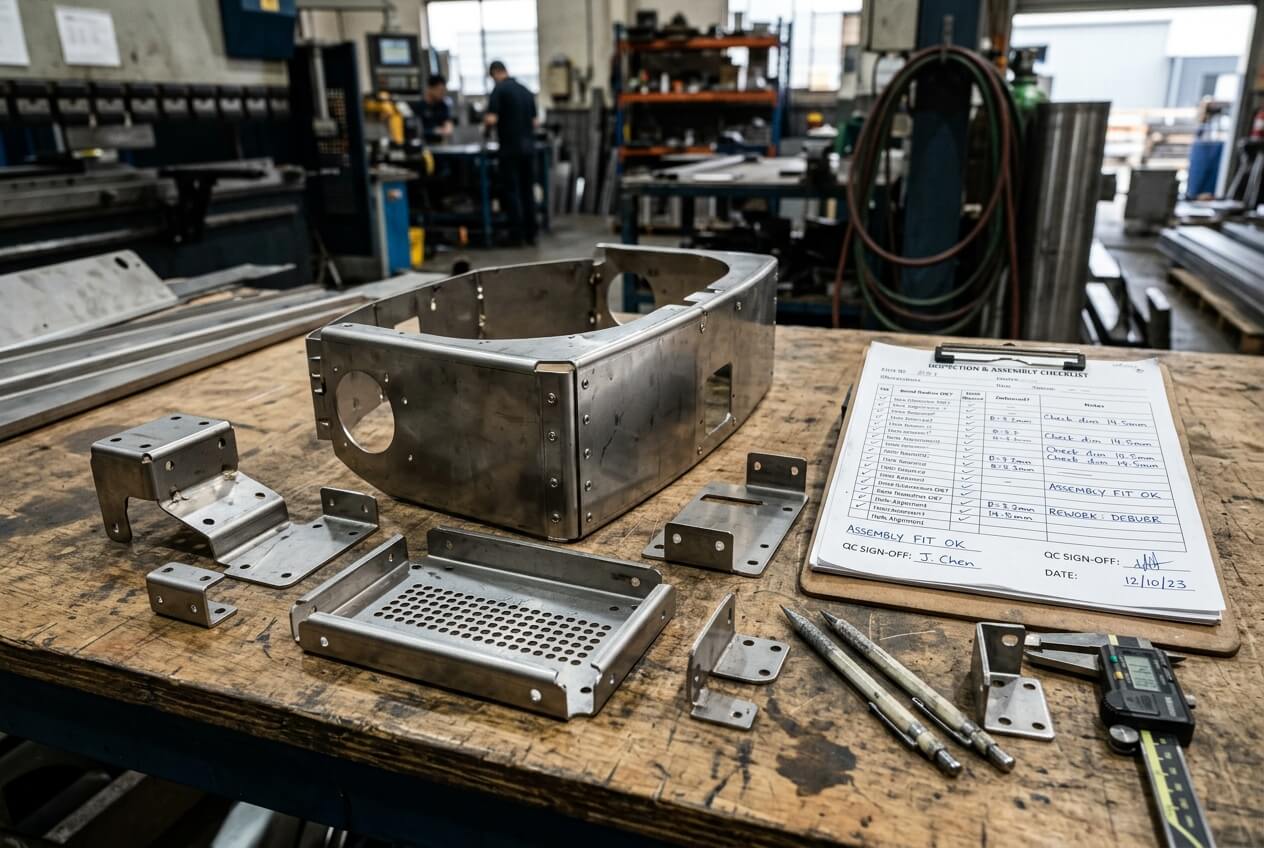
Why quote comparison fails when suppliers assume different ownership
A low unit price can hide missing work. A short lead time can ignore approval steps. A clean quotation can still contain assumptions that shift cost and risk back to the buyer after order placement. This matters most when a project combines custom sheet metal fabrication with welding, finishing, assembly, and lathe-made accessories.
Scope ambiguity changes more than the accessory line item. It affects material procurement, tooling sequence, finishing method, inspection time, packing, and rework responsibility. If the quote excludes a small turned spacer, the unit price drops. If it includes machining, plating, deburring, and inspection, the price rises. Without a clear RFQ, procurement may treat the higher quote as less competitive, even though it includes the real assembly requirements.
Ownership notes prevent quotation traps
Each quote should answer a simple question: what must the supplier deliver at shipment? A bare set of panels? A welded and powder-coated enclosure? A fully assembled cabinet with handles, feet, gaskets, hardware, and spacers? These levels of completion require different planning. They also carry different inspection responsibilities.
A welded display frame gives a common example. The frame uses round decorative end caps on exposed tube ends. The buyer expects the caps to match the black powder-coated frame. One supplier assumes plastic caps that press in after coating. Another assumes aluminum turned caps that need polishing, masking, and coating. The visual result may look similar in a rendering, but procurement cost, lead time, and defect risk differ sharply.
The RFQ should force those assumptions into writing before price comparison. Buyers do not need a long document for every bracket. They do need clear notes for assemblies where one missing accessory blocks shipment. Useful notes include delivery condition, assembly level, hardware responsibility, approved substitutes, and whether the supplier must source or manufacture round parts.
Yishang can review drawing packages for custom sheet metal parts, enclosures, brackets, frames, and welded assemblies to identify these scope gaps before quotation. That review works best when buyers send the BOM, STEP files, 2D drawings, quantities, and expected delivery condition together.
How unclear material and finish details widen the same RFQ gap
Material and finish details often appear to be separate quality topics. In mixed assemblies, they belong to the same RFQ risk. If a buyer leaves material grade, coating requirements, or masking notes open, each supplier builds a different cost model. The quote no longer represents the same product.
A drawing may state “powder-coated steel cabinet” and show brackets, a door frame, ventilation holes, grounding points, and internal spacers. That description sounds clear at a purchasing level. It does not tell the supplier which steel grade to use, whether substitutions are acceptable, what color code applies, which surfaces remain uncoated, or whether threaded holes need masking.
These missing details often delay production after the purchase order. The supplier checks local stock and proposes an alternative sheet grade. The buyer asks engineering to approve it. The coating supplier requests a color code or sample panel. The buyer sends a website image, which does not define gloss or texture. Assembly later finds powder inside tapped holes or on grounding surfaces. Each issue comes from the same source: the RFQ did not lock the details that affect the finished assembly.
Finish expectations must match assembly function
Powder coating creates visible quality and functional risk. It adds thickness around holes, edges, tabs, and sliding interfaces. A cover that fits before coating may bind after coating. A PEM insert may sit correctly before finishing, then lose clearance if masking was not specified. A welded frame may pass dimensional inspection but fail when coated feet or caps change the contact surfaces.
Buyers should define finish requirements around function, not only appearance. State the color code, texture, gloss range, indoor or outdoor use, corrosion expectations, and sample approval need. Mark masking zones for threads, grounding points, hinge faces, sliding tracks, fitted holes, gasket seats, and contact surfaces. If a turned spacer or knob receives a different finish from the sheet metal body, list that difference in the BOM.
These details help suppliers quote the same scope. They also prevent late changes. A supplier can plan coating queues, fixture points, masking labor, and inspection steps only when the RFQ explains what the finished assembly must do.
Why prototype approval cannot repair an incomplete RFQ
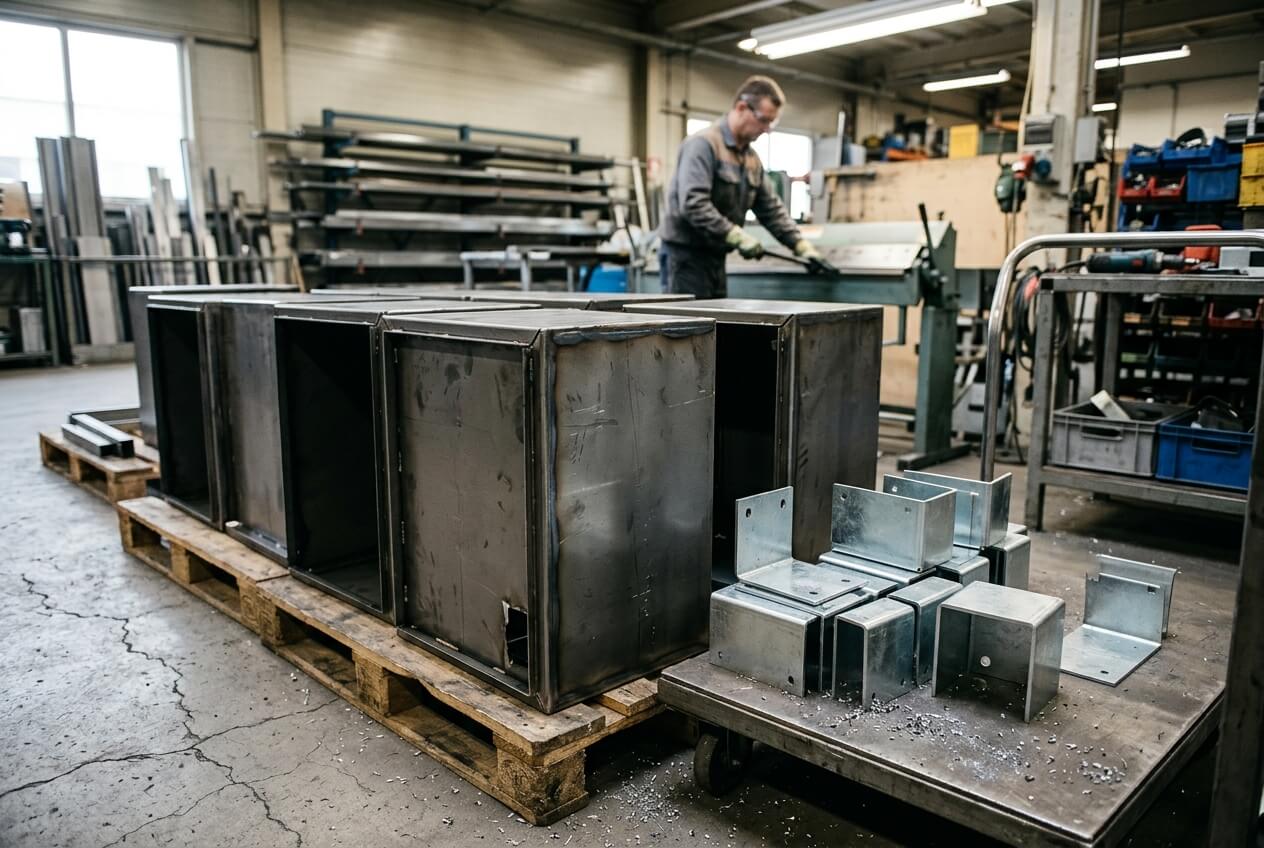
A good prototype can create false confidence. The sample fits, the door closes, and the finish looks acceptable. The buyer approves it and expects batch production to repeat the result. Yet the sample may have succeeded because a technician corrected small issues by hand. In a batch of 300 units, those corrections become delays, rework, and cost arguments.
Prototype approval works only when it freezes the right information. It should not simply confirm that one sample looked acceptable. It should document which dimensions, finishes, fit points, and assembly details control the batch. If the RFQ did not identify those points, the prototype may solve one unit while leaving the production method unclear.
Manual adjustment hides batch risk
Imagine a sheet metal equipment housing with a bent front panel, side brackets, and four lathe-made aluminum spacers. During sample build, the supplier files one bracket slot to align the panel. The operator also clears powder from two holes before installing the spacers. The buyer receives a clean prototype and approves it. No one records the filing or coating cleanup.
Batch production exposes the problem. Operators must adjust many brackets. Some spacers do not sit flat. Coating blocks several holes. Inspection finds inconsistent panel gaps. The buyer sees a quality issue, while the supplier sees missing tolerance and masking requirements. Both sides lose time because the RFQ and prototype approval did not define the repeatable method.
Buyers should ask suppliers to report any sample correction before batch release. That includes filing, drilling, re-tapping, weld grinding beyond the drawing note, hand fitting, coating removal, spacer substitution, and fixture changes. These notes do not blame the supplier. They show where the design or RFQ needs clarification before volume production.
For assemblies that combine sheet metal fabrication and turned accessories, prototype approval should freeze mounting hole datums, critical hole patterns, door gaps, hinge movement, coating texture, visible weld finish, accessory material, and packing method. Yishang may use prototype feedback to discuss bend relief, hole-to-bend distance, weld sequence, coating masking, and accessory sourcing before batch production starts.
What buyers should clarify before accepting the fastest quote
Fast delivery only helps when the quoted start point is clear. A supplier may quote 20 days after deposit. Another may quote 25 days after drawing approval, material confirmation, and finish sample sign-off. The shorter number looks better, but it may exclude the approval work that controls the actual shipment date.
Buyers should ask each supplier to separate the timeline into practical gates. These may include drawing review, material procurement, prototype or first article, buyer approval, cutting, bending, welding, surface preparation, powder coating, accessory production or sourcing, assembly, inspection, packing, and shipping readiness. The goal is not bureaucracy. The goal is to compare schedules that include the same risk.
Cost comparison also needs the same discipline. Ask whether the quote includes custom lathe-made parts, purchased hardware, coating samples, masking, assembly labor, final inspection, export packing, and rework caused by supplier error. Also ask which changes trigger re-quotation. A missing thread note or finish change can alter both cost and delivery.
Questions that turn a quote into a controlled scope
Before awarding an order, buyers should clarify which drawing revision controls production. They should confirm the BOM line for every spacer, pin, bushing, knob, foot, shaft, collar, or cap. They should mark critical tolerances for assembly fit instead of tightening every dimension. They should identify inspection datums for mounting holes that connect to a machine, rack, cabinet, or mating enclosure.
Supplier communication should focus on decisions that block production. Can material procurement begin before finish approval? Can cutting start while a color sample is under review? Does the supplier need written approval before machining custom spacers? What happens if the buyer approves the powder sample three days late? These questions reveal whether the quoted delivery date can survive normal procurement activity.
If your RFQ includes metal enclosures, brackets, frames, welded assemblies, sheet metal parts, or accessories often listed as things to make on lathe, send a complete package before asking for final pricing. Include 2D drawings, STEP files, BOM, material requirements, quantities, tolerance priorities, finish expectations, masking notes, mating-part photos, and prototype comments. Yishang can review the package for manufacturability and hidden scope assumptions before you commit to a supplier schedule.
Frequently Asked Questions
Why do simple lathe-made spacers cause delays in sheet metal assembly orders?
They often sit outside the formal RFQ scope. A supplier may quote panels, welding, and coating while assuming the buyer will supply spacers. If the BOM does not define material, finish, quantity, and ownership, final assembly can wait for parts that looked minor in the model.
How should buyers list things to make on lathe in an RFQ?
List each spacer, pin, bushing, knob, threaded foot, shaft, collar, or cap as a separate BOM item. State whether it is custom machined, standard purchased hardware, supplier-sourced, or buyer-supplied. Add material, thread details, finish, quantity, and inspection needs when the part affects assembly fit.
What RFQ details help suppliers quote the same sheet metal assembly scope?
Define the delivery condition, drawing revision, assembly level, material grade, finish requirements, masking zones, hardware responsibility, critical tolerances, and inspection datums. These details help buyers compare quotes that include the same work, rather than different supplier assumptions.
Why can powder coating affect spacers, holes, and fitted covers?
Powder coating adds thickness around holes, edges, tabs, and contact surfaces. It can reduce clearance for fitted covers, block threaded holes, or affect grounding points. Buyers should mark masking areas and request post-coating fit checks for critical interfaces.
Why is prototype approval not enough for batch production?
A prototype may include manual filing, re-tapping, hand fitting, or coating cleanup that does not appear in the approval record. Batch production needs repeatable fixtures, clear tolerances, controlled masking, and documented accessory requirements. Buyers should ask suppliers to report any sample adjustment before batch release.
What should buyers send for a safer sheet metal fabrication quote?
Send 2D drawings, STEP files, BOM, quantities, material requirements, tolerance priorities, finish expectations, masking notes, mating-part photos, and prototype feedback. This package helps the supplier identify missing scope, accessory lead time, coating risks, and assembly fit concerns before quoting final price and delivery.