
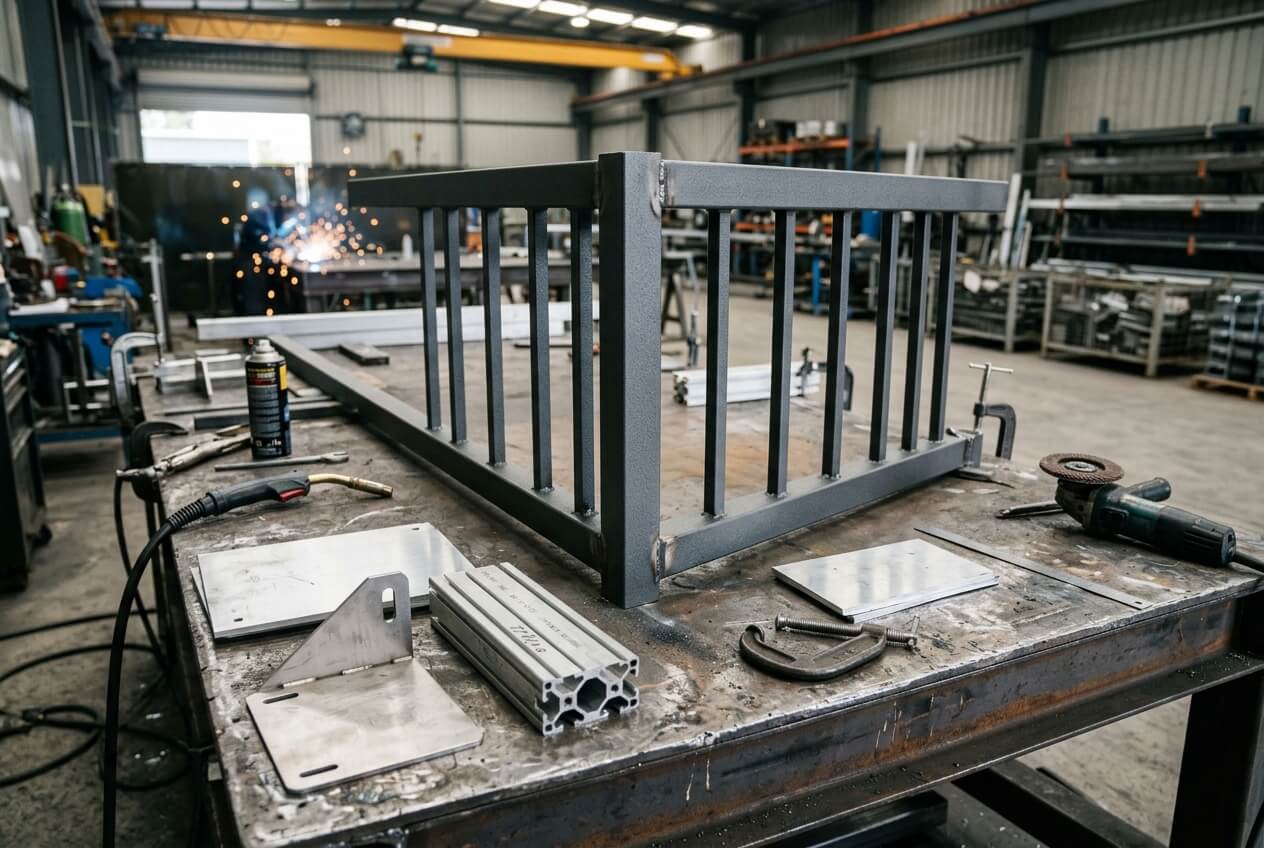
A contractor requests pricing for powder coated aluminium railings for a hotel balcony package. The RFQ includes a plan view, a black finish note, a quantity, and an installation deadline. Three suppliers respond. One quote looks low. One looks high. One supplier asks for the alloy, base plate thickness, coating pretreatment, cosmetic faces, anchor-hole clearance, and the mating concrete or steel details before confirming price.
Those quotes do not describe the same scope. One supplier may price simple aluminium profiles. Another may include laser-cut base plates, welded brackets, gussets, post-coating inspection, and outdoor powder. A third may assume standard coating and leave masking, weld dressing, and hole checks outside the price.
The main buyer risk is not choosing the wrong colour or missing a minor note. The risk is comparing quotes while each supplier fills the RFQ gaps differently. That decision can create coating defects, installation rework, delayed site handover, and arguments over who owned the missing detail.
This article focuses on how RFQ ambiguity distorts fabrication quotes for aluminium railing work. It also shows which details buyers should clarify before price comparison, prototype approval, and batch production.
Where quote assumptions first separate one railing price from another
A railing RFQ often looks complete because it shows the visible shape. Buyers see post height, top rail layout, spacing, finish colour, and quantity. Fabricators see missing process decisions. They need to know which parts come from extrusion, which parts come from sheet metal fabrication, and which joints need welding or mechanical fastening.
That difference matters because aluminium railings rarely consist only of rails and posts. Base plates, gussets, decorative infill panels, wall brackets, end caps, corner covers, and connector tabs may require laser cutting, CNC punching, bending, welding, grinding, and powder coating. If the drawing groups all items under one railing description, each supplier can build a different cost model.
A low quote may remove work the site still needs
Consider a hotel balcony railing with rectangular mounting feet. The drawing shows the foot outline, but it does not define thickness, hole diameter, slot direction, anchor size, or flatness after welding. One supplier prices a 4 mm plate with simple holes. Another prices an 8 mm plate with welded gussets and controlled post verticality. Both offers may say powder coated aluminium railings. They do not carry the same installation risk.
The consequence appears later. Installers may find that the base plate flexes, holes do not clear anchors, or coating chips when workers enlarge slots on site. The low quote did not save money. It moved cost from procurement to installation, where labour costs more and schedule pressure rises.
A similar problem appears in equipment access platforms. The railing may connect to a fabricated steel frame made by another supplier. If the RFQ omits the mating hole pattern or weld-boss positions, the railing supplier may quote nominal holes. Production parts can pass a visual check and still fail during assembly.
Buyers should separate the fabrication route in the RFQ. List extruded rails and posts apart from laser-cut plates, bent covers, welded brackets, and decorative panels. Add the mating interface drawings where possible. This keeps suppliers from quoting different products under the same description.
Material and fabrication gaps create hidden coating and fit consequences
The material line often says aluminium, but that word does not control forming, welding, machining, or appearance. Alloy choice affects bend behaviour, weld quality, surface preparation, and coating consistency. A supplier who assumes a convenient alloy may still deliver an attractive prototype. Batch production can expose cracks, uneven grind marks, poor edge coverage, or inconsistent gloss.
For visible railing profiles, many projects use 6063 aluminium because it extrudes cleanly and finishes well. Parts that need higher strength, machining, or welded load paths may use 6061 or another suitable grade. Sheet aluminium for covers, infill panels, caps, and brackets also needs thickness, bend radius, grain direction, and weld expectations.
Fabrication marks do not disappear under powder
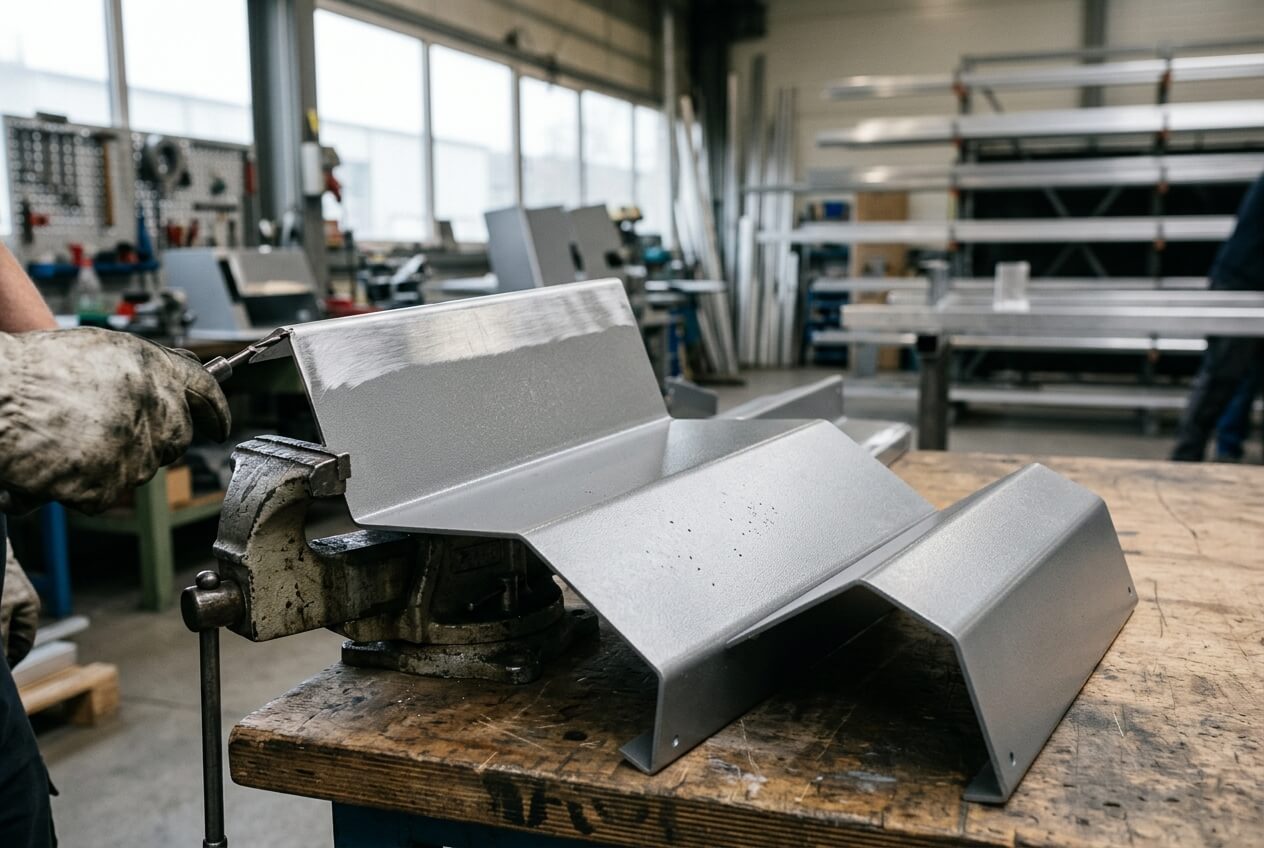
Powder coating covers colour. It does not erase poor process choices. Laser-cut edges may need deburring before coating. Welded areas may need dressing when they sit on a visible face. Bent corners need realistic radii so coating does not thin at the edge. Grinding marks may telegraph through gloss or textured powder under strong site lighting.
The issue starts when the RFQ defines only the final appearance. A supplier then chooses the fastest process that meets the drawing at a basic level. During production, that route can create burrs, rough weld zones, or sharp edges. The coating team then coats what arrives. The buyer sees the defect only after parts reach the project.
Clarify which faces need architectural appearance and which faces can accept normal fabrication marks. Mark cosmetic surfaces on drawings. State whether welds need grinding, blending, or only structural acceptance. Define edge rounding requirements where people touch the railing or where powder coverage matters.
One procurement team ordering powder coated aluminium support frames for outdoor signage faced this problem. The quote described welded aluminium frames and black powder. It did not mention weld dressing on visible corners. The sample looked acceptable from a distance. On the batch, sunlight revealed grind patterns and colour variation around the weld zones. Earlier cosmetic-face notes would have changed the quote and the inspection plan.
Yishang can review railing-related brackets, covers, frames, and welded assemblies from a fabrication viewpoint when buyers share drawings and finish expectations. The review works best before suppliers lock the quote assumptions.
Coating notes must control the finished assembly, not only the colour
Many railing disputes start with a short finish note: powder coated, black, outdoor. That note cannot make supplier quotes comparable. It does not define pretreatment, powder type, film thickness, gloss, texture, masking, rack marks, or inspection after coating.
Outdoor use also varies. A railing for a sheltered office stair does not face the same exposure as a poolside guardrail, coastal balcony, factory platform, or high-UV rooftop. If the RFQ does not state the environment, one supplier may quote a basic polyester finish while another includes aluminium pretreatment and stronger outdoor powder. The second quote may look expensive, but it may include real durability work.
Film thickness can solve corrosion risk and create assembly risk
Powder film build changes the final part size. Too little film can reduce edge protection. Too much film can close holes, slots, sliding joints, threaded inserts, and cover gaps. A base plate may pass inspection before coating, then fail to drop over anchor bolts after coating.
This risk often hides because drawings control bare metal dimensions. Fabricators cut, punch, bend, and weld to those dimensions. Coaters then add film. Inspectors may not recheck the critical interfaces after finishing unless the RFQ demands it.
Buyers should identify dimensions that matter after powder coating. Mounting holes, anchor slots, removable covers, hinge points, grounding areas, and mating tabs deserve special notes. Some areas may need masking. Others may need added clearance. Critical holes may need post-coating gauges.
Finish expectations should become quotation items
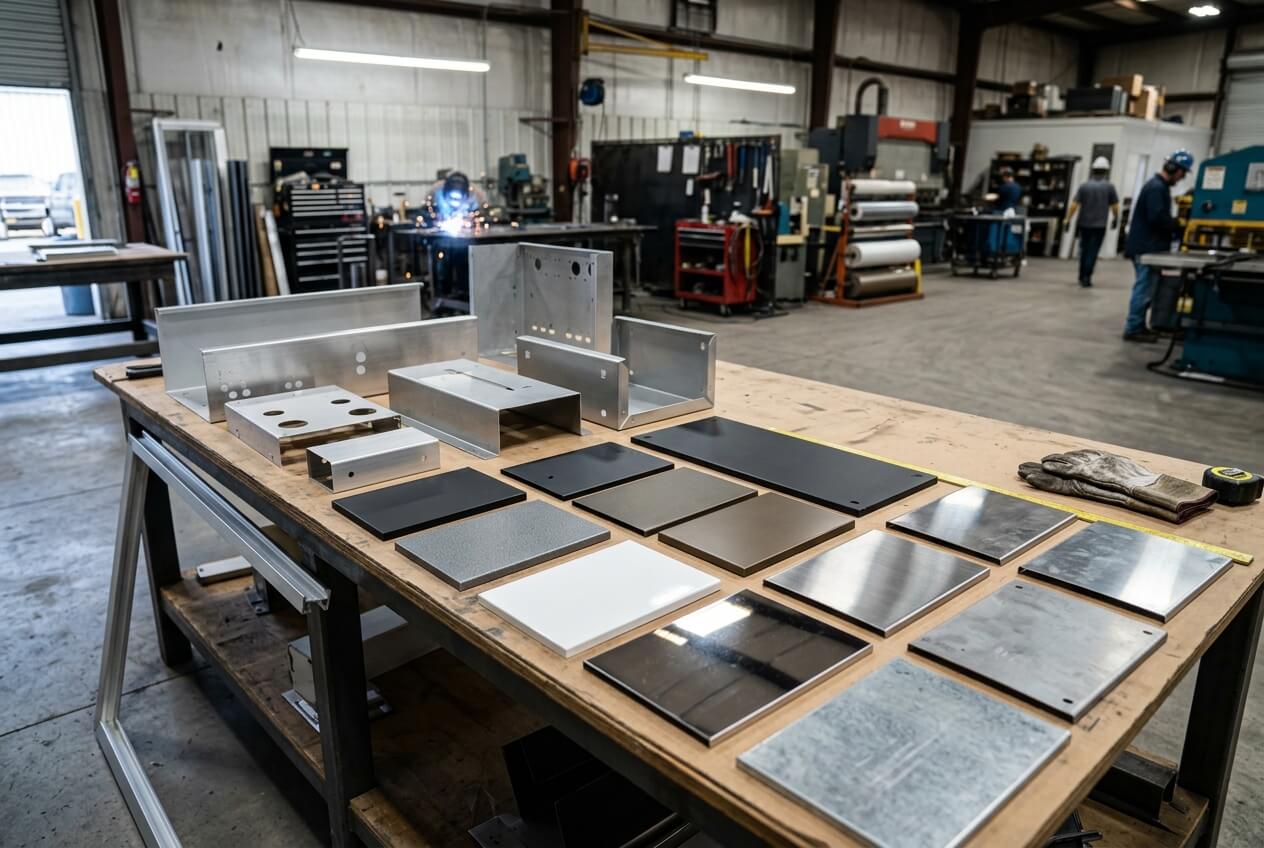
A comparable RFQ should state the coating system, not only the colour. Include the colour reference, gloss range, texture, film thickness range, pretreatment expectation, outdoor exposure, masking needs, and acceptable rack marks. If the project will use several production batches, ask how the supplier will control visual consistency between batches.
A cabinet manufacturer learned this on a small run of powder coated aluminium access panels. The drawing required a satin black finish, but it did not define gloss range or masking. The panels fitted during bare-metal inspection. After coating, several screw holes became tight and the gloss differed from adjacent cabinet doors. The supplier had not priced masking or matched batch control. The problem started at RFQ, not at final inspection.
For railings, finish expectations also affect packaging and lead time. Coated posts, long rails, and plates scratch easily during transport. If the RFQ ignores packaging, the supplier may price simple wrapping. The project may then receive acceptable parts with damaged coating. Specify separators, corner protection, labels for installation sequence, and packing lists for mixed assemblies.
Mounting datums decide whether finished railings install without site modification
Railing drawings often control overall size but leave installation datums unclear. That creates expensive uncertainty. A height dimension may start from finished floor level, the top of a base plate, a stair nosing, or the centreline of a wall bracket. A hole pattern may relate to the post centreline on the drawing but to cast-in anchors on site.
When suppliers assume different datums, their quotes include different risk. One supplier may plan jigs and post-coating hole checks. Another may assume normal fabrication tolerance and no mating inspection. The price gap may reflect inspection effort, not supplier efficiency.
Tight tolerances need a reason
Buyers sometimes react to fit problems by tightening every dimension. That approach raises cost and can still miss the real assembly risk. Aluminium welded assemblies can pull, twist, or distort. Powder coating heat can also reveal stress in thin covers or lightly built panels. A tight dimension on a non-critical edge adds cost without improving installation.
Control the dimensions that affect safety, alignment, and assembly. These usually include anchor-hole position, base plate flatness, post verticality, top rail height, bracket spacing, and fit to mating frames. Give hidden returns, decorative overhangs, and non-critical covers realistic tolerances.
Share the surrounding design. Send concrete anchor layouts, steel frame drawings, wall bracket details, installation photos, or sample measurements from site. If another supplier makes the mating frame, include that drawing in the RFQ. A railing supplier cannot control fit to an unknown interface.
This issue also appears outside railings. A buyer ordering powder coated aluminium brackets for an electrical enclosure specified tight hole positions but did not include the mating enclosure drawing. The brackets passed inspection at the fabricator. During assembly, coating build and enclosure tolerance stacked together. Operators had to file holes by hand, which exposed bare metal. A simple interface drawing and post-coating gauge would have reduced the risk.
Yishang often asks for mating-part information when reviewing custom sheet metal parts, metal enclosures, brackets, frames, or welded assemblies. That request can feel like a delay, but it helps prevent a cheaper quote from becoming a more expensive production problem.
Prototype approval must define what the batch must repeat
A prototype can create false confidence. Suppliers give samples extra attention. Welds may receive more hand finishing. Operators may adjust one bend manually. Coating may occur in a small batch with ideal rack spacing. The sample can look good while the purchase order still lacks repeatable controls.
Batch production needs defined acceptance points. If the prototype approval record only says approved, the supplier may not know which details matter most. The buyer may care about gloss, hole fit, base plate flatness, weld appearance, or scratch-free packaging. The supplier may believe the approval confirms only general appearance.
Record the decisions behind the approved sample
For powder coated aluminium railings, the approval record should capture the colour chip, gloss range, texture, coating thickness range, cosmetic faces, weld finish, edge condition, base plate flatness, and critical hole gauge results. Photos help, but lighting changes colour and gloss. Measurements and agreed standards reduce later disputes.
Inspection should follow the project risk. Balcony railings need checks for visible welds, scratches, rack marks, colour consistency, top-line alignment, and finish damage from packaging. Industrial access railings may need more focus on mounting holes, base plate flatness, edge coverage, stiffness, and fit to a platform frame.
Lead time also connects to prototype control. If buyers approve a sample and then compress batch delivery, the supplier may split coating runs, shorten inspection, or change packaging to meet the date. Those decisions can create colour variation or shipping damage. Discuss batch schedule, inspection points, and coating lot control before issuing the production order.
Before comparing final supplier prices, buyers should ask direct questions. Which assumptions does the quote include? Which dimensions will be checked after coating? What areas require masking? How will welded assemblies hold alignment? What packaging protects finished surfaces? These questions expose scope differences before they become claims.
If your powder coated aluminium railing quotes do not match, send Yishang the drawings, material requirements, quantities, critical tolerances, finish expectations, coating colour reference, installation photos, mating frame or anchor details, and prototype comments. A fabrication review can help you compare suppliers on the same material, process, coating, and assembly basis before batch production starts.
Frequently Asked Questions
What is the biggest RFQ risk with powder coated aluminium railings?
The biggest risk is comparing quotes built on different assumptions. One supplier may include fabricated plates, welding, outdoor pretreatment, masking, and post-coating checks. Another may price a simpler version. The low quote can later create coating defects, tight holes, site drilling, or delayed installation.
How should buyers separate extrusion and sheet metal fabrication in a railing RFQ?
List rails and posts separately from base plates, gussets, brackets, covers, infill panels, and caps. State which items use extrusion and which items need laser cutting, punching, bending, welding, or grinding. This makes the manufacturing route visible during quotation.
Why should mounting holes be checked after powder coating?
Powder coating adds film thickness around holes, slots, tabs, and mating edges. A hole that fits before finishing may become tight after coating. Mark critical interfaces for masking, added clearance, or post-coating gauge checks, especially where railings fit anchors or frames.
What coating details make aluminium railing quotes more comparable?
Define the exposure environment, pretreatment expectation, powder type, colour reference, gloss range, texture, film thickness range, masking, acceptable rack marks, and cosmetic faces. These details show whether a supplier priced only colour or a full outdoor coating system.
Why can an approved prototype still fail to control batch production?
A prototype may receive extra manual care. Batch production needs repeatable instructions for alloy, weld finish, hole position, coating thickness, colour control, inspection, and packaging. Record what the sample approves so the supplier can repeat the same result at quantity.
What should buyers send for a useful fabrication review?
Send drawings, quantities, material notes, critical tolerances, coating requirements, colour references, mating-part drawings, anchor layouts, installation photos, and prototype feedback. These inputs help identify quote assumptions before fabrication, powder coating, and assembly work begin.