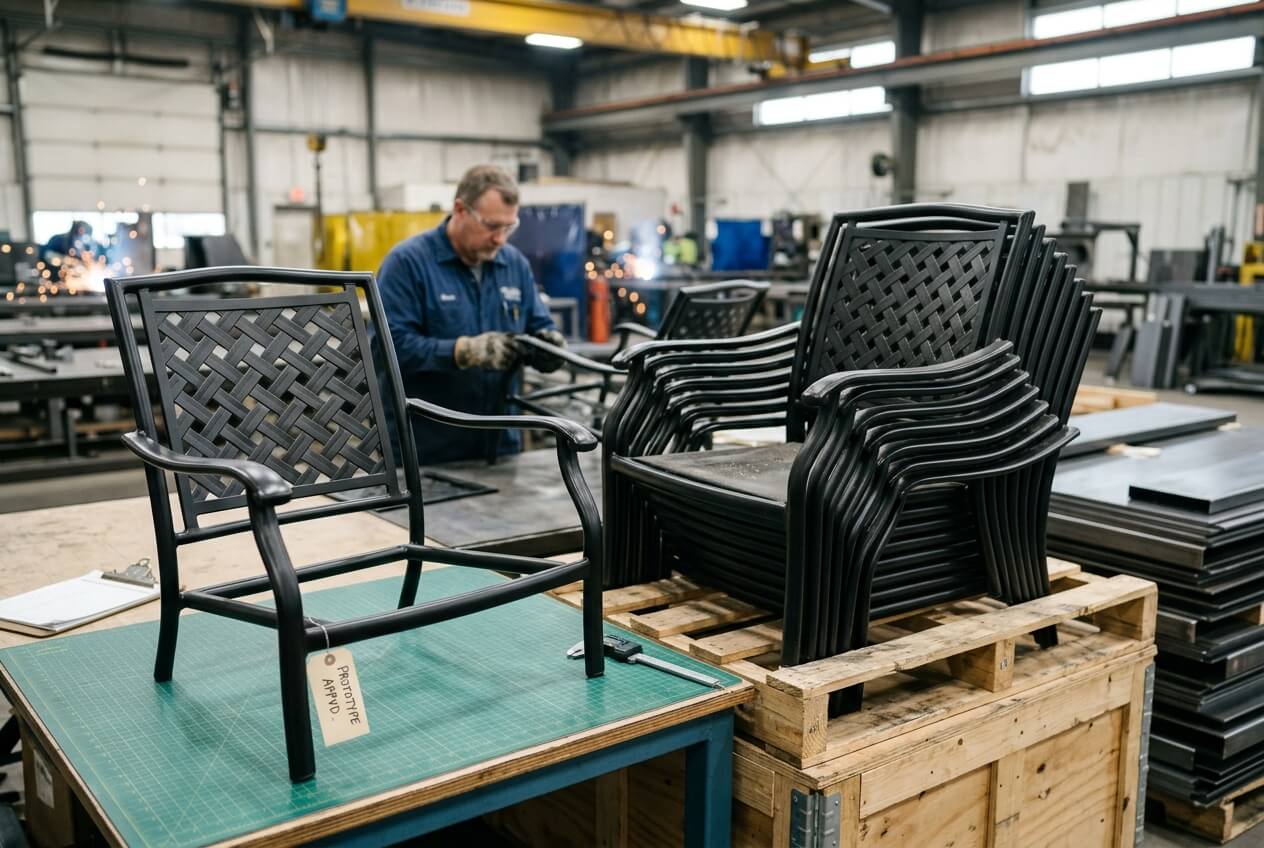
A buyer approves a matte black dining chair prototype. The welds look smooth. The seat panel fits. The armrests align with the back frame. The powder coated steel patio furniture sample also survives a showroom review without visible scratches.
Then the first batch arrives. Some chair legs rock on a flat floor. Several seat-panel screws need force. The table frame sits high at one corner. Powder coating looks thin near weld toes, while nested parts show rub marks from transport.
This problem rarely starts with one careless operation. It usually starts when the approved prototype becomes the production standard without enough manufacturing detail. A prototype can receive hand fitting, hole correction, extra polishing, slower coating, and stronger packaging. A batch cannot rely on those same hidden corrections unless the RFQ, drawings, and inspection plan make them repeatable.
The dominant procurement risk is simple: prototype approval can hide the real batch control requirements. If buyers do not clarify what must repeat, suppliers quote different fixture costs, tolerance assumptions, coating controls, inspection points, and packing methods. The cheapest quote may exclude the exact controls that made the sample acceptable.
This article explains how that risk affects custom powder coated steel patio furniture, welded frames, brackets, enclosures, cabinets, and other sheet metal assemblies. It focuses on the transition from approved sample to repeatable production, not on a generic furniture buying checklist.
Prototype Approval Can Hide Manual Corrections That Do Not Scale
A showroom sample proves that one set can be made. It does not prove that 300 sets will assemble, stand level, and ship without coating damage. Many prototype shops rely on skilled fitting because the quantity is low. Operators can tack weld, test fit, adjust, grind, drill, and touch up until the sample looks right.
That flexibility helps design development. It creates procurement risk when the buyer uses the sample as the only production reference. The supplier may not know which corrections mattered. Another supplier may quote from the drawing alone and miss every change made during sampling.
Where the hidden correction enters the order
Consider a patio chair side frame made from bent tube, laser-cut tabs, and welded cross braces. During prototype work, the welder may shift a tab by hand to align the seat panel. The operator may also open one hole by 1 mm after welding. The sample assembles cleanly, but the drawing still shows the old tab position and original hole size.
In batch production, the same detail becomes a repeated defect. If the supplier welds from the drawing, the seat holes will not align. If the supplier repeats the hand correction, cycle time rises and consistency drops. If workers force the screws, they can damage threads or chip the powder coating around the hole.
Buyers should treat each approved prototype as evidence, not as a complete specification. After approval, they need to ask what changed from the original file. Small changes to bracket position, bend angle, hole size, weld length, or coating texture should move into the production drawing and BOM before the purchase order.
Short project example: outdoor display frame
A retail brand approved a small powder coated steel display frame for an outdoor product launch. The prototype stood square because the fabricator manually corrected the diagonal after welding. The drawing did not show a diagonal tolerance or a required fixture. When the buyer requested 800 units, two suppliers quoted very different prices. One included a welding fixture and first-article checks. The other quoted manual welding only. The lower quote looked attractive, but it carried a higher risk of leaning frames, uneven shelf fit, and local rework before store installation.
For projects like this, Yishang can review drawings and prototype notes before batch release. The useful question is not only whether the part can be made. The stronger question is which prototype corrections need process control in production.
RFQ Ambiguity Turns the Same Prototype Into Different Supplier Quotes
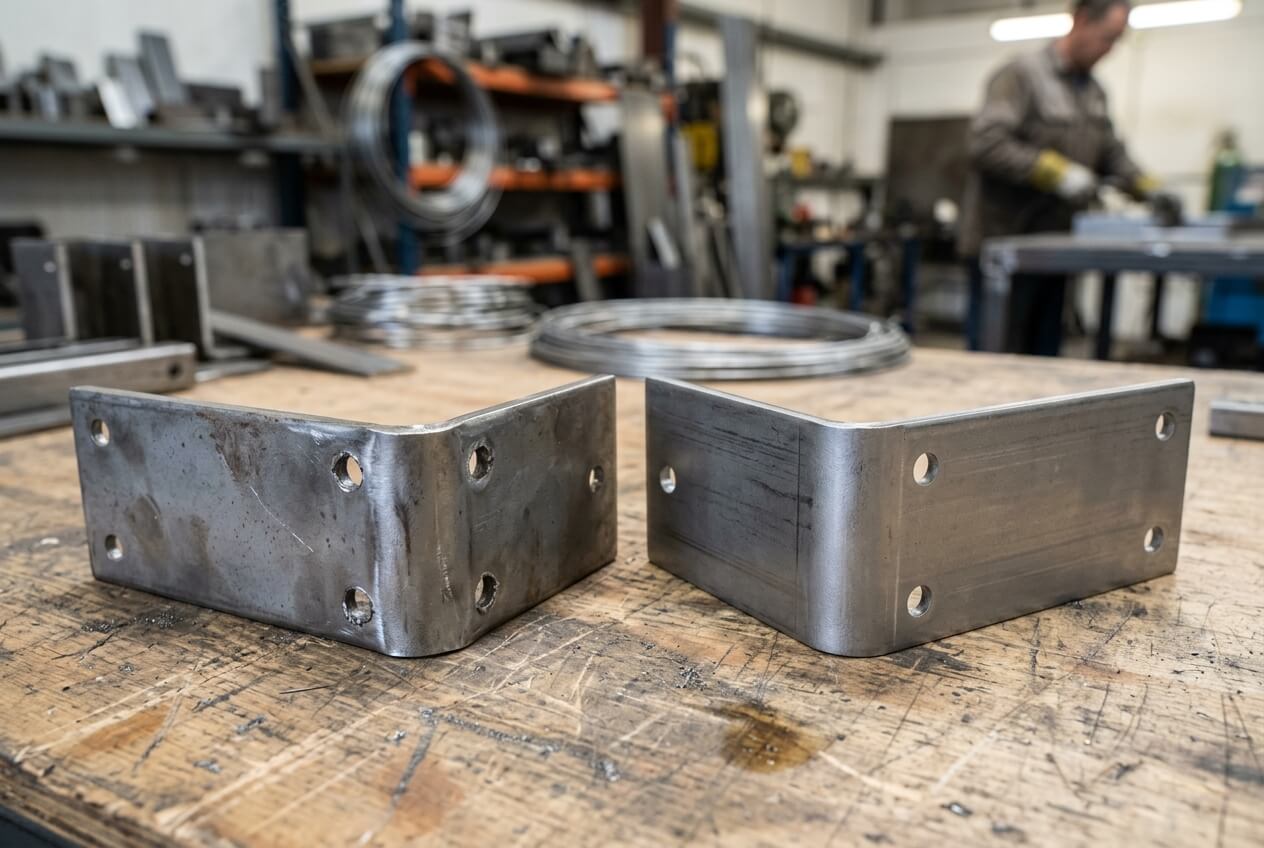
Two suppliers can look at the same approved patio furniture sample and build two different cost models. One may assume dedicated fixtures, masking, post-coating thread checks, and protective separators. Another may assume general tolerances, manual alignment, open stacking, and visual inspection only. Both quotes can appear valid if the RFQ does not define the production standard.
This is where prototype approval distorts procurement. Buyers compare unit prices, but they may not compare the same manufacturing scope. The gap often appears after welding and powder coating, when correction costs much more.
For powder coated steel patio furniture, the RFQ should identify the features that cannot drift from the approved sample. These may include chair leg stance, foot levelness, armrest height, back angle, tabletop mounting pattern, and seat-panel hole alignment. The RFQ should also state which surfaces need cosmetic protection and which areas allow hook marks or minor handling marks.
Assumptions that change the quote
Welding fixtures create one of the largest differences. A patio chair may need a fixture that controls leg angle, armrest height, and bracket spacing. A table frame may need a fixture for diagonal measurement and top-plane flatness. Without that requirement, a supplier can quote lower by using manual layout and accepting wider variation.
Powder coating assumptions also shift cost. A bare hole may fit during the prototype stage, then become tight after coating buildup. Threaded inserts, adjustable foot glides, hinge points, and sliding joints may need masking. If the RFQ says only “black powder coating,” suppliers must guess the powder type, pretreatment, coating thickness, gloss range, and masking level.
Inspection assumptions matter as well. A supplier may inspect parts before coating but not after coating. That creates a blind spot because coating thickness, hanging points, curing, and handling can all affect assembly. Buyers should call out post-coating checks for holes, threads, flatness, and visible surfaces.
Short project example: metal equipment enclosure
A buyer approved a powder coated outdoor equipment enclosure with a hinged door and welded mounting brackets. The prototype door closed well because the shop adjusted the hinge bracket after welding. The RFQ did not define hinge datum, door gap, gasket compression, or coating-free grounding points. In batch production, doors scraped the frame after coating. Some grounding studs also needed cleaning before assembly. The problem started as a prototype correction, moved into quote ambiguity, and ended as a production delay.
The same pattern appears in patio furniture. A chair frame, table base, outdoor cabinet, or welded bracket can pass sampling and still fail batch assembly if the quote does not include the controls behind the sample.
Assembly Fit Fails When Prototype Dimensions Are Not Converted Into Production Controls
Outdoor furniture often combines formed sheet metal, steel tube, laser-cut panels, welded brackets, inserts, screws, plastic feet, and packaging parts. Each component may sit within a reasonable tolerance. The assembly can still fail when those tolerances stack in the wrong direction.
A prototype hides this problem because the team builds one assembly and reacts to it. Batch production needs planned control points. Buyers do not need tight tolerances on every dimension. They need clear control on dimensions that affect stability, replaceable parts, and customer assembly.
For a patio chair, critical dimensions may include hole position from a bend line, bracket height from the floor, distance between side frames, and angle of the chair back. For a dining table, they may include diagonal measurement, tabletop support flatness, and mounting plate position. For a bench, cross-member location and leg spread may matter more than a decorative edge dimension.
Where tolerance choices affect cost and lead time
Tight tolerances raise cost when they require fixtures, slower welding, secondary machining, or more inspection. Loose tolerances reduce cost only when they do not affect assembly. The risk grows when the drawing uses general tolerances but the buyer expects prototype-level fit.
For example, a laser-cut seat panel may have accurate holes. The welded chair frame may vary more because heat pulls the side rails. If the drawing defines only the panel hole size, the supplier may not control the bracket position tightly enough. Assembly workers then use force, enlarge holes, or reject parts. Each choice adds cost and can damage the finish.
Buyers should separate functional dimensions from noncritical features. They can mark dimensions that need fixture control or first-article measurement. They can also approve larger clearance holes where appearance allows. This approach protects assembly without overpricing every cut edge, bend, and decorative feature.
Batch consistency needs a verification step
A pre-production set or pilot lot often prevents expensive surprises. The supplier can weld a small group with the planned fixture, powder coat it using the production process, and run a real assembly check. This step confirms more than dimensions. It reveals coating buildup, screw access, tool clearance, foot leveling, stacking behavior, and visible surface handling.
Yishang often asks buyers to share mating part drawings, approved sample photos, and assembly notes when reviewing sheet metal fabrication projects. Those details help identify which dimensions need production control and which can stay under general tolerance.
Powder Coating and Packing Can Change a Passing Prototype Into a Rejected Batch
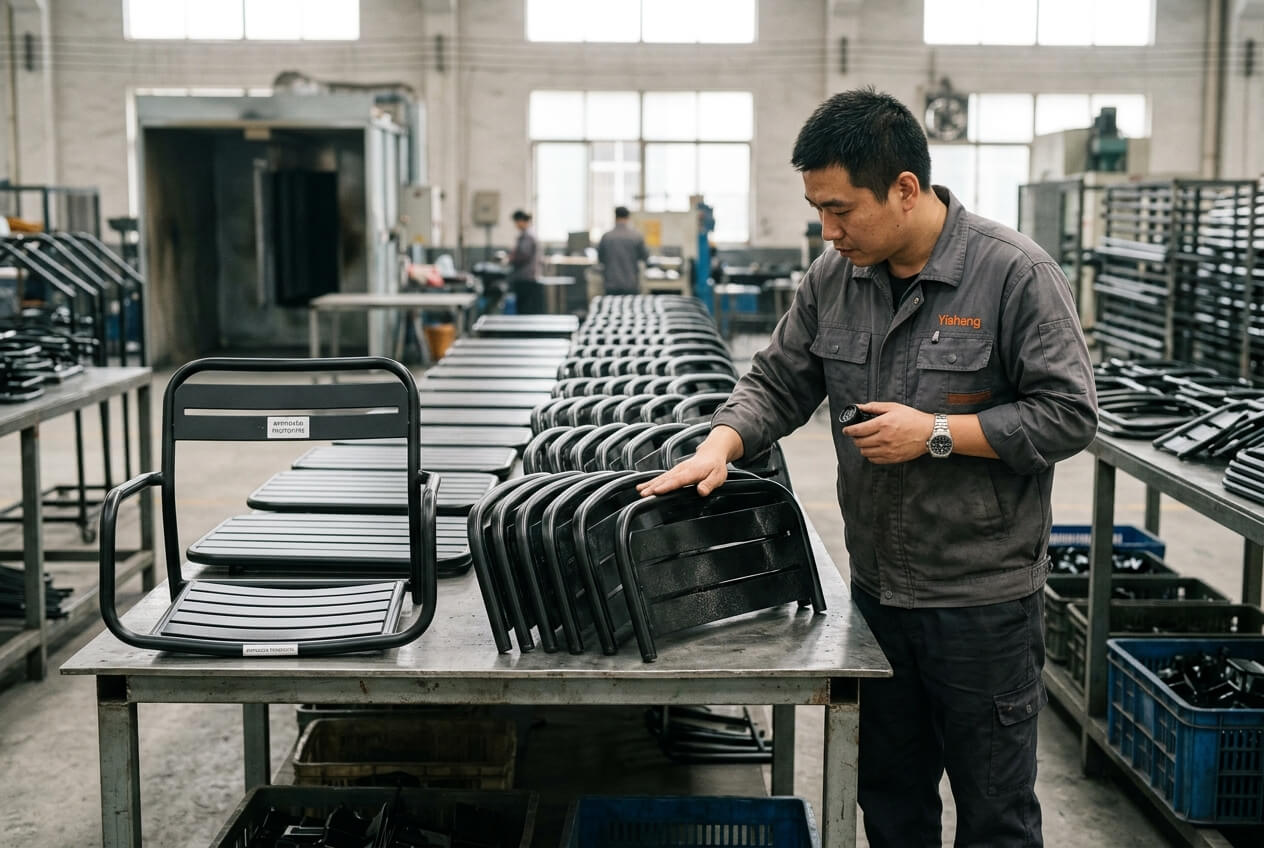
Finish approval can mislead buyers when it happens on one carefully handled sample. A prototype may receive extra surface preparation, slower coating, and individual packing. A batch moves through pretreatment, hanging, spraying, curing, cooling, inspection, assembly, and carton loading. Each step can change fit or appearance.
Powder coated steel patio furniture faces harsher expectations than indoor display parts. Rain, condensation, UV exposure, poolside moisture, coastal air, and customer assembly all increase risk. The RFQ should describe the production finish, not only the sample color.
Useful finish details include pretreatment method, powder type or approved equivalent, color code, gloss or texture range, target coating thickness, masking zones, and cosmetic inspection distance. Buyers should also define edge and weld-zone expectations. Laser-cut edges, tube ends, drain holes, and weld toes often become weak points when water sits on the surface.
Coating buildup can create assembly defects
Coating thickness changes holes, slots, threads, hinge points, and mating surfaces. A screw that fits the bare prototype may bind after coating. An adjustable foot may not thread smoothly. A sliding support may scrape powder from a contact surface.
If the RFQ does not call out masking or post-coating checks, the supplier may discover the problem during assembly. Workers may chase threads, scrape holes, or force hardware. These fixes consume time and can expose bare steel, which increases corrosion risk.
Buyers should mark all coating-sensitive features on the drawing. Threads, grounding points, bearing surfaces, nesting contact areas, and tight clearance holes deserve special attention. A simple masking note can prevent many disputes later.
Packing must match the approved surface standard
Packaging looks secondary until the container arrives with rubbed corners and shiny pressure marks. Patio furniture frames often have large coated faces, protruding brackets, and irregular nesting points. If parts contact each other during sea freight, vibration can wear through the coating at corners and welds.
A prototype may ship in extra foam because it is one sample. A batch needs a repeatable packing method that protects the actual visible surfaces. The buyer should review carton layout, separators, nesting direction, pallet compression, and hardware location. They should also state which surfaces cannot show rub marks after transport.
Finish and packing requirements affect price and lead time. They may require masking labor, thicker separators, more cartons, or a pilot packing test. These costs matter less than rejected goods, local sorting, delayed retail launches, or field complaints from customers.
Clarify the Production Standard Before You Compare Quotes
The safest time to remove prototype-to-batch risk is before the first production purchase order. At that stage, buyers still have leverage to clarify drawings, compare quote scope, adjust tolerances, review finish expectations, and plan verification. After welding and coating, every correction becomes slower and more expensive.
Start by defining the approval status. State whether the prototype is approved as-is, approved with changes, or approved only for appearance. If the sample needed changes, revise the 2D drawing, 3D file, BOM, coating specification, and inspection notes. Email comments alone can disappear when procurement, engineering, and production teams exchange files.
Next, identify the features that must repeat. For patio furniture, these usually include stance, levelness, hole position, visible alignment, tabletop support flatness, armrest height, stackability, and finish appearance. For sheet metal enclosures or cabinets, they may include door gaps, hinge alignment, gasket compression, mounting hole patterns, and coating-free electrical contact points.
Then ask suppliers to quote the same scope. The RFQ should state expected quantity, material grade and thickness, tube size, welding standard, critical tolerances, powder coating requirements, masking, inspection points, pilot lot needs, and packaging expectations. This does not make the RFQ complicated. It prevents suppliers from filling the gaps with different assumptions.
Finally, connect quality requirements to production checks. If levelness matters, define how to check it. If a seat panel must assemble after coating, inspect it after coating. If visible surfaces must stay clean, test the packing method before shipping the full order.
A strong procurement process does not demand perfect drawings at the first inquiry. It does require buyers to convert prototype lessons into production instructions before batch release. That single discipline helps protect cost, lead time, supplier communication, assembly fit, and customer acceptance.
Scaling a patio furniture prototype into a production order? Send Yishang your 2D drawings, 3D files, material requirements, tube or sheet thickness, target quantities, critical tolerances, finish expectations, approved sample photos, assembly notes, packaging requirements, and any prototype corrections. The team can review manufacturability, fixture needs, coating risks, post-coating inspection points, and packing protection before you release the batch. Share your project details at https://zsyishang.com/.
Frequently Asked Questions
Why can an approved powder coated steel patio furniture prototype fail in batch production?
The prototype may include manual corrections that never reached the production drawing. Operators may have adjusted weld gaps, opened holes, polished welds, or packed the sample with extra protection. Batch production needs fixtures, updated drawings, coating controls, and inspection points that repeat those results.
What should buyers update after approving a patio chair or table frame sample?
Buyers should update hole positions, bracket locations, bend angles, weld details, finish texture, masking areas, assembly notes, and packing requirements. Any change that made the sample acceptable should appear in the drawing, BOM, inspection plan, or coating specification before the purchase order.
How does RFQ ambiguity affect supplier quotes for welded patio furniture?
Ambiguity lets each supplier price different assumptions. One supplier may include welding fixtures, masking, pilot assembly, and protective packaging. Another may quote manual alignment and basic visual inspection. The unit prices may look comparable, but the production risk differs greatly.
Which dimensions usually need tighter control on patio furniture frames?
Control dimensions that affect assembly, stability, and visible alignment. Common examples include leg stance, foot levelness, tabletop mounting patterns, bracket spacing, chair back angle, armrest height, seat-panel hole position, and diagonal measurement on table frames.
Why should buyers inspect some features after powder coating?
Powder coating changes the size of holes, slots, threads, and tight mating areas. It can also create buildup near welds and edges. Post-coating inspection helps confirm that screws fit, foot glides turn, visible surfaces meet the standard, and assembly does not damage the finish.
What information should buyers send for a more accurate production review?
Send 2D drawings, 3D files, material and thickness requirements, quantities, tolerance notes, finish expectations, approved sample photos, assembly feedback, and packaging expectations. These details help the supplier identify fixture needs, cost drivers, lead-time risks, and batch consistency controls.