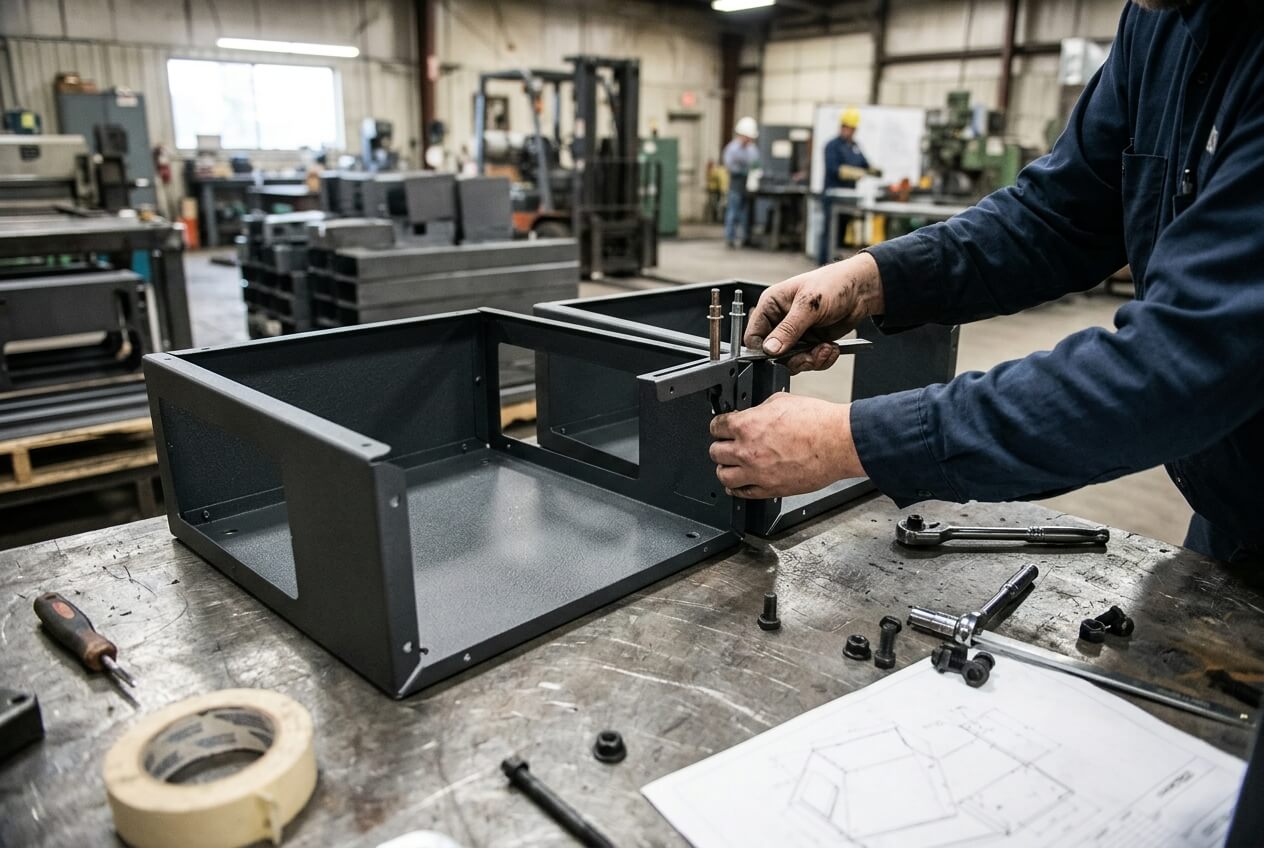
An OEM buyer sends drawings for a laser-cut and bent enclosure that will sit near a heating element. The drawing controls the panel size, bends, mounting holes, and black matte color. The finish note only says high heat powder coat. Three suppliers quote the same files, yet their prices differ sharply.
That price gap may not come from margin. One supplier may assume a standard polyester powder. Another may include silicone-based high-temperature powder, masking, plug protection, and post-coat thread cleaning. A third may ask about surface temperature, coated clearance, hinge movement, and mating parts before quoting.
This article focuses on one procurement risk: an unclear high heat powder coat requirement lets suppliers quote different assumptions, then the finished sheet metal part fails during assembly or heat exposure. The metal can meet the drawing. The coating can look acceptable. Still, screws may not enter threads, doors may bind, sliding panels may scrape, and surfaces may discolor after operation.
For custom sheet metal fabrication, the finish is not only a cosmetic layer. It changes clearances, holes, slots, bends, flanges, welded joints, and contact surfaces. Buyers need to define heat exposure and post-coat assembly requirements before comparing unit price.
Where a Vague High Heat Powder Coat Note Distorts the Quote
A vague finish note creates hidden choices before fabrication starts. The words high heat can describe many conditions. A control cabinet near warm electronics, a cooking equipment panel, and a heat shield near an exhaust path all face different surface temperatures. They also need different coating systems and inspection controls.
Suppliers must fill the gaps when the RFQ lacks temperature and assembly details. One may quote a common powder because the part only seems warm. Another may quote a high-temperature powder because the buyer mentioned a heating element. A third may add masking around threads, grounding points, gasket seats, and hinges. All three quotes can look valid, but they do not cover the same risk.
Cure temperature is not service temperature
Buyers often confuse powder cure temperature with operating temperature. Many powders cure at a specified metal temperature, often around 180°C to 200°C depending on the product. That does not prove the finished coating can run continuously at that temperature. Service heat can cause gloss loss, color change, softening, cracking, or adhesion loss if the powder system does not match the real surface condition.
The RFQ should state continuous surface temperature and short peak surface temperature. Ambient temperature and heater wattage help, but they do not replace measured or estimated part temperature. A part surface at 90°C creates a different sourcing decision than a shield that may reach 250°C.
The same color can hide different processes
Black matte high heat powder coat can mean several powders and process routes. Epoxy powders often serve indoor adhesion and chemical resistance needs. Polyester and polyurethane powders suit many decorative or exterior parts, depending on formulation. Epoxy-polyester hybrids appear on many indoor equipment panels. Silicone-based high-temperature powders serve hotter areas, such as BBQ components, industrial guards, exhaust-related shields, and hot-zone cabinets.
The quote changes when the powder changes. Pretreatment, cure window, rack method, film build, and inspection may also change. If the RFQ does not define the working heat condition, procurement may compare a low quote against a more complete quote and select the one that excluded the real requirement.
The Quote Gap Often Hides Post-Coat Assembly Work
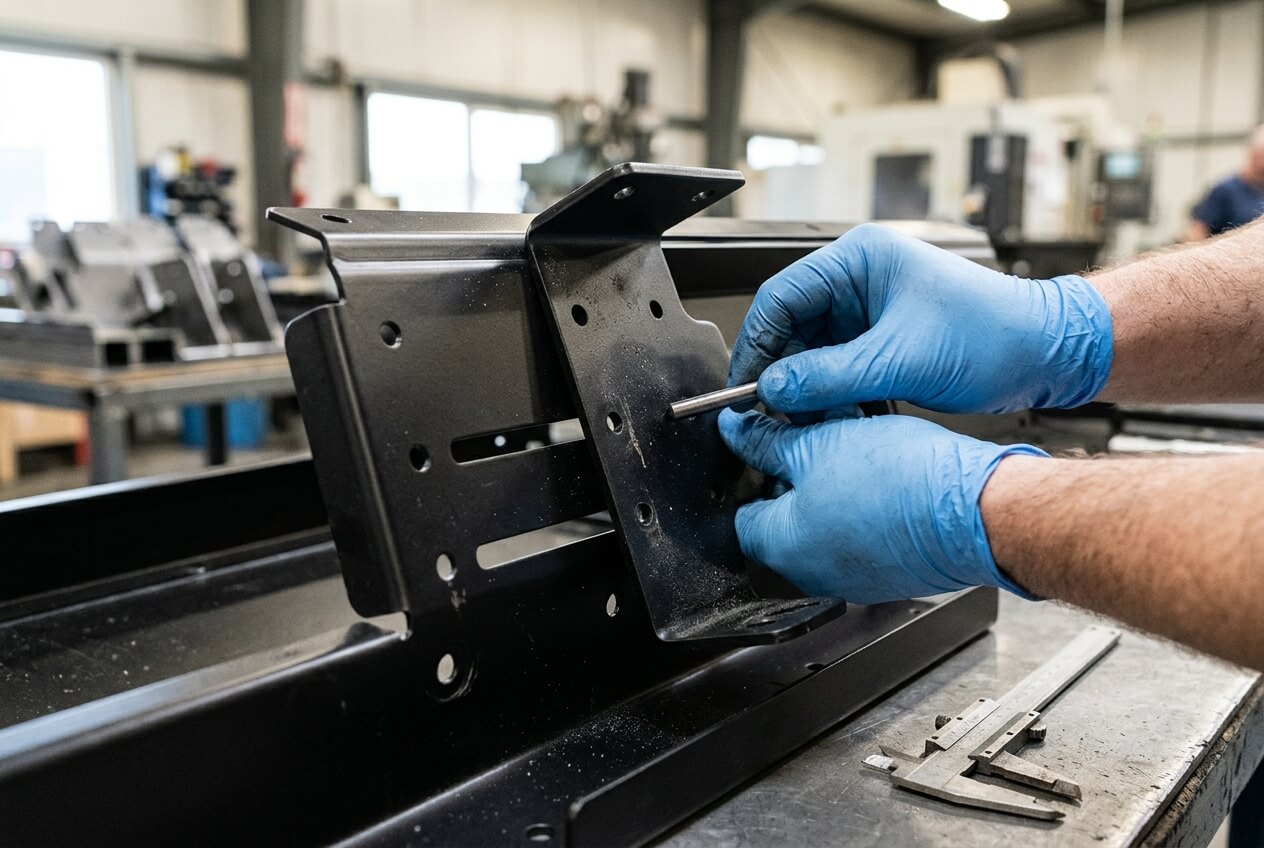
Powder coating adds material to the part. That sounds simple, but it creates real assembly risk. Coating can reduce hole clearance, narrow slots, thicken flange edges, fill countersinks, and interfere with hinge or latch movement. It can also affect PEM fastener areas, grounding points, gasket grooves, and sliding rails.
A supplier can laser cut, bend, weld, and inspect the bare-metal part correctly. After coating, the assembly may still fail. The problem starts when the drawing controls only bare-metal dimensions, while the product needs finished clearances after coating.
Example: enclosure cover that passed inspection but failed installation
Consider a compact heating-device enclosure. The buyer approves the flat pattern, bend dimensions, and mounting hole locations. The supplier applies a heat-resistant black powder. Incoming inspection checks the overall size and finish appearance, so the parts pass.
During assembly, the coated side flange rubs against an internal bracket. Operators force the cover into place, which scratches the visible face. The root cause did not start at assembly. It started in the RFQ, where the buyer did not identify the flange as a post-coat mating feature. The supplier quoted coating but not clearance review, masking, or finished-dimension inspection at that interface.
Example: welded frame with inconsistent batch fit
A welded display frame sits near a heated product area. The frame has laser-cut tabs that hold smaller brackets and panels. The prototype fits after an operator sands one coated edge by hand. The buyer sees the assembled sample and approves the finish.
Batch production exposes the hidden assumption. Some frames assemble smoothly. Others need rework because welding pull, coating build-up, and tab clearance vary together. The high heat powder coat did not cause the whole problem alone. It amplified a tolerance stack that the RFQ never treated as a finished assembly requirement.
To prevent this chain, buyers should separate cosmetic surfaces from functional interfaces. A decorative face may need consistent color and texture. A hinge knuckle may need free movement. A threaded hole may need masking or post-coat chasing. A grounding point may need bare metal. Each feature needs the right note, not the same coating instruction everywhere.
Prototype Approval Can Freeze the Wrong Assumptions
Prototype approval can reduce risk, but it can also hide risk. A single sample often receives more attention than a production batch. A skilled technician may choose a favorable rack position, clean coated threads, adjust a latch, or remove a small burr after coating. If nobody records that work, the approved sample becomes misleading.
High heat powder coat adds two types of repeatability risk. The first involves assembly fit. The second involves coating performance after heat exposure. A sample can look correct on the bench, then change after heat cycling near an oven, lamp, heater, or hot process area.
Approval should include the process, not only the part
Buyers should ask which controls created the approved prototype. Important items include powder brand or series, pretreatment method, target film thickness, cure profile, masking areas, rack contact locations, and post-coat inspection points. If the supplier changes these controls during batch production, the parts may still match the drawing note but fail in use.
Film thickness deserves special attention. A thicker coating may improve coverage on visible faces, but it can hurt functional areas. A thinner coating may preserve fit, but it may weaken edge coverage or heat durability. The best target depends on where the part needs protection and where it needs clearance.
Heat tests should match the consequence
Not every project needs the same validation. A warm indoor electronics cover does not need the same test plan as a hot-zone industrial guard. Still, the buyer should define the consequence of coating failure. Will discoloration create a customer complaint? Will softening near a fastener loosen the assembly? Will adhesion loss expose corrosion-prone steel?
Useful checks may include cross-hatch adhesion testing such as ASTM D3359, heat exposure based on coating supplier data, sample installation into the real assembly, and inspection of finished holes or sliding areas. If corrosion also matters, salt spray testing may enter the plan. The RFQ should connect these checks to the project risk rather than list them as generic quality requirements.
Yishang can review drawings, mating parts, and prototype feedback when buyers need custom sheet metal parts with heat-resistant powder coating. That review works best when the buyer shares both the fabrication drawing and the installation context.
What to Clarify Before You Compare High Heat Powder Coat Quotes
Procurement teams often compare unit prices too early. With high heat powder coat, a low quote may simply exclude the work that protects assembly fit. The buyer should first make sure each supplier quoted the same heat condition, coating scope, masking plan, and inspection method.
The RFQ does not need to over-control every feature. Over-specification can raise cost and extend lead time. Instead, define the areas where failure would create rework, field complaints, or delayed assembly. A drain hole may tolerate coating build-up. A locating hole, hinge area, latch slot, or threaded insert may not.
Drawing notes that remove the most dangerous assumptions
Strong RFQs define the material and thickness, finish expectation, quantity, tolerances, and service condition. For the finish, state the continuous and peak coated surface temperature. Mark visible surfaces, rack-mark restrictions, and acceptable texture. Identify holes, threads, slots, countersinks, PEM fastener zones, grounding points, gasket seats, and sliding faces that need masking or finished inspection.
For assemblies, include mating part drawings or photos when possible. Add notes such as door must open freely after coating, M5 threads must remain clean, bracket must slide into rail without scraping, or gasket seat must stay free of powder. These simple notes tell suppliers which risks belong in the quote.
Cost and lead time should reflect the agreed risk
Masking, plugs, thread chasing, heat testing, extra inspection, and tighter finished dimensions add cost. They may also affect lead time. That does not mean buyers should avoid them. It means procurement should apply them only where the consequence justifies the control.
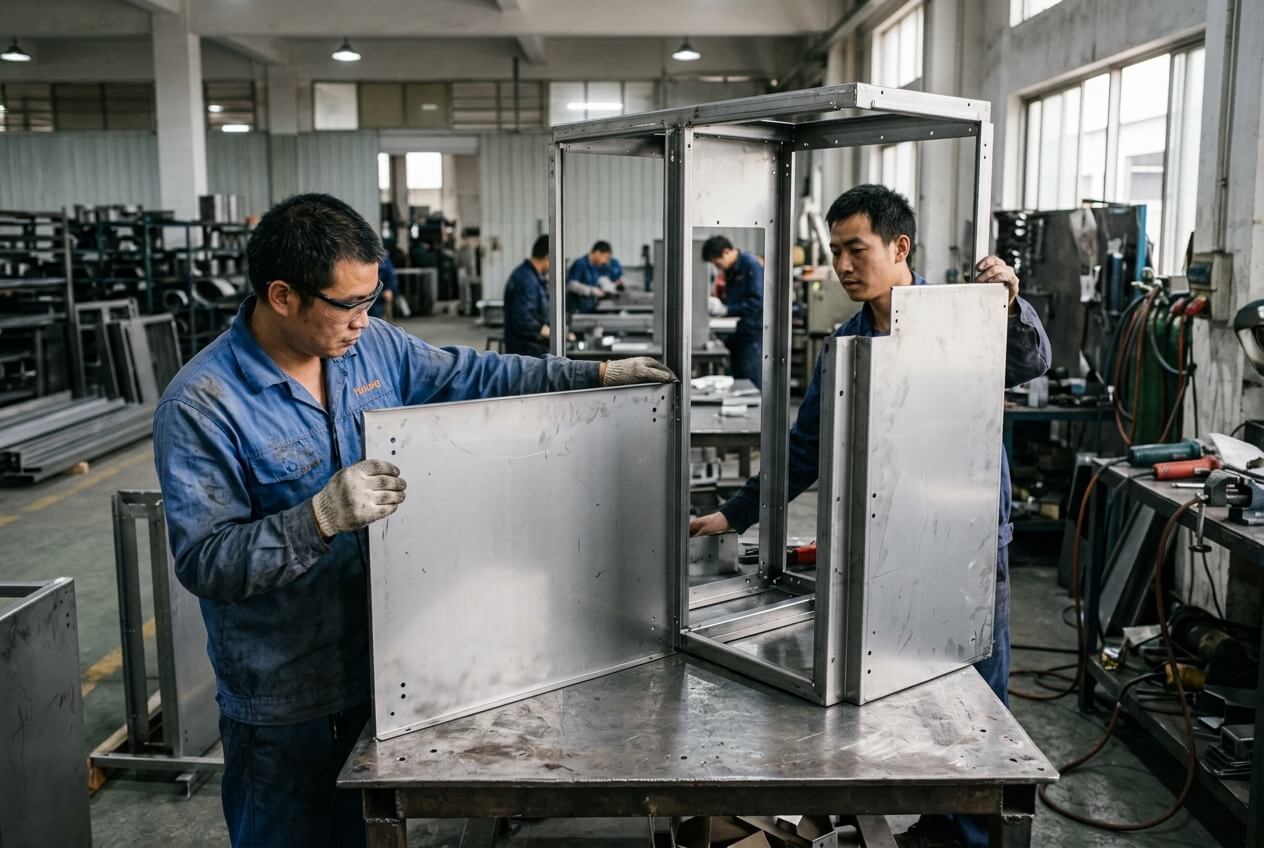
A flat bracket with generous clearance holes may need only a suitable powder and basic appearance inspection. A metal enclosure with hinges, gasket channels, louvers, internal brackets, and removable panels needs more review. A welded assembly that bolts into another structure may need an assembly trial before batch release. The quote should show those differences.
Supplier communication should happen before purchase order release. Ask each supplier what powder type they assumed, what film thickness they targeted, which areas they masked, and whether finished-hole inspection or assembly trial is included. If one quote excludes these items, it may not be cheaper after rework, sorting, or line delays.
For buyers sourcing enclosures, brackets, frames, cabinets, or welded assemblies, Yishang can support RFQ review across laser cutting, bending, welding, finishing, and assembly requirements. The goal is not to add unnecessary controls. The goal is to make the coating assumption visible before it becomes a production problem.
Planning sheet metal parts with high heat powder coat? Send Yishang your drawings, material requirements, sheet thickness, quantities, tolerance notes, finish color or texture, expected continuous and peak surface temperatures, masking needs, mating part details, and prototype fit-up feedback. A clearer RFQ helps align coating choice, post-coat clearance, inspection scope, cost, and lead time before production starts. Contact Yishang to request a drawing and RFQ review.
Frequently Asked Questions
What information should I provide for high heat powder coat on a sheet metal enclosure?
Provide the coated surface temperature during normal operation, any short peak temperature, material and thickness, finish color or texture, visible surfaces, masking needs, and assembly interfaces. Also share drawings or photos of mating parts if hinges, sliding panels, brackets, or gasket seats must fit after coating.
Why can a powder-coated part meet the drawing but fail assembly?
The drawing may control bare-metal dimensions while the product needs finished clearances after coating. Powder can reduce hole size, narrow slots, thicken flanges, and affect hinges or threads. If the RFQ does not identify those functional areas, the supplier may quote and inspect the wrong condition.
Is high heat powder coat always more expensive than standard powder coat?
Not always, but it often adds cost when the project needs a higher-temperature powder, special pretreatment, masking, heat validation, or finished-dimension inspection. The price should reflect the real service temperature and assembly risk, not only the color requirement.
Should threaded holes and PEM fastener areas be coated or masked?
It depends on function. Threads that must accept screws without extra labor often need masking, plugs, or post-coat chasing. PEM fastener zones may need protection if coating build-up affects seating, grounding, or assembly torque. Mark these areas clearly on the drawing.
How can prototype approval prevent batch problems with heat-resistant powder coating?
Record the powder series, pretreatment, cure profile, target film thickness, masked areas, rack locations, and assembly checks used on the approved sample. Then carry those controls into batch production. This reduces the chance that a prototype passes because of hidden handwork.
What is the biggest procurement mistake when comparing high heat powder coat quotes?
The biggest mistake is comparing unit price before checking assumptions. Confirm powder type, service temperature, masking, finished clearances, inspection points, prototype tests, and assembly trials. A lower quote may exclude the controls that prevent rework after delivery.