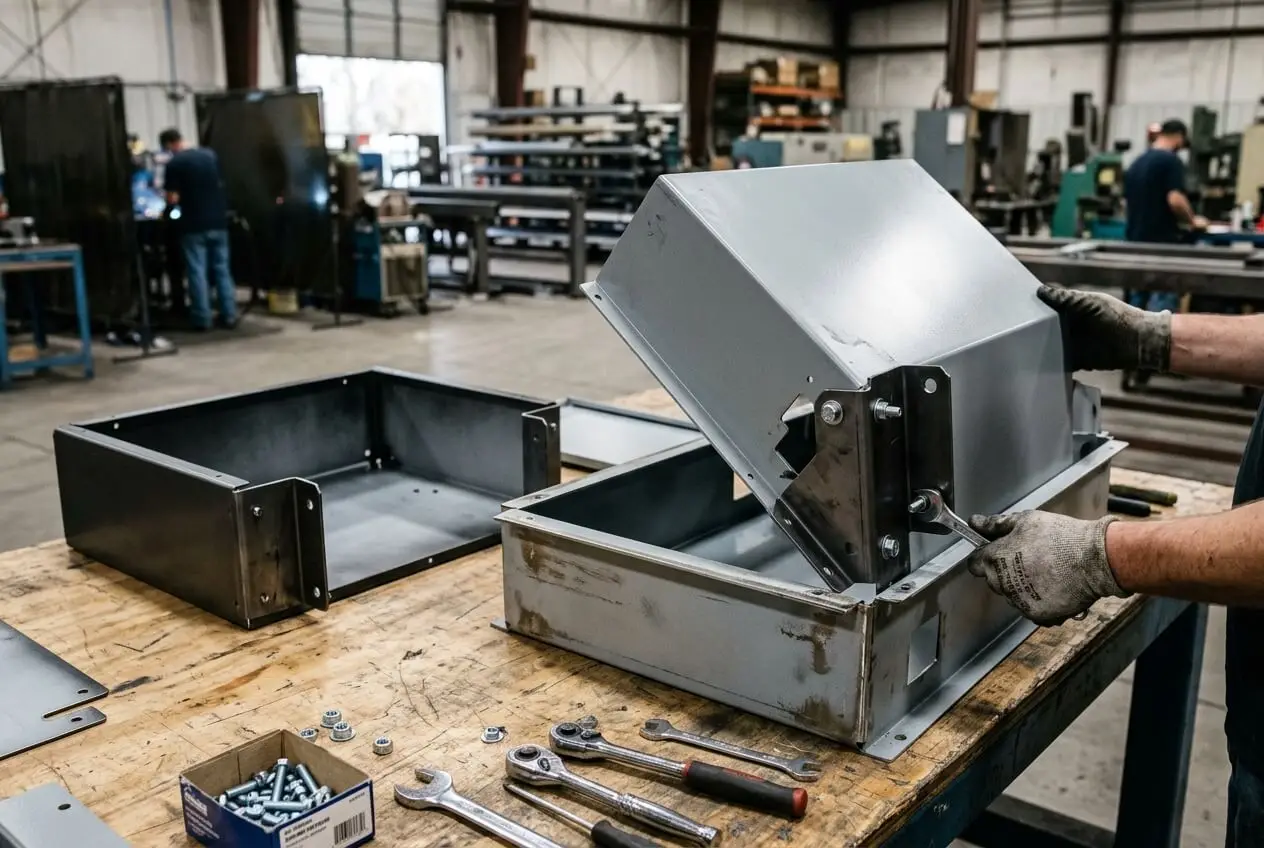
A buyer may have 300 painted sheet metal enclosures in stock. The metal still matches the drawing, but the customer now wants a new color and better outdoor durability. Scrapping the batch looks wasteful, so the next RFQ asks suppliers to powder coat over paint and return the parts ready for assembly.
That request sounds like a finish change. In practice, it can become an assembly-fit failure. The old paint may survive the cure cycle, or it may soften, blister, and lift. Even when adhesion looks acceptable, the new powder layer can reduce clearance at hinges, slots, flanges, grounding pads, screw holes, and sliding faces.
This is the core procurement risk: recoated parts can pass metal-dimensional inspection before finishing, then fail after the added coating stack changes how parts fit together. A quote that ignores this risk may look competitive. The same quote may also exclude masking, thread protection, film-thickness control, trial assembly, and rework responsibility.
Buyers should not treat recoating as a simple color refresh. They need to decide who owns assembly fit after finishing, which surfaces can accept extra film build, and which features must stay clear. Those decisions belong in the RFQ, not in a dispute after coated parts reach the assembly line.
Recoating Turns a Finish Decision Into an Assembly-Fit Decision
OEM buyers often consider recoating when cabinets, panels, brackets, display racks, or frames still have usable metal value. The commercial pressure makes sense. Recoating may reduce scrap, shorten replacement planning, and recover inventory after a color change. However, fabricated sheet metal rarely works as a decorative surface alone.
Coating covers laser-cut edges, bends, welded seams, fastener holes, tabs, returns, and contact faces. A second layer increases the total coating stack. That stack may look minor on a flat panel, but it can matter where two coated surfaces meet. A cover that had 0.5 mm clearance before recoating may bind when powder builds on both mating flanges.
The risk grows when drawings define only the metal dimensions. Many drawings include a finish note such as color, gloss, or powder type, but they do not define the maximum total coating thickness at functional interfaces. If a supplier quotes from that limited information, the quote may assume visual inspection only.
A short enclosure example
An electronics enclosure passes incoming inspection. The base and U-shaped cover match the CAD file. After powder coat over paint, the cover scrapes during installation. The drawing did not change. The metal did not change. The added finish stack changed the working clearance between the return flanges.
Assembly workers may force the cover into place, which damages the new finish. They may also file the edges, delaying shipment and exposing bare metal. The supplier and buyer then argue over responsibility because the original RFQ asked for recoating, not controlled fit after recoating.
A short bracket example
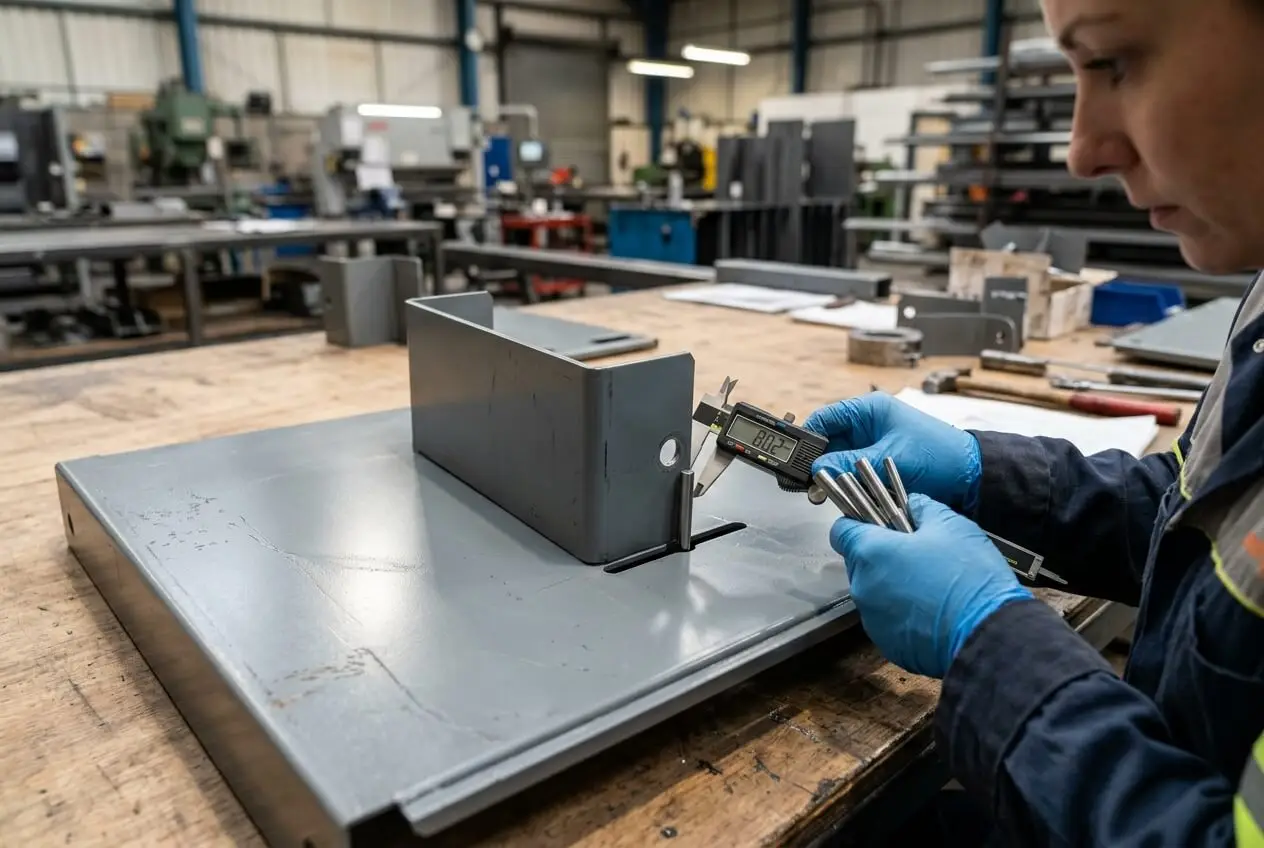
A batch of painted mounting brackets accepts M6 screws before finishing. After recoating, some holes pass and others bind. Powder builds heavily around several laser-cut edges. A few holes also contain old paint chips that the preparation step did not remove.
The low-price quote excluded hole masking and post-coating gauge checks. The buyer saved money on the finishing line item, then spent more on sorting, hand reaming, and delayed installation. The problem started when the RFQ did not identify hole fit as a controlled requirement.
RFQ Assumptions Decide Whether Film Build Gets Controlled or Ignored
Two suppliers can quote the same recoating request and plan very different work. One may assume light sanding and direct recoating. Another may include stripping, masking, plugging, thread chasing, adhesion checks, and trial assembly. A third may reject parts with unknown paint or rust. These differences can change price, lead time, and risk.
The buyer cannot compare those quotes fairly unless the RFQ states the fit-critical surfaces. A line that says “recoat existing painted parts” leaves too much room for assumptions. It does not tell the supplier whether hinge seats, PEM nuts, latch cutouts, grounding pads, or mating rails need protection.
The existing coating type also matters because it affects the preparation route. Stable powder coating may accept another layer after cleaning and abrasion. Some liquid paints may soften during the powder cure cycle. Unknown paint can hide adhesion problems. Rust at seams, oil in welded corners, or thick repair paint can create local failures even when most of the batch looks acceptable.
What the RFQ must make visible
A strong RFQ should show where added coating thickness can change function. Buyers can mark these areas on a PDF drawing or add a separate fit map. The map does not need to be complex. It should highlight hinge seats, sliding rails, cover flanges, threaded holes, countersinks, PEM nuts, grounding pads, slots, latch faces, and any face that contacts another component.
The RFQ should also define the supplier’s responsibility. Does the supplier need to inspect only color and appearance? Or must the supplier verify that screws install, doors close, latches engage, covers slide, and brackets fit the mating assembly? This single clarification changes the quote because it adds masking, inspection time, gauges, and sometimes a sample approval step.
Photos help suppliers judge the batch before they commit to a route. Buyers should show chipped paint, rust, bare metal, welded seams, previous repairs, and worn contact areas. If the old coating is unknown, the RFQ should say so. Guessing creates weak quotes and late surprises.
When Yishang reviews recoating RFQs for custom sheet metal fabrication, the practical question is not only “Can we recoat it?” The stronger question is “Which surfaces must still assemble after the coating stack changes?”
Tight Features Need Protection Before the Coating Line Starts
Powder coating does not build evenly across a part. Flat, open surfaces may receive a predictable layer. Edges, corners, slots, recessed holes, and inside bends behave differently. Powder can build heavily on exposed edges, while deep corners may receive less due to Faraday cage effects. A second finish layer adds more variation.
This variation matters most at functional features. Hinges may shift because coating builds under the hinge leaf. Latches may feel tight because the door sits proud. Threaded features may collect powder near the first threads. Countersunk screws may not seat fully if coating changes the cone surface. Grounding pads may stop conducting if nobody masks or restores them.
Enclosures and cabinets
Metal enclosures often combine cosmetic panels with precise assembly points. A front panel may need a smooth color match, while internal studs, cable plates, door flanges, and latch cutouts need controlled clearance. If the RFQ focuses only on the visible surface, the supplier may coat every area the same way.
That approach can cause field problems. A cabinet door may close in the factory but scrape after hardware installation. A service panel may fit once, then chip during repeated removal. A grounding point may look clean under powder but fail continuity testing. The buyer then faces rework, delayed shipment, and possible warranty claims.
Frames and welded assemblies
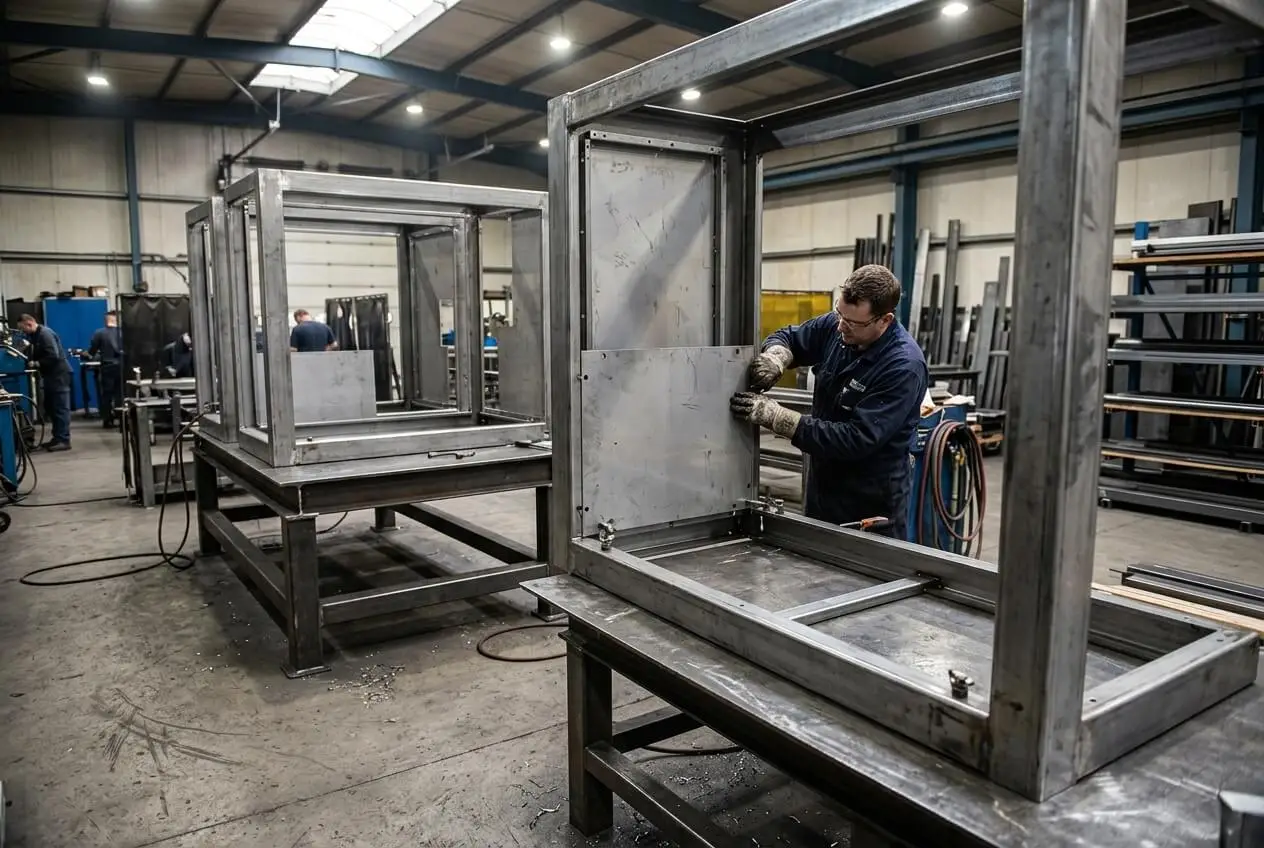
Welded frames create another risk. Weld seams, inside corners, and bolted faces often carry old paint, scale, oil, or corrosion. Direct recoating may hide these conditions rather than solve them. Added film on foot plates or cross-member faces can also change how the frame sits against mating equipment.
A welded display frame may look acceptable after recoating. During installation, shelf hooks fail to seat because powder thickened the slot walls. The supplier may say the color and coverage meet the finish note. The installer sees a functional failure. A clear RFQ would have marked hook slots as no-build or controlled-build zones.
Buyers should not wait for the coating supplier to discover every critical feature. The buyer knows how the part assembles. The RFQ should transfer that knowledge through drawings, photos, tolerance notes, and mating-part details.
A Good Sample Can Still Hide Batch-Level Recoating Failures
A recoated sample can reduce risk, but it can also create false confidence. Older parts may come from different fabrication lots, paint systems, repair histories, and storage conditions. One sample may have thin, stable paint. The full batch may include thicker repair paint, corrosion at seams, or contamination from handling.
If the buyer approves only the best-looking sample, the batch may still fail. During curing, some parts may outgas or blister. Others may survive visually but gain more total thickness than the sample. That difference can close holes, tighten covers, or shift hinge alignment.
Electrostatic application adds another batch issue. Powder coating needs reliable grounding. Existing paint can block grounding points. The supplier may need to expose bare metal at a controlled location. If workers improvise grounding points across the batch, coverage and contact marks may vary.
Sample approval must include fit checks
Buyers should approve more than color and texture. For a cabinet, check door swing, latch engagement, hinge seating, removable panels, cable plates, fastener installation, and grounding pads after curing. For brackets, check screw fit, slot width, countersinks, and mating faces. For frames, check foot plate holes, joining faces, insert points, and any installed hardware.
Film-thickness readings should include flat surfaces and functional edges. A flat panel reading alone may not predict interference at a flange or slot. Adhesion testing can also help, especially when the old coating type is unknown. Still, adhesion does not prove assembly fit. Buyers need both finish checks and functional checks.
Batch sorting may protect lead time
Some recoating projects need sorting before production. The supplier may group parts into direct recoat, strip and recoat, and reject or remake categories. Sorting adds cost and time, but it prevents mixed conditions from creating mixed results. It also helps buyers avoid coating a bad batch twice.
The inspection plan should state how many parts require functional checks. High-risk features may need 100% thread checks or plug gauges. Lower-risk cosmetic panels may only need sampling. The plan should match the consequence of failure, not the average part appearance.
Compare Recoating Quotes by Installed Cost, Not Unit Coating Price
The lowest recoating price can become the highest installed cost. A cheap quote may exclude stripping, masking, plugging, thread chasing, sample approval, adhesion testing, film-thickness checks, and assembly verification. Those exclusions do not remove the work. They move the work to the buyer’s assembly line.
Direct recoating can make sense when the existing finish is stable, clean, thin, and well-adhered. It also works better when parts have generous clearances and few functional features. A large non-mating display panel carries less fit risk than a compact control box with close cover gaps and many fasteners.
Stripping or blasting may cost more at the start, but it can reduce downstream rework. This route often makes sense when paint is thick, unknown, peeling, rusty, or contaminated. It also helps when the part has tight sliding interfaces, hinge seats, precision holes, or conductive contact points.
Remaking the part may be the safest commercial route when the current metal design never allowed for a thicker finish stack. A new fabrication run can adjust hole sizes, gaps, bend allowances, and mask notes for the required finish. That option may look expensive until the buyer adds sorting, rework, delayed shipment, and damaged coating claims to the recoating route.
Buyers should ask each supplier to state process assumptions clearly. Will they direct recoat, strip, or test first? Which features will they mask or plug? What film-thickness range will they target near mating surfaces? Who checks threaded holes and assembly fit? What happens if old paint fails during curing?
Yishang can support this discussion when buyers provide drawings, material requirements, quantities, tolerances, finish expectations, coating photos, and mating-part notes. For sheet metal enclosures, brackets, frames, and welded assemblies, early review helps decide whether direct recoating, controlled masking, stripping, or new fabrication gives the safer installed result.
Send the project before comparing quotes: If you are considering powder coat over paint, share the drawings, material grade, quantity, tolerance notes, existing finish condition, target color or texture, and assembly requirements. Include photos of the current coating and any mating parts. Yishang can review the RFQ details and help identify where coating thickness may affect fit before production starts. Visit Yishang to submit your project information.
Frequently Asked Questions
Can you powder coat over paint on sheet metal parts without stripping?
Sometimes. The old coating must stay well-adhered, clean, stable, and compatible with the powder cure cycle. Buyers also need to check assembly areas. A surface may look acceptable while added coating thickness blocks holes, tightens covers, or affects hinges.
Why does powder coat over paint create assembly problems?
The second layer increases total film thickness. That extra build can reduce clearance at flanges, slots, threaded holes, latch faces, grounding pads, and sliding interfaces. The metal dimensions may still match the drawing, but the finished assembly may no longer fit.
What should buyers add to a recoating RFQ?
Buyers should include drawings, material details, existing coating information, photos, quantities, tolerances, target finish, and marked fit-critical areas. The RFQ should also state whether the supplier must mask features, check threads, measure film thickness, or perform trial assembly.
When is stripping safer than direct recoating?
Stripping is often safer when the old paint is unknown, thick, peeling, rusty, contaminated, or repaired in patches. It also helps when the part has tight fits, hinged doors, precision holes, bolted faces, or conductive grounding points.
Is one recoated sample enough before approving a batch?
One sample helps, but it may not represent the full batch. Older parts can vary by paint thickness, storage condition, repair history, and corrosion level. Buyers should define batch inspection points for fit, threads, adhesion, film thickness, and functional assembly.
How can buyers compare recoating quotes more accurately?
Compare the included process steps, not just the unit price. Ask whether the quote includes preparation, masking, plugging, stripping if needed, adhesion checks, film-thickness control, thread checks, trial assembly, packaging protection, and responsibility for fit after coating.