
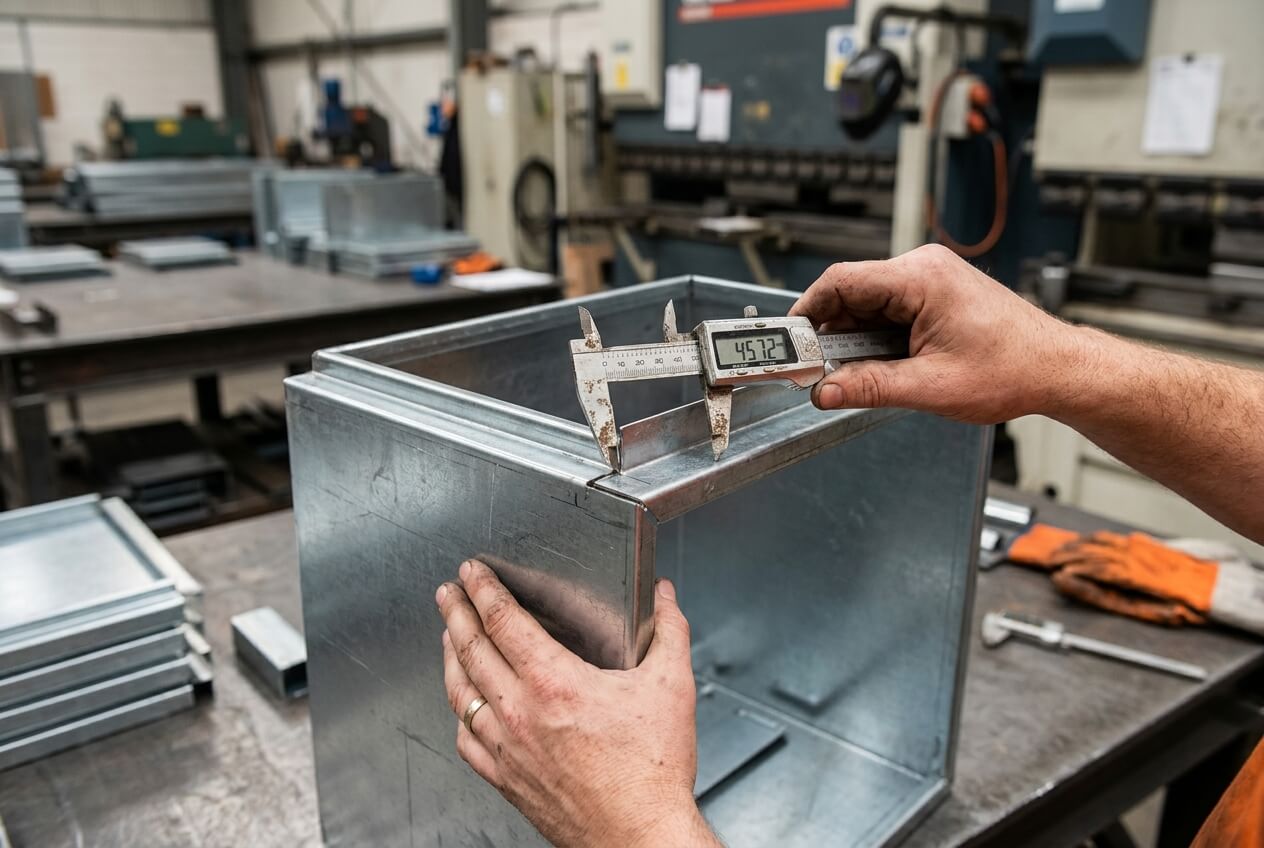
An OEM sends an RFQ for a powder-coated cabinet used in a compact water treatment unit. The model shows the enclosure, a welded pump base, several mounting brackets, and two holes where copper tubes pass through the rear panel. The drawing includes material thickness, overall dimensions, finish color, and annual quantity. It does not explain which sheet metal features sit near moisture, vibration, rubber bushings, or copper tubing.
Three suppliers quote the job. One price looks attractive because it treats the tube openings like ordinary clearance holes. Another quote includes extra deburring, coating control around cut edges, and a final fit check. On paper, both suppliers appear to quote the same cabinet. In production, they control very different risks.
The field complaint arrives months later. A tube rests against a welded frame member after assembly. Small burrs mark the insulation. Powder coating looks thin at the pass-through edge. Condensation collects near a blocked drain slot. The customer calls the visible green staining copper tube corrosion, but the sourcing error started much earlier. The RFQ did not separate ordinary sheet metal features from copper-tube interfaces.
This article focuses on one procurement risk: unclear RFQ assumptions around sheet metal features that interact with copper tubes. The issue affects cabinets, enclosures, brackets, frames, and welded assemblies. It also affects quote comparison, prototype approval, inspection scope, batch consistency, cost, and lead time. Buyers do not need to become corrosion chemists. They do need to tell fabricators which holes, edges, brackets, coated surfaces, and drain features can create contact, trapped moisture, or vibration wear.
Unclear copper-tube interfaces make cheap fabrication quotes look safer than they are
A sheet metal drawing may fully define the part shape and still hide the risk that matters in service. General tolerances, finish notes, and material callouts tell the supplier how to make the component. They do not always explain how a copper tube, clamp, bushing, pump, valve, or hose will interact with it after assembly.
That gap changes the quote. If the RFQ marks ten cutouts with the same tolerance, the supplier may inspect all ten the same way. Yet only two may carry copper tubes. Those two holes need more attention because edge condition, coating buildup, and position affect installation. A low quote may exclude that extra control, not because the supplier ignored the drawing, but because the RFQ never identified the functional interface.
The hidden cost sits in inspection, not only fabrication
Tube-related details often add small operations. A fabricator may need to remove dross, round an inside edge, protect a cutout during powder coating, verify a bushing fit, or check clearance after welding. Each action adds labor, inspection time, or fixture work. If one supplier includes these steps and another does not, procurement cannot compare unit prices fairly.
For example, a wall-mounted filtration enclosure uses 1.5 mm powder-coated steel. Two copper tubes enter through a rear panel with rubber grommets. The RFQ only states “deburr all edges.” One supplier quotes standard deburring. Another assumes a smoother grommet-ready edge and post-coating diameter check. The second quote costs more, but it covers a risk the first quote leaves open.
Assembly context prevents false savings
A copper tube rarely fails because of one drawing dimension alone. The consequence chain usually starts with a small assumption. A hole edge remains sharp. A welded tab pulls inward. Coating chips during grommet insertion. Vibration then turns a light touch into rubbing. Moisture reaches exposed metal or damaged insulation. The complaint appears as corrosion, staining, or leakage near the tube route.
Buyers can reduce this risk with practical RFQ notes. Identify copper tube pass-throughs, minimum clearances, required edge quality, bushing or sleeve details, surfaces where bare metal cannot appear, and drain features that must stay open after coating. This information helps suppliers quote the same production scope instead of guessing what the assembly needs.
Yishang can review drawings at this stage when buyers share the tube route, mating parts, finish expectations, and quantities. The review should not replace the buyer’s design responsibility. It should make the RFQ clearer before price pressure locks in weak assumptions.
Fabrication steps can move the tube interface after the drawing looks correct
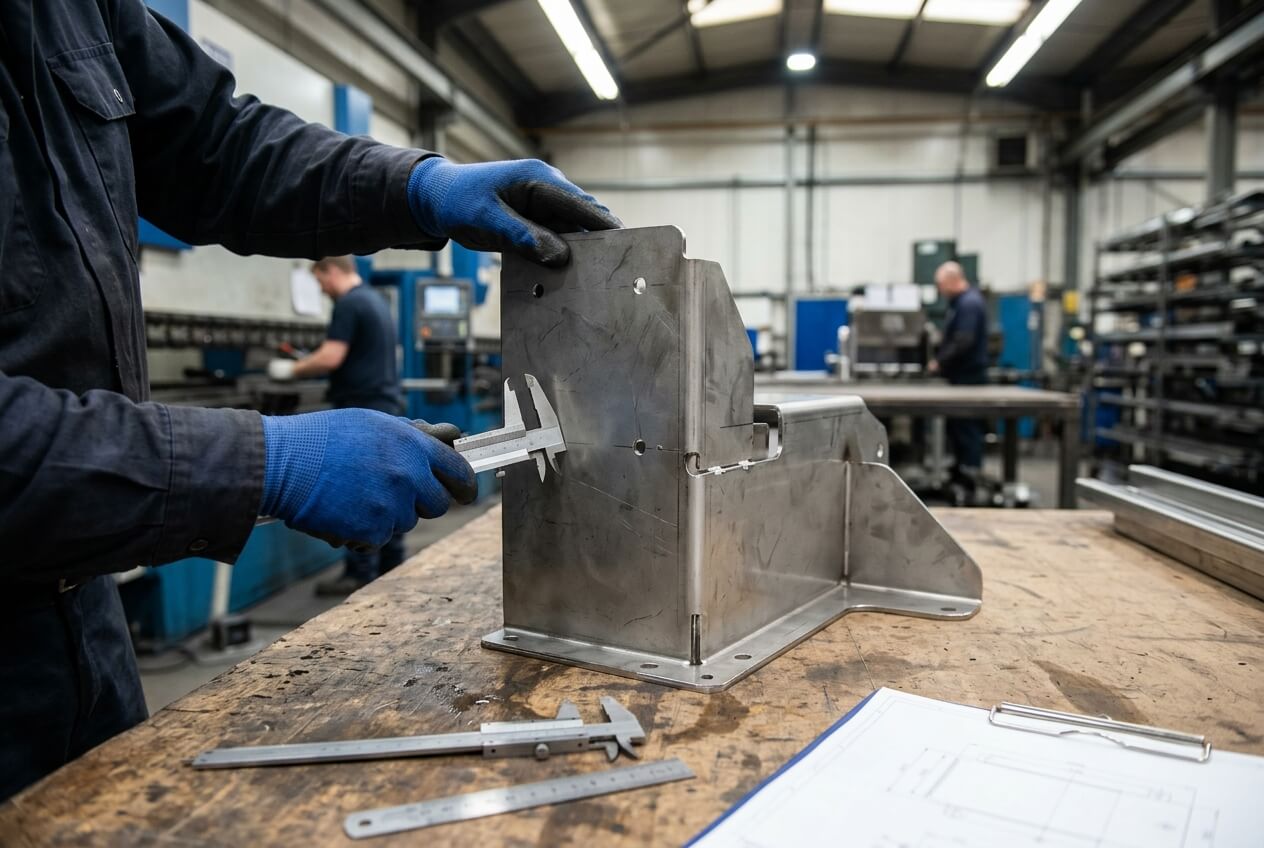
Many buyers inspect sheet metal risk too early in the process. A flat part may measure correctly after laser cutting or punching. The same part may create contact risk after bending, welding, grinding, powder coating, packing, and final assembly. Copper tube corrosion complaints often trace back to a feature that changed after the first dimensional check.
Cut edges affect more than appearance
Laser-cut openings can meet diameter tolerance while still carrying micro-burrs, dross, or sharp corners. For ordinary ventilation holes, that may not matter. For a copper tube opening, the edge may press against insulation, prevent a grommet from seating, or expose coating to damage during installation.
A clear RFQ should state whether tube holes need standard deburring, edge rounding, polishing, or a sleeve-ready surface. It should also state whether the supplier must inspect the opening after powder coating. Coating buildup can reduce hole size, while thin coverage can leave an exposed edge in a wet area.
Bending and welding change clearances
Bending moves features near flanges, especially when holes sit close to bend lines. Material grade, thickness, bend radius, and springback all affect final position. If a copper line must pass through the panel and connect to a fixed pump, a small shift can create assembly stress.
Welding creates a larger risk in frames and base assemblies. Heat pulls brackets, twists upright members, and closes gaps. A bracket designed with 5 mm clearance may finish with 1 mm clearance after weld pull and grinding. The overall frame can still meet the drawing, while the tube path becomes unsafe.
Consider a welded pump skid for a dosing unit. The drawing shows a sheet metal upright near a copper discharge line. The upright supports a small cover, so procurement treats it as a simple bracket. During batch welding, the upright leans inward. The installer can still force the tube into place, but the tube contacts the bracket under vibration. A later green stain near the contact point looks like a material issue. The earlier procurement problem was the missing clearance check after welding.
Finishing can close drains and hide weak edges
Powder coating protects sheet metal, but it also changes functional geometry. It adds thickness around cutouts, narrows slots, and can bridge small drain holes. It may also leave thin film on sharp internal edges. In a dry electronics enclosure, those defects may stay cosmetic. In a cabinet near copper tubing and condensation, they can trap moisture or expose metal near a sensitive interface.
The RFQ should connect finish expectations to function. Instead of saying only “powder coat black,” specify whether cut edges at tube openings require continuous coverage. Clarify if touch-up paint is acceptable near moisture zones. Mark drainage slots that must remain open after coating. These details affect cost and lead time because the supplier may need masking, rework limits, extra inspection, or modified hanging methods.
Prototype approval can hide manual fixes that batch production will not repeat
Prototype approval often gives procurement false confidence. A sample cabinet may pass because an experienced technician hand-deburrs tube openings, adjusts a welded shelf, touches up coating, and test-fits the customer’s grommet. The prototype ships as a clean example. Batch production then runs faster, with different operators, more heat input, more handling, and less manual fitting.
The risky phrase is “sample approved.” It does not say which details created approval. Did the buyer accept light coating thinning inside the tube hole? Did the grommet fit without trimming? Did the copper tube clear the welded frame after coating? Did the drain slot remain fully open? If the team does not record those answers, the batch supplier may repeat the drawing, not the successful sample behavior.
Prototype decisions must become production rules
A strong prototype review converts assembly observations into inspection points. Buyers should record photos of acceptable edge condition, the minimum tube clearance, approved coating coverage, and any allowed touch-up method. A go/no-go gauge can check tube holes after coating. A simple fixture can confirm bracket position after welding. These tools reduce arguments when batch parts differ from the approved sample.
One medical equipment enclosure shows the value of this step. The prototype used stainless sheet, a powder-coated outer cover, and a bent internal bracket that held a copper cooling line. The prototype assembled well because the bracket was hand-adjusted. During the first 300-piece batch, normal bend variation pushed the clamp inward. The tube still installed, but it sat under stress. The buyer avoided a larger problem only after adding a final clamp-position check and a minimum clearance note.
Batch consistency has a purchasing cost
Procurement teams often separate prototype cost from mass production cost. That makes sense, but it can hide risk. A supplier may quote a low batch price because it assumes standard sampling and no functional fit check. If the buyer expects every unit to match a manually tuned prototype, the quote may be unrealistic.
The RFQ should state when the supplier must preserve prototype conditions in batch production. Examples include tube hole diameter after coating, edge radius at pass-throughs, bracket-to-tube clearance, flatness of mounting faces, and drainage slot openness. These items do not require measuring every dimension on every part. They do require sampling plans that target the features most likely to drive field complaints.
Clear prototype records also improve lead time control. Without them, the first batch may stop for sorting, rework, recoating, or disputed acceptance. With them, the supplier can plan fixtures, inspection gauges, coating racks, and packing methods before production starts.
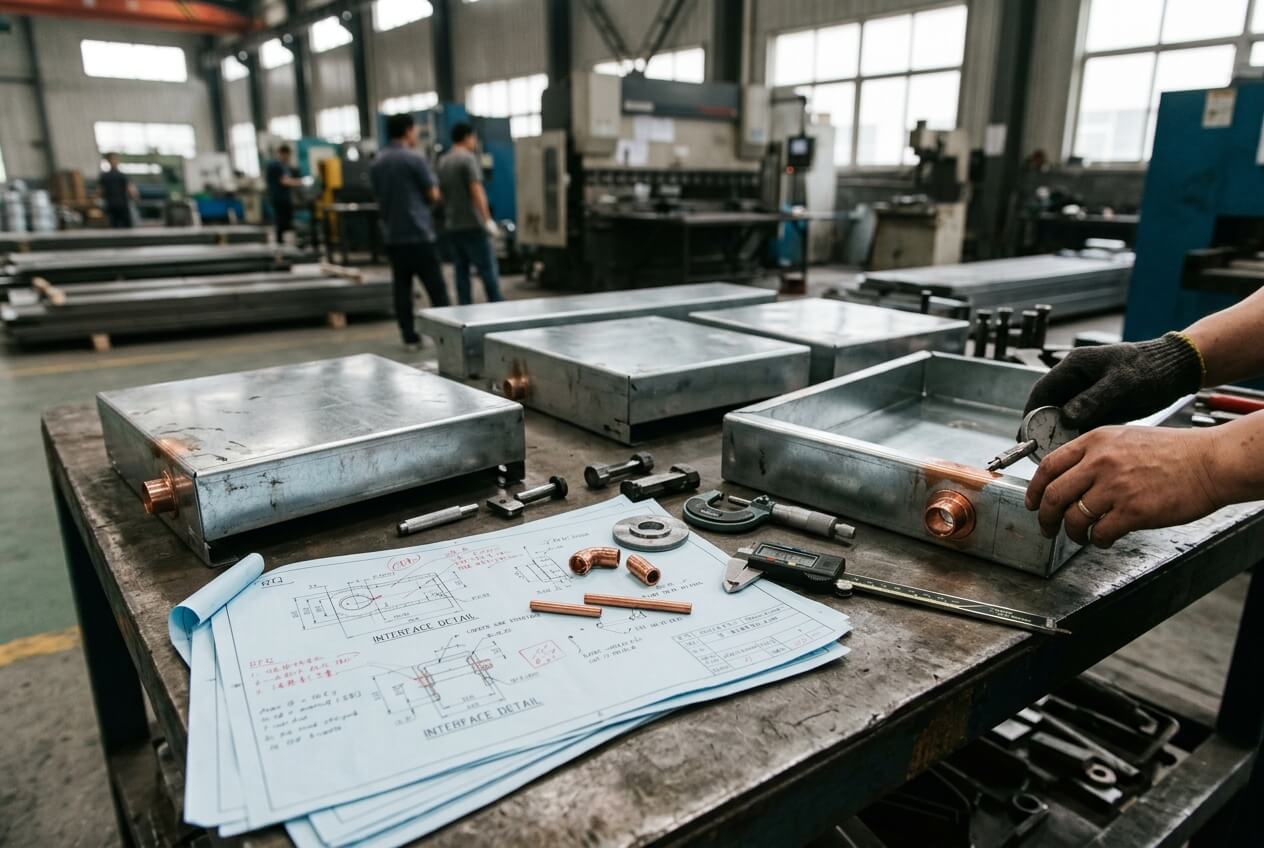
Compare supplier prices only after the RFQ defines the corrosion-sensitive features
The best time to control copper tube corrosion risk is before procurement compares final prices. After production, every correction becomes harder. Deburring after coating can expose metal. Straightening a welded bracket can crack finish or change alignment. Recoating delays delivery and may affect color match. Sorting finished assemblies increases handling marks and packing damage.
A clear RFQ does not need to over-specify every surface. It needs to separate normal fabrication features from corrosion-sensitive interfaces. This keeps the project economical because the supplier focuses extra inspection where the field consequence is real.
Clarify the few features that carry most of the risk
For enclosures, mark tube pass-through holes and define their final size after coating. Add the copper tube outside diameter, bushing size, and minimum assembly clearance. State the required edge condition and whether sharp internal corners are acceptable. If the opening sits in a wet area, define coating coverage on the inside edge.
For brackets and frames, identify faces that sit near copper tubing. Give a minimum clearance after bending, welding, and finishing. If the bracket holds a clamp, define the clamp position relative to the tube path, not only to the sheet metal edge. For welded assemblies, request an inspection point after welding because overall dimensions may not reveal local contact.
For cabinets with drains, mark slots or holes that must stay open after powder coating. If cleaning chemicals, condensation, or washdown conditions apply, tell the fabricator. The supplier may change hanging orientation, masking, edge preparation, or inspection frequency. Those choices affect quotation, but they also reduce later rework.
Supplier communication should connect price to assumptions
When quotes arrive, ask suppliers to state their assumptions for tube interfaces. Which holes will they inspect after finishing? What deburring standard applies at pass-throughs? Will they check grommet fit? Are coating chips allowed on hidden cut edges? Can they touch up bare areas near moisture zones? These questions reveal whether a lower price removes risk controls.
Buyers should also define rejection and rework rules before production. Some defects need a practical repair. Others should trigger rejection because repair creates another risk. For example, filing a coated tube hole may solve fit but leave exposed steel. Touch-up paint may work on a dry cosmetic area, but not on a wet internal edge. A welded bracket may tolerate small correction, while repeated bending may weaken the assembly.
Yishang supports custom sheet metal fabrication projects where buyers provide drawings, quantities, material requirements, tolerances, finish expectations, and assembly context. For projects near copper tubing, share photos of the tube route, mating bushings, clamps, prototype comments, and known field complaints. That information helps align the quote with the actual inspection scope instead of a generic cabinet price.
Before you approve the next quote, send the risk details with the drawing package. Include 2D drawings, 3D files, material grade and thickness, order quantity, critical tolerances, finish requirements, tube diameter, bushing or clamp details, and any prototype notes. If your enclosure, bracket, frame, cabinet, or welded assembly works near copper tubing, submit the project through Yishang sheet metal fabrication so the RFQ can address clearance, edge protection, coating coverage, drainage, and batch consistency before production starts.
Frequently Asked Questions
Why can copper tube corrosion complaints start with a sheet metal RFQ?
The RFQ may not identify the sheet metal features that touch or sit near copper tubes. A supplier may then quote standard deburring, general tolerances, and normal finish inspection. If a sharp edge, welded bracket shift, coating chip, or blocked drain later creates contact or trapped moisture, the field complaint can appear as copper tube corrosion.
What should buyers mark on drawings for copper tube pass-through holes?
Mark the holes as functional interfaces. Add final diameter after coating, position tolerance, required edge condition, bushing or sleeve fit, and minimum clearance. Also state whether the inside edge needs continuous coating and whether bare metal, chips, or thin coverage are acceptable.
How does welding create copper-tube contact risk in frames or brackets?
Welding can pull brackets, twist uprights, and reduce local gaps. The overall frame may still meet the drawing while one support moves close to the tube path. Buyers should specify minimum clearance after welding and finishing, especially where vibration or thermal movement can cause rubbing.
Should tube holes be inspected before or after powder coating?
Many projects need both checks. Pre-coating inspection confirms cutting and deburring quality. Post-coating inspection confirms final hole size, grommet fit, edge coverage, and drain openness. Coating buildup can make holes too small, while thin coating can expose cut edges in wet areas.
Why can an approved prototype still lead to batch corrosion complaints?
A prototype may include manual deburring, hand adjustment, touch-up, or careful fitting that batch production does not repeat. Buyers should record the prototype conditions that matter, such as tube clearance, edge finish, coating coverage, and drain function. Those records should become batch inspection points.
What information should be sent with an RFQ for sheet metal parts near copper tubing?
Send drawings, 3D files, material requirements, quantities, tolerances, finish expectations, tube diameter, bushings, clamps, assembly photos, prototype notes, and any known field concerns. This lets the fabricator quote the inspection and process controls needed for the tube interface.