
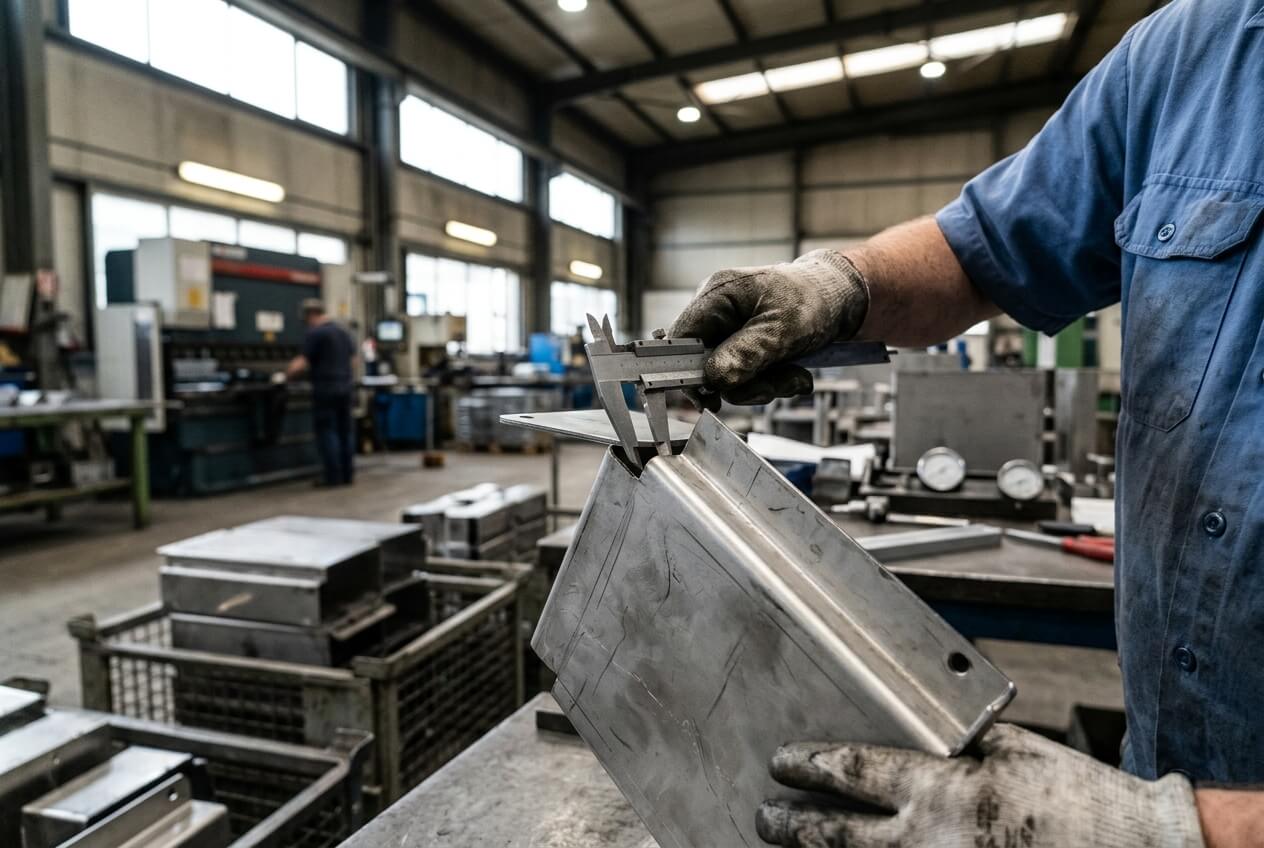
An OEM buyer sources stainless steel trays for a sterilization cabinet. The drawing lists 304 stainless steel, outside dimensions, laser-cut slots, welded handles, and an operating temperature of 650°C. Three suppliers quote. One price looks attractive because every supplier says the melting point stainless steel range sits far above the working temperature.
That answer can create false confidence. The melting point of stainless steel helps confirm that the alloy will not melt in service. It does not prove that a fabricated tray will remain flat, that holes will align after bending, or that handles will survive repeated heat cycles. It also says nothing about weld distortion, polishing marks, coating buildup, or final assembly fit.
The dominant buyer risk is inspection ambiguity. When the RFQ defines the alloy but not the features that must survive cutting, bending, welding, finishing, and assembly, each supplier quotes a different inspection scope. The low price may exclude the control steps that prevent rejection.
This article explains how to close that gap before quotation. It focuses on stainless sheet metal parts that face heat, assembly loads, cosmetic review, or batch production risk, including enclosures, brackets, frames, trays, cabinets, and welded assemblies.
Melting Point Stainless Steel Data Does Not Define the Acceptance Standard
Buyers often ask about the melting point stainless steel value when parts work near ovens, sterilization lines, dryers, heated cabinets, or process equipment. The question makes sense. Stainless grades melt at temperatures far above most sheet metal applications. Common approximate ranges include 304 stainless steel at 1400–1450°C, 316 stainless steel at 1375–1400°C, 430 stainless steel at 1425–1510°C, and 410 stainless steel at 1480–1530°C.
Those numbers answer only one question. They do not define part acceptability. A stainless panel can warp long before melting. A bracket can lose stiffness under load. A welded frame can pull out of square. A tray can pass material verification and still fail because its base rocks on a conveyor.
The RFQ needs to shift from alloy survival to feature survival. The buyer should identify which holes, edges, surfaces, welds, and mating points must remain correct after all manufacturing steps. Without that instruction, suppliers may inspect the easiest stage instead of the most meaningful stage.
The expensive mistake behind a low quote
A supplier can quote a stainless tray by checking the flat laser-cut blank and the final visual appearance. Another supplier may include a weld fixture, post-weld straightening, base flatness inspection, and final fit testing. Both quotes can appear to meet the same drawing. They do not carry the same rejection risk.
This gap affects unit cost, lead time, and production planning. Fixtures, controlled weld sequence, extra inspection, masking, polishing limits, and trial assembly all add work. If the RFQ does not state the required control points, buyers may choose a lower quote that removed the controls they actually needed.
For heat-exposed sheet metal parts, the RFQ should state the material grade and operating temperature. It should also state load conditions, thermal cycling, mating-part interfaces, inspection stage, and critical tolerances. The drawing should separate general fabrication dimensions from dimensions that control function.
RFQ Ambiguity Lets Suppliers Inspect Different Versions of the Same Part
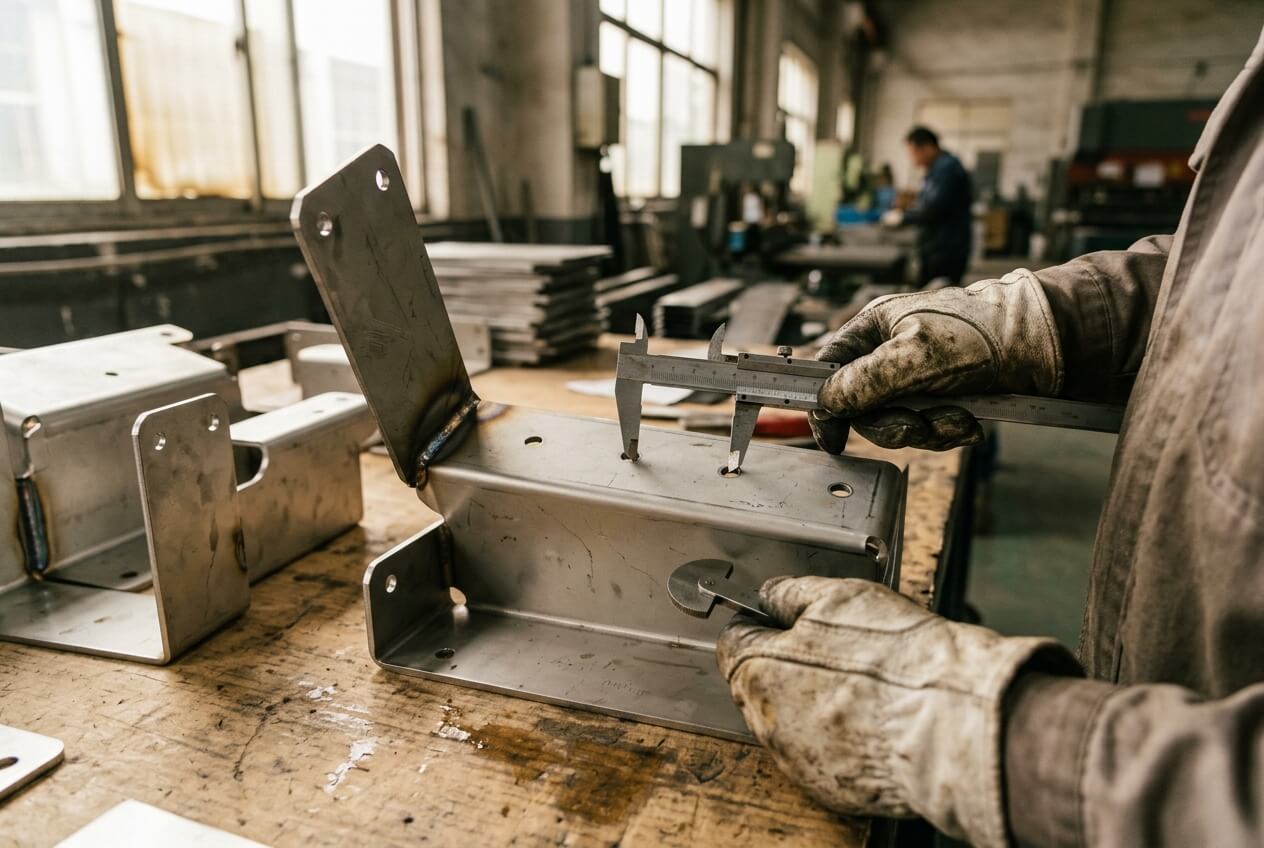
A drawing usually shows geometry. It does not always rank functional risk. A stainless enclosure drawing may show door size, hinge holes, louvers, welded studs, and surface finish. Yet it may not say whether the hinge hole pattern matters more than an outside cosmetic edge. It may also omit whether inspection happens before or after powder coating.
That omission creates different supplier assumptions. One supplier checks every mounting hole after forming. Another checks the flat pattern and applies standard bend tolerance. A third focuses on visible weld cleanup and misses the relationship between the hinge, latch, and door opening.
The dispute often appears at incoming inspection. The buyer says the part does not fit the assembly. The supplier says the drawing did not mark the feature as critical. Both sides can point to the same RFQ, but neither side has a shared inspection standard.
Project example: heated cabinet door with hinge reinforcement
A buyer sends a drawing for a stainless cabinet door used near a heated process chamber. The drawing lists 304 stainless steel, brushed visible surface, hinge holes, latch slot, and welded reinforcement plates. It does not mark the hinge hole pattern as critical after welding.
The supplier quotes standard cutting, bending, welding, brushing, and visual inspection. During welding, the reinforcement plate pulls the door slightly. The brushed surface looks acceptable, and the outside size remains within title-block tolerance. During assembly, the hinge line shifts enough to create an uneven gap.
The issue started in the RFQ, not at final assembly. The buyer should have clarified the hinge datum, allowable door twist, inspection after welding and brushing, and acceptable gap condition. That would have changed the quote, but it would have made the cost visible before production.
When Yishang reviews RFQs for custom sheet metal fabrication, these unclear relationships often require discussion before quoting. Datums, hole relationships, weld access, bend direction, finish side, and final assembly interfaces should not remain hidden assumptions.
Post-Process Movement Turns Material Compliance into Assembly Failure
Stainless sheet metal fabrication moves through a sequence. Laser cutting creates the profile. Bending changes geometry. Welding adds heat and shrinkage. Grinding and polishing remove local material. Powder coating, passivation, or cleaning can change surfaces and fit. Assembly then exposes whether the controlled features still work together.
Inspection ambiguity becomes dangerous because each process can move the feature the buyer cares about. A laser-cut blank may hold slot spacing very well. After bending, springback and bend radius can shift those slots relative to a mounting face. A frame may look square before all welds. After final welding, diagonal length can move outside the assembly fixture.
Finish can cause the same problem. Powder coating may add thickness around holes, tabs, sliding covers, and hinge areas. Polishing can soften edges or change local flatness. Passivation and cleaning may not change dimensions much, but they can affect appearance and acceptance if the buyer expects a specific surface condition.
Project example: sensor bracket inside a heated machine
A buyer orders stainless sensor brackets for a heated machine. The drawing specifies 316 stainless steel, thickness, outside dimensions, bend angle, and two sensor holes. The supplier quotes laser cutting and bending with standard inspection. The RFQ does not identify the sensor holes as the locating feature.
The first articles pass outside dimension checks. During production assembly, the sensor points slightly off target. The problem comes from the relationship between the bend line and hole pattern after forming. The melting point of stainless steel never mattered to the rejection. The critical feature was the formed hole position.
The buyer could have reduced the risk by marking the hole pattern as critical after bending. A simple datum callout, functional tolerance, or mating-part note would have told suppliers how to quote inspection. It would also have prevented a false comparison between a basic fabrication quote and a controlled-fit quote.
Project example: welded tray for sterilization handling
A buyer requests welded stainless trays for sterilization handling. The RFQ lists operating temperature, 316 stainless steel, handles, drainage slots, and overall size. The prototype looks good because the supplier straightens it by hand. The buyer approves photos and a sample.
Batch production reveals the missing control. Several trays rock on the conveyor because the base twists after welding. Some handles pull inward, reducing clearance. The drawing did not define base flatness after welding, load during heating, handle spacing, or final rail fit.
The supplier may still have met the written drawing. The buyer, however, needed a functional inspection plan. Earlier clarification should have covered weld sequence, fixture use, post-weld flatness, rail clearance, and whether straightening formed part of the production method.
Prototype Approval Does Not Freeze Batch Quality Unless the RFQ Defines What Repeats
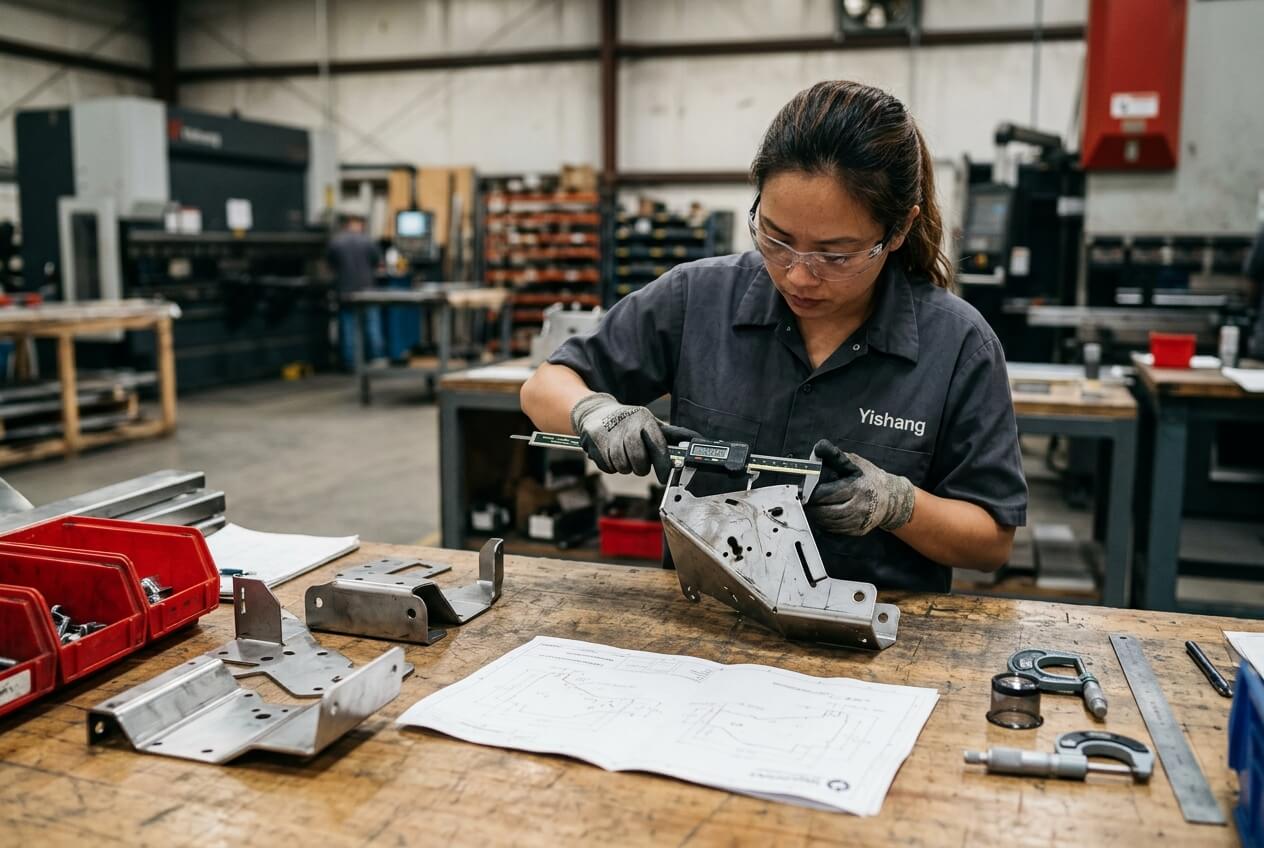
Prototype approval often hides inspection gaps. A skilled fabricator can make one stainless enclosure, tray, frame, or bracket slowly. The team can adjust the bend sequence, tune the weld order, hand-straighten distortion, and polish visible marks. The sample may pass fit and appearance checks. Batch production then follows faster controls and exposes what the drawing never defined.
A prototype proves that one part can meet the buyer’s expectation. It does not automatically prove that 200 or 2,000 parts will repeat the same result. Buyers need to decide which sample characteristics become production requirements.
For a metal enclosure, the repeatable features may include door gap, hinge hole position, grounding mask area, threaded insert fit, and visible surface direction. For a welded frame, they may include diagonal squareness, foot position, load-bearing weld size, and mounting-pad flatness. For a heat-exposed tray, they may include base flatness, handle spacing, drainage slot consistency, and rail clearance.
Photo approval carries extra risk for overseas procurement. Photos can show finish direction, weld color, scratches, and general shape. They cannot prove hole position, twist, bend angle, assembly force, or diagonal measurement. If the buyer approves by photo, the approval should state what the photo covers and what still requires measurement.
Batch consistency also affects lead time. If the RFQ waits until production to define final inspection, the supplier may need new fixtures, rework time, or process changes. That delay can exceed the time saved by a fast prototype. Earlier supplier communication should connect prototype comments to drawings, tolerances, inspection records, and batch acceptance.
Yishang can support this stage by reviewing prototype feedback against production drawings. The useful question is not whether the sample looked good. The useful question is which features must repeat after cutting, bending, welding, finishing, and assembly.
Make Quotes Comparable by Naming the Final Inspection Responsibility
Buyers do not need to tighten every tolerance. That approach raises cost and may slow production without improving function. A stronger RFQ protects the few features that control assembly fit, heat performance, appearance, safety, and service life.
Start with the drawing. Mark functional datums, critical holes, mating faces, visible surfaces, weld areas, and post-process inspection points. Add operating temperature, material grade, load condition, thermal cycling, and chemical exposure when relevant. State whether dimensions apply before or after bending, welding, polishing, coating, passivation, cleaning, or final assembly.
Then ask suppliers to quote the required control method. A basic part may need standard dimensional and visual inspection. A welded stainless frame may need a fixture and diagonal check after welding. A cabinet panel may need finish-side protection and final hinge fit. A high-temperature tray may need post-weld flatness inspection and rail clearance verification.
This clarity also improves cost comparison. One supplier may include fixture design, first article inspection, coating masks, thread protection, and assembly checking. Another may exclude them. A higher quote may carry lower rejection risk if it includes the controls the project needs. A lower quote may still work if the part has low functional risk and broad tolerances.
Use supplier communication to confirm assumptions before purchasing. Ask where inspection occurs, which features receive tighter control, how finish affects fit, what the prototype approval will freeze, and which rework steps are included. These questions reduce conflict because they turn hidden assumptions into quoted responsibilities.
RFQ CTA: Send Yishang your drawings, stainless material requirements, quantities, target lead time, critical tolerances, mating-part notes, operating temperature, finish expectations, prototype comments, and photos or samples. Ask for a quotation that identifies the inspection stage for critical holes, flatness, weld areas, coating or polishing limits, and final assembly fit. That makes the melting point stainless steel discussion part of a safer fabrication RFQ, not a substitute for one.
Frequently Asked Questions
Does the melting point stainless steel value prove a fabricated part will pass high-temperature use?
No. The melting point only shows when the alloy begins to melt. A stainless sheet metal part can warp, lose stiffness, crack near welds, scale, or fail assembly before it reaches that temperature. Buyers should define operating temperature, load, thermal cycling, critical dimensions, and final inspection stage.
What should an RFQ specify beyond stainless grade and temperature?
The RFQ should identify functional datums, critical holes, mating faces, visible surfaces, weld requirements, finish limits, and inspection timing. It should also state whether dimensions apply after bending, welding, polishing, coating, cleaning, or final assembly. These details make supplier quotes more comparable.
Why can a prototype pass while batch stainless parts fail?
A prototype may receive extra manual adjustment, hand straightening, slower welding, or special polishing. Batch production uses repeatable process controls. If the drawing does not define which prototype features must repeat, production may vary in hole alignment, flatness, door gap, weld appearance, or assembly fit.
Which features matter most on heat-exposed stainless trays or brackets?
Focus on the features that control use. These may include base flatness, rail clearance, handle spacing, sensor hole position, load-bearing welds, drainage slots, bend angle, and fixture interfaces. Mark them as critical after the process that can move them.
How does undefined inspection responsibility affect quote comparison?
One quote may include fixtures, post-weld inspection, coating masks, thread protection, and final fit checks. Another may include only cutting, bending, welding, and visual inspection. If the RFQ does not define inspection responsibility, the lowest unit price may carry the highest rejection risk.
When should finish expectations enter the inspection plan?
Finish expectations should enter the plan when brushing, polishing, coating, passivation, or cleaning affects appearance or fit. Buyers should mark visible surfaces, polishing direction, acceptable weld marks, masked areas, threads, hinge zones, grounding areas, and sliding interfaces before quotation.