
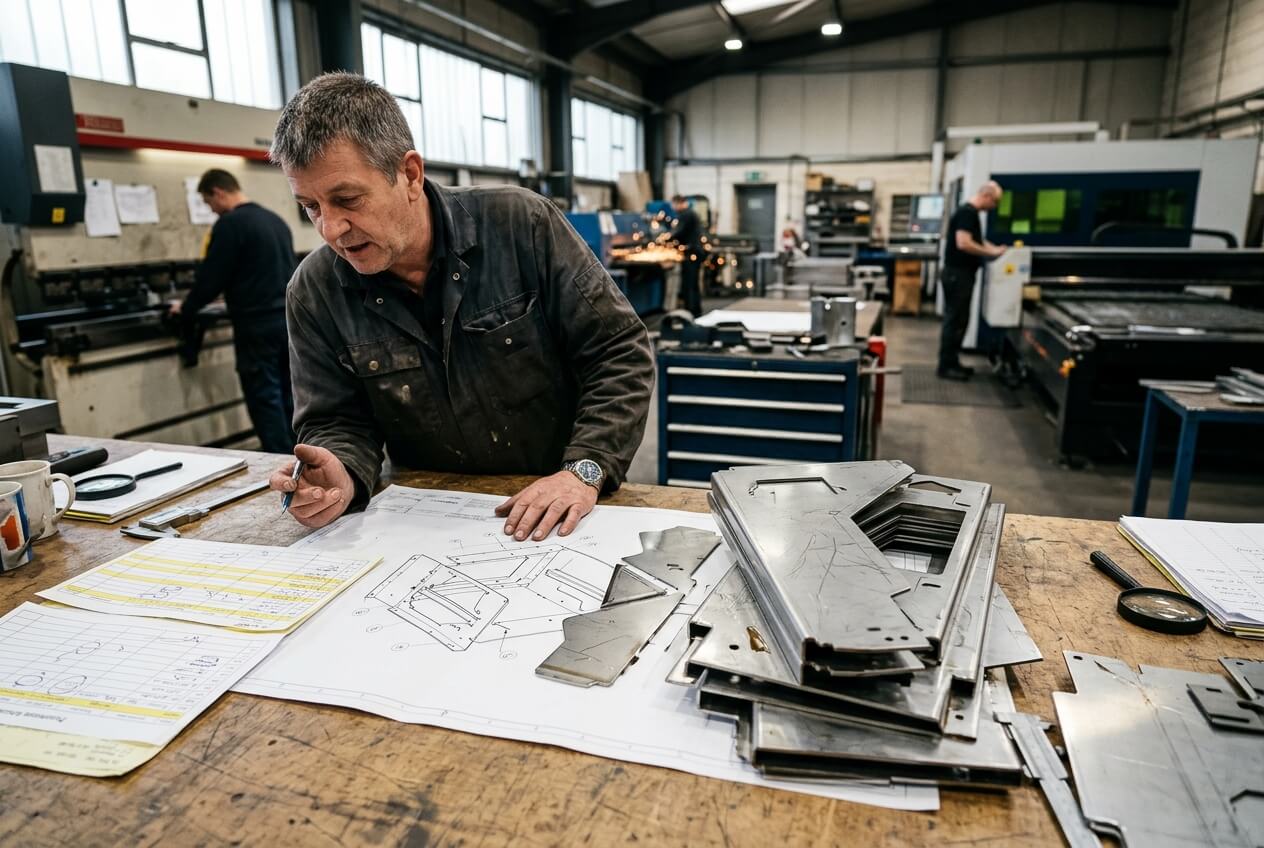
A sourcing engineer sends one enclosure package to three sheet metal suppliers. The CAD model looks complete. The PDF includes geometric dimensioning and tolerancing callouts for true position, flatness, and perpendicularity. Two suppliers return short lead times. One supplier adds fixture review, first article inspection, and a question about whether powder coating counts in the flatness requirement.
If the buyer compares only unit price and promised delivery, the wrong supplier may look faster. The real problem sits inside the RFQ. The drawing asks for precision, but it does not explain which features protect assembly, which surfaces control appearance, and which tolerances came from an earlier design template.
That ambiguity creates a procurement risk: quotes no longer describe the same manufacturing plan. One supplier may price normal laser cutting and bending. Another may include welded fixtures, post-coating inspection, and extra engineering time. A third may assume the buyer will accept adjustment during assembly. The first quote can win the project and still cause late clarification, rework, or batch delay.
Geometric dimensioning and tolerancing can reduce confusion when it matches real sheet metal function. It can also create hidden schedule risk when buyers leave datum choices, inspection stages, coating effects, and prototype approval rules open. The goal is not to remove GD&T from sheet metal drawings. The goal is to make every schedule-critical callout clear before suppliers quote.
RFQ ambiguity turns GD&T into hidden supplier assumptions
Most quote problems do not start with a bad supplier. They start when the RFQ gives suppliers too much freedom to interpret the same drawing. A sheet metal drawing may show a tight position tolerance on holes, a flatness control on a door, and perpendicularity on a welded bracket. Without assembly context, each supplier must decide how much control the project really needs.
That decision changes price and lead time. A supplier who treats the hole pattern as critical may plan a forming fixture and first article report. Another may check only laser-cut dimensions before bending. Both may believe they followed the drawing. The buyer then compares two delivery promises that carry different production risks.
Where assumptions enter the quote
Assumptions often enter through missing datum information. A drawing may identify an outside edge as the reference, while the final product locates from a bent flange or welded corner. The supplier must choose the practical datum for fabrication and inspection. If the RFQ does not identify the real mounting face, that choice becomes invisible inside the quote.
Inspection stage creates another gap. Sheet metal parts change after bending, welding, polishing, and powder coating. A true position callout may look simple on a flat pattern. After forming, the same holes may shift relative to a flange. After coating, slots and close-fitting covers may lose clearance. If the buyer does not state when to inspect, suppliers quote different levels of control.
Yishang often sees this risk in enclosure, bracket, frame, and cabinet RFQs. The drawing contains enough detail to quote a price, but not enough detail to protect the delivery date. Early review should ask one question: what could stop production after the purchase order?
Datum choices can make parts pass inspection but fail assembly
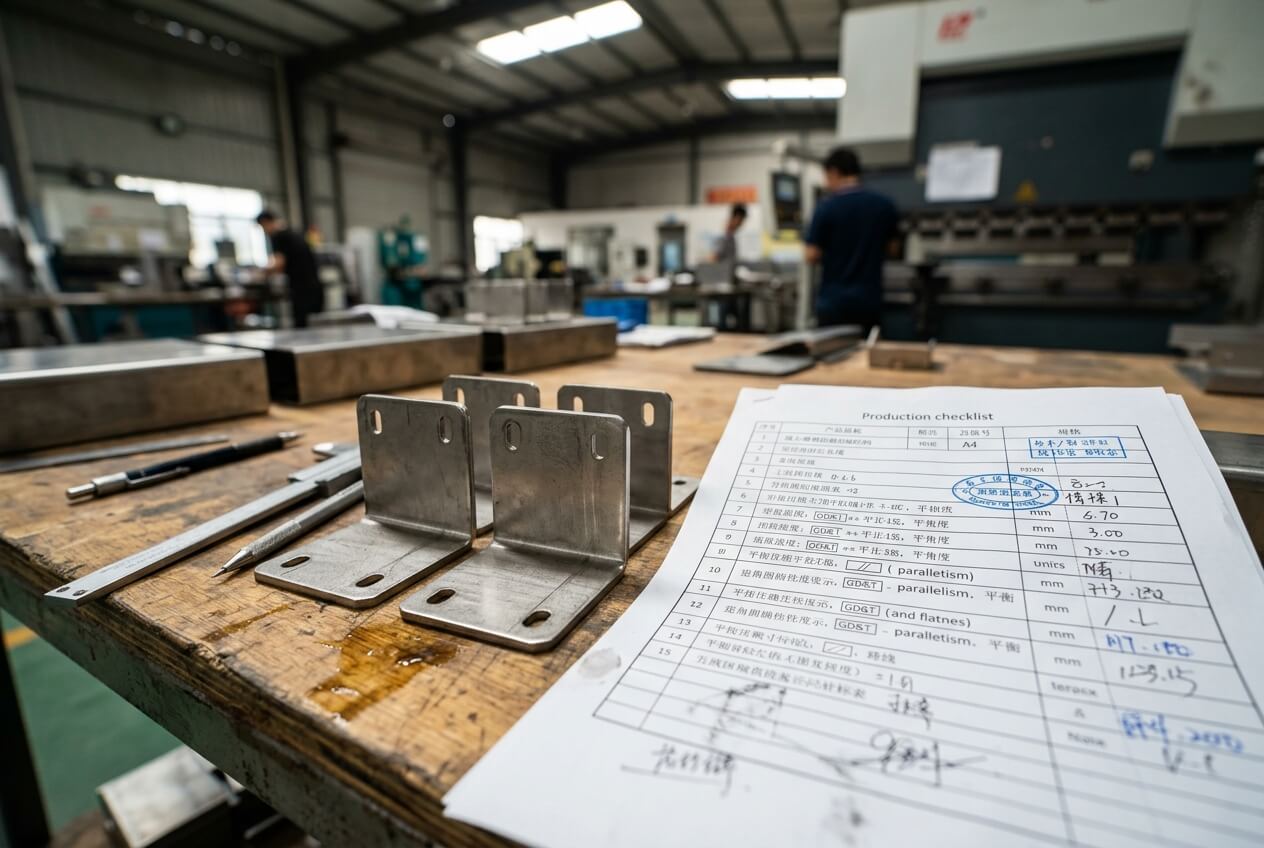
A weak datum scheme can produce the most expensive kind of defect. The supplier checks the part, records acceptable dimensions, packs the batch, and ships it. The buyer then finds that covers, brackets, or frames do not align with the real equipment. The drawing passes. The assembly fails.
This happens because sheet metal parts do not stay in one geometric condition. Laser cutting may create accurate blanks. Bending introduces springback and material thickness effects. Welding adds heat distortion. Powder coating adds thickness at edges, holes, hooks, and contact faces. A datum that looks stable in CAD may not reflect the way the part installs.
Enclosure example: hinge holes controlled from the wrong edge
Consider a small electrical enclosure with a hinged front door. The drawing controls hinge hole true position from two outside door edges. The real cabinet, however, locates the door from a formed hinge line and a latch bracket welded to the frame. During prototype assembly, a technician adjusts the hinge slightly and the door closes well.
In batch production, the hinge holes follow the drawing, but the door gap varies. The latch sometimes rubs. The supplier then asks whether to slot holes, change the hinge location, or hold the frame tighter. The delay began in the RFQ because the datum structure did not match the assembly interface.
Bracket example: a coated mounting face becomes the real datum
A buyer may order powder coated brackets that bolt to an internal machine frame. The drawing uses a formed side flange as a datum and applies perpendicularity to the mounting face. In the actual assembly, the flat coated mounting face controls fit. If the RFQ does not specify masking or post-coating inspection, the coating can build on the contact surface and reduce clearance.
The supplier may stop before packing the batch to confirm whether sanding is allowed. If the buyer rejects touch-up marks, the project needs rework or new masking instructions. A small datum oversight becomes a finish, fit, and delivery problem.
Procurement teams can reduce this risk by marking the real locating faces, hinge lines, latch areas, welded bases, and mating hole patterns. They should also state whether inspection uses the bare component, the formed part, the welded assembly, or the finished assembly. That clarification lets suppliers quote the same intent instead of guessing.
Over-tight callouts distort cost when function is not ranked
Tight GD&T can protect a product. It can also create cost without improving performance. The difference depends on whether the RFQ ranks function-critical features before quote comparison. When every hole, flange, and panel receives tight controls, suppliers must treat too many features as schedule risks.
True position shows this problem clearly. A laser-cut panel may include twenty holes. Four holes locate a PCB or mating frame. The rest hold cable clips, covers, or labels. If all holes carry the same tight true position tolerance, the supplier may add inspection time across the entire panel. The quote rises, and the lead time grows, even though only four holes affect assembly fit.
Flatness across large panels can hide process limits
Flatness creates similar risk on doors, covers, and cabinet skins. A buyer may want a clean appearance and a consistent closing gap. The drawing may instead apply a tight flatness control across the full panel. Thin sheet metal may need stiffening ribs, revised bend sequence, special handling, or extra inspection to approach that requirement.
Welding and powder coating can make the callout harder to hold. Weld heat can pull a panel. Oven temperature can reveal stress. If the supplier prices ordinary fabrication and later discovers that the flatness callout applies after coating, the schedule can shift from production to negotiation.
Perpendicularity on welded frames can require fixtures
Welded frames and rack assemblies need careful tolerance decisions. A base plate may need coplanarity because it bolts to a floor or machine bed. Uprights may need perpendicularity because shelves, screens, or covers mount to them. If the drawing applies tight controls everywhere, the supplier may need stronger fixtures, staged welding, straightening, or machining after welding.
That extra work belongs in the quote. If the RFQ does not identify which relationships matter most, one supplier may include fixture trials while another assumes normal weld variation. The cheaper quote may only be cheaper because it skipped the risk.
Buyers should separate function-critical GD&T from general sheet metal tolerance. They should also explain mating conditions, fastener types, slot allowances, and installation method. This does not weaken the drawing. It helps suppliers focus cost and time on the controls that protect the product.
Prototype approval does not remove RFQ ambiguity for batch production
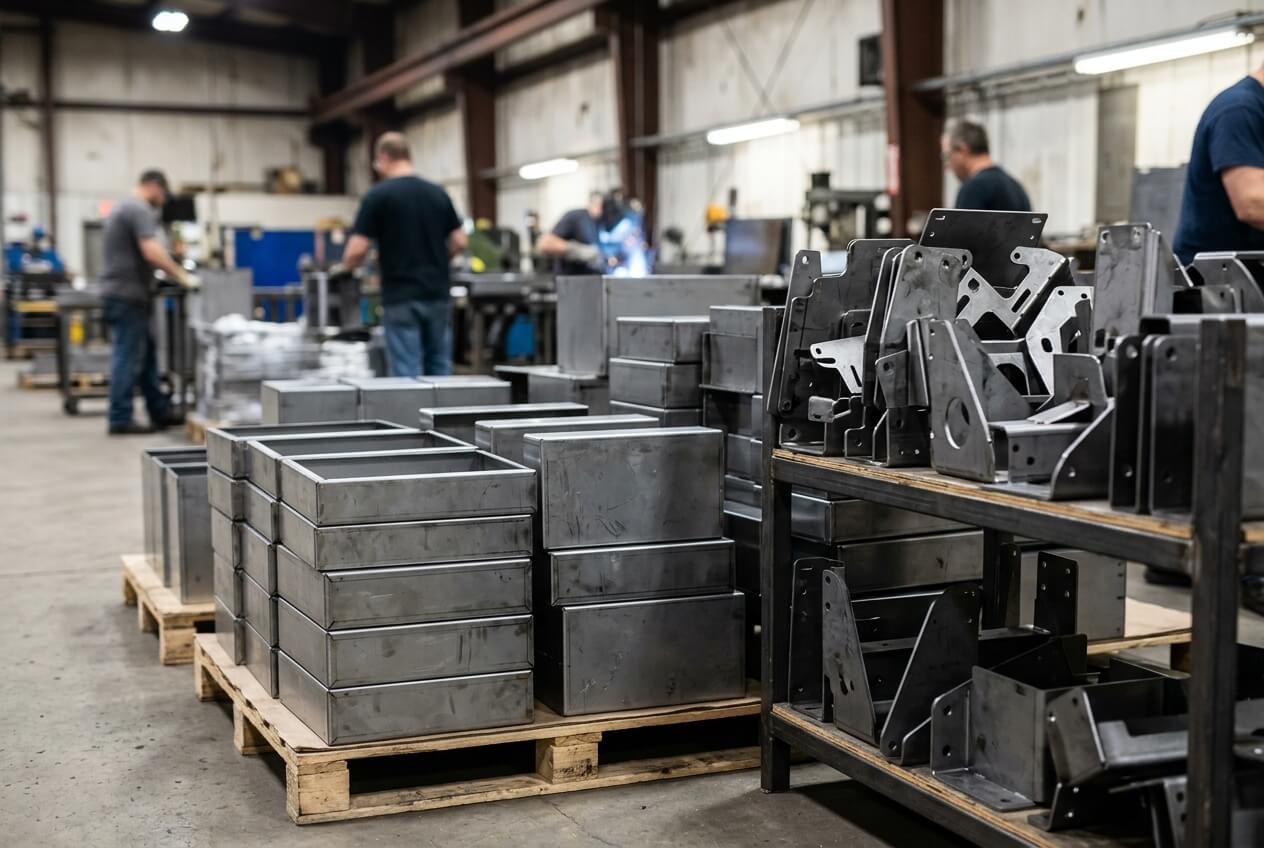
Prototype approval often gives buyers false confidence. A prototype can pass because one experienced fabricator adjusted a hinge, straightened a frame, or selected the best part from a small run. Batch production needs repeatable datums, stable fixtures, clear inspection rules, and written acceptance criteria.
The risk grows when prototype feedback stays in emails. A buyer may write that the front cover fit is acceptable, the latch hole needs a slight move, and the finish looks good. If the drawing does not change, the supplier faces three authorities during batch planning: the original GD&T, the approved sample, and informal comments.
Welded frame example: one good sample becomes a poor batch rule
A display rack prototype may stand square after manual adjustment. The buyer approves the sample because the shelves fit and the appearance looks acceptable. For a batch of 300 units, the supplier cannot rely on hand correction for every frame. The welding sequence, fixture references, base plate flatness, and upright perpendicularity must become part of the production plan.
If the RFQ never defined which dimensions require 100 percent checking and which can follow sampling, production may pause before mass welding. The supplier may ask for a revised drawing, a master sample, or a written deviation. Each question arrives after the buyer expected production to start.
A similar issue appears in wall-mounted metal cabinets. A prototype may install easily because the technician uses oversized wall anchors. Later, the batch must mount to a pre-drilled machine frame. The hole position now matters more than the prototype suggested. If the buyer did not clarify that interface before quoting, the first batch may need rework.
Buyers should treat prototype approval as a conversion step. They need to convert learning into controlled batch documents. Updates may include revised GD&T, marked critical dimensions, photos of mating parts, coating notes, inspection stage, sampling plan, and approved deviations. This step protects batch consistency more than a simple approved sample label.
Clarify quote-critical GD&T before comparing price and lead time
Procurement teams do not need to turn every RFQ into a long engineering manual. They need to remove the assumptions that distort quotes. The most useful RFQ notes connect geometric dimensioning and tolerancing to assembly fit, production method, finish condition, and inspection timing.
Before comparing suppliers, buyers should identify the features that can stop production. For an enclosure, those may include hinge holes, latch brackets, door gap, and mounting panel position. For a bracket set, they may include bend-to-hole distance after forming and coated contact faces. For a welded frame, they may include base coplanarity, upright perpendicularity, and mating hole true position.
Details that make quotes comparable
- Mark real assembly datums, including mounting faces, hinge lines, cabinet frames, welded bases, and mating hole patterns.
- Rank critical tolerances so suppliers know which GD&T callouts protect function and which features can use general sheet metal tolerance.
- State inspection stage for position, flatness, perpendicularity, and profile controls.
- Clarify whether coating thickness affects holes, slots, threaded inserts, hinges, covers, and contact surfaces.
- List material grade, thickness, finish expectation, quantity, and prototype or batch release status in the same RFQ package.
- Ask suppliers to show added time for fixture design, first article inspection, coating review, or GD&T clarification.
These notes expose quote assumptions early. If one supplier includes a weld fixture trial and another does not, the buyer can ask why. If one supplier measures after powder coating and another checks only bare metal, their delivery promises are not equivalent.
Supplier communication should focus on consequence, not symbol debate. Ask what the callout changes in cutting, bending, welding, finishing, inspection, and packing. A useful answer will link tolerance decisions to cost drivers and lead time. A vague answer may signal that the supplier has not priced the real risk.
For custom sheet metal fabrication, Yishang can review drawings, CAD files, assembly notes, and prototype comments to identify GD&T items that may affect forming, welding, finishing, inspection, or batch consistency. The review works best when buyers share the complete RFQ context, not only a PDF drawing.
Practical next step: If your RFQ includes geometric dimensioning and tolerancing for sheet metal enclosures, brackets, frames, cabinets, or welded assemblies, send Yishang the drawings, CAD files, material requirements, quantities, tolerances, finish expectations, assembly photos, and prototype comments. Ask for feedback on datum choices, inspection stage, coating impact, fixture needs, and batch control before you lock price and delivery at https://zsyishang.com/.
Frequently Asked Questions
Which GD&T issues most often make sheet metal quotes incomparable?
Unclear datums, tight true position callouts, large-panel flatness, welded-frame perpendicularity, and missing inspection-stage notes create the biggest quote gaps. Suppliers may price different fixtures, inspection work, or coating checks without showing those assumptions clearly.
Should true position be checked before or after bending?
Check true position after bending when the holes locate a mating part in the formed condition. Pre-bend checking may suit non-critical blank features. The RFQ should state the assembly condition so suppliers quote the same inspection method.
How can a part pass the drawing but fail assembly?
The drawing may reference an edge or surface that does not control the real installation. The assembly may locate from a bent flange, hinge line, latch bracket, welded base, or coated mounting face. Mark those real interfaces before requesting quotes.
Does powder coating affect geometric dimensioning and tolerancing?
Yes, when the controlled feature affects fit after finishing. Coating can change clearance at slots, holes, covers, hinges, and contact faces. Buyers should specify masking, coating thickness concerns, and whether inspection occurs before or after coating.
Why is prototype approval not enough for batch consistency?
A prototype may include manual adjustment or informal acceptance. Batch production needs repeatable fixtures, updated drawings, clear datums, inspection rules, and approved deviations. Convert prototype comments into written batch requirements before release.
What should buyers send for a GD&T review before RFQ comparison?
Send drawings, CAD files, material grade and thickness, quantities, tolerance notes, finish expectations, assembly photos, mating part details, prototype feedback, and required delivery timing. This helps the supplier separate normal fabrication from added fixture, inspection, or clarification time.