
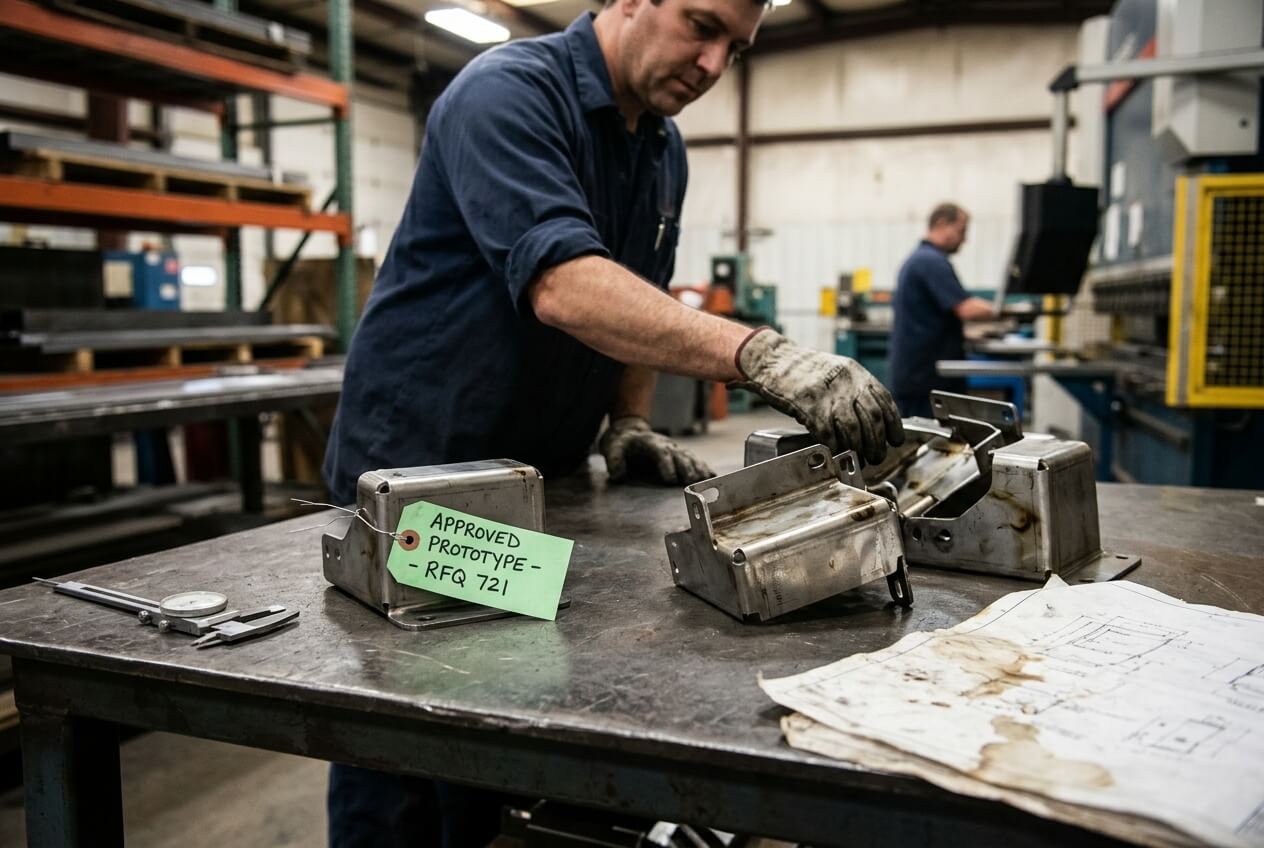
A sourcing team can approve a prototype enclosure and still buy a batch that does not assemble cleanly. The sample door closes. The powder coating looks acceptable. The mounting holes match the mating frame. Then the first production lot arrives with twisted welded bodies, uneven door gaps, and rough edges showing through the coating.
The failure often starts before production. The RFQ did not state whether annealing heat treatment was required, prohibited, or left to supplier judgment. One supplier quoted post-weld stress relief. Another skipped it because the prototype looked stable. A third outsourced annealing but did not include fixture support, scale removal, or post-anneal inspection.
The buyer compared unit prices, but the quotes did not describe the same manufacturing route. That is the procurement risk. Annealing may solve stress, cracking, or forming problems. It can also move holes, change flatness, add oxide scale, increase inspection work, and extend lead time. Buyers do not need to become metallurgists. They do need to stop annealing from becoming a hidden production assumption.
For custom sheet metal fabrication, the safest RFQ treats annealing as a controlled condition tied to fit, finish, and batch repeatability. The drawing, quote, prototype record, and purchase order should all describe the same route.
The Costly Risk Is Not Annealing Itself, but an Unstated Process Condition
Annealing heat treatment becomes risky when the buyer and supplier treat it as a shop-floor decision instead of a quoted process condition. The word “annealing” may mean stress relief after welding, softening before forming, dimensional stabilization before machining, or a material-specific thermal cycle. Each purpose changes cost, inspection, finish preparation, and production timing.
Sheet metal parts rarely fail because someone discussed annealing too early. They fail because nobody defined why it was needed. A welded frame may need stress relief to reduce distortion after long seams. A stainless bracket may need better formability before a tight bend. A cabinet body may need dimensional stability before doors, hinges, locks, and internal shelves get installed.
If the RFQ stays silent, the supplier must guess. That guess enters the quote. It may also change between prototype and batch production.
One word can hide several routes
Low carbon steel stress relief may involve a different temperature range, hold time, and cooling method than stainless solution annealing or aluminum alloy heat treatment. Thin sheet metal also reacts differently than thick machined parts. A large enclosure panel can relax, bow, or twist when internal stress releases. A small bracket may tolerate the same process without visible movement.
Procurement teams should avoid vague notes such as “anneal if needed.” That phrase gives suppliers room to make different assumptions. A stronger note explains the function. For example: “Stress relief after welding to support flatness requirement before powder coating,” or “No post-forming annealing allowed unless approved because hole position is critical after bending.”
Those statements do not replace technical standards. They make the quote comparable. They also tell the fabricator which risk matters most: cracking, distortion, surface condition, or assembly fit.
Where RFQ Silence Creates Non-Comparable Quotes
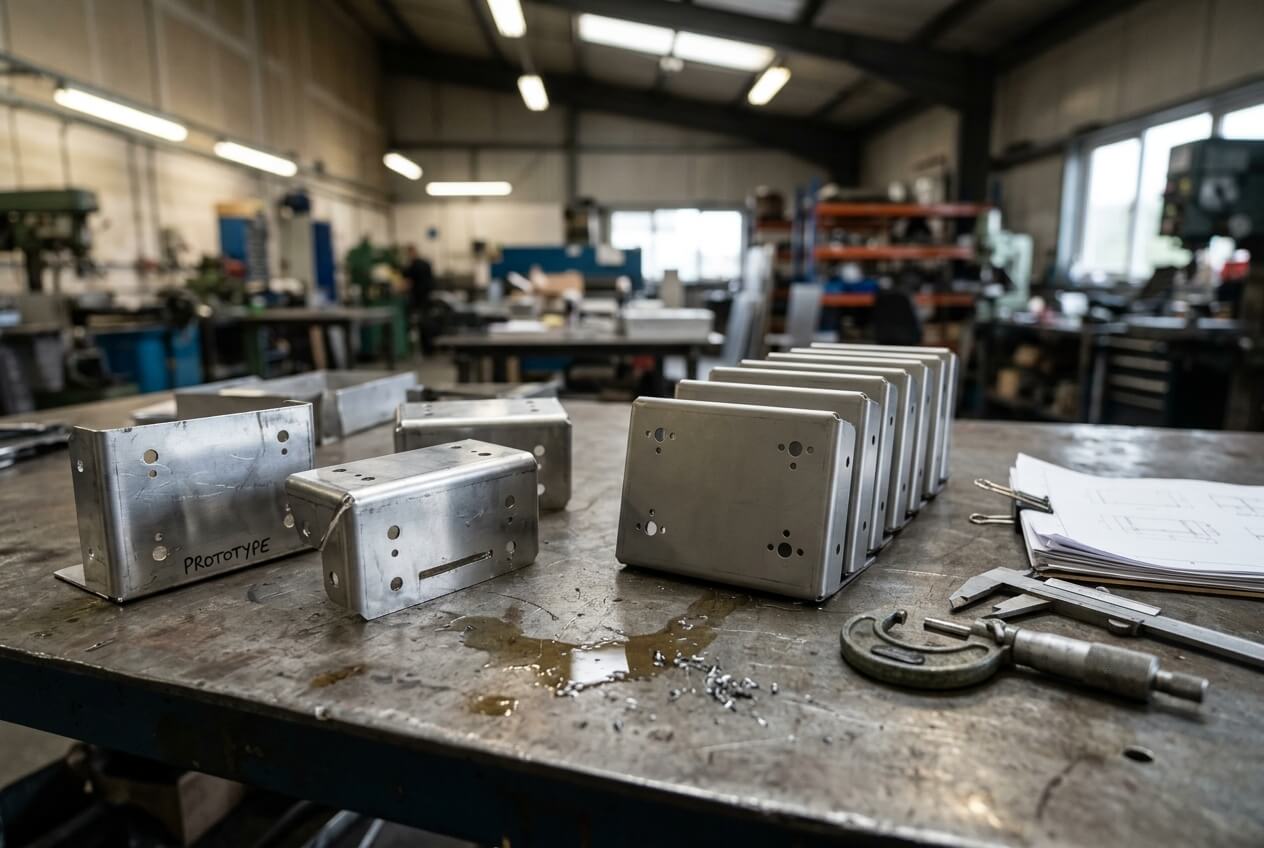
Many buyers compare sheet metal quotes by unit price, tooling cost, and delivery date. That approach breaks down when annealing sits outside the drawing notes. Two suppliers may quote the same enclosure, bracket, or welded assembly, but they may not include the same process steps.
One price may include laser cutting, bending, welding, stress relief, straightening, abrasive cleaning, powder coating, and final inspection. Another may include only cutting, bending, welding, and coating. A third may include outsourced annealing but exclude rework after heat treatment. The spreadsheet shows three prices. In reality, the buyer received three different technical proposals.
This gap affects more than price. Annealing adds handling and scheduling risk. Parts may travel to an outside heat treatment vendor. They may wait for furnace capacity. After cooling, the supplier may need to inspect flatness, diagonals, hole positions, threaded inserts, and visible surfaces again. If oxide scale appears, the finish route may need blasting, polishing, pickling, or extra cleaning before powder coating.
Cost differences often come from missing operations
A low quote may look attractive because it leaves out operations that become necessary later. Post-anneal straightening can consume skilled labor. Scale removal can add finishing cost. Re-inspection can slow packing. Fixture support during heating may require design time and fabrication time. None of these costs feel optional when the first batch must fit an assembly line.
Lead time also changes. A supplier that controls the full route in-house may schedule annealing more predictably. A supplier that outsources the step may need extra days for transport and queue time. The buyer should not assume either route is better. The point is to make the assumption visible before comparing prices.
A practical RFQ should ask suppliers to state whether annealing heat treatment is included, when it occurs, which dimensions they inspect after it, how they clean surfaces before finishing, and whether any straightening is included. Yishang can review drawings and RFQ notes with buyers when the part includes welded assemblies, enclosures, frames, or brackets that may move after stress relief.
Prototype Approval Can Hide Annealing Changes Until Batch Assembly
Prototype approval gives buyers confidence, but it can also hide process variation. A supplier can hand-straighten one sample frame. They can polish one heat-tinted edge. They can adjust one cabinet door until the gap looks even. Those actions may create an acceptable prototype without proving a repeatable batch route.
The danger increases when the prototype record only says “approved.” It may not capture the material lot, bend radius, weld sequence, fixture method, annealing condition, cooling method, cleaning process, or final inspection result. When production starts, any change in those details can move the part.
Batch consistency requires more than a good sample. It requires the same process condition or an approved change. If the prototype used annealing, buyers should know why it was added and what measurements followed. If the prototype did not use annealing, buyers should ask whether batch welding, forming, or coating will remain stable without it.
Example: control cabinet door gaps
A buyer approves a powder coated control cabinet. The prototype door closes well, and the gasket compresses evenly. During batch production, the cabinet body receives post-weld stress relief because the supplier sees corner pull after welding. The body relaxes during heating, and the hinge side shifts slightly. Outer dimensions still look acceptable, but door gaps vary after assembly.
The issue started with an undocumented process change. The quote did not define post-weld annealing or post-anneal hinge inspection. The production team solved one problem, weld stress, but created another problem, assembly variation. Earlier clarification should have tied stress relief to diagonal checks, hinge bracket position, door gap limits, and first article approval before full release.
Example: welded display rack frames
A retail display rack uses two welded side frames and several bolt-in shelves. The prototype stands straight after manual correction. The batch uses the same drawing, but the supplier adds annealing to reduce welding stress across repeated frames. Several frames relax differently because they sit unsupported in the furnace. Shelf slots no longer align easily, and installers must force hardware into position.
The drawing showed slot size and frame width. It did not define free-state flatness, fixture support during annealing, or inspection after cooling. The buyer bought a part number. The supplier produced a different process condition. That mismatch caused the assembly cost.
Freeze the Annealing Condition Before Comparing Prices or Releasing the PO
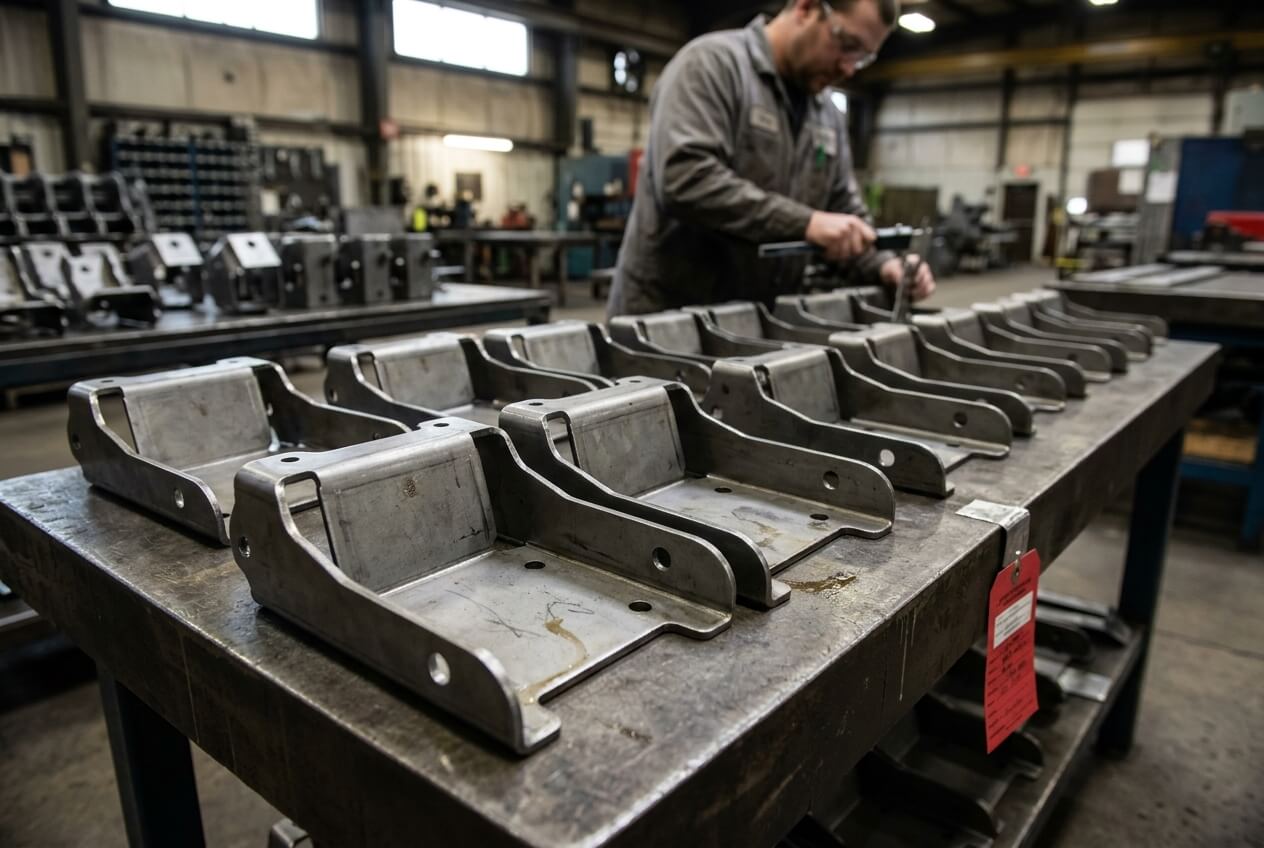
Buyers reduce risk when they freeze the heat treatment condition before the purchase order. “Freeze” does not mean every thermal parameter must appear on the main drawing. It means the buyer and supplier agree on the purpose, timing, controls, and inspection points that affect fit and finish.
Start with the function. If the part must stay flat for a machine base, state the flatness tolerance and measurement condition. If a welded enclosure must hold door alignment, define hinge location, diagonal tolerance, and door gap checks after any stress relief. If the part needs cosmetic powder coating, mark visible faces and require surface cleaning after annealing before coating.
Material information also matters because annealing affects different alloys differently. The RFQ should include material grade, thickness, temper or hardness condition when relevant, and any customer standard that controls heat treatment. A supplier cannot price the route accurately from thickness alone.
Clarify inspection at the point where risk appears
Inspection should follow the operation that can change the part. Measuring holes before annealing may not protect assembly fit if the panel relaxes afterward. Checking a welded frame before stress relief may not prove squareness after cooling. Approving a cleaned surface after coating may miss scale marks that should have been removed earlier.
For annealed sheet metal parts, useful inspection points often include flatness, hole-to-hole distance, diagonal, bend angle, PEM nut alignment, hinge position, door gap, threaded features, and mating surfaces. The buyer should also clarify whether the part gets measured free-state or fixture-mounted. A frame may look out of tolerance on a table but assemble correctly when bolted into its mating structure. The drawing or inspection note should state the condition.
Control the change path
Suppliers sometimes need to change the route during production. That can be reasonable. The risk comes from unapproved changes. The RFQ or PO should require notice if the supplier adds, removes, or changes annealing after prototype approval. It should also require a new first article when the change can affect fit, finish, or functional dimensions.
This step protects both sides. The buyer avoids surprise assembly problems. The supplier avoids absorbing hidden straightening, cleaning, or inspection work. Clear change control also makes quote comparison fair because every supplier prices the same risk.
What to Send With the RFQ When Annealing May Affect Batch Repeatability
A strong RFQ does not need excessive wording. It needs the right context. Send the drawing, 3D model if available, material grade, thickness, quantity, tolerance priorities, finish expectations, prototype photos, assembly requirements, and any known failure history. Then ask the supplier to identify whether annealing heat treatment is included or recommended.
Procurement should focus the discussion on consequences. Which dimensions will move if stress releases? Which surfaces will show oxide scale if cleaning is weak? Which assembly steps fail first if holes or door gaps drift? Which added operations affect cost or lead time? These questions move the conversation away from a generic “can you anneal?” and toward a controlled production route.
For a sheet metal enclosure, the RFQ may call out post-weld stress relief only if the supplier confirms the need after prototype welding. It may also require approval before adding the step to batch production. For a bracket, the note may prohibit annealing after final hole sizing unless the supplier rechecks hole position. For a frame, the quote may need fixture support, diagonal inspection, and straightening criteria.
When buyers send drawings to Yishang, they should include material requirements, quantities, tolerance priorities, and finish expectations, not only the part geometry. That context helps the fabrication review connect annealing decisions to bending, welding, powder coating, assembly fit, inspection points, and quoted cost.
Before releasing annealed sheet metal parts to batch production, send Yishang your drawings, material requirements, quantities, tolerance priorities, finish expectations, prototype notes, and assembly concerns. A drawing review can identify where annealing may change flatness, hole alignment, cosmetic surfaces, powder coating preparation, inspection scope, cost, and lead time before the RFQ becomes a purchase order.
Frequently Asked Questions
Should annealing heat treatment be listed on a sheet metal drawing?
List it when it affects fit, flatness, cracking risk, hardness, finish, or inspection. If the main drawing must stay simple, add an RFQ note that defines the purpose, timing, post-anneal inspection, cleaning requirement, and approval path for process changes.
Why do quotes differ so much when annealing is not defined?
Suppliers may include different operations. One may price stress relief, straightening, cleaning, re-inspection, and outsourced heat treatment transport. Another may exclude those steps. The unit prices then compare different manufacturing routes, not the same part.
Can a prototype pass even if the batch annealing route is risky?
Yes. A supplier can manually correct one prototype, polish one surface, or adjust one door. Batch production needs repeatable controls. Confirm whether the prototype used annealing, when it occurred, and which dimensions were checked afterward.
Which dimensions should buyers check after annealing welded assemblies?
Focus on assembly-driven features: flatness, diagonal, hole location, hinge position, door gap, PEM nut alignment, threaded features, and mating surfaces. Clarify whether inspection occurs in free state or while the part sits in a fixture.
How can annealing affect powder coating on enclosures or frames?
Annealing can leave oxide scale, discoloration, or surface roughness. If the RFQ only states a color code, the batch may meet the color requirement but fail the cosmetic expectation. Mark visible faces and define cleaning before coating.
What should buyers send for an RFQ when annealing may be needed?
Send drawings, material grade, thickness, quantities, tolerance priorities, finish expectations, prototype notes, photos, and assembly requirements. Ask the supplier to state whether annealing is included, recommended, prohibited, or subject to approval after sampling.