Overseas wholesale buyers rarely judge a custom metal product by appearance alone. The real test comes later, when the approved sample moves into bulk production, the shipment reaches the warehouse, and the buyer’s team assembles, resells, installs, or integrates the parts into a larger system.
Small details often decide whether that process runs smoothly. A hole that shifts slightly, a thread that feels rough, a slot that becomes tight after coating, or a frame corner damaged during shipping can create more cost than expected. The product may still look acceptable, but it may not work smoothly in the buyer’s real supply chain.
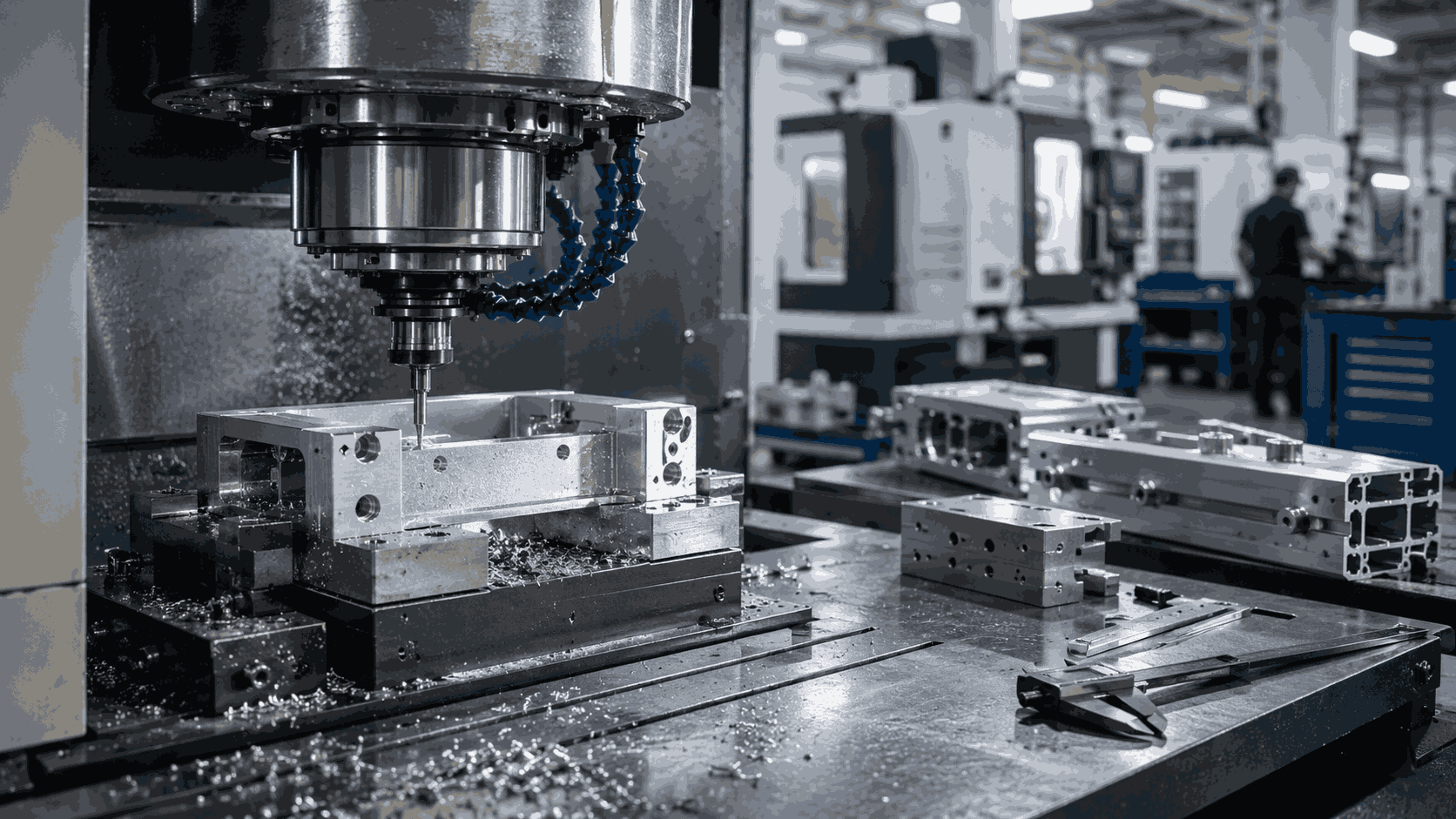
In-house precision machining helps connect RFQ review, drawing confirmation, sampling, bulk production, dimensional inspection, packaging, and shipment into a more controlled process. For custom metal cabinets, display racks, metal frames, brackets, enclosures, and sheet metal assemblies, precision does not only mean tight numbers on a drawing. It means better fit, faster assembly, and more consistent repeat orders.
What Wholesale Buyers Look For Beyond a Machine List
Equipment Matters, But It Does Not Tell the Whole Story
When procurement teams search for a precision machine shop or custom metal products supplier, they often see similar capability terms: CNC machining, laser cutting, forming, welding, powder coating, assembly, and quality inspection. These capabilities matter, but they do not tell the whole story.
A machine list may show processing capacity. It may mention a 3-axis vertical mill, lathe capacity, axis travel, tool capacity, or maximum RPM. Engineers may use those details to understand the supplier’s technical range. Wholesale buyers, however, usually need another layer of confidence.
They want to know whether the supplier can repeat the approved sample across the full production batch. They care about whether holes still align after bending, whether welded frames remain stable, whether threaded holes support repeated assembly, and whether coated areas still fit after powder coating or plating.
Buyers Think in Landed Cost, Not Only Unit Price
A minor issue in a small order may only require a quick correction. The same issue across hundreds or thousands of units can become a serious sourcing problem. Inspection time increases. Resale may slow down. Customer complaints may follow. Replacement cost can quickly remove the advantage of a lower unit price.
Experienced buyers often think beyond the quotation price. They look at landed cost, which includes incoming inspection, rework, packaging damage, communication time, and supply reliability. A part that looks cheap at the purchasing stage may become expensive if the buyer’s team has to fix it after arrival.
In-house precision machining helps reduce these hidden costs because machining feedback stays close to fabrication, welding, surface treatment, assembly, and quality control. If a slot needs more clearance after coating, or a welded frame needs dimensional checking before final assembly, the production team can review the issue before shipment.
For buyers comparing suppliers, this kind of process control often matters more than another long equipment list. A stronger supplier can explain which product features require closer control, how the team checks them, and how sample feedback moves into mass production.
How Machining Control Connects Fabrication, Assembly, and Inspection
Fit Problems Often Start Between Processes
Most custom metal product issues do not come from one isolated process. They often appear when several processes interact. Laser cutting may produce the basic profile, but it may not prepare every functional feature for assembly.
Forming can slightly change the relationship between holes and edges. Welding can introduce heat distortion. CNC machining may refine holes, slots, threads, or fitting surfaces. Surface treatment can change clearance. Assembly then shows whether the earlier processes worked together as expected.
This is where sheet metal and precision machining should work as one connected plan. For wholesale custom metal products, machining control brings the most value when it supports the full production route rather than standing alone as a separate service.
Critical Features Carry Real Purchasing Impact
A metal cabinet may need accurate hinge holes, lock openings, ventilation features, and internal bracket positions. A metal frame may need stable connection points that match the buyer’s installation layout. A display rack may require repeated slots or threaded inserts so workers can assemble a large shipment quickly and consistently.
These details may look small on a drawing, yet they carry real purchasing impact. If the first shipment needs extra drilling, sorting, or manual correction, the buyer loses time and money even if the quoted price looked attractive.
| Feature or Process Point | What Can Go Wrong | Impact on Wholesale Buyers |
|---|---|---|
| Mounting holes | Holes do not match mating parts | Slower installation or rework |
| Threaded holes | Threads feel shallow, rough, or inconsistent | Weak fastening or assembly complaints |
| Welded frame connection points | Heat distortion changes final position | Poor fit at the installation site |
| Coated fitting areas | Powder coating or plating reduces clearance | Tight assembly or blocked holes |
| Repeated slots or brackets | Units vary across the batch | Higher incoming inspection workload |
| Machined or coated surfaces | Packing or transport damages them | Claims, resale delay, or replacement cost |
Machining Value Shows Up During Inspection
This table also gives buyers a useful RFQ reference. Instead of asking only whether a supplier offers CNC machining for sheet metal parts, buyers can ask which critical features the factory will check during production.
Real manufacturing experience shows up in these details. A capable team knows when to machine a hole after forming, when to check a welded assembly dimensionally, and when to plan surface treatment allowance before completing the production batch.
That practical knowledge helps buyers avoid surprises. It also makes inspection more meaningful because the inspection focuses on the features that affect fit, fastening, movement, assembly, and shipment quality.
Practical Tolerance Control for Cost, Fit, and Repeatability
Tight Tolerance Should Protect Function
Many buyers ask, “What tolerance can you achieve?” The question makes sense, but it should not always start the conversation. In custom metal manufacturing, a more useful question is which dimensions need tighter control because they affect product function.
A threaded hole used for repeated assembly deserves different attention from a hidden cover edge. A hinge position on a metal cabinet may need closer alignment than a decorative surface. A bracket interface that carries load may need more careful inspection than a non-functional panel edge.
Practical tolerance control helps both buyer and supplier. Loose tolerances on critical features can create assembly problems. Unnecessarily tight tolerances on non-critical features can add machining time, inspection cost, scrap risk, and higher unit price.
Process Route Affects Final Dimensions
For wholesale buyers, this balance matters. A small cost increase across thousands of units can affect margin. A small dimensional issue across the same quantity can create even greater downstream cost.
Tolerance planning should also consider the full manufacturing route. Laser cutting, CNC punching, forming, welding, CNC machining, powder coating, polishing, assembly, and inspection can all influence the final result.
Surface treatment gives a common example. Powder coating, plating, brushing, or polishing can affect final clearance, hole fit, and mating surfaces. A part may fit well before finishing but become tight after coating if the team does not consider clearance earlier.
Standards Help When They Match the Project
Technical standards can support clear communication when they match the project. Some drawings may reference ISO 2768 for general tolerances. Some engineering projects may use GD&T requirements under ASME Y14.5.
No single tolerance value fits every custom metal product. A more reliable approach starts with drawing review, critical feature identification, inspection requirement confirmation, and tolerance planning that matches the product’s actual use.
For YISHANG’s OEM and ODM metal fabrication projects, the team considers machining decisions together with material, surface finish, assembly method, packaging needs, and order quantity. This helps buyers avoid both over-engineering and under-controlled production risk.
From RFQ Review to Bulk Production Control
A Good RFQ Review Reveals Supplier Thinking
The RFQ stage often reveals how a supplier thinks. Some suppliers return only a price. A more useful manufacturing partner reviews the drawing, checks manufacturability, identifies risk points, and asks practical questions before quoting.
For custom metal products, RFQ review should consider material, thickness, hole positions, thread requirements, bend lines, weld areas, assembly sequence, finish type, packaging requirements, and inspection standards. These details help determine whether the part can move into efficient and repeatable production.
Material choice belongs in this discussion. Stainless steel 304 and 316 may suit corrosion-resistant and long-life products. Mild steel may fit cost-effective frames, brackets, cabinets, and general industrial components. Galvanized steel may support protective performance. Aluminum may reduce weight. Copper and brass may support conductivity, appearance, or special functional needs.
Material Affects More Than Price
Material should not appear only as a list. Buyers need to understand how the material affects machining strategy, welding behavior, surface finish, thread strength, packaging protection, and production stability.
The same drawing can behave differently in stainless steel, aluminum, or galvanized steel. A supplier that reviews material behavior during RFQ can often give a more realistic quotation and a more useful sampling plan.
This matters for buyers who plan repeat orders. A quote should not only answer “how much does it cost?” It should also help answer “can this product run steadily in production?”
Sample Approval Is Only the Beginning
After RFQ and sampling, the approved sample becomes the production reference. Yet one good sample does not automatically prove batch stability. A technician may manually adjust a sample during trial production, while bulk production needs a repeatable process.
In-house precision machining supports the move from prototype to bulk production. If sample review shows that a slot needs better clearance, a thread needs deeper engagement, or a welded structure needs a more stable datum before machining, the team can build that feedback into the production workflow before scaling.
For wholesale buyers, this reduces the gap between what they approve during sampling and what they receive in the final shipment. That gap often hides the sourcing costs that appear later.
Export readiness should stay connected to the same process. Machined edges, coated surfaces, threaded holes, hinge areas, and frame corners need protection during transportation. If these areas arrive damaged, machining quality loses part of its value.
For international wholesale orders, made correctly and arrived correctly both support supplier reliability.
How Buyers Can Evaluate a Precision Machining Partner
Better Questions Lead to Better Sourcing Decisions
When buyers compare precision machining services, the most useful question is not simply which factory has more equipment. A better question is whether the supplier can connect machining with the full custom metal manufacturing process.
A capable supplier should discuss critical features, tolerance control, material behavior, surface treatment allowance, inspection points, packaging protection, and batch repeatability. These topics show whether the factory understands how the product will perform after shipment.
For overseas wholesale buyers, communication during RFQ plays a major role. When a supplier asks about application details, assembly method, surface finish, inspection standards, and packaging needs, that usually signals a more careful approach. The supplier is trying to understand purchasing risk before production begins.
Sample Feedback Should Become Production Control
Buyers can also ask how the supplier handles sample feedback. If the approved sample required adjustment, will that adjustment become part of the standard production process? If a dimension is critical, how will the team inspect it during production? If a finish affects clearance, will the team consider that before completing the batch?
YISHANG supports wholesale and project-based buyers with custom metal cabinets, display racks, metal frames, brackets, enclosures, and sheet metal assemblies. Projects may involve sheet metal fabrication, CNC machining, welding, surface treatment, assembly, packaging, quality inspection, and shipment support.
The goal is not to make every project complicated. It is to reduce preventable issues before they become shipment problems. That approach works especially well for repeat orders, private-label projects, OEM metal fabrication, and custom wholesale production.
Certification Should Support Real Process Control
YISHANG holds ISO 9001 and RoHS certification. These are supporting points rather than exaggerated promises. For buyers, the real value comes from how the team applies structured quality control, drawing-based inspection, and in-process communication to the actual order.
If you are preparing an RFQ, drawings, samples, material requirements, order quantity, surface finish needs, packaging requirements, and inspection standards provide the best starting point for a practical review.
Made to Fit, Made to Last, Made to Scale
In metal fabrication, shape is only the starting point. A product can be cut cleanly, formed accurately, welded firmly, and finished well, but still fail if the functional details do not receive enough control.
For wholesale buyers, final value shows through repeatable quality, smooth assembly, reliable packaging, and stable supply. In-house precision machining helps control the details that support those outcomes.
It supports hole alignment, thread quality, slot accuracy, fitting surfaces, connection points, coating allowance, dimensional inspection, and batch consistency from approved sample to production shipment.
Buyers should evaluate machining capability as part of the supplier’s ability to control the whole product, not as a machine list alone. The question is not only whether a part can be made. The better question is whether it can be made to fit, made to last, and made to scale.