
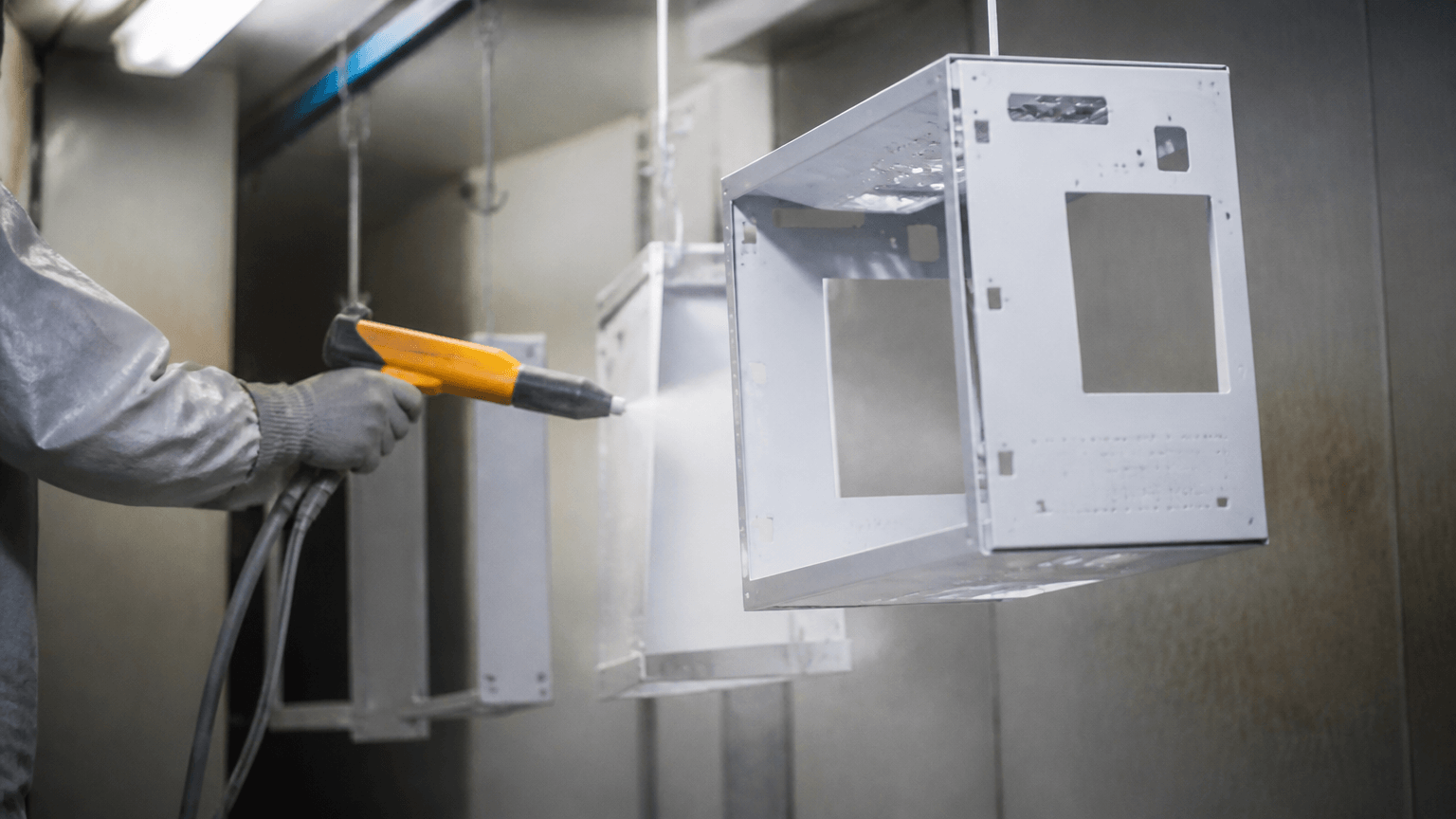
“Forever Powder Coating” is not established by the supplied information as a recognized powder chemistry, coating standard, certification, or guaranteed service-life category. The phrase may refer to a company or trade name, a product or marketing label, or an informal description of durability. If you are evaluating industrial metal parts, confirm the actual powder system, substrate preparation, curing process, inspection criteria, and service environment instead of treating “forever” as a technical requirement.
Clarifying the Term Before Evaluating the Finish
For an OEM buyer, the phrase can create a practical problem: a drawing, supplier listing, or internal request may identify a finish without defining what will be applied to the part. Powder coating is a finishing process, not a single product called Forever. A dry powder is deposited on a prepared metal surface and heated until it flows and forms a continuous film, with final performance depending on the powder system, substrate, preparation, application, cure, geometry, and exposure conditions.
Search results that combine business names, local services, color work, blasting, or decorative work may indicate that “Forever Powder Coating” is being used as an entity name. That possibility does not verify a particular provider’s identity, location, ownership, equipment, capabilities, or certifications. The intended context should be confirmed before a name or marketing phrase is used as a technical specification.
| Possible meaning | What it may indicate | What must be confirmed |
|---|---|---|
| Company or trade name | A name used by a business or finishing provider | Legal identity, coating scope, industrial experience, equipment limits, and quality responsibilities |
| Product or marketing label | A commercial name for a coating offering | Powder product designation, chemistry, intended environment, technical data, and application conditions |
| Informal durability description | An attempt to suggest a durable finish | Defined exposure, measurable requirements, inspection methods, and maintenance assumptions |
Confirming which meaning applies prevents a navigational search from being mistaken for a coating specification. It also helps separate the identity of a supplier or product from the industrial process used to finish the metal.
From Prepared Metal to Inspected Film
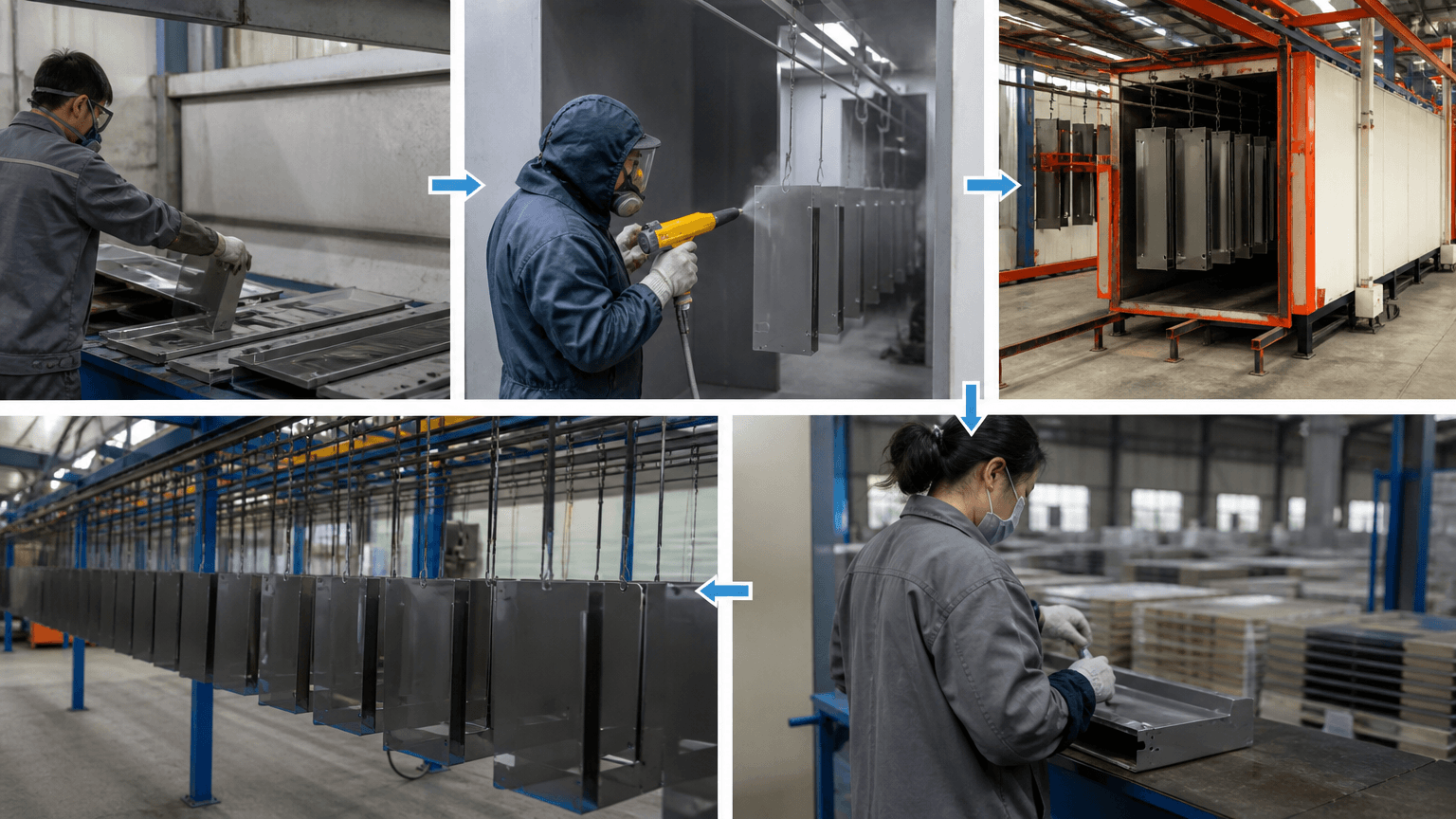
When a fabricated enclosure, bracket, frame, or other metal part is sent for powder coating, the finish begins with the condition of the substrate. Oil, rust, scale, oxides, weld residue, and other contamination can interfere with pretreatment and adhesion. Depending on the base metal and expected exposure, preparation may include cleaning, rinsing, mechanical treatment, chemical conversion, drying, or a combination of these steps. Abrasive blasting may suit some parts, but the abrasive and method must match the material and geometry.
After preparation, the conductive metal part is grounded. An electrostatic spray gun charges the powder particles, which are attracted to exposed surfaces of the workpiece. Deposition can vary around recesses, narrow channels, sharp edges, welds, and other features that shield or concentrate the spray. Part orientation, grounding, and hanging points also affect coverage and may need to be considered during final inspection.
The coated part then enters a controlled heating stage. For common thermosetting powder systems, the required combination of part temperature and time allows the material to flow and chemically crosslink into a continuous film. Cure depends on the powder system, part temperature, geometry, mass, loading arrangement, and thermal process control. An oven air setting alone does not establish that the metal reached the required cure condition.
After curing, the part cools before handling and inspection. Depending on the application, inspection may address appearance, color, gloss, texture, coverage, film thickness, adhesion, and other defined characteristics. The relevant checks and acceptance limits should be agreed before production. Yishang’s Surface Finishing page is a starting point for discussing finishing scope.
Substrate and Environment Set the Durability Conditions
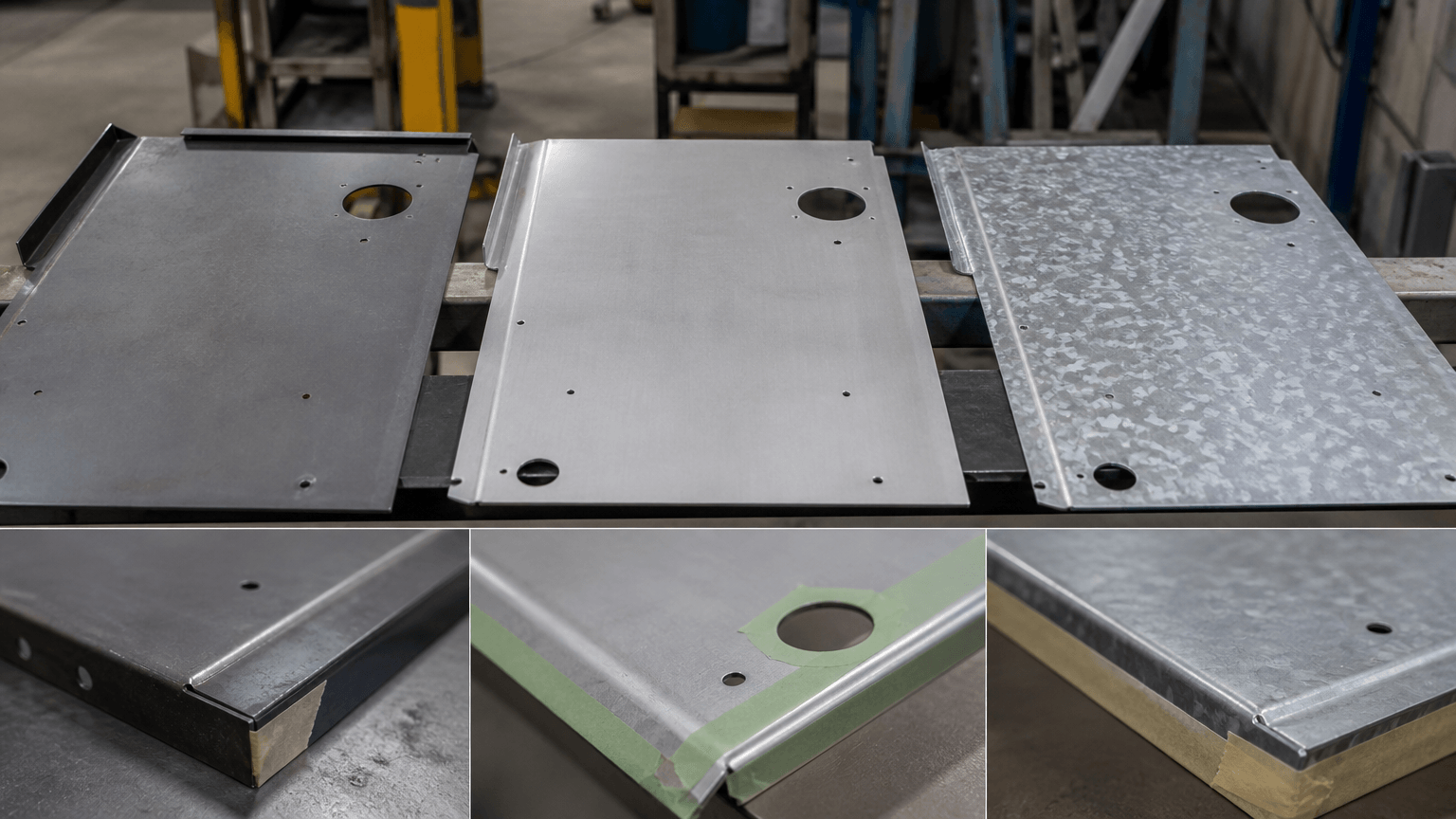
A preparation route and coating specification that suit one part should not automatically be applied to every metal component. Steel, aluminum, and galvanized steel have different surface conditions and defect risks, while the service environment determines which performance concerns deserve the most attention. This matters when a finish must remain compatible with bends, welds, fasteners, electrical interfaces, or other fabricated features.
| Substrate | Preparation considerations | Risks to review |
|---|---|---|
| Mild steel | Remove oil, rust, scale, and fabrication contamination; select pretreatment for the expected corrosion exposure. | Flash rust before coating, corrosion from damaged areas, limited edge coverage, or contamination around welds. |
| Aluminum | Address oils and the oxide surface with a compatible cleaning and conversion route. | Adhesion problems from inadequate preparation, surface variation, contamination, or outgassing from some cast or porous components. |
| Galvanized steel | Confirm the zinc-surface condition, storage history, passivation, and compatibility of the proposed preparation system. | Adhesion loss, gas-related film defects, storage contamination, or damage to the zinc layer during aggressive preparation. |
Buyers using zinc-coated sheet can review Yishang’s Galvanized Steel information, while still confirming the preparation route for the actual part. The substrate, its prior handling, and the selected pretreatment should be evaluated together.
Indoor use in a controlled room presents different demands from outdoor exposure to sunlight, rain, humidity, and temperature cycles. Chemicals, abrasion, impact, repeated handling, cleaning agents, airborne contamination, and maintenance can also influence deterioration. Film formation and cure affect the initial condition of the finish, but service life results from the interaction of those factors with the substrate and pretreatment.
Therefore, “forever” cannot replace an application-specific durability requirement. No coating should be assumed to last indefinitely or to have a fixed service life in every environment. The buyer should define the exposure and identify which appearance, corrosion, adhesion, or mechanical characteristics require inspection or testing.
Turn the Label Into a Usable Specification
A name or marketing phrase may help identify an offering, but a purchase order needs information that can be evaluated. The matrix below separates identity questions from coating-process requirements and whole-part considerations. It is useful when a supplier listing or internal specification uses “Forever Powder Coating” without describing the actual finish.
| Decision area | Information to request | Why it matters |
|---|---|---|
| Identity | Supplier identity, powder product designation or chemistry, technical data, and intended interior or exterior grade. | Separates a business name or label from the powder system actually proposed. |
| Service environment | Indoor or outdoor use, UV, moisture, chemicals, abrasion, impact, cleaning, and temperature exposure. | Provides the basis for discussing powder selection and pretreatment. |
| Substrate and pretreatment | Base metal, initial condition, cleaning, mechanical preparation, conversion treatment, rinsing, and drying. | The finished film depends on the surface beneath it. |
| Appearance | Color reference, gloss, texture, visible-surface expectations, and approved sample requirements. | Terms such as black, smooth, or matte do not fully define acceptance. |
| Film and coverage | Target film thickness or agreed acceptance method, required coverage areas, edge expectations, and surfaces to remain uncoated. | Part geometry can produce uneven deposition and may conflict with fit or interface requirements. |
| Cure | Powder supplier’s cure basis and the method used to verify part temperature through the required cycle. | Oven air temperature does not by itself confirm cure at the workpiece. |
| Interfaces and masking | Threads, grounding points, bearing fits, electrical contacts, labels, weld zones, and assembly interfaces that require protection. | Coating buildup can affect fit, conductivity, fastening, or later joining. |
| Inspection | Agreed methods and records for appearance, coverage, thickness, adhesion, color, gloss, or other application-specific checks. | Marketing language becomes useful only when translated into acceptance criteria. |
Acceptance methods and thresholds should come from the drawing, customer specification, applicable product requirements, or an agreement with the supplier. ISO and RoHS certifications do not, by themselves, demonstrate a particular coating’s adhesion, corrosion, color, or service-life result. Yishang’s Quality Control information can support discussions about inspection responsibilities, but the actual requirements still need to be defined for the part.
When Finishing Becomes a Complete Metal-Product Review
Coating may be sourced as a standalone operation when the fabricated parts, interfaces, and acceptance criteria are already settled. It belongs in a broader manufacturing review when the finish interacts with cutting, bending, joining, assembly, or packaging. Reviewing those relationships early can prevent a visually acceptable coating from creating problems with fit, grounding, fastening, or shipment.
Enclosures, cabinets, frames, display racks, welded structures, and bent sheet-metal parts often require coordinated decisions. Bend design affects visible surfaces, while weld dressing affects appearance and local coating coverage. Threads, electrical contacts, and mating features may need masking or coating allowances. Hanging points can leave contact marks, and packaging must protect finished faces during handling and shipment.
These operations remain technically distinct. Sheet-metal fabrication forms parts through cutting, bending, punching, or related operations. Welding joins components, powder coating applies and cures a finish, and assembly brings finished or partially finished components together. CNC turning and milling are separate machining processes used for components such as inserts, brackets, spacers, or interface parts. When a machined component is used in a sheet-metal assembly, its dimensions, fits, surface condition, and coating or masking requirements should be coordinated with the fabricated enclosure or frame rather than described as sheet-metal work.
Yishang provides B2B OEM and ODM custom manufacturing, has more than 26 years of experience, exports to more than 50 countries, and holds ISO and RoHS certifications. These company facts do not establish coating performance for a particular component. The finish, inspection plan, and acceptance criteria still require project-specific review. For enclosure work, the Custom Sheet Metal Enclosures That Arrive Ready to Assemble overview provides the broader fabricated-product context.
If the phrase led you to investigate a finish for an OEM product, a useful project review should include drawings or 3D files, base material, part dimensions and approximate weight, batch or annual quantity, indoor or outdoor environment, visible surfaces, required color, gloss and texture, and any existing coating, inspection, joining, assembly, or packaging requirements. Prototype needs, tolerances, and areas that must remain uncoated should also be identified when they affect fit or function. Those inputs help determine whether the requested finish and manufacturing route fit the part.
Frequently Asked Questions
Is Forever Powder Coating a powder type or a company name?
The supplied information does not establish it as a recognized powder-coating type. It may be a company or trade name, a product label, or informal durability language. Verify the intended entity or product before drawing technical conclusions from the phrase.
Does “forever” guarantee a specific coating life?
No. Service life depends on the substrate, preparation, powder system, film formation, curing, UV and weather exposure, chemicals, abrasion, impact, maintenance, and damage during use. A durability requirement should be tied to defined conditions and agreed evaluation methods rather than to the word “forever.”
What should an OEM buyer request before approving the finish?
Request the powder product or chemistry and intended grade, substrate and pretreatment route, color reference, gloss, texture, visible surfaces, film-thickness requirement where relevant, cure basis, masking and coverage instructions, and agreed inspection criteria. Also provide drawings, tolerances, part geometry, environment, quantity, prototype needs, and assembly interfaces so the finish can be evaluated against the actual part.
Can a coating supplier also manufacture and assemble the sheet-metal part?
Some suppliers provide coating only, while custom manufacturers may coordinate fabrication, finishing, assembly, and packaging. The specific scope must be verified against the material, dimensions, weight, geometry, quantity, joining method, finish requirements, prototype requirements, and inspection responsibilities. A supplier’s ability to coat a part does not by itself establish that it can fabricate or assemble the complete product.
Conditional project review: If “Forever Powder Coating” concerns an OEM sheet-metal product, send the drawings or 3D files, base material, dimensions, approximate weight, batch or annual quantity, service environment, color, gloss, texture, visible-surface expectations, tolerances, prototype requirements, and any existing inspection, masking, joining, assembly, or packaging requirements. Yishang can review whether the requested finish and custom sheet-metal route fit the part, while the coating specification and measurable acceptance criteria remain subject to project confirmation.