
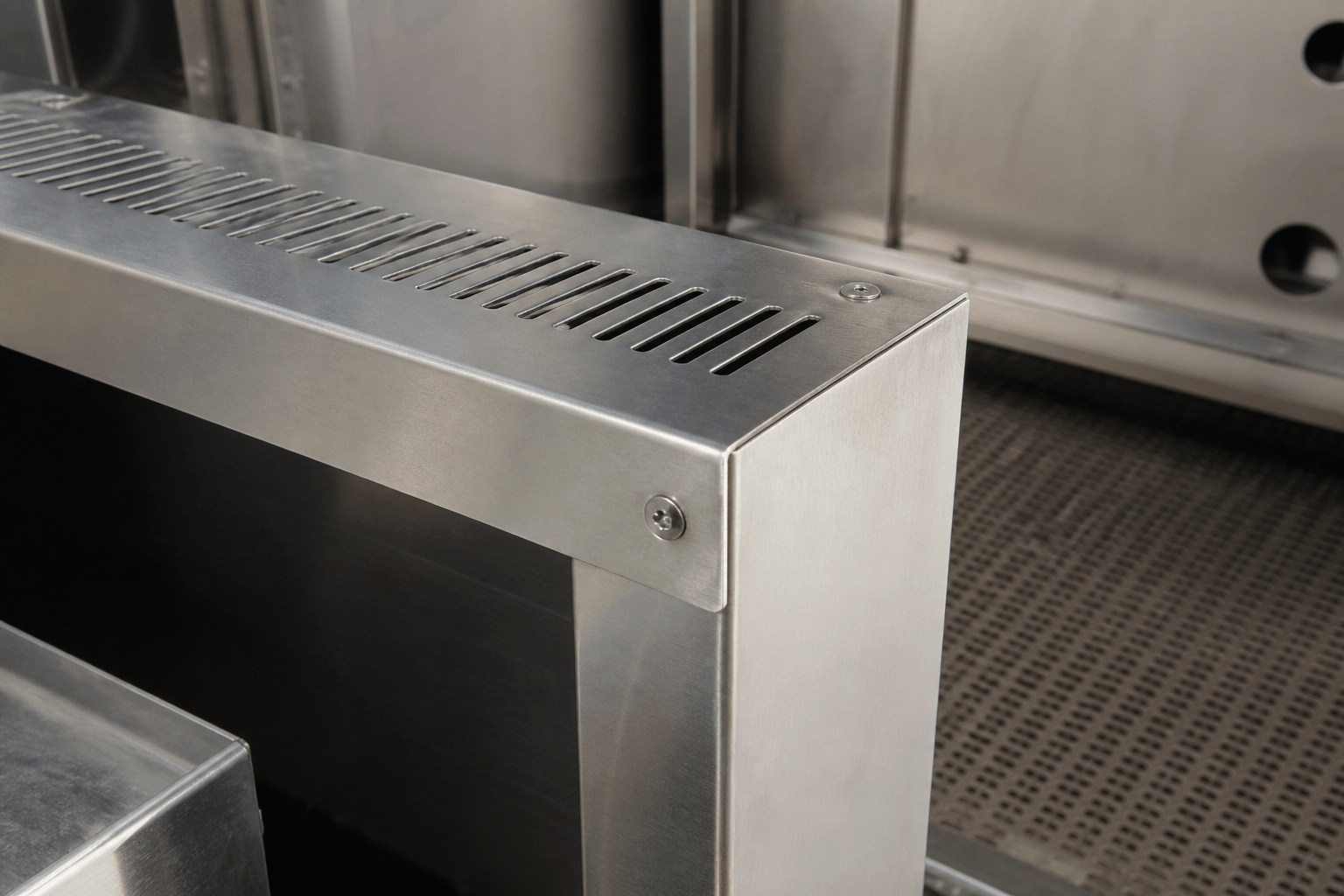
304 stainless steel can tolerate elevated temperatures, but its usable limit depends on whether the concern is oxidation, retained strength, dimensional stability, corrosion after exposure, or melting. There is no single safe operating temperature for every 304 component because exposure time, atmosphere, load, geometry, thermal cycling, and material condition all affect performance.
Published datasheets commonly provide oxidation guidance for continuous and intermittent service, but those figures are not universal design limits. They must be checked against an authoritative source for the specified product form and then evaluated against the component’s actual thermal duty.
What Heat Resistance Means for 304 Stainless Steel
The phrase 304 stainless steel heat resistance can refer to several different properties. A sheet may resist visible scaling at a given temperature while losing enough strength to deform under load. Another part may remain mechanically functional but expand beyond an assembly clearance. A surface can also look acceptable after heating while its corrosion performance has changed.
Four questions should therefore be considered separately:
- Oxidation and scaling: Will the surface form excessive oxide in the service atmosphere?
- Mechanical retention: Will the material retain sufficient strength and creep resistance for the applied load and exposure duration?
- Dimensional stability: Can thermal expansion, restraint, and repeated cycling alter flatness, clearances, or joint alignment?
- Post-exposure corrosion: Could heating affect resistance to the chemicals, moisture, condensate, or chlorides encountered during or after service?
Manufacturer and industry datasheets often cite approximately 870°C (1,600°F) for intermittent oxidation service and 925°C (1,700°F) for continuous oxidation service for 304 in air. These are distinct oxidation-service categories, not a simple ranking of short versus long exposure. The widely published values, including those found in Atlas Steels grade guidance, describe oxidation behavior under particular test and service assumptions; they do not establish allowable stress, dimensional accuracy, corrosion resistance, or suitability for a complete product.
| Temperature information | Reference context | Correct engineering use |
|---|---|---|
| About 870°C intermittent and 925°C continuous | Common oxidation-service guidance for 304 in air, reported in supplier grade datasheets such as Atlas Steels | Use as screening information for scaling, not as a universal maximum operating temperature |
| Approximately 1,400–1,450°C melting range | Typical published melting range for 304; exact values depend on composition | Do not use as a service rating because strength, oxidation, creep, distortion, and corrosion concerns arise much earlier |
| Temperature-dependent strength and expansion data | Sources such as Outokumpu product datasheets and recognized engineering design data | Match the data to product form, condition, temperature, load duration, and applicable design rules |
Before approving a material, engineers should obtain the current datasheet from the material producer or another authoritative source. Coil, plate, bar, tube, cast product, and fabricated sheet assemblies do not automatically have identical conditions or design implications.
What Changes Before 304 Approaches Melting
Melting is rarely the controlling limit. The mechanical properties of 304 change progressively as temperature rises. Yield and tensile strength decline, while time-dependent deformation can become important when a component remains loaded at elevated temperature. A cover that only carries its own weight presents a different problem from a bracket, vessel component, or structural support carrying a sustained load.
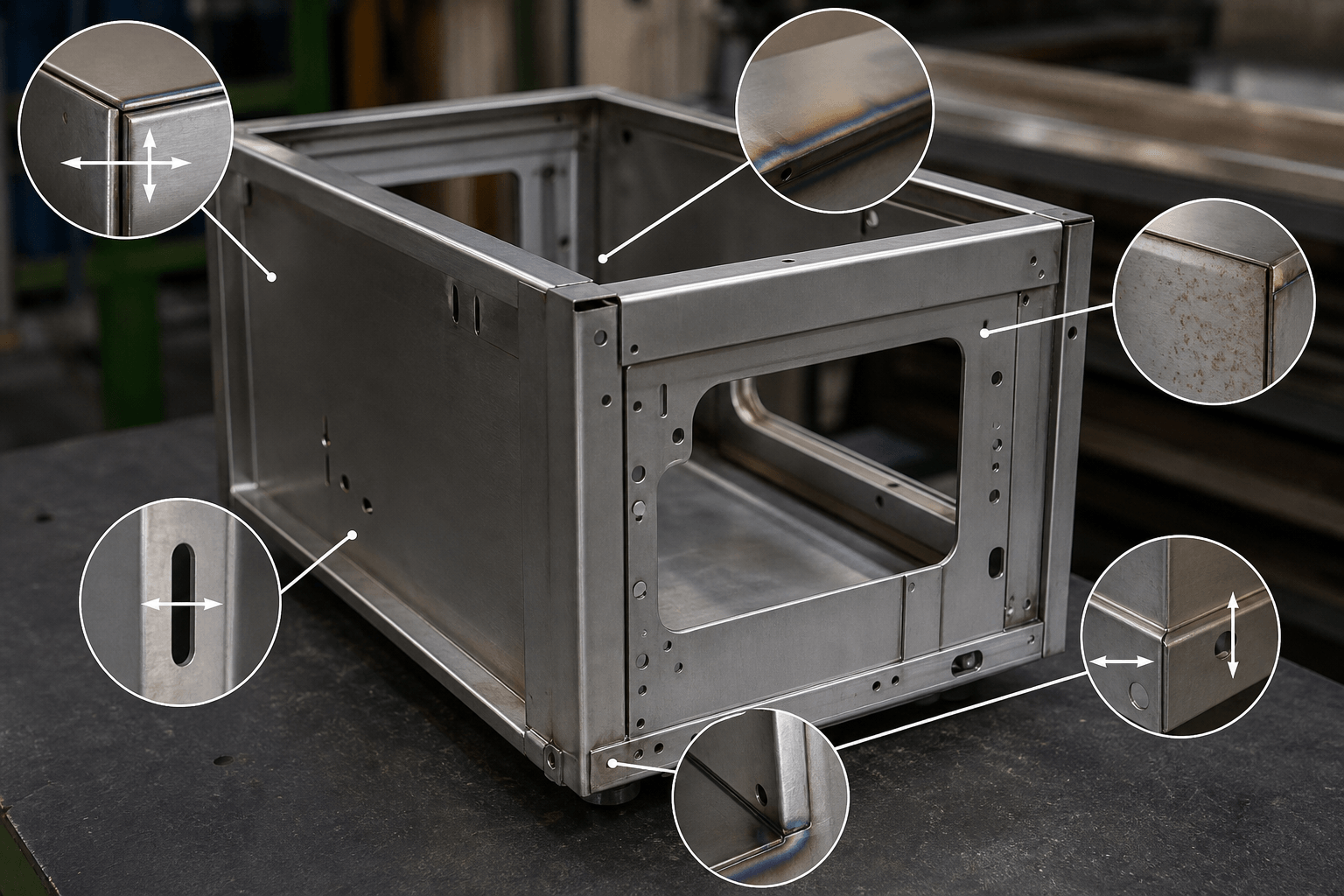
Thermal expansion can affect a fabricated assembly even when the material is far below temperatures associated with heavy oxidation. Published room-to-elevated-temperature expansion values should be used for calculation because expansion is not perfectly constant across the full temperature range. Long panels, unequal section thicknesses, restrained weldments, and mixed-material joints can convert ordinary expansion into bowing, local stress, hole misalignment, or changed door and fastener clearances.
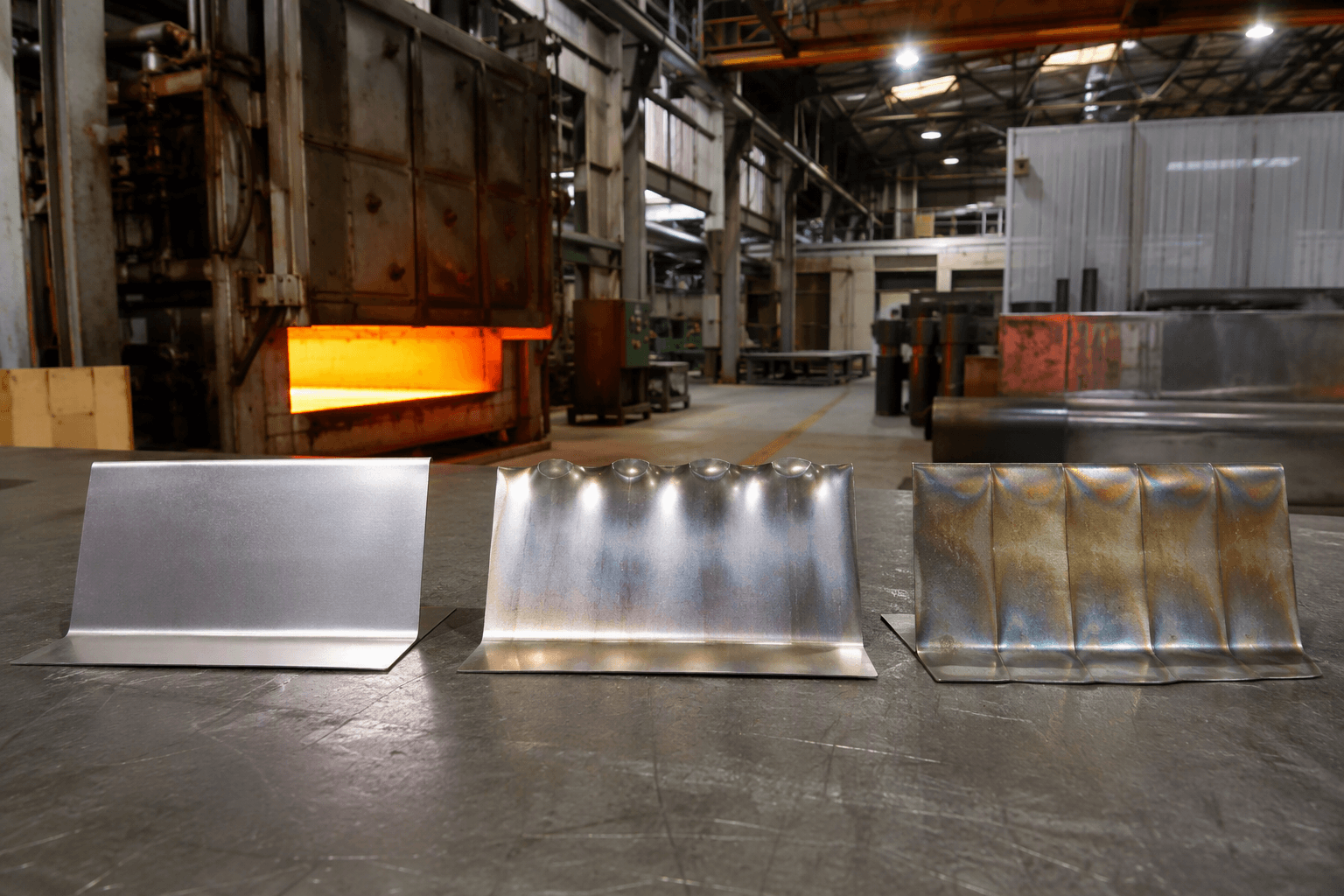
Surface condition can also change. Heat tint, oxide growth, scaling, and finish variation depend on peak temperature, dwell time, oxygen availability, prior surface condition, and cooling environment. A brushed or polished cosmetic finish may therefore have a much lower practical temperature threshold than a hidden component for which appearance is not an acceptance criterion.
Heating within a sensitization range can, under some combinations of time, carbon content, and prior processing, promote chromium-carbide precipitation at grain boundaries. This may reduce resistance to intergranular corrosion in a later corrosive environment. Low-carbon 304L or another grade may be considered where welding and thermal history make sensitization relevant, but grade selection still requires application-specific review. Unverified claims about immunity to microstructural changes should not be used as design evidence.
Continuous Heat, Short Peaks, and Thermal Cycling
The exposure pattern often matters as much as the highest recorded temperature. Three components reaching the same peak can experience different outcomes:
- Continuous exposure: Long dwell time allows oxidation, creep, and microstructural effects to accumulate. The load at temperature and the required service life become central.
- Intermittent peaks: A brief excursion may create less oxide than continuous exposure, but rapid heating or uneven temperature distribution can produce large thermal gradients.
- Repeated cycling: Expansion and contraction can progressively affect fasteners, welds, seals, interfaces, flatness, and fatigue-sensitive details even when each individual cycle appears acceptable.
Atmosphere changes the interpretation of published temperature values. Data stated for air should not be transferred automatically to reducing gases, combustion products, vacuum, humid conditions, molten salts, sulfur-bearing environments, or chloride-bearing deposits. Deposits and condensate can create localized corrosion conditions that are not represented by a clean-air oxidation figure.
Cooling deserves equal attention. Forced air, liquid contact, uneven cooling, or contact with a large cold frame can create gradients and restraint. Thin sheet responds quickly, while thicker sections and attached hardware may lag. This differential movement can alter panel flatness and assembly fit. These effects are especially relevant in custom sheet metal enclosures, where doors, removable panels, internal brackets, and gasket lands must still align after thermal exposure.
304 vs 316 Stainless Steel Heat Resistance
316 is not categorically better than 304 for every high-temperature application. Common datasheets give similar oxidation-service guidance for the two grades in air, while their most important practical difference is often corrosion resistance rather than nominal heat resistance. The molybdenum addition in 316 generally improves resistance to pitting and crevice corrosion in many chloride-bearing environments.
| Decision factor | 304 | 316 |
|---|---|---|
| Oxidation in clean air | Commonly published continuous and intermittent guidance must be checked for the specified product | Often has broadly similar published oxidation limits; superiority should not be assumed |
| Chlorides after or during heating | May be adequate in mild conditions, subject to concentration, temperature, deposits, and cleaning | Usually offers better pitting and crevice-corrosion resistance, but is not immune |
| Loaded elevated-temperature service | Requires temperature-dependent strength and creep evaluation | Also requires a load, duration, and design-code evaluation |
| Fabricated assembly behavior | Geometry, restraint, weld layout, thickness, and finish influence distortion | The same fabrication variables remain important; changing grade alone does not control distortion |
For equipment exposed to heat, cleaning chemicals, moisture, or food-processing environments, corrosion and cleanability requirements may govern the choice even when operating temperatures are moderate. Such requirements should be assessed explicitly when specifying metal components for food and beverage equipment; the grade name alone does not establish food-contact, oven, or cleaning-process suitability.
Define the Exposure Before Judging 304
A defensible specification translates the operating environment into measurable inputs and acceptance criteria. This prevents a material datasheet’s oxidation value from being treated as approval for the finished component.
| Requirement | Information to define | Why it matters |
|---|---|---|
| Temperature | Normal operating range, maximum peak, local hot spots, and measurement location | The average equipment temperature may not represent the metal temperature |
| Time | Dwell time at normal and peak temperatures, total service duration, and frequency | Oxidation, creep, and microstructural effects are time dependent |
| Cycle | Ramp rate, number or frequency of cycles, shutdown pattern, and cooling method | Gradients and repeated movement can affect distortion and joints |
| Atmosphere | Air, process gas, humidity, condensate, chemicals, chlorides, deposits, and cleaning media | Oxidation data for air may not predict corrosion in the actual environment |
| Load and restraint | Sustained or cyclic load, mounting points, fastener restraint, and connected materials | Reduced hot strength and differential expansion can change deformation |
| Acceptance after heating | Flatness, critical dimensions, clearances, surface color, scale, corrosion condition, and assembly function | “Heat resistant” is not an inspectable requirement by itself |
A useful drawing or specification pattern is: material grade and product condition; required material documentation; normal and peak metal temperatures; duration at each temperature; heating and cooling rate where relevant; atmosphere and contaminants; applied load; cycle frequency; and post-exposure dimensional, surface, and assembly criteria. Any required test method, sampling plan, or engineering approval should also be stated rather than left for the manufacturer to infer.
For a focused manufacturing review, send Yishang the part drawing or model, specified stainless grade and required material documentation, normal and peak temperatures, exposure duration and cycle pattern, service atmosphere, load conditions, and post-exposure tolerance, finish, and assembly requirements. The review can identify manufacturability, clearance, distortion, surface, assembly, and inspection questions for the heat-exposed component, but it does not replace material engineering, regulatory, pressure-design, fire-safety, or product-safety approval.
Frequently Asked Questions
What temperature can 304 stainless steel withstand?
There is no universal maximum. Datasheets commonly cite about 870°C for intermittent oxidation service and 925°C for continuous oxidation service in air, but these are oxidation-context figures rather than complete design limits. Allowable temperature may be lower when strength, creep, distortion, corrosion, finish, or assembly fit controls the design. Verify the current authoritative data for the actual product form and condition.
Is 304 stainless steel suitable for oven use?
Possibly, but the word “oven” does not define the duty. Suitability depends on actual metal temperature, exposure duration, cycling, atmosphere, contact media, load, cleaning method, dimensional requirements, and applicable food-contact or safety rules. A general heat-resistance value cannot establish oven suitability for a particular product.
Is 304 or 316 better for high-temperature service?
Neither grade is automatically better in every case. Their published oxidation behavior in air can be broadly similar, while 316 often provides an advantage in chloride corrosion resistance because it contains molybdenum. Elevated-temperature strength, duration, atmosphere, cycling, product condition, and post-heating corrosion exposure must be compared using equivalent authoritative data.
Why is the melting range different from the recommended service temperature?
The melting range only indicates when the alloy transitions toward liquid. Long before melting, 304 can lose strength, deform under sustained load, expand beyond available clearance, oxidize, change appearance, or experience corrosion-related metallurgical effects. Practical service limits are therefore based on required function and environment, not on proximity to melting.